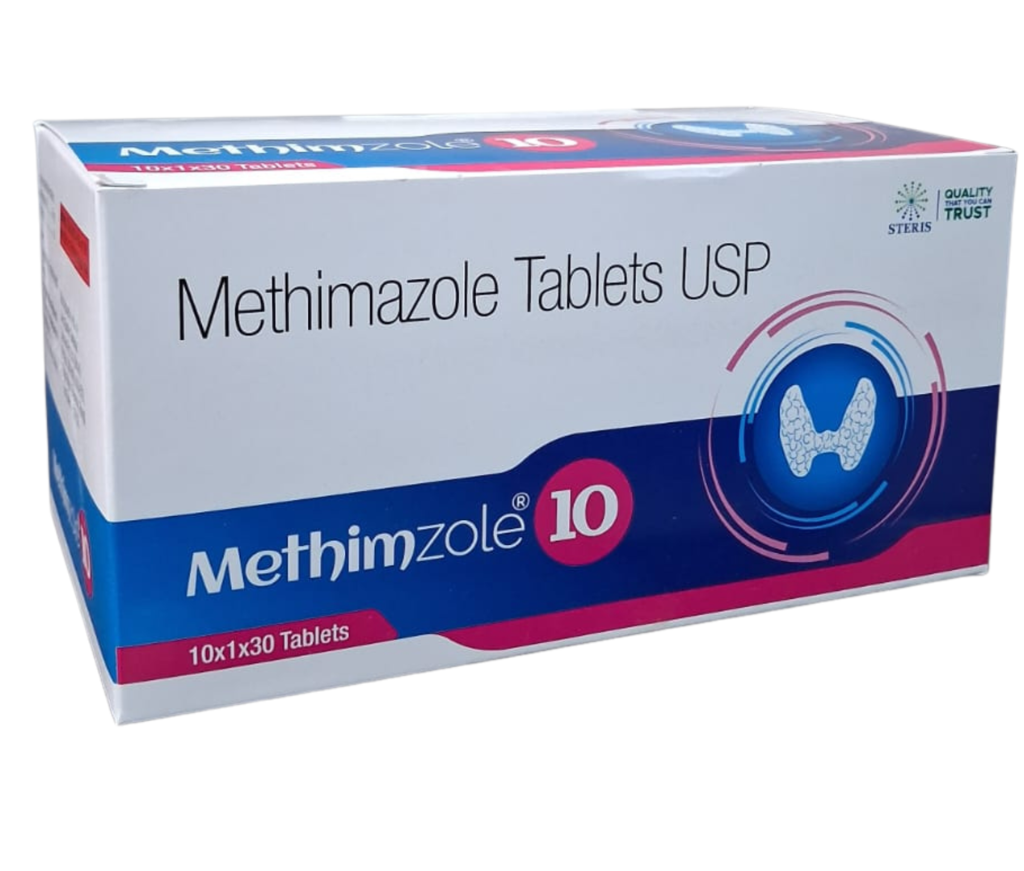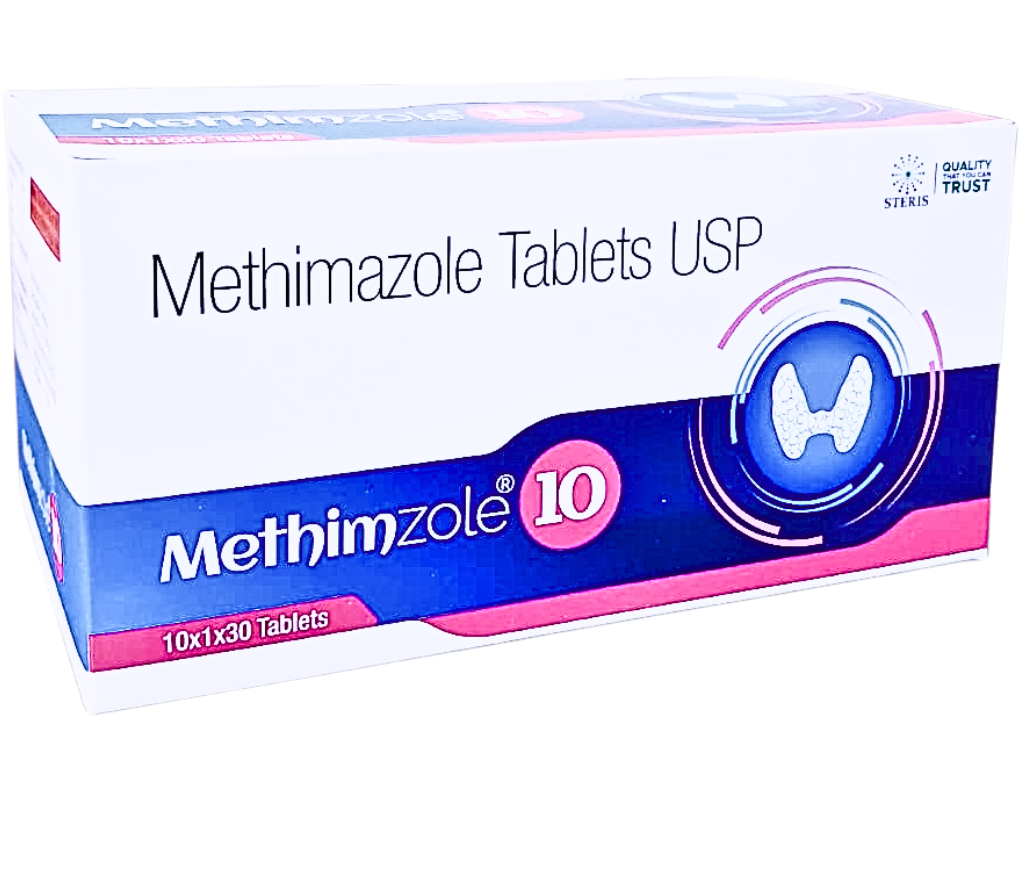
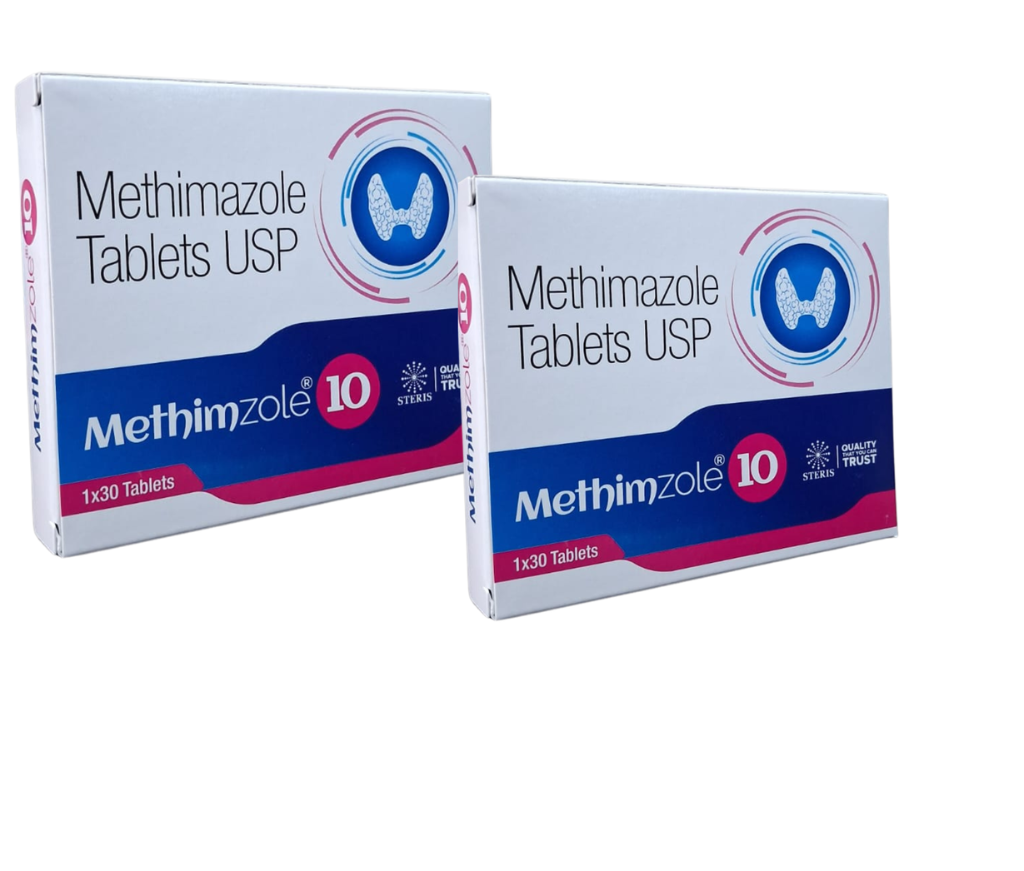
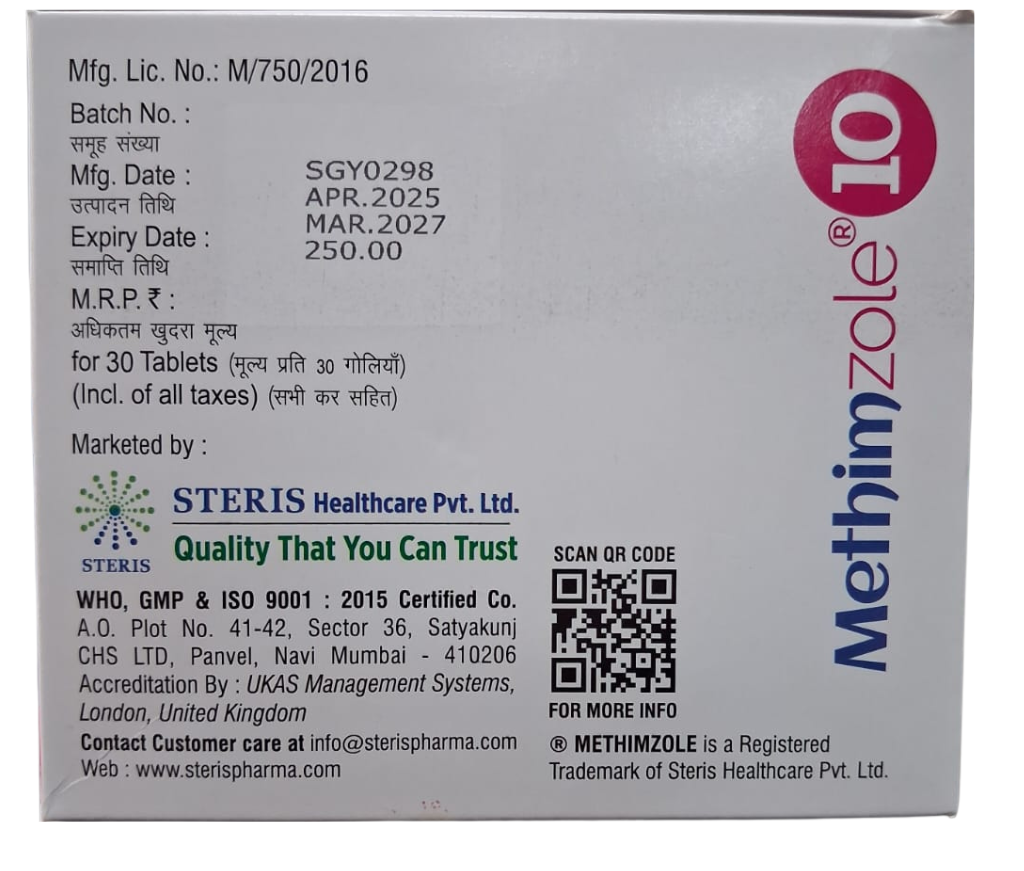
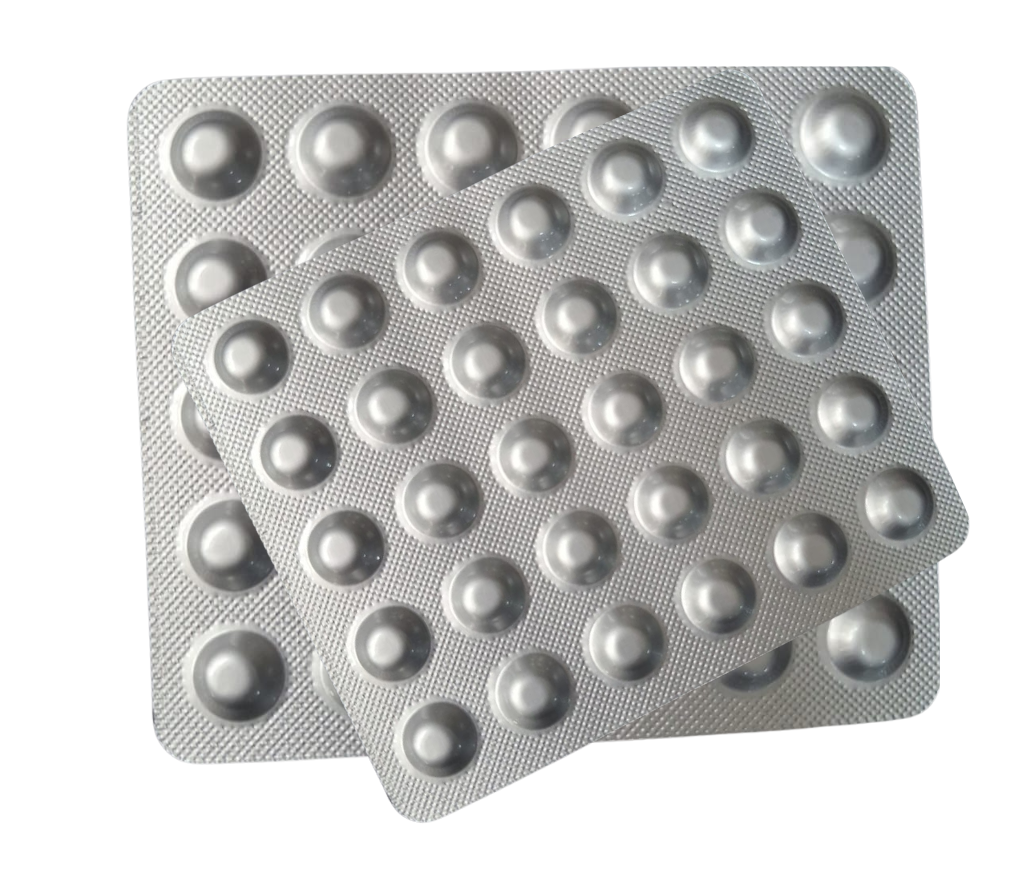
METHIMZOLE 10
 Item requires a valid prescription
Manufactured By Steris Healthcare Pvt Ltd
Composition Methimazole 10mg
Rs 163.80
MRP Rs 234.00
(30% OFF)
Includes all taxes
Package SIZE
( For 30 Tablet )

100% Authentic
Products

Free
Shipping*

Products
Return Policy
Description:
Methimazole 10mg is a prescription antithyroid tablet used to treat hyperthyroidism (overactive thyroid), including conditions like Graves' disease and toxic multinodular goiter. It works by blocking the thyroid gland's ability to produce excess thyroid hormone (T3/T4). Doctors also prescribe it before thyroid surgery or radioactive iodine (RAI) therapy to stabilize hormone levels. Common side effects include nausea, joint pain, skin rash, and mild itching, while rare but serious effects include liver problems and low white blood cell count (agranulocytosis), which require immediate medical attention.
What Is Methimazole 10mg Used For?
Methimazole belongs to a class of medicines called thionamides or antithyroid drugs. Methimazole 10mg tablet is primarily prescribed to manage conditions where the thyroid gland produces too much thyroid hormone — a state known as hyperthyroidism or thyrotoxicosis.
Clinical Indications Table
| Condition | How Methimazole 10mg Helps |
|---|---|
| Graves' Disease | Reduces autoimmune-driven overproduction of thyroid hormone |
| Toxic Multinodular Goiter | Controls excess hormone secretion from overactive thyroid nodules |
| Toxic Adenoma | Manages hormone excess from a single hyperfunctioning nodule |
| Pre-Thyroid Surgery (Thyroidectomy) | Normalizes thyroid hormone levels before surgical intervention |
| Pre-Radioactive Iodine (RAI) Therapy | Stabilizes patients prior to definitive RAI treatment |
| Thyroid Storm (adjunct, hospital setting) | Used as part of emergency management under medical supervision |
Methimazole does not cure the underlying cause of hyperthyroidism (such as Graves' disease); instead, it manages hormone levels while the underlying condition is addressed through ongoing monitoring, surgery, or radioactive iodine treatment.
How Does Methimazole 10mg Work?
Methimazole works by inhibiting the enzyme thyroid peroxidase (TPO), which the thyroid gland needs to synthesize thyroid hormones (T3 and T4) from iodine. By blocking this enzyme, Methimazole 10mg:
- Prevents iodine from being incorporated into thyroglobulin
- Slows down the production of new thyroid hormone
- Gradually normalizes circulating T3 and T4 levels over several weeks
Key Benefits of Methimazole 10mg
- Effective Hormone Control – Normalizes overactive thyroid hormone levels in Graves' disease and related conditions.
- Once- or Twice-Daily Dosing Convenience – Depending on the prescribed regimen, Methimazole often allows simpler dosing schedules compared to some alternatives.
- Non-Surgical First-Line Option – Frequently used as an initial medical therapy before considering surgery or radioactive iodine.
- Pre-Procedure Stabilization – Helps bring hormone levels into a safer range before thyroid surgery or RAI therapy, reducing procedural risk.
- Long-Term Remission Potential – In some Graves' disease patients, a defined course of Methimazole therapy can lead to sustained remission.
- Symptom Relief – Helps reduce hyperthyroid symptoms such as rapid heartbeat, tremors, heat intolerance, weight loss, and anxiety as hormone levels normalize.
Methimazole 10mg Dosage Guidelines
- Initial Dose: Typically individualized; often started at a higher dose to control severe hyperthyroidism and then tapered down.
- Maintenance Dose: Once hormone levels stabilize, doctors usually reduce to a lower maintenance dose, sometimes using the 10mg strength as part of this titration.
- Administration: Usually taken orally, with or without food, at consistent times each day as directed.
- Monitoring: Regular blood tests (TSH, T3, T4, and periodically liver function and complete blood count) are essential throughout treatment.
- Duration: Treatment courses can range from several months to 1–2 years or longer, depending on the underlying condition and doctor's assessment.
Side Effects of Methimazole 10mg
As with all medicines, Methimazole 10mg can cause side effects. Most are mild and improve with continued use or dose adjustment, but some require urgent medical attention.
Common Side Effects
- Nausea or mild stomach upset
- Skin rash or itching
- Joint pain or muscle aches
- Headache
- Loss of taste or altered taste sensation
- Hair thinning (mild, in some patients)
- Dizziness
Serious Side Effects (Seek Immediate Medical Care)
- Agranulocytosis (sudden drop in white blood cells) – signs include fever, sore throat, mouth ulcers, or unusual infections
- Liver problems – signs include yellowing of skin/eyes (jaundice), dark urine, severe fatigue, or abdominal pain
- Severe allergic reaction – swelling of face/lips/throat, difficulty breathing, severe rash
- Vasculitis (rare) – joint pain, skin lesions, kidney problems
- Bone marrow suppression (rare) – unusual bruising or bleeding
Methimazole vs. Other Antithyroid Options: Comparison Table
| Feature | Methimazole 10mg | Carbimazole | Propylthiouracil (PTU) |
|---|---|---|---|
| Drug Class | Thionamide | Prodrug of Methimazole | Thionamide |
| Dosing Frequency | Once or twice daily | Once or twice daily | Multiple times daily |
| Pregnancy (1st trimester) | Generally avoided if possible | Generally avoided if possible | Often preferred in 1st trimester |
| Onset of Action | Gradual (weeks) | Gradual (weeks) | Gradual (weeks) |
| Liver Toxicity Risk | Present, monitored | Present, monitored | Higher risk of severe liver injury |
| Typical Use Case | Long-term Graves' management, pre-surgery/RAI | Similar indications (converts to methimazole in the body) | Thyroid storm, early pregnancy |
Precautions & Safety Information
- Prescription Only: Methimazole 10mg is a Schedule H drug and must be taken only under medical supervision.
- Pregnancy & Breastfeeding: Inform your doctor if you are pregnant, planning pregnancy, or breastfeeding, as antithyroid drug choice may need adjustment.
- Regular Blood Monitoring: Periodic thyroid function tests, complete blood counts, and liver function tests are typically recommended throughout treatment.
- Drug Interactions: Inform your doctor about all medications, including blood thinners (e.g., warfarin), beta-blockers, and other thyroid medications, as interactions are possible.
- Alcohol: Discuss alcohol use with your doctor, particularly given the drug's potential effect on liver function.
- Do Not Self-Discontinue: Stopping Methimazole abruptly without medical guidance can cause hyperthyroid symptoms to return or worsen.
- Allergy History: Inform your doctor of any prior allergic reaction to Methimazole or Carbimazole before starting treatment.
- Children & Elderly: Dosing and monitoring frequency may differ; always follow your doctor's specific guidance for these groups.
Conclusion
Methimazole 10mg is a well-established, widely prescribed antithyroid medication used to manage hyperthyroidism caused by conditions like Graves' disease, toxic multinodular goiter, and toxic adenoma. By blocking the thyroid peroxidase enzyme, it helps bring overactive thyroid hormone production back into a healthy range, whether as a standalone long-term therapy or as preparation before thyroid surgery or radioactive iodine treatment. While generally effective and convenient to dose, Methimazole does carry the potential for side effects ranging from mild (nausea, rash, joint pain) to rare but serious (liver injury, agranulocytosis) — making regular blood monitoring and open communication with your doctor essential throughout treatment. If you or a loved one has been diagnosed with hyperthyroidism, consult your doctor to determine whether Methimazole 10mg is the right fit for your treatment plan, and always follow the prescribed dosage and monitoring schedule closely.
Frequently Asked Questions
1. What is Methimazole 10mg used for?
Methimazole 10mg is used to treat hyperthyroidism (overactive thyroid), including Graves' disease, toxic multinodular goiter, and to prepare patients before thyroid surgery or radioactive iodine therapy.
2. How does Methimazole 10mg work in the body?
It blocks the thyroid peroxidase enzyme, which the thyroid gland needs to produce new thyroid hormone, gradually lowering elevated T3 and T4 levels.
3. Is Methimazole 10mg a steroid?
No. Methimazole is an antithyroid medication (thionamide), not a steroid.
4. How long does it take for Methimazole 10mg to work?
Most patients notice improvement in symptoms over several weeks, as the drug works gradually to reduce new hormone production rather than removing hormone already stored in the gland.
5. Can I take Methimazole 10mg on an empty stomach?
It can generally be taken with or without food, but you should follow your doctor's specific instructions for consistency.
6. What are the most common side effects of Methimazole 10mg?
Common side effects include nausea, skin rash, joint pain, headache, and altered taste sensation.
7. What are the serious warning signs to watch for while on Methimazole?
Fever, sore throat, mouth ulcers, yellowing of the skin or eyes, dark urine, and unusual bruising or bleeding require immediate medical attention.
8. Can Methimazole 10mg be taken during pregnancy?
Antithyroid drug choice during pregnancy, especially in the first trimester, should be individualized by your doctor, as alternatives may be preferred in certain stages.
9. Is Methimazole 10mg safe for long-term use?
It can be used long-term under medical supervision with regular monitoring of thyroid function, liver function, and blood counts.
10. What happens if I miss a dose of Methimazole 10mg?
Take it as soon as you remember, unless it is close to your next scheduled dose — do not double up doses.
11. Can Methimazole 10mg cure hyperthyroidism permanently?
It manages hormone levels and, in some Graves' disease cases, a defined treatment course may lead to remission, but it does not guarantee a permanent cure for everyone.
12. What is the difference between Methimazole and Carbimazole?
Carbimazole is a prodrug that converts into Methimazole in the body; both have similar effects, though dosing and regional availability may differ.
13. Can I drink alcohol while taking Methimazole 10mg?
Discuss alcohol consumption with your doctor, as it may affect liver function during antithyroid treatment.
14. Does Methimazole 10mg interact with other medications?
Yes, it can interact with blood thinners like warfarin and other medications; always share your full medication list with your doctor.
15. What tests are needed while taking Methimazole 10mg?
Regular thyroid function tests (TSH, free T3, free T4), complete blood counts, and liver function tests are typically recommended.
16. Can children take Methimazole 10mg?
Yes, in certain pediatric hyperthyroidism cases, but dosing and monitoring are adjusted by a pediatric endocrinologist.
17. What should I do if I experience a sore throat and fever while on Methimazole?
Contact your doctor immediately and request a blood count check, as this can be a sign of a rare but serious drop in white blood cells.
18. Is a prescription required to buy Methimazole 10mg?
Yes, Methimazole 10mg is a Schedule H drug and can only be purchased with a valid doctor's prescription.
If You Need More Information About METHIMZOLE 10 Click here
Available Substitutes