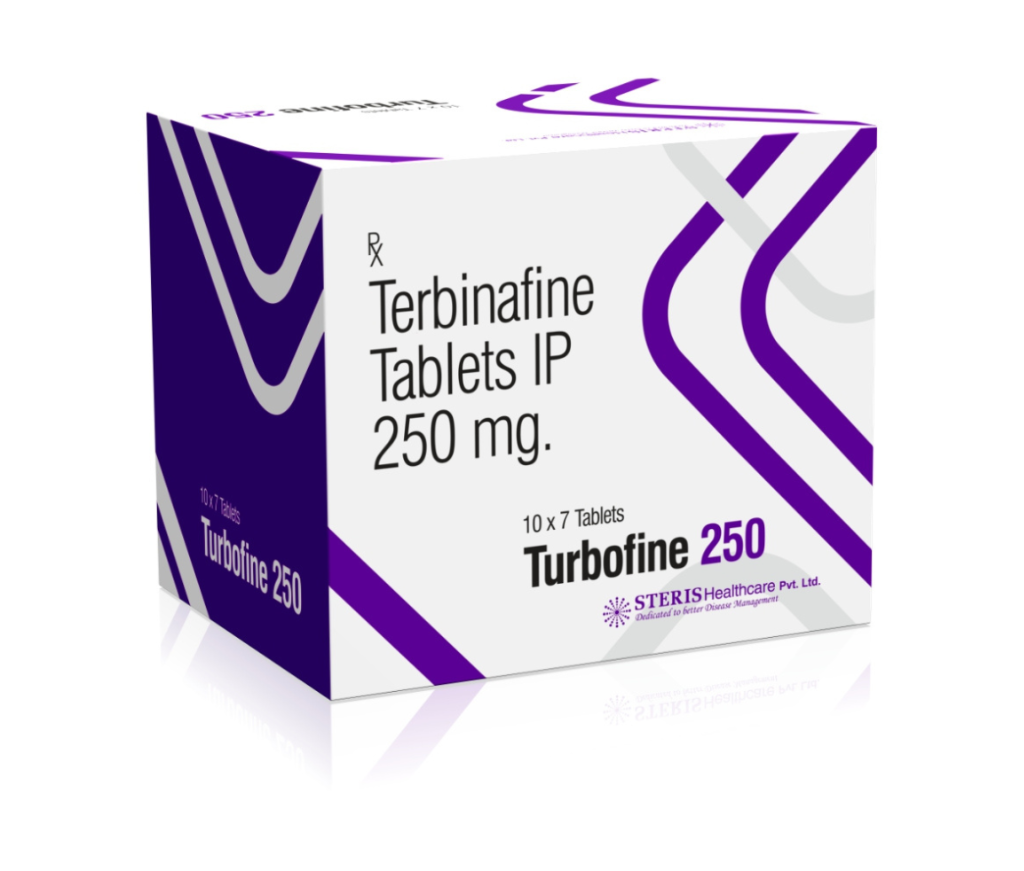


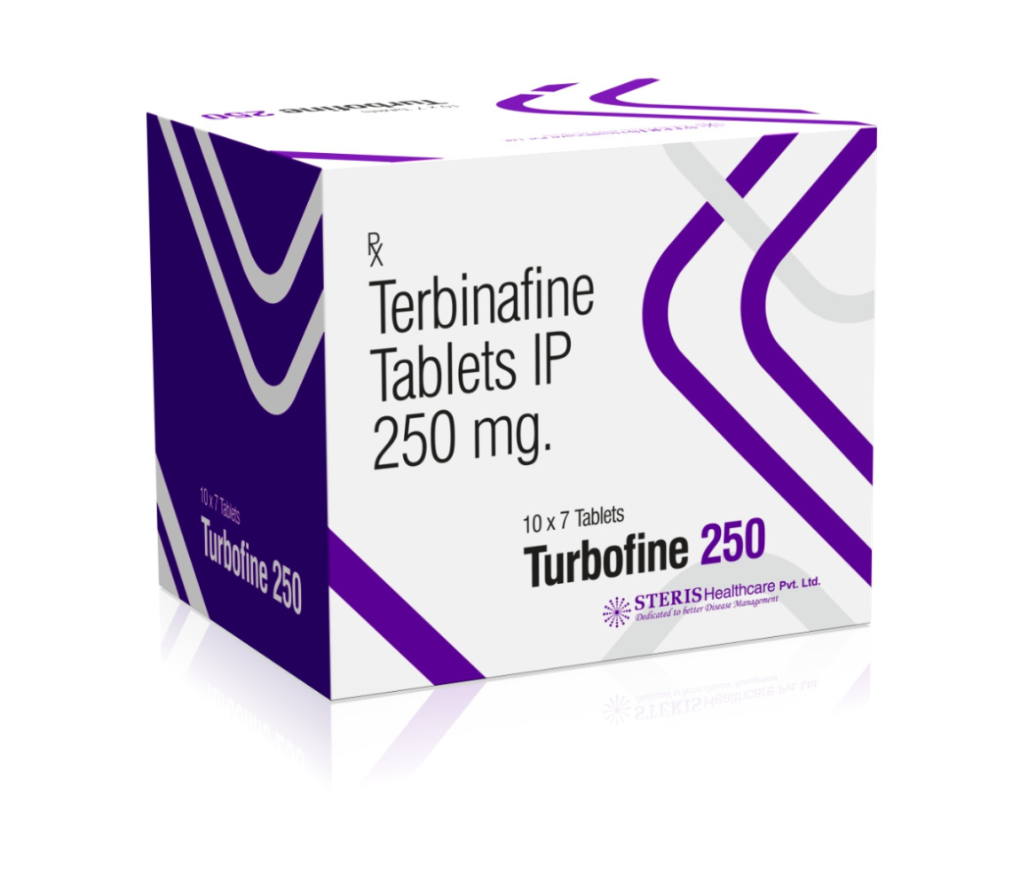

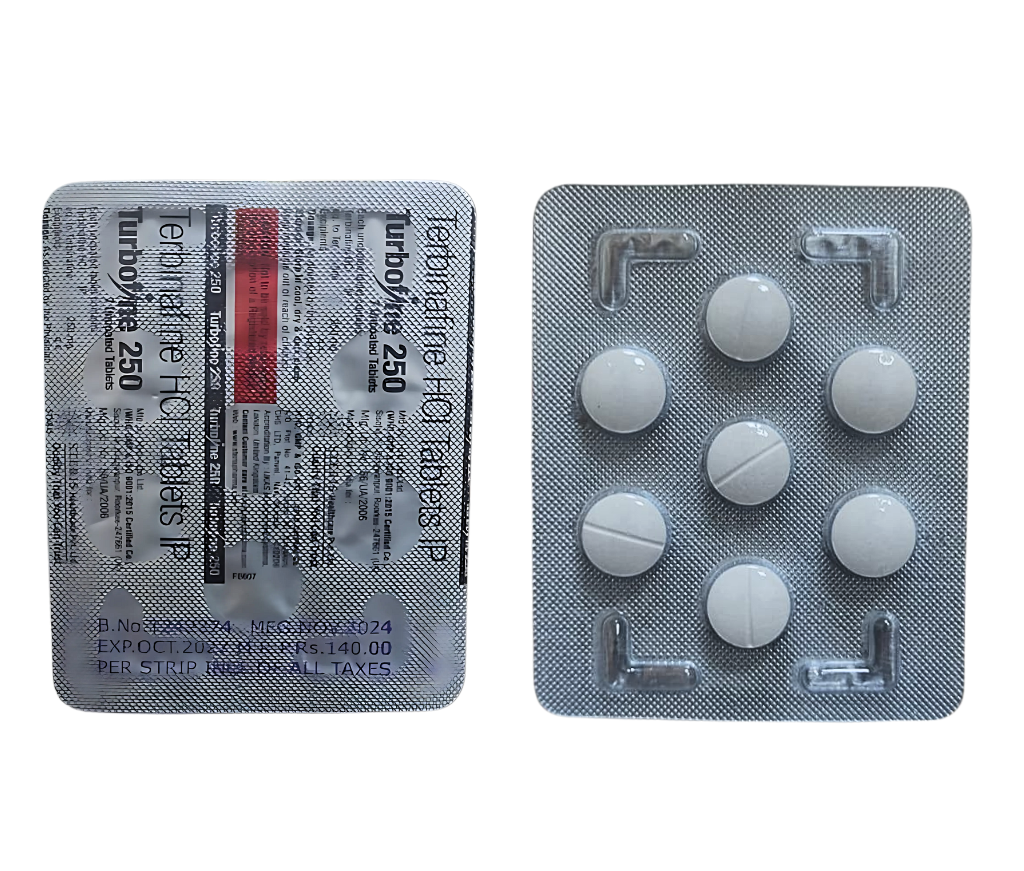
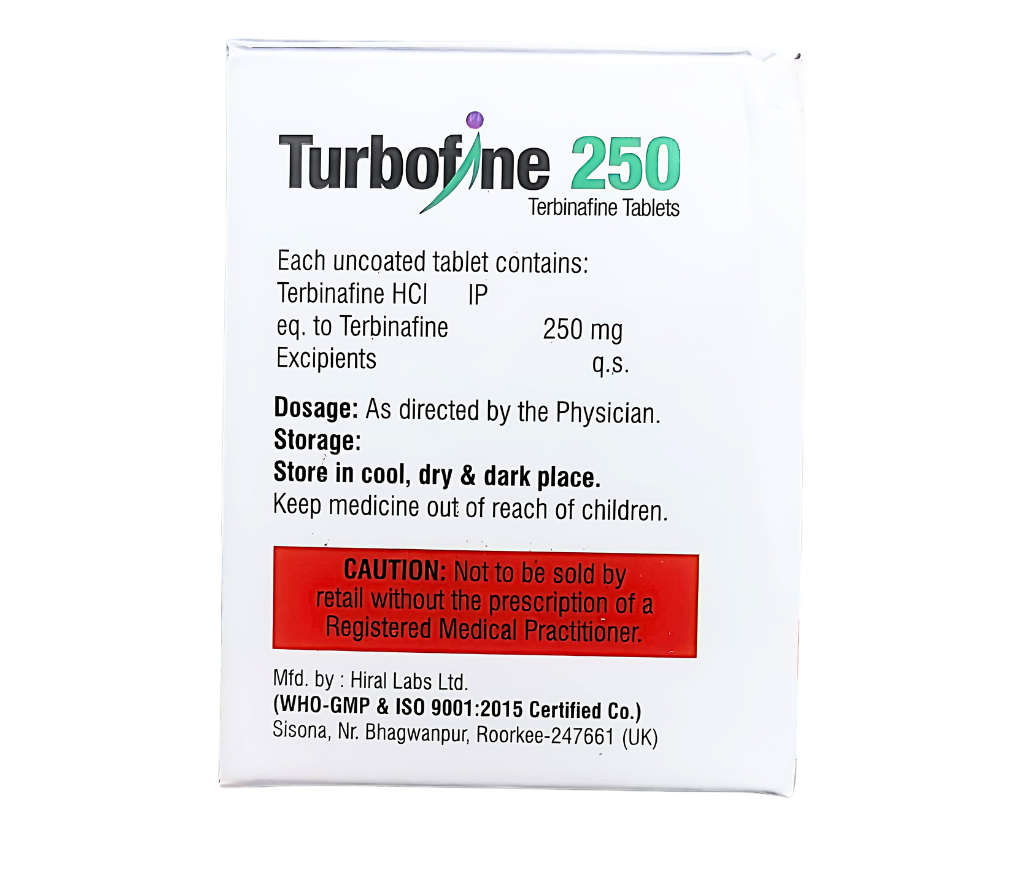
TURBOFINE 250
 Item requires a valid prescription
Manufactured By Steris Healthcare Pvt Ltd
Composition Terbinafine 250 mg
Rs 91.88
MRP Rs 131.25
(30% OFF)
Includes all taxes
Package SIZE
( For 7 TABLETS )

100% Authentic
Products

Free
Shipping*

Products
Return Policy
Description:
Terbinafine 250 mg is an oral antifungal medicine used to treat certain fungal infections, particularly fungal infections of the fingernails and toenails. It belongs to the allylamine class of antifungal medicines and works by interfering with the fungus's ability to produce an essential component of its cell membrane. Because oral terbinafine acts systemically, it is generally used when a fungal infection requires treatment beyond what a topical cream or spray can adequately provide.
If you have been prescribed terbinafine 250 mg tablets, understanding their uses, expected benefits, dosage, possible side effects, interactions, and precautions can help you use the medicine safely.
What Is Terbinafine 250 mg Used For?
Terbinafine is an antifungal medicine. Oral tablets are particularly important in the treatment of onychomycosis, a fungal infection affecting the fingernails or toenails. Current U.S. prescribing information lists dermatophyte-related fingernail and toenail onychomycosis as the indication for terbinafine tablets.
Healthcare professionals may also use oral terbinafine for certain other fungal infections depending on the organism, location of infection, clinical circumstances, and local prescribing guidance.
Unlike topical terbinafine, which is applied directly to infected skin, the 250 mg tablet is taken by mouth and distributes through the body. This makes oral treatment particularly useful for infections involving the nail where topical medicines may have difficulty penetrating sufficiently.
Key Benefits of Terbinafine 250 mg
The main potential benefit of terbinafine 250 mg is its effectiveness against susceptible dermatophyte fungi.
Key benefits include:
- Targets fungal infections systemically: The tablet works throughout the body rather than only on the skin surface.
- Commonly used for fungal nail infections: Oral terbinafine is an established treatment for dermatophyte onychomycosis.
- Convenient once-daily dosing: Standard prescribing information for adults commonly uses one 250 mg tablet once daily for nail infections.
- Can treat infections that are difficult to manage with topical products: Nail infections often require systemic treatment because the infection can extend into the nail structure.
- May gradually restore healthy nail growth: With fungal nail infections, improvement is not immediate because the damaged nail must grow out over time.
It is important to understand that “benefit” does not mean the medicine is appropriate for every fungal infection. Correct diagnosis matters because nail discoloration, thickening, or brittleness can have causes other than fungus.
Terbinafine 250 mg Dosage
The appropriate dose and treatment duration should be determined by a healthcare professional.
For adult fungal nail infections, U.S. prescribing information lists:
- Fingernail onychomycosis: 250 mg once daily for 6 weeks.
- Toenail onychomycosis: 250 mg once daily for 12 weeks.
Other formulations and treatment schedules may be appropriate for different fungal infections.
Terbinafine tablets can generally be taken with or without food and should be swallowed with water. Taking the tablet at approximately the same time each day can make it easier to maintain the prescribed schedule.
Do not increase the dose, take extra tablets, or extend treatment without medical advice.
How Long Does Terbinafine 250 mg Take to Work?
One of the most important things to know about oral terbinafine is that improvement in a nail does not necessarily happen as soon as the fungus begins responding.
A fungal nail infection can require weeks or months before the nail looks normal because healthy nail has to grow and replace the damaged portion. NHS guidance notes that tablets may take from around two weeks to several months to show their full effect, while nail infections can take three months or longer to clear.
Therefore, don't assume that terbinafine has failed simply because an infected nail still looks abnormal during the early part of treatment. Your doctor can determine whether the infection is responding appropriately.
Terbinafine 250 mg Side Effects
Like all medicines, terbinafine can cause side effects, although not everyone experiences them.
Commonly reported side effects with oral terbinafine include:
- Headache
- Nausea or vomiting
- Diarrhea
- Stomach discomfort or indigestion
- Reduced appetite
- Rash
- Muscle or joint pain
- Dizziness
- Changes in taste
- Changes in smell
NHS guidance lists these among the recognized side effects of terbinafine tablets.
Most side effects are manageable, but certain symptoms require prompt medical attention.
Serious Terbinafine 250 mg Side Effects
The most important safety concern with oral terbinafine is liver injury. Current prescribing information warns that serious liver injury, including liver failure, has occurred in people taking oral terbinafine. Terbinafine tablets are contraindicated in people with chronic or active liver disease, and liver function should be assessed before treatment.
Contact a healthcare professional promptly if you develop symptoms that could indicate liver problems, such as:
- Yellowing of the skin or eyes
- Dark urine
- Pale stools
- Persistent nausea
- Loss of appetite
- Unusual tiredness
- Vomiting
- Pain in the upper abdomen
Other uncommon but potentially serious reactions include severe allergic reactions, serious skin reactions, blood disorders, pancreatitis, and significant taste or smell disturbances. Current U.S. labeling specifically warns that taste or smell disturbances can occasionally be prolonged or permanent.
If you experience a severe or rapidly worsening reaction, seek urgent medical care.
Who Should Not Take Terbinafine 250 mg?
Oral terbinafine is not suitable for everyone.
People with chronic or active liver disease should not take oral terbinafine according to current U.S. labeling. A previous allergic reaction to oral terbinafine is also a contraindication.
Before receiving a prescription, tell your doctor about:
- Liver or kidney problems
- Previous reactions to terbinafine
- All prescription medicines
- Over-the-counter medicines
- Vitamins and supplements
- Pregnancy or breastfeeding
- Any unexplained changes in taste or smell
Your healthcare professional can determine whether terbinafine is appropriate and whether laboratory monitoring is necessary.
Terbinafine 250 mg Drug Interactions
Terbinafine tablets can interact with other medicines. NHS guidance specifically identifies several medicines that may interact with oral terbinafine, including certain antidepressants, beta blockers, amiodarone, cimetidine, rifampicin, tamoxifen, warfarin, ciclosporin, and some hormonal contraceptive considerations.
This does not mean you necessarily need to stop another medicine. Instead, your doctor or pharmacist should review your complete medication list before treatment.
Always mention supplements and herbal products as well because interaction information for some complementary products may be limited.
What Should You Do If You Miss a Dose?
If you forget a terbinafine tablet, take it when you remember unless it is almost time for the next scheduled dose. If the next dose is near, skip the missed dose and continue with your regular schedule.
Do not take two tablets together to compensate for a missed dose.
If you frequently forget doses, a daily reminder can help you maintain consistency.
Can You Buy Terbinafine 250 mg Without a Prescription?
The availability of terbinafine 250 mg depends on the country and local regulations. In the UK, oral terbinafine tablets are prescription-only, while topical formulations may be available through pharmacies.
Because oral terbinafine can cause clinically important adverse effects and may require assessment of liver health, it is not a medicine that should be self-started simply because a nail or skin problem appears fungal.
For online purchasing, use a licensed pharmacy and a valid prescription where required. Avoid unverified sellers offering unusually cheap tablets or products without appropriate labeling.
Terbinafine 250 mg vs. topical terbinafine
The tablet and topical forms are not interchangeable.
Oral terbinafine 250 mg is absorbed into the body and is particularly useful for fungal nail infections requiring systemic therapy.
Topical terbinafine is applied directly to infected skin and is commonly used for conditions such as athlete's foot, ringworm, and jock itch. NHS guidance notes that terbinafine is available in creams, gels, sprays, solutions, and tablets, with the appropriate formulation depending on the infection.
Choosing the right formulation depends on the type, location, severity, and confirmed cause of the infection.
Frequently Asked Questions
1. What is terbinafine 250 mg used for?
Terbinafine 250 mg is an oral antifungal medicine most notably used to treat dermatophyte fungal infections of the fingernails and toenails. The exact use should be determined by a healthcare professional based on the diagnosis.
2. How should I take terbinafine 250 mg?
Take the tablet exactly as prescribed, usually once daily for adult nail infections. It can generally be taken with or without food and should be swallowed with water.
3. How long does terbinafine 250 mg take to cure a fungal nail infection?
Treatment commonly lasts about 6 weeks for fingernail infections and 12 weeks for toenail infections under the U.S. labeling. However, the nail may continue to look abnormal for months while healthy nail grows out.
4. What are the most common side effects of terbinafine 250 mg?
Possible side effects include headache, stomach upset, diarrhea, nausea, rash, reduced appetite, muscle or joint pain, dizziness, and changes in taste or smell.
5. Can terbinafine 250 mg damage the liver?
Yes. Although serious liver injury is uncommon, oral terbinafine has been associated with potentially severe liver problems. Current U.S. labeling recommends evaluating liver function before treatment and discontinuing the medicine if liver injury develops.
6. Can I take terbinafine 250 mg with other medicines?
Potentially, but terbinafine tablets can interact with several medicines. Tell your doctor or pharmacist about every prescription medicine, OTC medicine, vitamin, and supplement you take before starting treatment.
7. Can I stop terbinafine 250 mg when my symptoms improve?
Do not stop or change your treatment without discussing it with your healthcare professional. Nail infections can take considerable time to disappear because healthy nail must grow out, and stopping treatment prematurely may contribute to treatment failure. N
Conclusion
Terbinafine 250 mg is an established oral antifungal treatment, particularly for dermatophyte fungal nail infections, but it should be used under appropriate medical supervision. Its major advantages include systemic antifungal activity and a convenient once-daily regimen for common nail-infection treatment schedules. However, oral treatment also carries important safety considerations, particularly the potential for liver injury and uncommon but serious taste, smell, allergic, skin, and blood-related reactions.
Available Substitutes