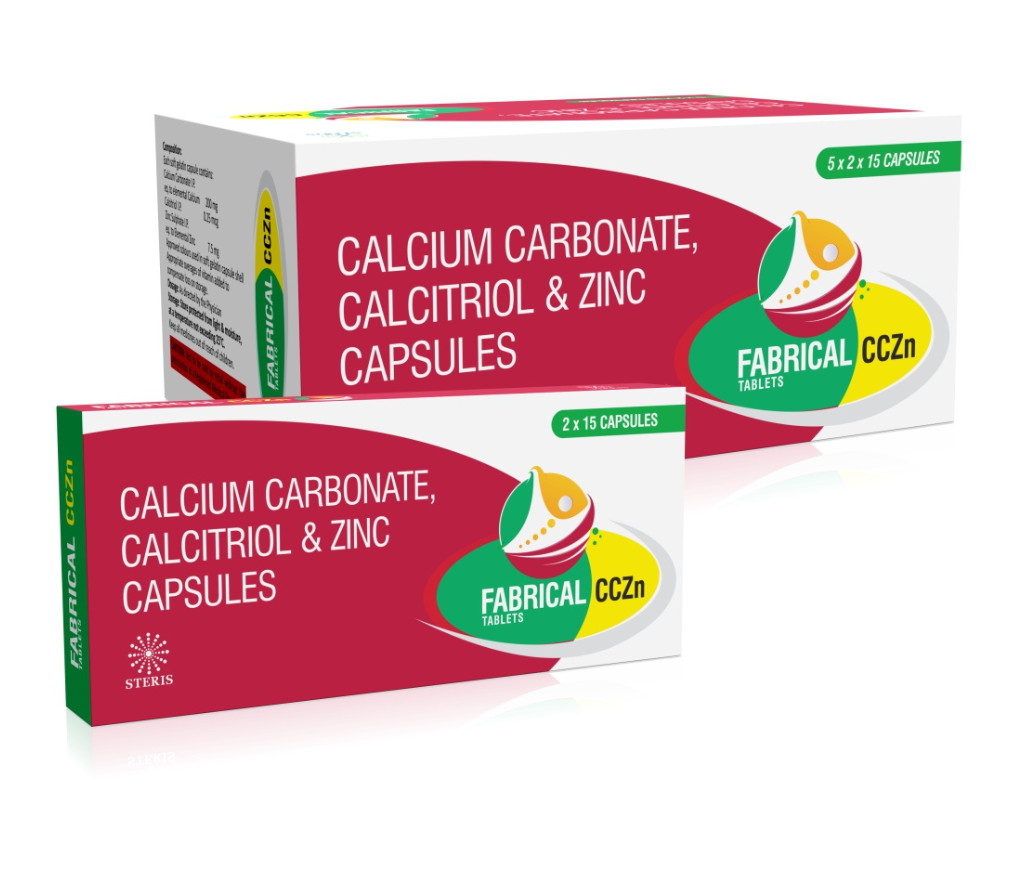


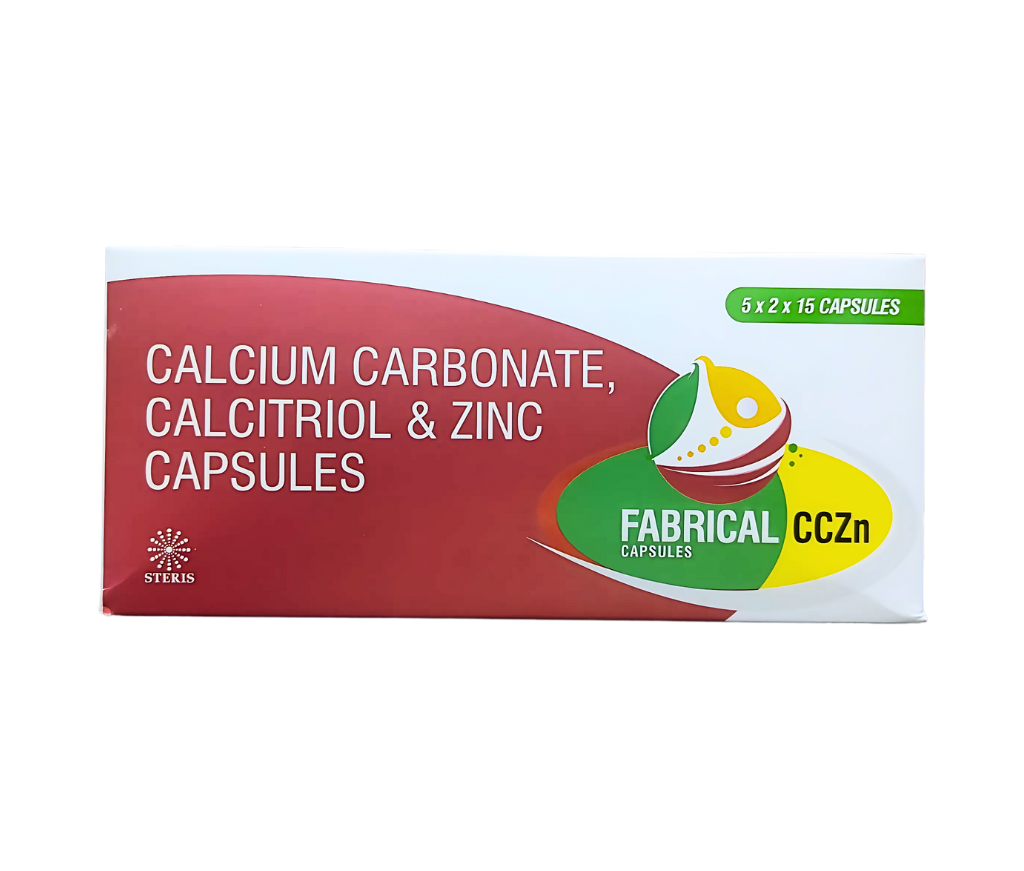


FABRICAL CCZn
 Item requires a valid prescription
Manufactured By Steris Healthcare Pvt Ltd
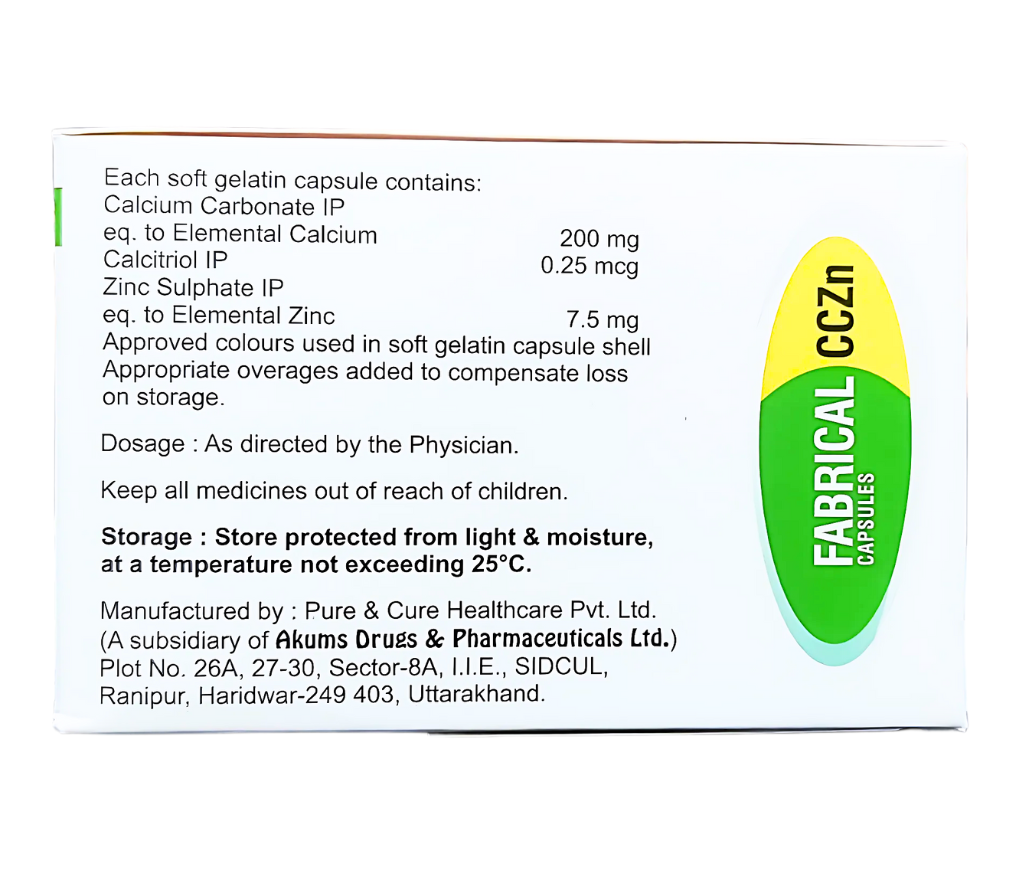
Composition Calcium Carbonate ,Calcitriol & Zinc Caps
Rs 193.59
MRP Rs 276.56
(30% OFF)
Includes all taxes
Package SIZE
( For 10 Capsules )

100% Authentic
Products

Free
Shipping*

Products
Return Policy
Description:
Calcium carbonate, calcitriol, and zinc capsules are a combination nutritional supplement widely prescribed to support bone health, correct calcium and vitamin D deficiency, and manage conditions like osteoporosis and osteomalacia. This three-ingredient formula works together — one nutrient builds bone, one helps the body absorb it, and one supports the metabolic and immune processes bones depend on. Below is a complete breakdown of how each ingredient works, the combined benefits, dosage guidance, and possible side effects.
What Are Calcium Carbonate, Calcitriol & Zinc Capsules?
This is a fixed-dose combination supplement, typically formulated as calcium carbonate 500 mg, calcitriol 0.25 mcg, and zinc 7.5 mg per capsule (strengths vary by brand and manufacturer). It's manufactured widely across India by GMP-certified pharmaceutical and nutraceutical companies, sold both as a prescription product and, depending on the market, as an over-the-counter bone-health supplement. It's commonly recommended for older adults, postmenopausal women, pregnant and lactating women, and anyone with diagnosed calcium or vitamin D insufficiency.
How This Combination Works
- Calcitriol is the active, hormonally-functional form of Vitamin D3. Unlike standard vitamin D supplements that need to be converted by the liver and kidneys first, calcitriol works immediately to help the intestines absorb calcium efficiently and supports muscle function that helps prevent falls.
- Calcium carbonate provides the raw building block calcium needs to maintain bone density and strength, and supports healthy teeth.
- Zinc plays a supporting role in bone metabolism and collagen formation, and contributes to immune function — an added benefit given how often calcium-deficient populations are also zinc-deficient.
Together, the three ingredients address both the supply (calcium, zinc) and the absorption (calcitriol) sides of bone health, which is why this combination is often preferred over single-ingredient calcium supplements alone.
Key Uses
- Osteoporosis — supporting bone density in postmenopausal women and older adults
- Osteomalacia — softening of bones caused by prolonged vitamin D or calcium deficiency
- Calcium and vitamin D deficiency, particularly in people with limited sun exposure or dietary intake
- Pregnancy and lactation support — increased calcium and vitamin D needs during pregnancy for maternal bone health and fetal development, always under a gynecologist's guidance
- Age-related bone health maintenance, especially in elderly patients at higher fracture risk
- Supportive therapy in patients with chronic kidney disease under specialist supervision, since calcitriol is often specifically used in renal-related calcium metabolism issues
Key Benefits
- Combines three complementary nutrients in one capsule, simplifying dosing compared to taking separate calcium, vitamin D, and zinc supplements
- Calcitriol bypasses the body's natural conversion steps, making it more immediately effective for people whose kidneys or liver may not convert standard vitamin D efficiently
- Supports fall-prevention through better muscle function, in addition to bone strengthening
- Zinc adds immune and metabolic support, extending the formula's benefit beyond bone health alone
- Widely available and competitively priced, especially as a generic combination manufactured by Indian pharmaceutical companies for both domestic and export markets
Dosage & Administration
This supplement is typically taken as one capsule daily, ideally with food to improve absorption of the calcium and zinc content. Consistency matters — taking it at the same time each day supports steadier calcium and vitamin D levels in the body. Depending on the reason for use, treatment duration can range from a defined course (for deficiency correction) to long-term, ongoing use (for chronic conditions like osteoporosis or kidney-related calcium metabolism issues). The exact dosage and duration should always be set by a physician based on blood calcium levels, kidney function, and the underlying condition — this is not a supplement to be dosed independently, particularly because excess calcium and vitamin D can themselves cause harm.
Side Effects
Common side effects:
- Constipation or general stomach upset
- Headache and mild dizziness
- Fatigue or weakness
- Muscle cramps, bone or joint discomfort
- Mood changes
Zinc-related effects:
- Gastrointestinal upset or a metallic taste
- Long-term excessive zinc intake can interfere with copper absorption
Serious side effects (uncommon but important):
- Hypercalcemia (high blood calcium) — symptoms include nausea, vomiting, constipation, muscle weakness, and confusion
- Hypervitaminosis D (excess vitamin D activity) from calcitriol accumulation
- Kidney stones, particularly with excessive or poorly monitored calcium intake
- Allergic reactions to any of the three components
Precautions & Contraindications
This combination should not be used by people with hypercalcemia, severe kidney failure, or a known allergy to calcitriol, calcium carbonate, or zinc. It requires caution in anyone with a history of kidney stones, kidney disease, or heart conditions, and should not be combined with additional calcium or vitamin D supplements unless specifically directed by a doctor, since stacking sources increases the risk of hypercalcemia. Excess alcohol intake can also reduce nutrient absorption and increase side-effect risk. Pregnant and breastfeeding women can generally use this combination safely, but dosage should always be confirmed by their treating physician rather than self-adjusted.
Sourcing This Combination: What Buyers Should Verify
For pharmacies, hospitals, and nutraceutical distributors evaluating suppliers, key checkpoints include:
- WHO-GMP certified manufacturing with consistent batch quality
- Certificate of Analysis (COA) confirming exact ingredient strength per capsule
- Clear labeling of calcium, calcitriol, and zinc concentrations, since formulations vary between brands
- Verified drug manufacturing and export licensing for institutional or international procurement
- Transparent bulk and wholesale pricing for pharmacy chains and hospital procurement
Conclusion
Calcium carbonate, calcitriol, and zinc capsules offer a well-rounded, physician-trusted approach to bone health — combining the raw material bones need, the active nutrient that helps absorb it, and a mineral that supports the broader metabolic picture. It's especially valuable for older adults, postmenopausal women, and pregnant patients managing increased calcium demands. That said, because excess calcium and active vitamin D can themselves cause harm — including kidney stones and hypercalcemia — this combination should always be used at a doctor-prescribed dose with periodic monitoring rather than as a self-directed, long-term supplement.
This content is for general informational purposes and does not replace advice from a licensed healthcare provider. This combination should be used only as prescribed by a doctor.
Frequently Asked Questions
1. What are calcium carbonate, calcitriol, and zinc capsules used for?
They're used to support bone health and treat calcium and vitamin D deficiency, including conditions like osteoporosis and osteomalacia.
2. How is calcitriol different from regular vitamin D supplements?
Calcitriol is the already-active form of Vitamin D3, so it works immediately to help the body absorb calcium, rather than needing to be converted by the liver and kidneys first like standard vitamin D3 supplements.
3. What are the common side effects of this combination?
Constipation, stomach upset, headache, and mild dizziness are the most commonly reported side effects.
4. Is this supplement safe during pregnancy?
It's generally considered safe during pregnancy and lactation to support increased calcium and vitamin D needs, but the dosage should always be confirmed by a gynecologist rather than self-prescribed.
5. Can this combination cause kidney stones?
Yes, in rare cases — particularly with excessive or poorly monitored calcium intake — which is why regular blood calcium monitoring is recommended for long-term use.
6. Can I take additional calcium or vitamin D supplements along with this combination?
It's not recommended to add extra calcium or vitamin D supplements unless specifically directed by a doctor, since combining sources increases the risk of hypercalcemia.
Available Substitutes