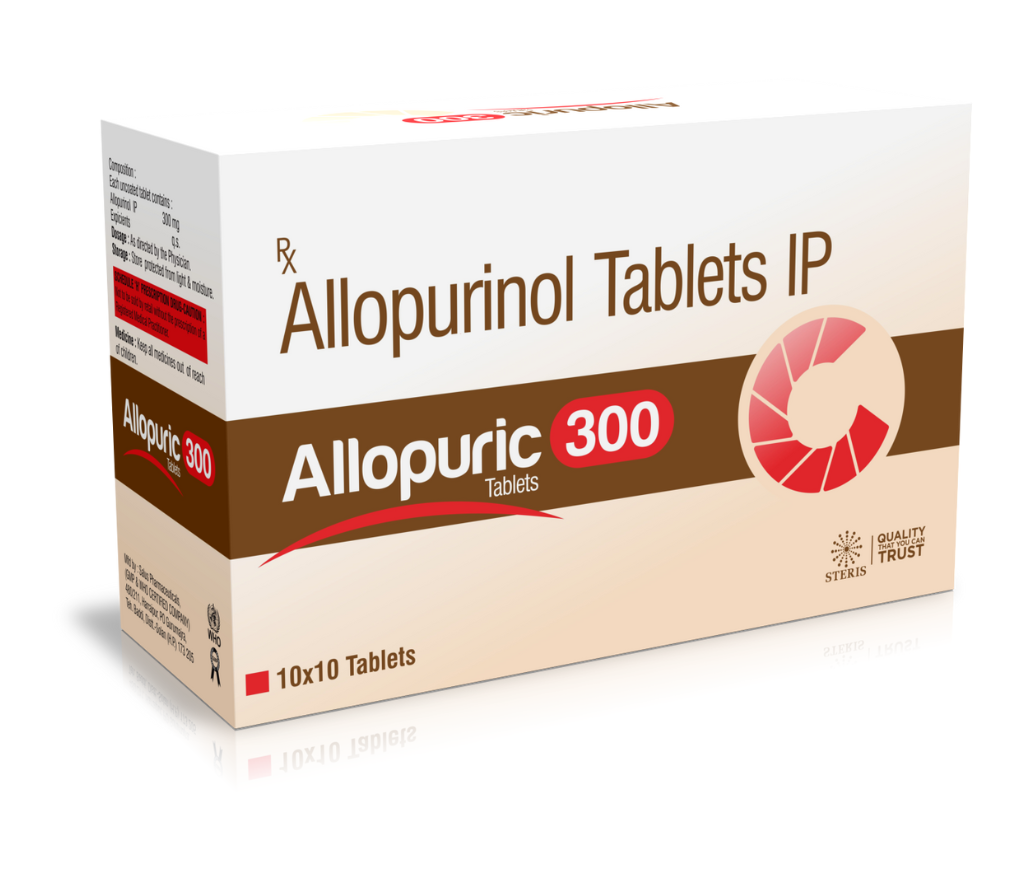


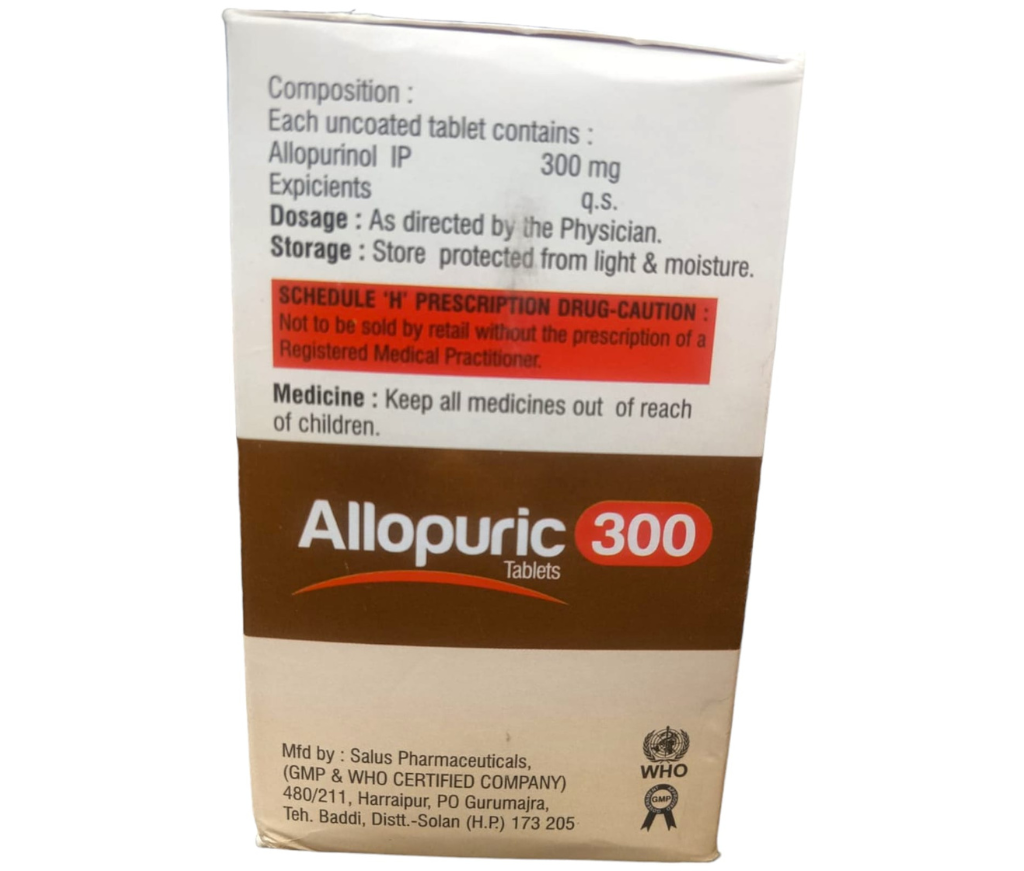
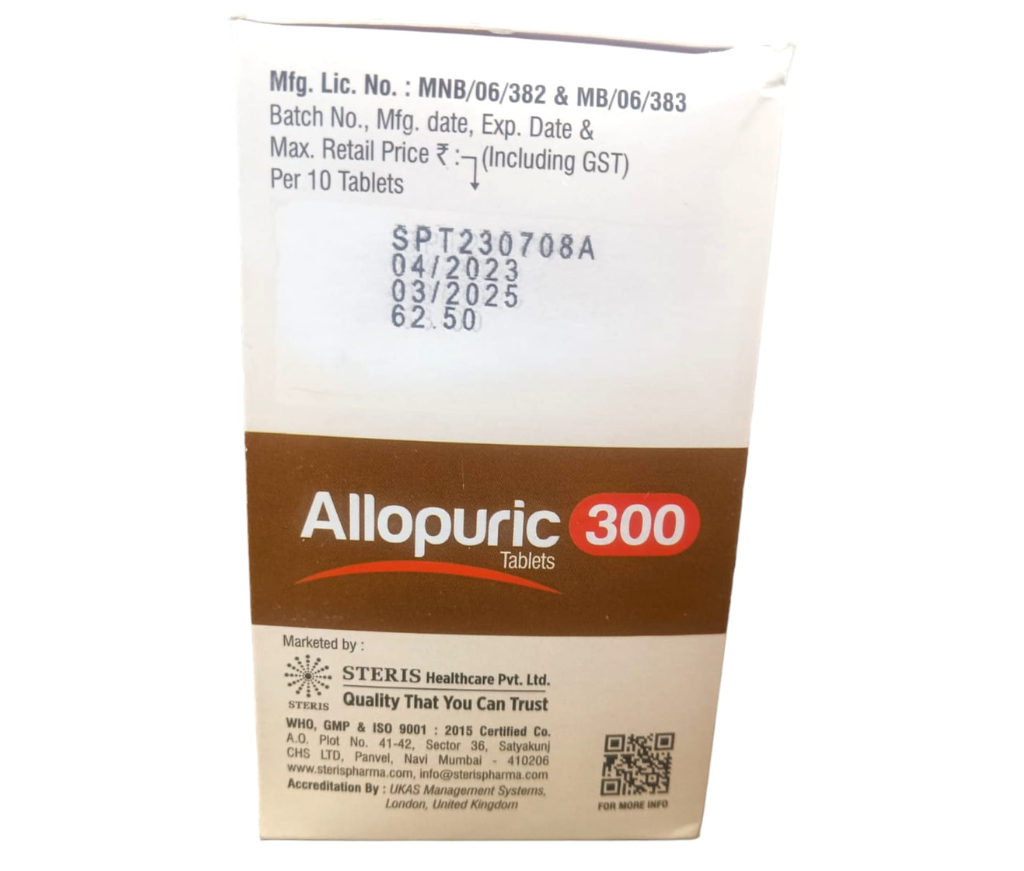
Allopurinol 300 mg | ALLOPURIC 300
 Item requires a valid prescription
Manufactured By Steris Healthcare Pvt Ltd
Composition Allopurinol (300mg)
Rs 36.90
MRP Rs 52.71
(30% OFF)
Includes all taxes
Package SIZE
( For 10 Tablet )

100% Authentic
Products

Free
Shipping*

Products
Return Policy
Description:
What Is Allopurinol 300 mg?
Allopurinol 300 mg refers to a tablet containing 300 milligrams of the active ingredient allopurinol. It belongs to a class of medicines called xanthine oxidase inhibitors.
The medicine works by reducing the body's production of uric acid. Lower uric acid levels can help prevent the formation and accumulation of urate crystals in joints and other tissues. This is particularly important for people with recurrent gout, tophi, certain uric-acid kidney stones, or other medical conditions for which urate-lowering treatment is appropriate.
A key point for patients is that 300 mg is a strength, not necessarily the correct starting dose for everyone. Treatment is commonly started at a lower dose and increased gradually according to the person's uric acid level, kidney function, response, and tolerability.
What Is Allopurinol 300 mg Used For?
Doctors may prescribe allopurinol for several conditions involving excessive uric acid.
1. Gout prevention
The most familiar use is long-term gout management. Gout occurs when urate crystals accumulate in joints, causing episodes of intense pain, swelling, redness, and inflammation.
Allopurinol helps reduce the uric acid that contributes to crystal formation. With consistent treatment, urate levels can be reduced and future gout attacks can become less frequent.
2. High uric acid associated with certain cancer treatments
Allopurinol may also be used when cancer treatment is expected to cause rapid breakdown of tumor cells. This can release large amounts of uric acid and potentially contribute to kidney complications.
3. Certain uric-acid kidney stones
In appropriate patients, allopurinol can help prevent recurrent kidney stones associated with excessive uric acid.
Is 300 mg a Normal Allopurinol Dose?
It can be, but 300 mg should not be assumed to be the appropriate dose for every patient.
The dose is individualized. Doctors commonly start allopurinol at a low dose and gradually increase it while monitoring serum urate and other relevant clinical factors. NHS guidance notes that allopurinol tablets are available in strengths from 100 mg to 300 mg, while some patients may require higher total daily doses under medical supervision. People with kidney or liver disease may require lower doses and closer monitoring.
The ACR supports a treat-to-target approach: rather than automatically keeping everyone on one fixed dose, clinicians adjust urate-lowering therapy to achieve and maintain a serum urate level below 6 mg/dL for patients with gout receiving urate-lowering therapy.
How Should Allopurinol 300 mg Be Taken?
Take allopurinol exactly as prescribed. Depending on the prescribed regimen, it may be taken once daily or divided into multiple doses. It is commonly taken after food with water, and taking it at approximately the same time each day can help with adherence.
Do not increase the dose yourself because your uric acid remains high, and do not take an extra tablet to compensate for a missed dose.
If you forget a dose, general guidance is to take it when remembered unless it is nearly time for the next dose. Do not double the next dose.
How Long Does Allopurinol 300 mg Take to Work?
Allopurinol is not an instant painkiller.
It gradually lowers uric acid, and the full benefit can take weeks or several months. Some people experience more gout flares during the early phase of urate-lowering treatment. This does not necessarily mean that the medicine is failing.
Doctors may prescribe temporary anti-inflammatory treatment, such as colchicine or an NSAID, when initiating urate-lowering therapy to reduce the risk or impact of early flares. The ACR recommends anti-inflammatory prophylaxis for at least 3–6 months when starting urate-lowering therapy, with continued treatment when clinically appropriate.
Does Allopurinol 300 mg Stop a Gout Attack?
No. Allopurinol is primarily a preventive treatment, not a fast-acting medicine for an acute gout attack.
It lowers uric acid over time to reduce future crystal formation and gout attacks. A separate treatment may be needed for acute gout pain and inflammation.
Do not start, stop, or change allopurinol during an acute flare without medical guidance. Your doctor can determine the appropriate timing and treatment strategy for your individual circumstances.
Allopurinol 300 mg Side Effects
Many people tolerate allopurinol well, but side effects can occur.
Commonly reported effects include:
- Nausea
- Diarrhea
- Drowsiness
- Stomach discomfort
Taking the medicine with or shortly after food may help with nausea for some people.
Important warning: skin rash
A rash while taking allopurinol should not be ignored.
Rare but potentially severe reactions can involve rash, blistering, peeling skin, fever, mouth or eye involvement, facial swelling, or flu-like symptoms. Severe hypersensitivity reactions require urgent medical attention.
If a new rash develops after starting allopurinol, contact a healthcare professional promptly rather than continuing to self-manage the symptom.
Who Should Be Especially Careful With Allopurinol?
Tell your doctor before taking allopurinol if you have:
- Kidney disease
- Liver disease
- A previous reaction to allopurinol
- Other significant medical conditions
- A history of medication allergies
- Pregnancy or plans for pregnancy
- A current list of prescription medicines, OTC medicines, vitamins, or supplements
People with kidney or liver problems may require individualized dosing and closer monitoring.
The ACR also recommends considering HLA-B*5801 testing before starting allopurinol in certain higher-risk populations, including people of Southeast Asian descent and African American patients.
Allopurinol 300 mg Drug Interactions
Allopurinol can interact with other medicines. Patients should tell their doctor or pharmacist about everything they take.
Important examples include certain:
- Blood thinners
- Antibiotics
- Immunosuppressive medicines
- Diuretics
- Blood-pressure medicines
NHS guidance specifically advises patients to discuss medicines such as warfarin, some antibiotics, immunosuppressants, diuretics, and certain ACE inhibitors with a healthcare professional.
Never assume that an OTC medicine, herbal product, or supplement is automatically safe to combine with allopurinol.
Allopurinol 300 mg and Kidney Function
Kidney function is an important consideration when prescribing allopurinol.
Because the medicine and its metabolites are handled partly through the kidneys, patients with reduced kidney function may need individualized dosing and monitoring. The goal is to lower urate effectively while maintaining an appropriate safety profile.
This is one reason why copying another person's 300 mg dose is unsafe.
Can You Stop Allopurinol 300 mg Suddenly?
Do not stop long-term allopurinol treatment without discussing it with your doctor.
Stopping treatment can allow uric acid levels to rise again and may increase the risk of recurrent gout problems. NHS guidance recommends medical supervision when changing or stopping treatment.
If you develop a serious suspected allergic reaction, however, seek urgent medical care rather than taking another dose and waiting for symptoms to disappear.
Frequently Asked Questions About Allopurinol 300 mg
1. What is allopurinol 300 mg used for?
Allopurinol 300 mg is a prescription strength used primarily to lower uric acid in conditions such as gout. It may also be prescribed for certain uric-acid kidney stones and for preventing excessive uric acid during specific cancer treatments.
2. Is allopurinol 300 mg a high dose?
It is a commonly available tablet strength, but whether 300 mg is high or appropriate depends on the individual's treatment plan, kidney function, uric acid level, and response.
3. Can I take allopurinol 300 mg every day?
Some patients are prescribed 300 mg daily, but you should take it only according to your clinician's instructions. Do not change your dose independently.
4. How long does allopurinol 300 mg take to lower uric acid?
It works gradually. Uric acid can begin falling as treatment progresses, but the full clinical benefit may take weeks or months.
5. Does allopurinol 300 mg relieve gout pain immediately?
No. Allopurinol is intended primarily for long-term urate lowering and gout prevention rather than immediate relief of an acute attack.
6. Can allopurinol cause a gout flare when you start it?
Yes. Gout attacks can become more frequent during the early period of urate-lowering treatment. Preventive anti-inflammatory therapy may be used when starting treatment.
7. What should I do if I develop a rash while taking allopurinol?
Contact a healthcare professional promptly. A rash can rarely indicate a serious hypersensitivity reaction. Blistering, peeling skin, fever, mouth sores, facial swelling, or breathing difficulty require urgent medical evaluation.
8. Can I take allopurinol 300 mg with food?
Allopurinol can generally be taken after food, with water, according to prescribing instructions.
9. Can I drink alcohol while taking allopurinol?
Alcohol can increase uric acid and may trigger or worsen gout. Discuss your alcohol intake with your healthcare professional.
10. Can I stop allopurinol when my uric acid becomes normal?
Do not stop it on your own. Normal uric acid may reflect that treatment is working; discontinuing therapy can allow urate levels to rise again.
11. Is allopurinol 300 mg safe for people with kidney disease?
It can be used in appropriate patients, but kidney function affects treatment decisions and dosing. The ACR recommends allopurinol as a first-line option even for patients with chronic kidney disease, with appropriate low-dose initiation and adjustment.
12. Can allopurinol 300 mg be used during a gout attack?
Treatment decisions during an acute gout flare should be individualized. Do not start, stop, or alter allopurinol without medical advice.
13. What uric acid level should I aim for while taking allopurinol?
For patients with gout receiving urate-lowering therapy, the ACR recommends a treat-to-target strategy aiming for a serum urate level below 6 mg/dL.
14. Can I take allopurinol with colchicine?
Doctors may prescribe colchicine alongside allopurinol, particularly during the early phase of urate-lowering therapy, to help prevent gout flares. Your prescribed combination should be determined by a healthcare professional.
15. What happens if I miss an allopurinol 300 mg dose?
Take the missed dose when remembered unless it is nearly time for your next dose. Do not double the next dose.
16. Can allopurinol 300 mg damage the liver?
Serious liver problems are uncommon but possible. Yellowing of the skin or eyes, significant fatigue, abdominal symptoms, or other concerning reactions should be reported promptly.
17. Is allopurinol 300 mg available without a prescription?
Allopurinol is a prescription medicine in many markets. Requirements vary by country, so use a licensed pharmacy and follow local prescribing rules.
18. Is allopurinol 300 mg the best medicine for gout?
Allopurinol is recommended as the preferred first-line urate-lowering medicine by the ACR for patients who need urate-lowering therapy, but the best treatment for an individual depends on their medical history, kidney function, other medicines, and treatment response.
19. Can I take allopurinol 300 mg with other medicines?
Potential interactions exist, including with some blood thinners, antibiotics, immunosuppressants, diuretics, and other medicines. Give your doctor or pharmacist a complete list of your medications and supplements.
20. How do I safely buy allopurinol 300 mg?
Use a legitimate pharmacy and obtain the medicine according to your country's prescription requirements. Verify the medicine's packaging, strength, active ingredient, expiry information, and pharmacy credentials. Avoid unverified online sellers or products making unsupported medical claims.
21. Can allopurinol cause constipation?
Yes. Allopurinol can occasionally cause constipation, though it is not among its most common side effects.
22. Alopurinolis 300?
If you mean allopurinol 300 mg: yes, constipation can occur occasionally, but it’s uncommon.
Available Substitutes