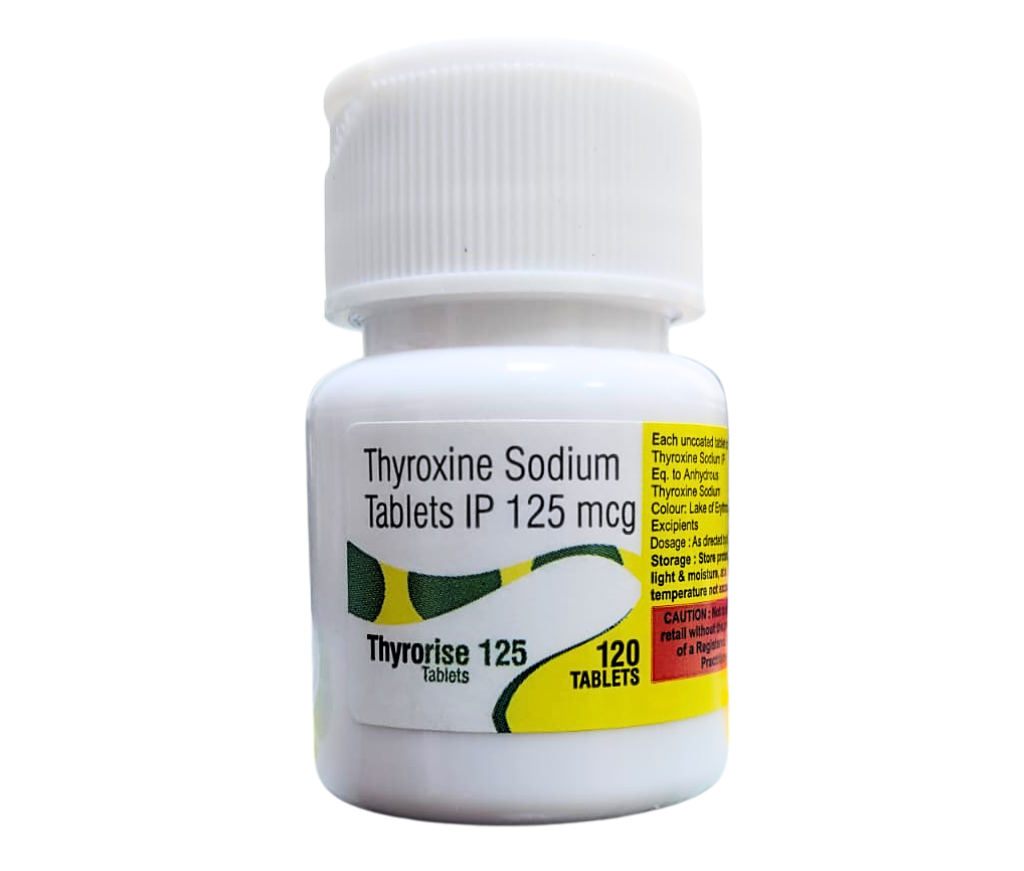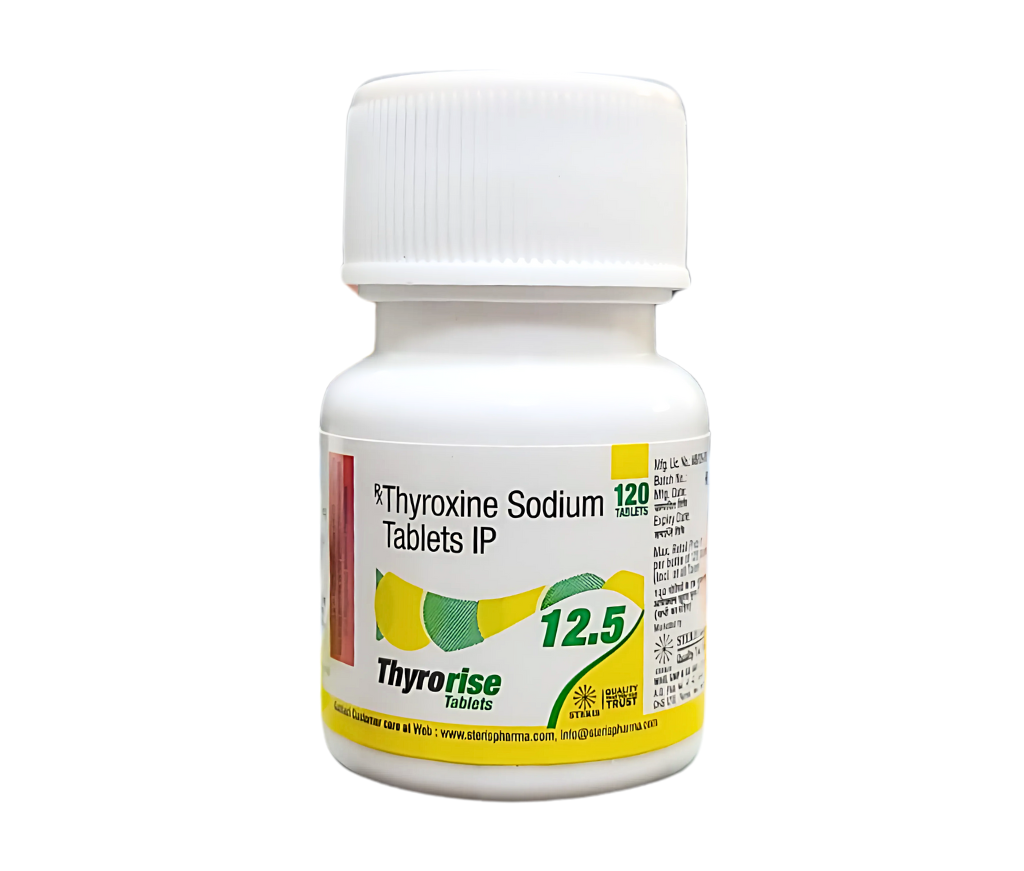



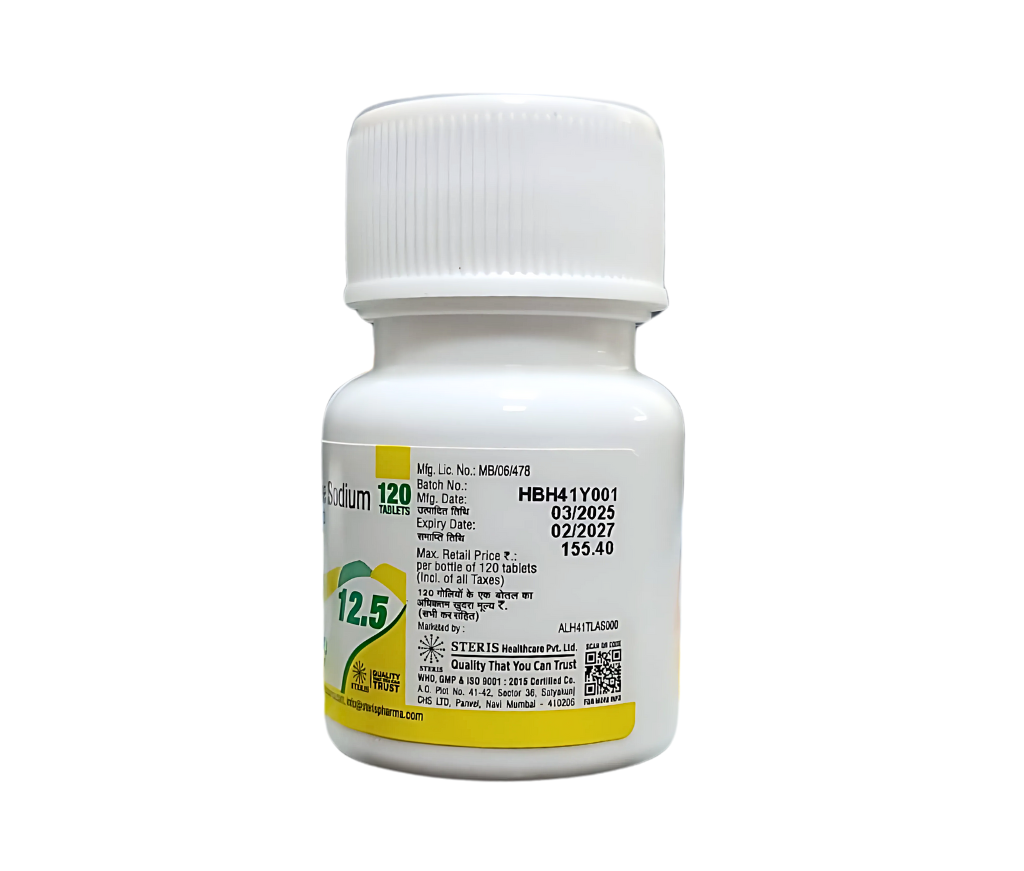
THYRORISE 12.5
Manufactured By Steris Healthcare Pvt Ltd
Composition Thyroxine Sodium (12.5mcg)
Rs 101.98
MRP Rs 145.69
(30% OFF)
Includes all taxes
Package SIZE
( 120 Tabs Pack )

100% Authentic
Products

Free
Shipping*

Products
Return Policy
Description:
Thyroxine sodium tablets are oral thyroid hormone replacement medicines containing levothyroxine sodium, a synthetic form of thyroxine (T4), the hormone naturally produced by the thyroid gland. They are primarily prescribed to replace insufficient thyroid hormone in people with hypothyroidism.
Hypothyroidism occurs when the thyroid gland does not produce enough thyroid hormone for the body's needs. Because thyroid hormone affects metabolism and the function of many organs, inadequate levels can contribute to symptoms such as tiredness, feeling unusually cold, constipation, dry skin, and difficulty concentrating.
Levothyroxine is designed to restore the body's thyroid hormone supply. The appropriate dose is individualized according to factors such as age, body weight, cardiovascular health, other medicines, the cause of hypothyroidism, and laboratory results.
For anyone searching for thyroxine sodium tablet uses and benefits, the most important distinction is that this is a prescription thyroid hormone replacement medicine, not a general vitamin, energy supplement, or weight-loss treatment.
What Are Thyroxine Sodium Tablets Used For?
The principal use of thyroxine sodium tablets is thyroid hormone replacement therapy for hypothyroidism. Official prescribing information includes primary, secondary, and tertiary hypothyroidism, including congenital and acquired forms.
Depending on the clinical situation, levothyroxine may also be prescribed as part of TSH suppression therapy in certain patients with well-differentiated thyroid cancer, alongside appropriate cancer treatment.
Common medical uses include:
-
Primary hypothyroidism
-
Hypothyroidism caused by Hashimoto's thyroiditis
-
Hypothyroidism after thyroid surgery
-
Hypothyroidism following certain radiation treatments
-
Some forms of congenital hypothyroidism
-
Certain pituitary or hypothalamic causes of thyroid hormone deficiency
-
TSH suppression in selected thyroid cancer patients
The exact indication should always be established by a healthcare professional using the patient's medical history, symptoms, thyroid function tests, and clinical examination.
How Do Thyroxine Sodium Tablets Work?
Thyroxine sodium tablets supply synthetic T4, which is chemically equivalent to the thyroxine produced by the human thyroid gland.
After administration, T4 can be converted in body tissues into triiodothyronine (T3), the more biologically active thyroid hormone. Together, thyroid hormones help regulate metabolic activity and support the normal function of multiple body systems.
When a person's thyroid cannot produce enough hormone, levothyroxine replaces the missing hormone. This can help normalize thyroid hormone levels and reduce symptoms associated with hypothyroidism.
The American Thyroid Association identifies synthetic thyroxine taken once daily as an effective treatment for most people with hypothyroidism.
Key Benefits of Thyroxine Sodium Tablets
1. Replaces missing thyroid hormone
The primary benefit is straightforward: levothyroxine provides the thyroid hormone that the body is unable to produce in sufficient quantities.
For appropriately diagnosed hypothyroidism, restoring thyroid hormone levels can improve the symptoms and physiological effects of hormone deficiency.
2. Helps restore normal thyroid function
Although tablets do not repair an underactive thyroid gland, appropriate hormone replacement can bring thyroid hormone levels toward the desired range.
Treatment is adjusted according to laboratory results, particularly TSH and/or T4, along with the patient's clinical response.
3. Can improve symptoms of hypothyroidism
When symptoms are caused by thyroid hormone deficiency, effective replacement therapy may help improve problems such as fatigue, cold intolerance, constipation, dry skin, and slowed thinking.
However, not every symptom of tiredness or weight change is caused by hypothyroidism. Thyroid hormone should therefore be used only when medically indicated.
4. Supports normal metabolism
Thyroid hormone plays an important role in regulating metabolism. Correcting a deficiency helps restore physiological thyroid hormone activity throughout the body.
5. Provides convenient once-daily treatment
Levothyroxine tablets are generally taken once daily, making long-term thyroid hormone replacement relatively straightforward when taken consistently. Current prescribing information recommends taking the tablet on an empty stomach, typically 30–60 minutes before breakfast.
How to Take Thyroxine Sodium Tablets
Correct administration matters because food, supplements, and other medicines can affect levothyroxine absorption.
For many patients, the standard approach is the following:
-
Take the prescribed dose once daily.
-
Take it on an empty stomach.
-
Take it approximately 30–60 minutes before breakfast with water.
-
Take medicines known to interfere with absorption at an appropriate interval; prescribing information recommends separating certain interacting medicines by at least four hours.
-
Take the medicine consistently at approximately the same time each day.
-
Follow the specific instructions provided with your prescription and product.
Current U.S. prescribing information also recommends considering regular exposure to certain foods that may affect absorption and monitoring thyroid function appropriately.
Thyroxine Sodium Tablets: Dosage
There is no single correct dose for everyone.
Levothyroxine dosage is individualized. The starting and maintenance doses can depend on the following:
-
Age
-
Body weight
-
Severity and duration of hypothyroidism
-
Cardiovascular status
-
Pregnancy status
-
Other medications
-
Other medical conditions
-
Whether the patient has primary or central hypothyroidism
-
TSH and thyroid hormone results
Older adults and people with underlying cardiovascular disease may require a lower starting dose because excessive thyroid hormone can increase cardiovascular risk.
Available tablet strengths vary by manufacturer and market. One current U.S. product label lists strengths ranging from 25 mcg to 300 mcg.
Do not select a thyroxine dose based on an online article. Taking too much or too little thyroid hormone can cause problems, and dose changes should be made by the prescribing clinician.
How Long Does Thyroxine Take to Work?
Levothyroxine does not usually produce its complete therapeutic effect immediately.
The current prescribing information states that peak therapeutic effect may not be achieved for approximately 4–6 weeks. Thyroid function tests are therefore commonly used after an appropriate interval to determine whether the dose needs adjustment.
Some symptoms may improve sooner, while others can take longer. The response depends on the severity and duration of hypothyroidism and the individual's overall health.
Thyroxine Sodium Tablets Side Effects
When the dose is appropriate, levothyroxine is generally well tolerated. However, many adverse effects are associated with excess thyroid hormone, which can occur if the dose is too high.
Possible symptoms of excessive thyroid hormones include the following:
-
Fast or irregular heartbeat
-
Palpitations
-
Nervousness or anxiety
-
Tremors
-
Difficulty sleeping
-
Increased sweating
-
Heat intolerance
-
Increased appetite
-
Unexplained weight loss
-
Muscle weakness
-
Headache
-
Diarrhea
-
Menstrual changes
The prescribing information warns that overtreatment can produce serious or potentially life-threatening toxicity. Cardiovascular effects, including atrial fibrillation, are an important concern, particularly in older adults and people with underlying heart disease.
If you develop significant chest pain, severe shortness of breath, fainting, or a markedly rapid or irregular heartbeat while taking thyroid hormone, seek urgent medical assessment.
Important Warning: Thyroxine Is Not a Weight-Loss Medicine
One of the most important points for consumers searching to buy thyroxine sodium tablets is that levothyroxine should not be used for weight loss in people with normal thyroid function.
Official labeling specifically warns against using thyroid hormones to treat obesity or promote weight reduction. Excessive doses can cause serious or life-threatening toxicity.
A person with hypothyroidism may lose weight as thyroid function is brought back toward normal, but that is different from using thyroid hormone as a weight-loss drug.
Thyroxine Sodium Tablets and Drug Interactions
Several medicines, supplements, and foods can interfere with levothyroxine absorption or alter thyroid hormone requirements.
Examples include:
-
Calcium-containing supplements
-
Iron supplements
-
Certain antacids
-
Some cholesterol-lowering medicines
-
Certain acid-reducing medicines
-
Some other prescription medicines
Because interactions vary, patients should provide their healthcare professional with a complete list of prescription medicines, over-the-counter products, vitamins, and supplements.
Biotin is also important. Current prescribing information advises stopping biotin-containing supplements at least two days before assessment of TSH or T4 because biotin can interfere with certain laboratory tests.
Thyroxine Sodium Tablets During Pregnancy
Thyroid hormone requirements can change during pregnancy, and adequately treated hypothyroidism is important for maternal health and fetal development.
People who are pregnant, planning pregnancy, or have recently become pregnant should contact their healthcare professional promptly if they take levothyroxine. The dose may require adjustment, and thyroid function needs appropriate monitoring.
Do not stop prescribed thyroid replacement without medical advice.
Buying Thyroxine Sodium Tablets: What Should You Check?
If your intent is transactional and you are looking to buy thyroxine sodium tablets, safety and authenticity should come before price.
Before purchasing, check:
-
Active ingredient: levothyroxine sodium
-
Strength: verify the prescribed microgram strength
-
Dosage form: oral tablet
-
Manufacturer: use a legitimate pharmaceutical manufacturer
-
Batch/lot information: confirm that packaging is traceable
-
Expiry date: never use expired medicine
-
Packaging: avoid products with damaged or suspicious packaging
-
Storage instructions: follow the product label
-
Prescription requirements: follow applicable local regulations
-
Pharmacy source: purchase through a legitimate, authorized pharmacy or healthcare provider
Do not substitute one strength for another because the tablets appear similar. Levothyroxine is a narrow-therapeutic-index medicine for which consistent dosing and appropriate monitoring matter.
The American Thyroid Association also notes that because potency can vary between preparations and manufacturers, remaining with the same product/manufacturer when possible can be helpful; if a product is changed, healthcare professionals may recommend additional thyroid-function monitoring.
What Happens If You Miss a Dose?
If you forget a dose, follow the instructions supplied with your particular medicine or ask your pharmacist or doctor.
Do not routinely double doses without professional guidance. Because levothyroxine has a long biological half-life, the appropriate response to a missed dose can differ depending on the circumstances.
If missed doses happen frequently, discuss practical ways to improve adherence with your healthcare professional.
Who Should Use Thyroxine Sodium Tablets Carefully?
Extra medical supervision may be needed for people with:
-
Heart disease
-
Arrhythmias
-
Older age
-
Long-standing severe hypothyroidism
-
Adrenal insufficiency
-
Pregnancy
-
Diabetes
-
Other endocrine disorders
Uncorrected adrenal insufficiency is listed as a contraindication in current prescribing information.
Thyroxine Sodium Tablets: Expert Summary
Thyroxine sodium tablets are an established treatment for hypothyroidism because they replace the body's missing thyroid hormone with synthetic T4. Their principal benefits include restoring thyroid hormone levels, improving symptoms associated with deficiency, and supporting normal metabolic function.
The medicine works best when taken consistently and correctly. Taking it on an empty stomach, maintaining appropriate separation from interacting medicines or supplements, and attending scheduled thyroid-function tests can help optimize treatment.
Most importantly, the correct dose is individual, and too much thyroid hormone can be harmful. Thyroxine should never be used as a self-directed weight-loss treatment. For anyone purchasing or considering thyroxine sodium tablets, a prescription from a qualified healthcare professional and a reliable pharmacy source are essential components of safe use.
Frequently Asked Questions
1. What are thyroxine sodium tablets used for?
Thyroxine sodium tablets contain levothyroxine, a synthetic thyroid hormone used primarily to treat hypothyroidism by replacing insufficient thyroid hormone.
2. What is thyroxine sodium?
Thyroxine sodium is the sodium salt form of levothyroxine, a synthetic version of the thyroid hormone T4.
3. Are thyroxine sodium tablets the same as levothyroxine?
Yes. Levothyroxine sodium is the active ingredient commonly referred to as synthetic thyroxine or T4.
4. What are the main benefits of thyroxine sodium tablets?
The main benefit is replacement of deficient thyroid hormone. Appropriate treatment can help restore normal thyroid hormone levels and improve symptoms associated with hypothyroidism.
5. How should thyroxine sodium tablets be taken?
They are generally taken once daily on an empty stomach, approximately 30–60 minutes before breakfast, with water. Follow your prescription and product-specific instructions.
6. Can I take thyroxine sodium tablets with food?
Food can affect levothyroxine absorption. Taking the tablet consistently on an empty stomach before breakfast helps maintain predictable absorption.
7. Can I take calcium or iron with thyroxine?
Calcium and iron can interfere with levothyroxine absorption. Current prescribing information recommends separating levothyroxine from medicines known to interfere with absorption by at least four hours.
8. What are the side effects of thyroxine sodium tablets?
Side effects are often related to excessive thyroid hormone levels and can include palpitations, rapid heartbeat, tremor, anxiety, sweating, heat intolerance, insomnia, diarrhea, and weight loss.
9. Can thyroxine sodium tablets cause weight loss?
Thyroxine can restore weight toward normal in someone whose weight gain resulted from untreated hypothyroidism. However, it should not be used as a weight-loss medicine in people with normal thyroid function.
10. How long does thyroxine take to work?
The full therapeutic effect may take approximately 4–6 weeks. Thyroid function testing is used to assess whether the dose is appropriate.
11. Do I need a blood test while taking thyroxine?
Yes. TSH and/or T4 levels are commonly monitored to determine whether treatment is adequately replacing thyroid hormone and whether the dose needs adjustment.
12. Can I stop thyroxine sodium tablets when I feel better?
Do not stop prescribed thyroid hormone without speaking with your healthcare professional. Hypothyroidism commonly requires ongoing replacement therapy.
13. Can I take thyroxine sodium tablets during pregnancy?
Levothyroxine is commonly used to treat hypothyroidism during pregnancy, but thyroid hormone requirements can change. Pregnant patients should have appropriate medical monitoring and should not change their dose without professional advice.
14. Is thyroxine sodium safe for older adults?
It can be used in older adults when appropriately prescribed. However, older patients and those with cardiovascular disease may need lower starting doses because excessive thyroid hormone can increase cardiac risks.
15. Can I buy thyroxine sodium tablets without a prescription?
Prescription and dispensing requirements vary by country and product. Because levothyroxine requires individualized dosing and monitoring, it should be obtained through a legitimate healthcare and pharmacy channel.
16. What strength of thyroxine sodium tablets should I buy?
Buy only the strength prescribed by your healthcare professional. Levothyroxine doses are individualized, and changing the strength without medical advice can result in undertreatment or excessive thyroid hormone exposure.
17. Can I switch between thyroxine brands?
Do not switch products casually. Because consistent thyroid hormone exposure is important, tell your healthcare professional if your manufacturer or product changes. Additional thyroid testing may be appropriate after some changes.
18. Can thyroxine sodium tablets be used for thyroid cancer?
Levothyroxine can be used for TSH suppression in selected patients with well-differentiated thyroid cancer, generally as part of specialist-directed management.
19. Does thyroxine sodium contain T3?
Thyroxine sodium/levothyroxine is synthetic T4, not T3. The body can convert T4 into the active thyroid hormone T3 in peripheral tissues.
20. What should I do if I experience a fast heartbeat while taking thyroxine?
A fast or irregular heartbeat can indicate excessive thyroid hormone or another medical problem. Contact your healthcare professional promptly; severe symptoms such as chest pain, fainting, or serious breathing difficulty require urgent medical evaluation.
21. Can I take vitamins with thyroxine sodium tablets?
Some vitamins and mineral supplements can interfere with levothyroxine absorption. In particular, calcium and iron should generally be separated from levothyroxine. Tell your pharmacist or doctor about all supplements you use.
22. Does biotin affect thyroxine blood tests?
Biotin-containing supplements can interfere with some thyroid laboratory tests. Current prescribing information advises stopping biotin and biotin-containing supplements at least two days before TSH or T4 assessment, unless your healthcare professional advises otherwise.
23. Is thyroxine sodium a vitamin?
No. Thyroxine sodium is a thyroid hormone medicine, not a vitamin or nutritional supplement.
24. What is the most important safety advice for thyroxine sodium tablets?
Take exactly the prescribed dose, take it consistently, avoid using it for weight loss, and have thyroid function monitored as recommended. Excessive doses can cause serious cardiovascular and other complications.