


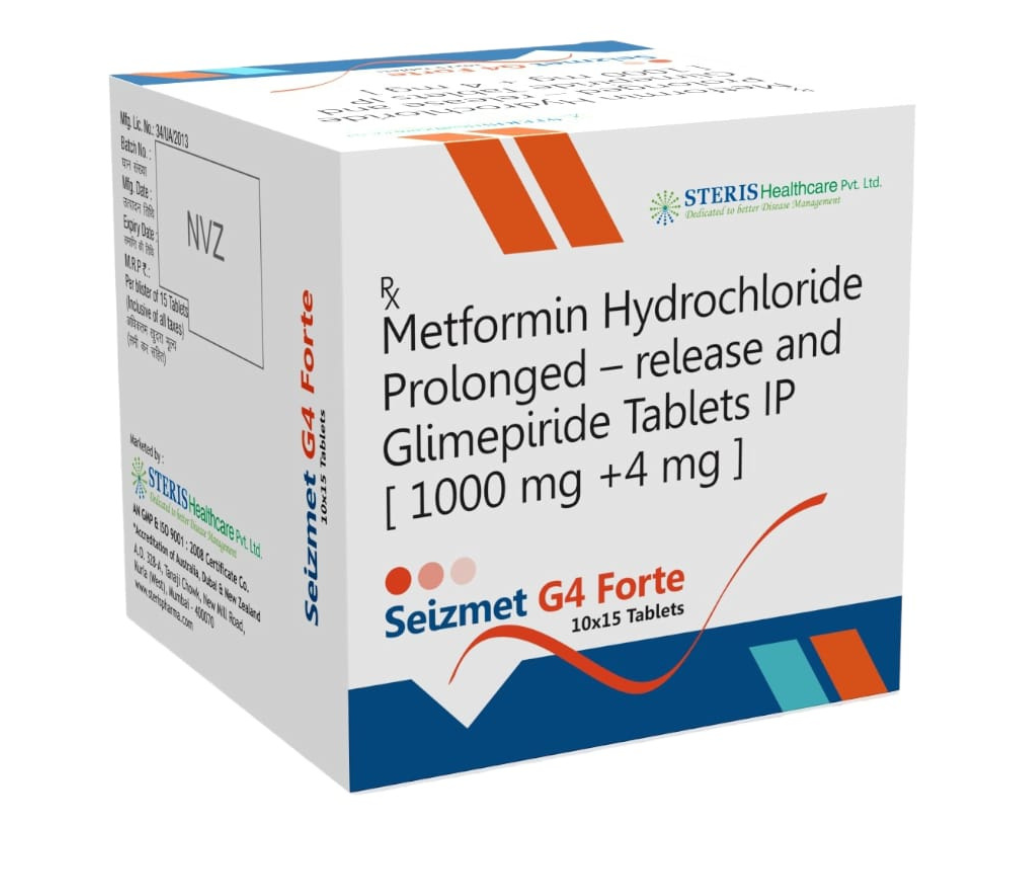

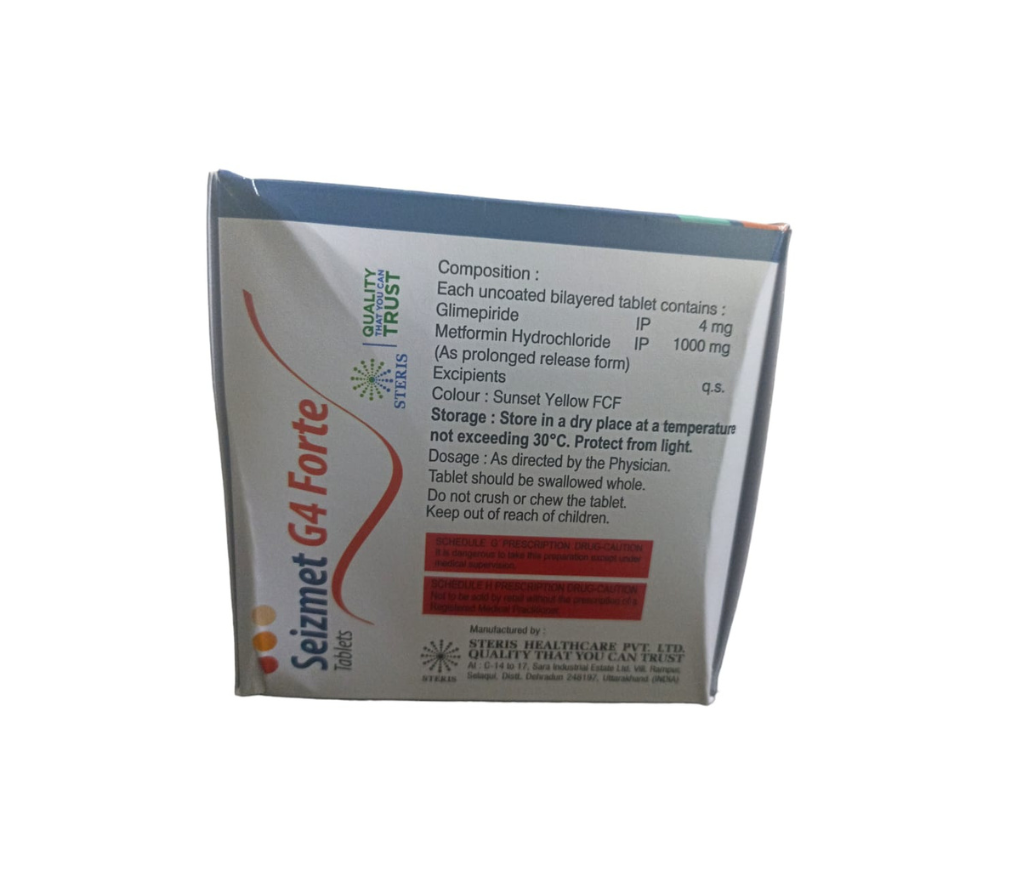
SEIZMET G4 FORTE
 Item requires a valid prescription
Manufactured By Steris Healthcare Pvt Ltd
Composition Glimepiride (4mg), Metformin (1000mg)
Rs 114.84
MRP Rs 164.06
(30% OFF)
Includes all taxes
Package SIZE
( For 15 Tablets )

100% Authentic
Products

Free
Shipping*

Products
Return Policy
Description:
If you are searching for glimepiride metformin, you are likely looking for information about this commonly prescribed combination for managing type 2 diabetes. Glimepiride and metformin work through different mechanisms to help lower elevated blood glucose. Glimepiride stimulates the pancreas to release insulin, while metformin reduces glucose production by the liver and improves the body's sensitivity to insulin.
This guide explains glimepiride-metformin uses, benefits, side effects, how to take it, precautions, and buying considerations, with a focus on practical information for patients researching a product before purchase.
What Is Glimepiride Metformin?
Glimepiride/metformin is a combination of two oral antidiabetic medicines:
-
Glimepiride – a sulfonylurea that stimulates the pancreas to release insulin.
-
Metformin – a biguanide that decreases glucose production by the liver and improves insulin sensitivity.
Combining medicines with different mechanisms can provide better blood-glucose control for some people when one medicine alone is insufficient.
The exact strength varies between products. For example, current Indian pharmacy listings include combinations such as glimepiride 0.5mg + metformin 500mg, glimepiride 2mg + metformin 500mg, and glimepiride 4mg + metformin 500mg. Therefore, always check the strength printed on your prescription and product packaging.
Glimepiride Metformin Uses
1. Treatment of Type 2 Diabetes
The primary use of glimepiride metformin is to help control blood glucose in adults with type 2 diabetes mellitus when prescribed as part of an appropriate treatment plan. It is generally used together with a healthy diet and regular physical activity.
It is not intended to treat type 1 diabetes, because glimepiride requires the pancreas to produce insulin and type 1 diabetes involves little or no natural insulin production.
2. When One Diabetes Medicine Is Not Enough
Healthcare professionals may use two medicines when blood glucose is not adequately controlled with a single medicine or when a combination is otherwise clinically appropriate. Oral diabetes medicines are frequently combined because different medicines can target blood glucose through different pathways.
3. Maintaining Long-Term Blood Sugar Control
Consistent blood glucose management is important because uncontrolled diabetes can contribute to complications affecting the heart, kidneys, eyes, nerves, and other organs. Medication is only one part of diabetes management; nutrition, physical activity, monitoring, and regular medical review also matter.
How Does Glimepiride Metformin Work?
Understanding the two ingredients makes the combination easier to understand.
How Glimepiride Works
Glimepiride encourages the pancreas to release more insulin. Insulin helps move glucose from the bloodstream into cells, lowering blood glucose levels.
Because glimepiride increases insulin release, hypoglycemia (low blood sugar) is an important potential risk, particularly when meals are missed or delayed, alcohol is consumed, physical activity is unusually strenuous, or other glucose-lowering medicines are being used.
How Metformin Works
Metformin primarily reduces the amount of glucose produced by the liver and improves the body's response to insulin. This helps the body use available insulin more effectively.
The combination therefore provides complementary blood-glucose-lowering effects.
Key Benefits of Glimepiride Metformin
When appropriately prescribed, glimepiride metformin can provide several practical benefits.
Better Blood Glucose Control
The combination can help lower elevated blood glucose in adults with type 2 diabetes when diet, exercise, and/or previous therapy do not provide adequate control.
Two Different Mechanisms in One Treatment
Glimepiride increases insulin release, while metformin reduces hepatic glucose production and improves insulin sensitivity. Using complementary mechanisms may provide more effective glucose control for appropriate patients.
Convenient Combination Therapy
A combination tablet can simplify a treatment regimen when a patient has been prescribed both active ingredients. In some cases, people already controlled on separate glimepiride and metformin treatment may be switched to a corresponding combination product under medical supervision.
Helps Support Long-Term Diabetes Management
Maintaining appropriate blood glucose levels is an important part of reducing the risk of diabetes-related complications. However, medication should be combined with the lifestyle measures recommended by your healthcare professional.
How to Take Glimepiride Metformin
Take glimepiride metformin exactly as prescribed. Current product information for commonly marketed formulations advises taking these tablets with or after food, which can also help reduce stomach-related discomfort.
Swallow the tablet whole unless your specific product instructions say otherwise. Do not independently increase the dose because your blood sugar reading is high.
Try to take your medicine at the same time each day and follow your prescribed diet and exercise plan.
If you miss a dose, follow the instructions supplied with your particular product or contact your pharmacist. Do not automatically take a double dose to compensate.
Glimepiride Metformin Side Effects
Like all medicines, glimepiride metformin can cause side effects.
Common Side Effects
Current product information reports possible side effects, including:
-
Nausea
-
Diarrhea
-
Abdominal pain
-
Loss of appetite
-
Vomiting
-
Headache
-
Dizziness
-
Flatulence or gas
-
Altered taste
The exact side-effect profile can vary according to the formulation, dose, and individual patient.
Digestive symptoms are particularly associated with metformin and may improve as the body adjusts to treatment.
Hypoglycemia or Low Blood Sugar
One of the most important risks associated with glimepiride is hypoglycemia. Warning symptoms may include:
-
Sweating
-
Shaking
-
Hunger
-
Dizziness
-
Fast heartbeat
-
Anxiety
-
Irritability
-
Weakness or confusion
Low blood sugar can occur more readily if you skip or delay meals, drink alcohol, exercise excessively, or combine the medicine with other glucose-lowering treatments.
If you experience symptoms of low blood sugar, follow the hypoglycemia-management instructions provided by your healthcare professional.
Rare but Serious Risks
Metformin-containing combinations carry a rare but potentially serious risk of lactic acidosis, particularly in people with certain medical conditions or risk factors. Warning symptoms can include persistent nausea or vomiting, stomach pain, unusual weakness, or deep/rapid breathing. These symptoms require urgent medical assessment.
Long-term metformin therapy can also be associated with vitamin B12 deficiency in some people. Your healthcare professional may decide whether periodic monitoring is appropriate based on your treatment and risk factors.
Who Should Be Careful With Glimepiride Metformin?
Before starting this combination, tell your doctor if you have:
-
Kidney disease
-
Liver disease
-
Heart-related conditions
-
A history of severe hypoglycemia
-
Heavy or frequent alcohol consumption
-
Other medical conditions
-
Allergies to glimepiride, metformin, or related medicines
Kidney function is particularly important when metformin is used. Your healthcare professional may evaluate kidney function before and during treatment.
Tell your doctor about all prescription medicines, over-the-counter medicines, supplements, and herbal products you take because other medicines can affect blood glucose or increase the risk of adverse effects.
Glimepiride, Metformin, and Alcohol
Alcohol deserves particular attention. Combining alcohol with glimepiride and metformin may increase the risk of low blood sugar and can also increase concerns related to metformin-associated lactic acidosis.
If you drink alcohol, discuss safe limits with your healthcare professional rather than assuming that occasional or heavy drinking is harmless with this medicine.
Glimepiride Metformin Price and Buying Information
If your doctor has prescribed glimepiride-metformin and you are searching for glimepiride-metformin price, online availability, or a lower-cost alternative, compare the exact strength and composition before purchasing.
Current Indian listings updated in August 2026 show considerable variation in prices between brands. For example, listings for glimepiride 2mg + metformin 500mg include products priced around ₹40–₹121 per strip depending on the brand and seller, while lower-strength combinations can have different prices.
These prices are examples of current listings rather than a universal market price. Discounts, stock, pack size, location, and pharmacy can change the final amount.
What to Check Before Buying
When purchasing glimepiride/metformin, verify the following:
-
Glimepiride strength
-
Metformin strength
-
Immediate-release or modified/extended-release formulation, if applicable
-
Manufacturer
-
Batch number
-
Expiry date
-
Packaging condition
-
Prescription requirements
-
Pharmacy authenticity
-
Current price and pack size
Do not substitute a different strength merely because it costs less. If a pharmacist recommends another brand, confirm that its composition and dosage form are appropriate for your prescription.
Glimepiride Metformin: Who Is It For?
This medicine is generally intended for adults with type 2 diabetes for whom the combination is clinically appropriate. It is not a general-purpose supplement or a medicine for occasional high blood sugar after a meal.
Your treatment should be individualized according to your blood glucose targets, other medicines, kidney function, lifestyle, and medical history.
If your blood sugar remains consistently high despite taking your prescribed medicine, speak with your doctor rather than taking additional tablets.
Frequently Asked Questions
1. What is glimepiride metformin used for?
Glimepiride metformin is used to help control blood glucose in adults with type 2 diabetes, usually alongside diet and exercise. Glimepiride increases insulin release, while metformin reduces glucose production by the liver and improves insulin sensitivity.
2. What are the main benefits of glimepiride metformin?
The main benefit is improved blood glucose control through two complementary mechanisms. Glimepiride stimulates insulin secretion, while metformin reduces hepatic glucose production and improves insulin sensitivity.
3. What are the common side effects of glimepiride metformin?
Commonly reported side effects include nausea, diarrhea, abdominal pain, vomiting, loss of appetite, headache, dizziness, gas, and altered taste. Low blood sugar is also an important potential adverse effect because of glimepiride.
4. Can glimepiride metformin cause low blood sugar?
Yes. Glimepiride can cause hypoglycemia, particularly if you skip meals, consume alcohol, exercise more than usual, or take other diabetes medicines that lower blood glucose. Recognizing symptoms such as sweating, shaking, hunger, dizziness, and a rapid heartbeat is important.
5. Can I take glimepiride metformin on an empty stomach?
Many currently marketed formulations are directed to be taken with or after food. Follow the instructions on your specific prescription and product label.
6. Is glimepiride metformin used for type 1 diabetes?
No. Glimepiride is intended for people whose bodies still produce insulin and is not used to treat type 1 diabetes.
7. Can I stop glimepiride metformin when my blood sugar becomes normal?
Do not stop the medicine without speaking with your doctor. A normal blood glucose reading may indicate that your treatment is working. Stopping treatment without medical guidance can cause blood glucose to rise again.
8. Can I drink alcohol while taking glimepiride metformin?
Alcohol can increase the risk of hypoglycemia and may increase concerns regarding lactic acidosis associated with metformin. Discuss alcohol consumption with your healthcare professional.
9. Can I buy glimepiride metformin online?
Availability varies by pharmacy and brand. Because it is a prescription diabetes medicine, purchase it through a legitimate pharmacy and verify the exact glimepiride + metformin strength, manufacturer, expiry date, and prescription requirements before buying.
10. What should I do if my blood sugar is still high while taking glimepiride metformin?
Do not take an extra tablet unless your doctor specifically instructs you to do so. Persistent high blood glucose may mean that your treatment, diet, activity level, or another medical factor needs reassessment. Contact your healthcare professional for individualized advice.
Conclusion
Glimepiride and metformin is an established combination treatment for appropriate adults with type 2 diabetes. Its two ingredients work differently: glimepiride increases insulin release, while metformin reduces liver glucose production and improves insulin sensitivity. This complementary action can help improve blood glucose control when prescribed appropriately.
For patients researching or purchasing the product, the most important factors are the exact strength, formulation, prescription suitability, manufacturer, authenticity, expiry date, and pharmacy reliability. Current August 2026 Indian listings show that prices can vary substantially between brands, so comparing the exact composition and pack size is more useful than choosing solely on discount.

