


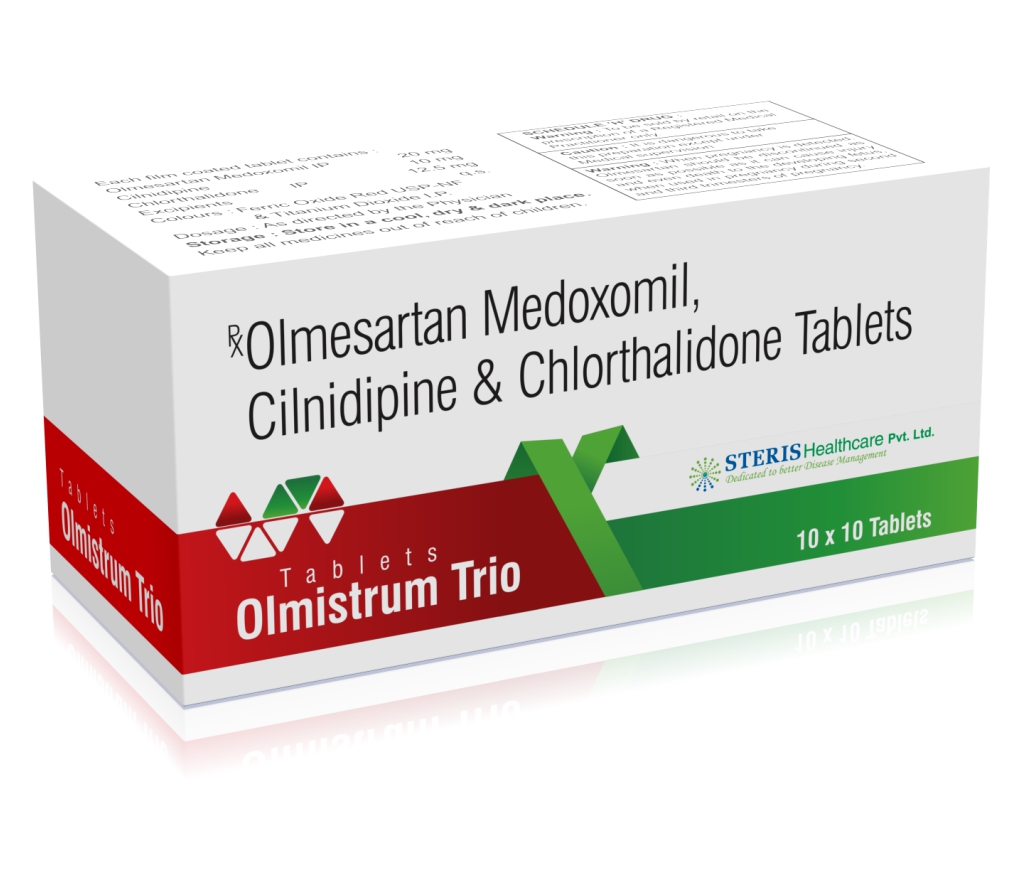
OLMISTRUM TRIO
 Item requires a valid prescription
Manufactured By Steris Healthcare Pvt Ltd
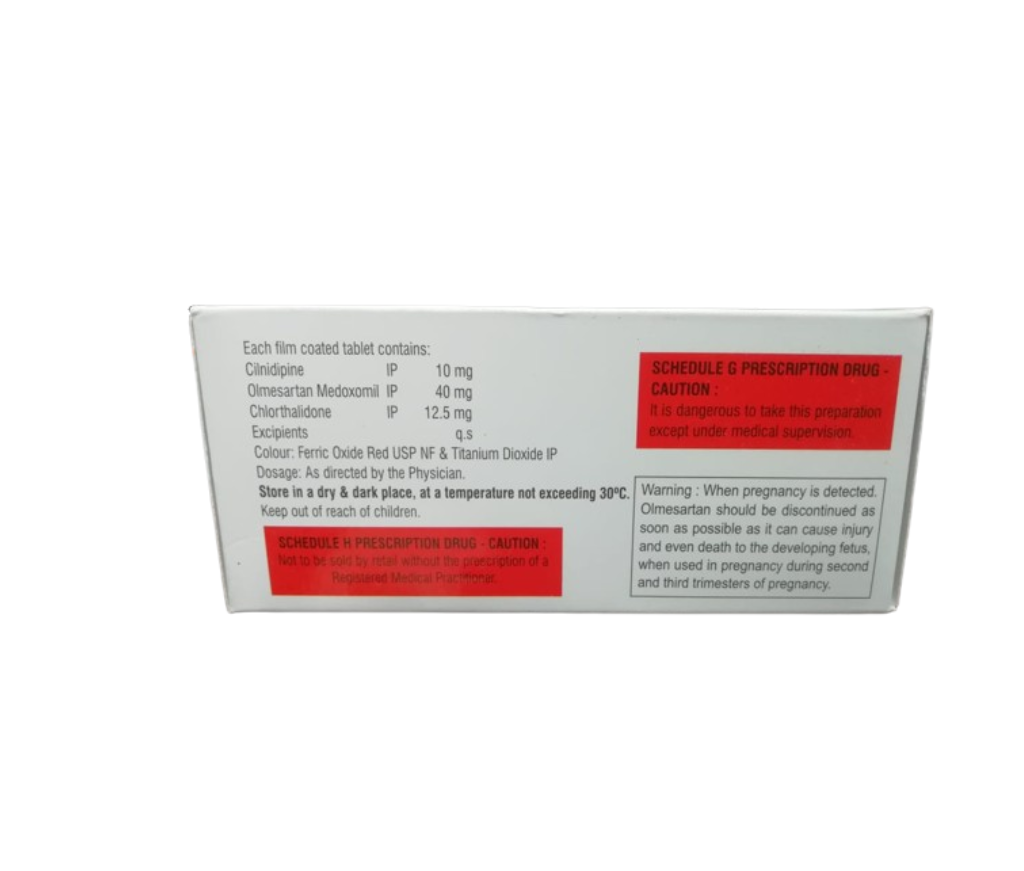
Composition Olmesartan (40mg), Cilnidipine (10mg), Chlorthalidone (12.5mg)
Rs 101.72
MRP Rs 145.31
(30% OFF)
Includes all taxes
Package SIZE
( For 10 Tablet )

100% Authentic
Products

Free
Shipping*

Products
Return Policy
Description:
OLMISTRUM TRIO (Olmesartan Medoxomil 40 mg, Cilnidipine 10 mg, & Chlorthalidone 12.5 mg) is an advanced, triple-combination antihypertensive medication formulated for comprehensive, round-the-clock blood pressure control in patients requiring multi-drug therapy.
| Product Attribute | Details |
| Brand Name | OLMISTRUM TRIO |
| Primary Target Keyword | Olmesartan 40 mg, Cilnidipine 10 mg, Chlorthalidone 12.5 mg |
| Active Composition | Olmesartan Medoxomil (40 mg) + Cilnidipine (10 mg) + Chlorthalidone (12.5 mg) |
| Manufacturer / Marketer | Steris Healthcare Pvt. Ltd. |
| Dosage Form | Film-Coated Tablet |
| Packaging Size | Strip of 10 Tablets |
| Therapeutic Class | Antihypertensive Combination (ARB + CCB + Thiazide-like Diuretic) |
| Target Country | India |
| Prescription Requirements | Schedule H Prescription Drug (Requires a valid doctor's prescription) |
Buy OLMISTRUM TRIO Tablets Online in India
Order OLMISTRUM TRIO (Pack of 10 Tablets) by Steris Healthcare Pvt. Ltd. online through licensed Indian pharmaceutical platforms for fast, secure doorstep delivery.
-
100% Genuine Medicines: Sourced directly from verified pharmaceutical distributors and manufacturers.
-
Express Pan-India Delivery: Fast shipping coverage across major metros, tier-2 cities, and rural pincodes.
-
Hassle-Free Prescription Upload: Quick digital prescription verification to ensure full regulatory compliance.
-
Safe & Discrete Packaging: Sealed in protective blister strips to maintain drug stability and potency.
What is OLMISTRUM TRIO?
OLMISTRUM TRIO is a single-pill triple combination (SPC) developed by Steris Healthcare Pvt. Ltd. to manage resistant or severe essential hypertension (high blood pressure). When monotherapy or dual-drug combinations fail to achieve target blood pressure levels, clinical guidelines recommend combining three distinct drug classes with complementary mechanisms of action.
OLMISTRUM TRIO merges three active ingredients into a single daily tablet:
-
Olmesartan Medoxomil (40 mg): A potent Angiotensin II Receptor Blocker (ARB) that prevents blood vessel constriction.
-
Cilnidipine (10 mg): A dual L/N-type Calcium Channel Blocker (CCB) that dilates blood vessels while mitigating reflex tachycardia.
-
Chlorthalidone (12.5 mg): A long-acting thiazide-like diuretic that reduces plasma volume and arterial stiffness.
Triple-Action Mechanism (How OLMISTRUM TRIO Works)
The power of OLMISTRUM TRIO lies in its synergistic approach, targeting three separate physiological pathways responsible for regulating systemic blood pressure.
1. Olmesartan Medoxomil (40 mg) – Vascular Relaxation
Olmesartan targets the Renin-Angiotensin-Aldosterone System (RAAS). It selectively blocks angiotensin II from binding to $AT_1$ receptors in vascular smooth muscle cells. This action stops vessel constriction, reduces total peripheral resistance, and promotes smooth blood circulation throughout the body.
2. Cilnidipine (10 mg) – Dual L/N-Type Calcium Channel Blockade
Unlike traditional CCBs that only block L-type calcium channels, Cilnidipine blocks both L-type and N-type calcium channels.
-
L-type blockade: Relaxes vascular smooth muscle cells in peripheral arteries, leading to vasodilation.
-
N-type blockade: Suppresses sympathetic nerve endings in the kidneys and blood vessels, preventing heart rate spikes (reflex tachycardia) and reducing intraglomerular pressure to protect renal function.
3. Chlorthalidone (12.5 mg) – Sustained Diuresis & Volume Reduction
Chlorthalidone is a long-acting thiazide-like diuretic that inhibits sodium and chloride reabsorption in the distal convoluted tubules of the kidneys. By promoting the excretion of excess water and sodium, it lowers plasma volume and stroke volume. Additionally, long-term use of chlorthalidone reduces systemic vascular resistance directly.
Key Therapeutic Indications
Physicians across India prescribe OLMISTRUM TRIO for several clinical needs:
-
Severe or Uncontrolled Essential Hypertension: For patients whose blood pressure remains elevated despite treatment with two antihypertensive agents.
-
Resistant Hypertension Management: Helps bring blood pressure down to target guidelines ($<130/80 \text{ mmHg}$) in high-risk patients.
-
Reduction of Cardiovascular Risk: Effectively controls sustained hypertension to prevent severe complications like myocardial infarction (heart attack), heart failure, and stroke.
-
Renal Protection in Hypertensive Patients: The combination of an ARB (Olmesartan) and an N-type CCB (Cilnidipine) offers renal microvascular protection by reducing intraglomerular pressure and proteinuria.
Benefits of Triple Single-Pill Fixed-Dose Combination
-
Enhanced Efficacy: Combining three distinct drug classes yields a greater blood pressure reduction than titrating a single drug to its maximum dose.
-
24-Hour Blood Pressure Control: Chlorthalidone’s long half-life ($40\text{--}60 \text{ hours}$) ensures smooth blood pressure management overnight and into early morning hours.
-
Reduced Side-Effect Profile: Counteractive physiological effects (e.g., olmesartan reducing diuretic-induced RAAS activation) lower overall side-effect risks compared to high-dose monotherapy.
-
Improved Patient Adherence: Substituting three individual pills with one single daily tablet reduces pill burden and improves treatment compliance.
Dosage & Administration Instructions
-
Recommended Dosage: Take one tablet daily, or strictly according to your doctor's prescription.
-
Administration: Swallow the tablet whole with water. Do not crush, chew, or break the tablet.
-
Timing: Take the tablet at the same time every day, preferably in the morning with or after breakfast, as the diuretic component increases urination.
-
Missed Dose: If you miss a dose, take it as soon as you remember. However, if it is almost time for your next scheduled dose, skip the missed dose. Do not take a double dose to make up for a missed one.
Side Effects & Precautionary Guidelines
While OLMISTRUM TRIO is generally well-tolerated, some patients may experience mild to moderate side effects as their body adjusts to the medication.
Common Side Effects
-
Dizziness or lightheadedness when standing up (orthostatic hypotension)
-
Increased frequency of urination (especially during the first few weeks)
-
Mild peripheral edema (ankle swelling, though significantly less than with older CCBs)
-
Fatigue, weakness, or lethargy
-
Muscle cramps or mild electrolyte imbalances
-
Headache or flushing
Safety Warnings & Contraindications
-
Pregnancy Warning: Contraindicated in pregnancy. ARBs like olmesartan cause severe fetal damage, renal failure, or death when administered during the second and third trimesters. Stop the drug immediately if pregnancy occurs.
-
Lactation: Avoid using during breastfeeding unless specifically advised by a cardiologist.
-
Severe Renal Failure & Anuria: Do not use if you have severe kidney impairment or complete absence of urine output (anuria).
-
Severe Hepatic Impairment: Use with caution in patients with impaired liver function or biliary obstructive disorders.
-
Electrolyte Disturbances: Refractory hypokalemia, hyponatremia, or hypercalcemia require monitoring before starting treatment.
-
Abrupt Discontinuation: Do not stop taking OLMISTRUM TRIO suddenly. Sudden withdrawal can cause a rapid rise in blood pressure, increasing cardiac risk. Taper down under medical supervision.
Storage & Handling Requirements
-
Store below 30°C in a dry place.
-
Protect from direct sunlight, light, and heat.
-
Keep out of reach of children and pets.
-
Keep tablets sealed in their original blister packaging until ingestion.
Frequently Asked Questions
Where can I buy Olmesartan 40 mg, Cilnidipine 10 mg & Chlorthalidone 12.5 mg online?
Olmesartan 40 mg, Cilnidipine 10 mg & Chlorthalidone 12.5 mg can be purchased through authorized pharmacies and pharmaceutical suppliers, subject to applicable prescription requirements. Always verify the strength, manufacturer, pack size, and expiry date before purchasing.
What is the price of Olmesartan 40 mg, Cilnidipine 10 mg & Chlorthalidone 12.5 mg?
The price may vary depending on the brand, manufacturer, pack size, and seller. For the latest price, check the product listing or contact the authorized pharmaceutical supplier for current pricing.
Can I order Olmesartan 40 mg, Cilnidipine 10 mg & Chlorthalidone 12.5 mg online?
Yes, this combination may be ordered online through legitimate pharmaceutical platforms where available. A valid prescription may be required, so follow the applicable prescription and dispensing requirements.
Is Olmesartan 40 mg, Cilnidipine 10 mg & Chlorthalidone 12.5 mg available from Steris Healthcare?
Availability depends on the specific product and current stock. You can contact Steris Healthcare to confirm the availability, strength, pack size, pricing, and ordering details.
What is Olmesartan 40 mg, Cilnidipine 10 mg & Chlorthalidone 12.5 mg used for?
This combination is used to help control high blood pressure (hypertension) when treatment with multiple antihypertensive medicines is appropriate. Olmesartan is an angiotensin II receptor blocker (ARB), Cilnidipine is a calcium channel blocker, and Chlorthalidone is a diuretic. Together, they help lower blood pressure through complementary mechanisms.
What is the composition of Olmesartan 40 mg, Cilnidipine 10 mg & Chlorthalidone 12.5 mg?
The composition contains Olmesartan Medoxomil 40 mg, Cilnidipine 10 mg, and Chlorthalidone 12.5 mg. Always check the product packaging and label to confirm the exact composition and formulation.
Is a prescription required for Olmesartan 40 mg, Cilnidipine 10 mg & Chlorthalidone 12.5 mg?
Yes. This is a prescription medicine and should be taken under the supervision of a qualified healthcare professional. Do not start, stop, or change the dosage without medical advice.
How should Olmesartan 40 mg, Cilnidipine 10 mg & Chlorthalidone 12.5 mg be taken?
Take this medicine exactly as prescribed by your doctor. It is taken orally, usually at a consistent time each day. Because Chlorthalidone can increase urination, your doctor may recommend taking it at a suitable time during the day. Do not alter the prescribed dose.
What should I know before buying Olmesartan 40 mg, Cilnidipine 10 mg & Chlorthalidone 12.5 mg?
Before buying, check the medicine name, strength, composition, manufacturer, pack size, expiry date, and authenticity. Tell your healthcare professional about other medicines or supplements you take and any existing medical conditions. Purchase prescription medicines only from authorized sources.
How can I order Olmesartan 40 mg, Cilnidipine 10 mg & Chlorthalidone 12.5 mg online?
To order online, select the required product and pack size from an authorized pharmaceutical supplier, verify the strength and composition, complete any applicable prescription requirements, and provide the required delivery details. For Steris Healthcare products, contact the company to confirm current availability, pricing, and ordering options.

