
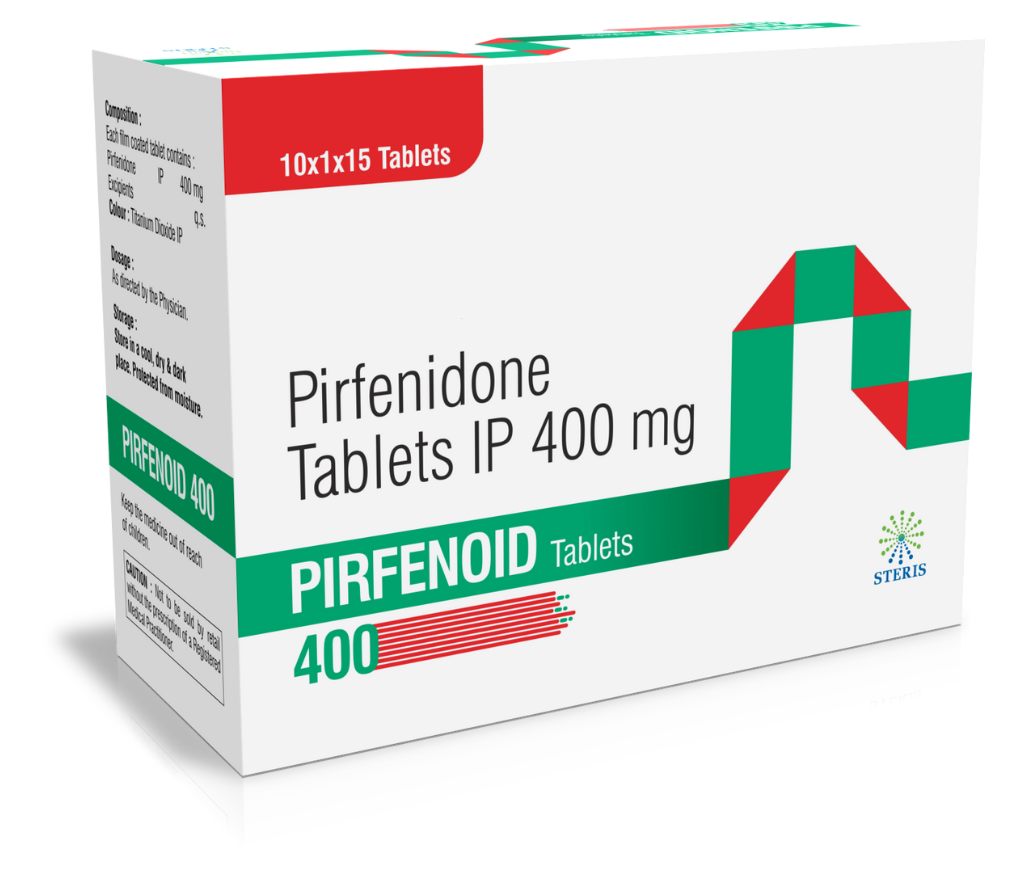
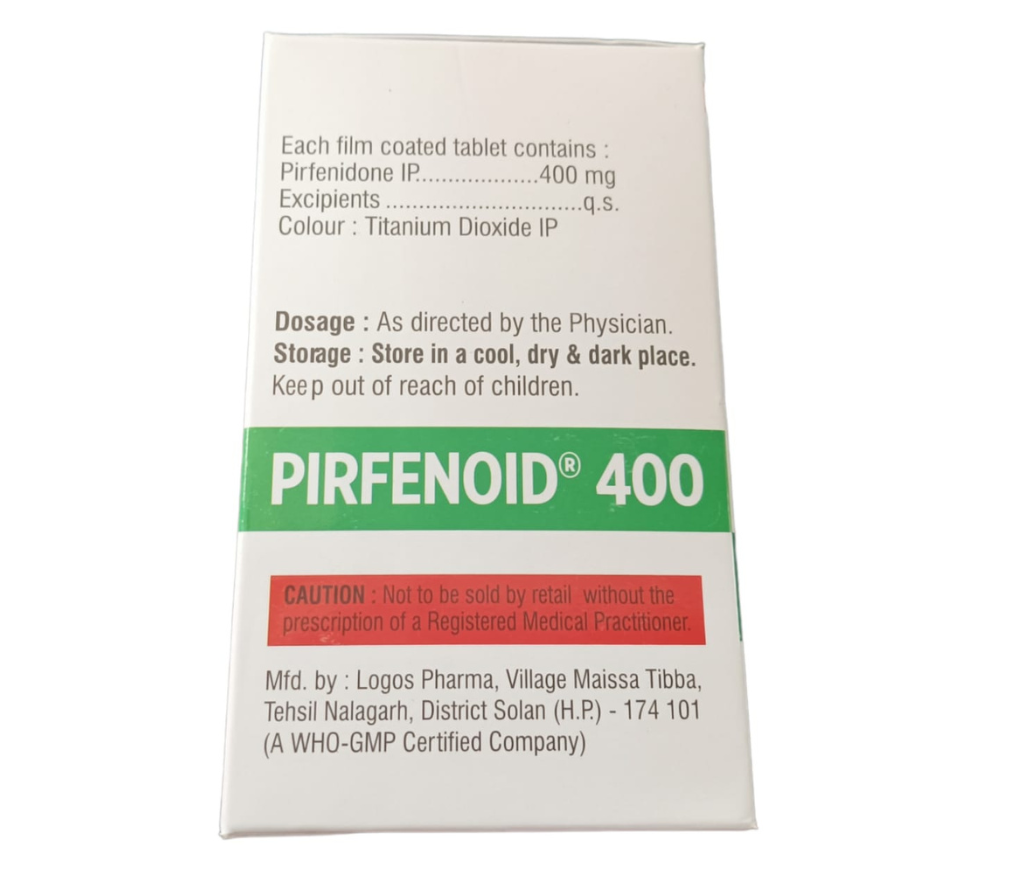
PIRFENOID 400
Item requires a valid prescription
Manufactured By Steris Healthcare Pvt Ltd
Composition Pirfenidone (400mg)
Rs 246.60
MRP Rs 411.00
(40% OFF)
Includes all taxes
Package SIZE
( For 10 Tablets )
100% Authentic
Products
Free
Shipping*
Products
Return Policy
Description:
Pirfenidone 400 mg is an oral medicine containing pirfenidone, an antifibrotic drug used primarily in the management of idiopathic pulmonary fibrosis (IPF). IPF is a chronic, progressive lung disease in which scar tissue develops in the lungs, making it increasingly difficult for oxygen to pass into the bloodstream.
Pirfenidone belongs to a class of medicines known as antifibrotic therapies. It is intended to slow the progression of pulmonary fibrosis rather than provide an immediate cure or reverse established lung scarring. Pirfenidone is an approved treatment for IPF, and international respiratory guidelines recognize antifibrotic treatment as an important component of IPF management.
An important point for people searching specifically for pirfenidone 400 mg is that the strength available depends on the country and manufacturer. For example, current U.S. pirfenidone labeling lists 267 mg and 801 mg tablets rather than a 400 mg tablet. Therefore, patients should not assume that a 400 mg product has the same dosing instructions as U.S. 267 mg or 801 mg formulations.
Pirfenidone 400 mg Uses
The primary pirfenidone 400 mg use is the management of idiopathic pulmonary fibrosis.
1. Idiopathic pulmonary fibrosis
Idiopathic pulmonary fibrosis causes progressive scarring of lung tissue. As fibrosis increases, lung function can decline, leading to symptoms such as:
- Shortness of breath, particularly during activity
- Persistent dry cough
- Reduced exercise tolerance
- Fatigue
- Reduced oxygen levels in advanced disease
Pirfenidone is approved for treatment of IPF. The FDA's drug information identifies pirfenidone as indicated for IPF, while international respiratory guidelines have evaluated pirfenidone as an antifibrotic treatment option.
2. Slowing decline in lung function
One of the key reasons physicians prescribe pirfenidone is to slow the decline associated with pulmonary fibrosis.
It is important to set realistic expectations: pirfenidone does not remove existing lung scar tissue and is not expected to restore already-lost lung function. Its role is disease management and slowing progression.
3. Long-term IPF management
IPF requires ongoing medical care. Treatment can involve antifibrotic medication, pulmonary rehabilitation, oxygen therapy when appropriate, vaccinations, management of associated conditions, and evaluation for lung transplantation in selected patients.
Pirfenidone should therefore be considered part of a broader IPF management plan rather than a standalone cure.
Key Benefits of Pirfenidone 400 mg
The potential benefits of pirfenidone 400 mg are related primarily to its antifibrotic effects.
Helps slow pulmonary fibrosis progression
Pirfenidone is designed to reduce processes involved in the development and progression of fibrosis. Its clinical role is to slow the decline associated with IPF rather than eliminate existing fibrosis.
May help preserve lung function
Clinical trials of pirfenidone have demonstrated effects on measures of lung-function decline. This is clinically important because progressive loss of lung function is a major feature of IPF.
Established antifibrotic treatment
Pirfenidone has an established place in IPF treatment. The American Thoracic Society and collaborating organizations have published international guidance addressing antifibrotic treatment of IPF and progressive pulmonary fibrosis.
Oral treatment option
Pirfenidone is administered orally, which can make long-term treatment more practical than therapies requiring infusion or other invasive administration.
How Does Pirfenidone Work?
The precise mechanism by which pirfenidone produces its antifibrotic effects is not completely understood.
Research indicates that pirfenidone affects biological pathways involved in fibrosis and inflammation. By modifying processes associated with the formation of scar tissue, the medicine may help slow progression of pulmonary fibrosis.
Because IPF is a complex disease, pirfenidone does not simply work like an antibiotic or conventional anti-inflammatory pain medicine.
It also does not provide an immediate bronchodilator effect. Therefore, a patient should not expect pirfenidone to produce rapid relief of breathlessness in the way an inhaled bronchodilator might.
Pirfenidone 400 mg Dosage: How Much Should You Take?
This is one of the most important safety issues surrounding pirfenidone 400 mg.
Do not choose the dose based only on tablet strength.
Pirfenidone treatment is normally started at a lower dose and increased gradually to improve tolerability. Current U.S. prescribing information for pirfenidone tablets recommends titration over 14 days to a maintenance dose of 2,403 mg/day, divided into three doses. The U.S. labeled strengths are 267 mg and 801 mg.
This does not mean that a person prescribed a 400 mg product should independently calculate an equivalent schedule.
The correct regimen depends on:
- The exact product
- Tablet or capsule strength
- Country-specific labeling
- Your doctor's treatment plan
- Liver function
- Kidney function
- Other medicines
- Previous tolerance of pirfenidone
- Whether treatment has been interrupted
What if treatment is interrupted?
Current MedlinePlus information advises that patients who miss 14 or more days of pirfenidone treatment should contact their doctor because treatment may need to be restarted at a lower dose and gradually increased again.
Never compensate for missed doses by taking several tablets at once.
How to Take Pirfenidone 400 mg
Follow the directions supplied with your specific product.
For current U.S. pirfenidone tablets, the recommended maintenance doses are taken with food, and the label specifies a gradual titration when starting treatment.
Taking pirfenidone with food can also help reduce certain gastrointestinal side effects.
General administration principles include:
- Take the medicine exactly as prescribed.
- Take doses consistently at the recommended times.
- Take with food if directed by your product label.
- Swallow tablets or capsules according to the manufacturer's instructions.
- Do not double a missed dose.
- Do not stop treatment without speaking to your doctor.
Because 400 mg pirfenidone products may have different labeling depending on the market, always prioritize the instructions on the exact package prescribed to you.
Pirfenidone 400 mg Side Effects
Like other prescription medicines, pirfenidone 400 mg can cause side effects.
Commonly reported adverse effects include:
- Nausea
- Vomiting
- Diarrhea
- Heartburn or indigestion
- Stomach pain or discomfort
- Reduced appetite
- Weight loss
- Headache
- Dizziness
- Fatigue
- Joint pain
- Skin sensitivity to sunlight
MedlinePlus lists nausea, vomiting, diarrhea, heartburn, stomach pain, headache, dizziness, decreased appetite, weight loss, and joint pain among possible side effects.
Not everyone experiences these effects, and the severity can vary.
Important Pirfenidone 400 mg Warnings
1. Liver problems
One of the most important safety considerations is liver toxicity.
Current U.S. prescribing information recommends checking ALT, AST, and bilirubin before treatment and monitoring liver function during therapy. The current label recommends testing monthly during the first six months and every three months thereafter, as well as when clinically indicated.
Contact your healthcare professional promptly if you experience:
- Yellowing of the skin or eyes
- Dark or tea-colored urine
- Unusual tiredness
- Loss of appetite
- Pain in the upper-right abdomen
- Unexpected bruising or bleeding
Severe drug-induced liver injury, including rare fatal cases, has been reported with pirfenidone.
2. Photosensitivity
Pirfenidone can make the skin more sensitive to sunlight.
The current U.S. label advises patients to minimize exposure to sunlight and sunlamps, use sunscreen with SPF 50 or higher, and wear protective clothing.
This is particularly important for people who spend substantial time outdoors.
Possible photosensitivity reactions include:
- Redness
- Burning
- Rash
- Increased sunburn-like reactions
- Skin swelling or blistering
3. Severe skin reactions
Rare but serious skin reactions, including Stevens-Johnson syndrome, toxic epidermal necrolysis, and DRESS, have been reported after marketing.
A widespread rash, blistering, skin peeling, facial swelling, fever, or difficulty breathing requires urgent medical assessment.
Who Should Avoid or Use Extra Caution With Pirfenidone?
Tell your doctor if you have:
- Liver disease
- Kidney disease
- A history of severe drug reactions
- A condition requiring multiple medications
- Pregnancy or plans to become pregnant
- Breastfeeding
- A smoking habit
Current labeling states that pirfenidone is not recommended in severe hepatic impairment and is not recommended in patients with end-stage renal disease requiring dialysis.
Your doctor may therefore need to assess kidney and liver health before determining whether pirfenidone is appropriate.
Pirfenidone 400 mg and Smoking
Smoking is particularly important when taking pirfenidone.
Current prescribing information reports decreased pirfenidone exposure in smokers, which may affect the medicine's efficacy.
MedlinePlus similarly advises patients to stop smoking before beginning treatment and avoid smoking during treatment.
If you smoke, discuss a smoking-cessation plan with your healthcare professional.
Pirfenidone 400 mg Drug Interactions
Pirfenidone is metabolized partly through CYP1A2, so medicines that strongly affect this enzyme can alter pirfenidone exposure.
Current labeling specifically addresses interactions involving CYP1A2 inhibitors and inducers.
Tell your doctor or pharmacist about:
- Prescription medicines
- Over-the-counter medicines
- Herbal products
- Vitamins and supplements
- Smoking or tobacco use
Do not start a new medicine or supplement without checking whether it is compatible with your pirfenidone regimen.
Can You Buy Pirfenidone 400 mg Online?
Pirfenidone is a prescription medicine, so it should be purchased through a legitimate pharmacy using a valid prescription where required.
If you are searching online for “buy pirfenidone 400 mg,” do not choose a supplier solely on price.
Before purchasing, verify:
- Active ingredient: pirfenidone
- Strength: 400 mg, if this is the strength prescribed
- Dosage form: tablet or capsule
- Manufacturer
- Batch or lot number
- Expiry date
- Sealed packaging
- Storage conditions
- Pharmacy credentials
- Prescription requirements
Important transactional tip
Do not substitute one pirfenidone strength for another without medical advice.
For example, current U.S. labeling uses 267 mg and 801 mg tablets, while a 400 mg product may be marketed in another country. The dosing schedule should therefore be determined from the exact product's approved information, not by simply converting milligrams yourself.
Pirfenidone 400 mg vs. Other Antifibrotic Treatment
Pirfenidone is one of the established antifibrotic therapies for IPF. Nintedanib is another commonly used antifibrotic option.
The choice between treatments depends on factors such as:
- Confirmed diagnosis
- Disease progression
- Liver and kidney health
- Other medicines
- Side-effect risks
- Patient preferences
- Drug interactions
- Local treatment availability
There is no universally best antifibrotic for every patient.
A pulmonologist specializing in interstitial lung disease can help determine which treatment is appropriate.
What Lifestyle Measures Can Support IPF Treatment?
Medicine is only one part of pulmonary fibrosis care.
Patients may also benefit from clinician-guided:
- Pulmonary rehabilitation
- Appropriate physical activity
- Smoking cessation
- Vaccination
- Nutritional support
- Oxygen therapy when indicated
- Management of reflux and other medical conditions
- Regular lung-function monitoring
The ATS/ERS/JRS/ALAT guideline update emphasizes multidisciplinary management of IPF and progressive pulmonary fibrosis.
Pirfenidone should therefore be viewed as one component of a comprehensive treatment plan.
When Should You Contact a Doctor Urgently?
Seek prompt medical attention if you develop:
- Yellow skin or eyes
- Dark urine
- Severe or persistent abdominal pain
- Severe rash or blistering
- Facial or throat swelling
- Difficulty breathing
- Severe vomiting or diarrhea
- Unusual bleeding or bruising
- Significant worsening of respiratory symptoms
These symptoms can indicate serious adverse reactions or complications requiring medical assessment.
Frequently Asked Questions
1. What is pirfenidone 400 mg used for?
Pirfenidone is primarily used to treat idiopathic pulmonary fibrosis (IPF). Its purpose is to help slow the progression of pulmonary fibrosis.
2. Is pirfenidone 400 mg an antifibrotic medicine?
Yes. Pirfenidone is an antifibrotic medicine used in the management of IPF.
3. Does pirfenidone 400 mg cure pulmonary fibrosis?
No. Pirfenidone is not considered a cure for IPF. Its role is to help slow disease progression.
4. Does pirfenidone improve lung function?
Pirfenidone can slow the decline in lung function associated with IPF. It should not be expected to reverse established lung scarring.
5. What are the benefits of pirfenidone 400 mg?
The primary benefit is its antifibrotic effect, which can help slow the progression of idiopathic pulmonary fibrosis and decline in lung function.
6. What are the common side effects of pirfenidone 400 mg?
Common side effects include nausea, diarrhea, indigestion, stomach discomfort, reduced appetite, weight loss, headache, dizziness, fatigue, and photosensitivity.
7. Can pirfenidone cause liver problems?
Yes. Pirfenidone can cause elevated liver enzymes and, rarely, serious drug-induced liver injury. Liver tests are recommended before and during treatment.
8. Does pirfenidone make your skin sensitive to sunlight?
Yes. Photosensitivity and rash are recognized adverse effects. Sunscreen, protective clothing, and minimizing unnecessary sun exposure are recommended.
9. Can I drink alcohol while taking pirfenidone?
Discuss alcohol use with your doctor, particularly because pirfenidone can affect the liver. Your clinician can advise you based on your liver function and overall treatment plan.
10. Can smokers take pirfenidone 400 mg?
Smoking can decrease exposure to pirfenidone and may reduce its effectiveness. Smoking cessation is strongly recommended.
11. Should pirfenidone be taken with food?
Current U.S. pirfenidone labeling recommends taking the medicine with food. However, follow the instructions for your exact 400 mg product because formulations and regional labels may differ.
12. What happens if I miss a dose of pirfenidone?
Do not double the next dose. MedlinePlus advises taking a missed dose when remembered unless it is nearly time for the next dose; patients who miss 14 or more days should contact their doctor because re-titration may be required.
13. Can I stop pirfenidone suddenly?
Do not stop long-term pirfenidone treatment without discussing it with your doctor. If treatment has been interrupted for an extended period, the medicine may need to be restarted using a gradual titration schedule.
14. Is pirfenidone 400 mg safe during pregnancy?
Pregnancy requires individualized medical advice. Tell your doctor if you are pregnant, planning pregnancy, or breastfeeding before taking pirfenidone.
15. Can pirfenidone be taken with other medicines?
It can interact with certain medicines, particularly drugs affecting CYP1A2. Give your doctor and pharmacist a complete list of medicines and supplements you use.
16. Is pirfenidone 400 mg available online?
Availability varies by country. Because pirfenidone is a prescription medicine, purchase it from a legitimate pharmacy and use a valid prescription where required.
17. Is pirfenidone 400 mg the same as pirfenidone 801 mg?
No. They contain different amounts of the active ingredient. They should not be substituted or converted by the patient without professional instructions.
18. Why does pirfenidone need to be increased gradually?
Gradual dose escalation is used to improve tolerability and reduce treatment-related adverse effects. Current U.S. labeling titrates pirfenidone to the full maintenance dose over 14 days.
19. Does pirfenidone cause weight loss?
Weight loss and decreased appetite are reported adverse effects. If you experience significant or continuing weight loss, inform your healthcare professional.
20. Does pirfenidone cause nausea?
Yes. Nausea is one of the commonly reported side effects. Taking the medicine with food according to the product's instructions may improve gastrointestinal tolerability.
21. What tests are needed before taking pirfenidone?
Liver-function testing is recommended before starting treatment. Ongoing liver-function monitoring is also recommended during therapy. Kidney and other assessments may be appropriate depending on the individual's health.
22. Can people with kidney disease take pirfenidone?
Kidney disease requires medical assessment before treatment. Current U.S. labeling says pirfenidone is not recommended for patients with end-stage renal disease on dialysis.
23. Can people with liver disease take pirfenidone?
Liver disease can affect the safety of pirfenidone. It is not recommended in severe hepatic impairment under current U.S. labeling, and liver-function monitoring is an important part of treatment.
24. What should I do if I develop a rash while taking pirfenidone?
Contact your healthcare professional. Pirfenidone can cause photosensitivity and rash, and rare severe skin reactions have been reported. Severe blistering, peeling, facial swelling, or breathing difficulty requires urgent medical attention.
25. What is the most important thing to know about pirfenidone 400 mg?
The most important point is that pirfenidone is a prescription antifibrotic treatment for IPF and requires individualized dosing and monitoring. Do not select the dose, change the schedule, or substitute strengths based only on the milligram number.

