

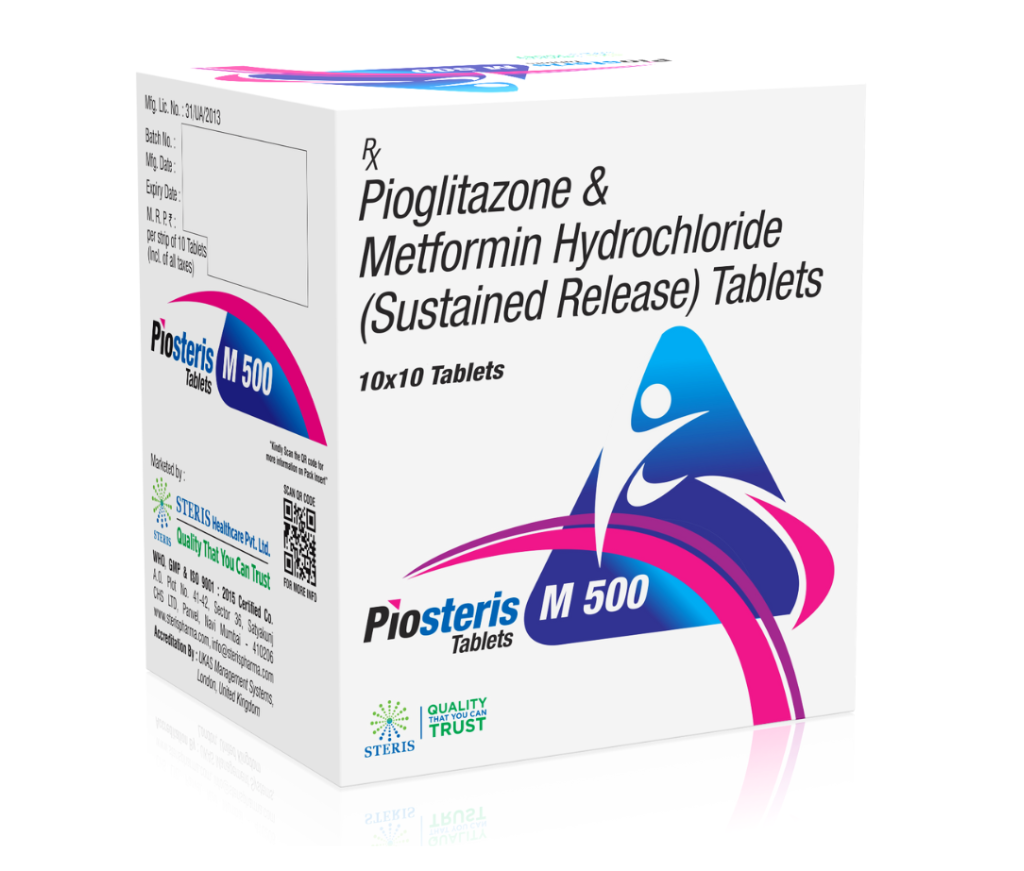
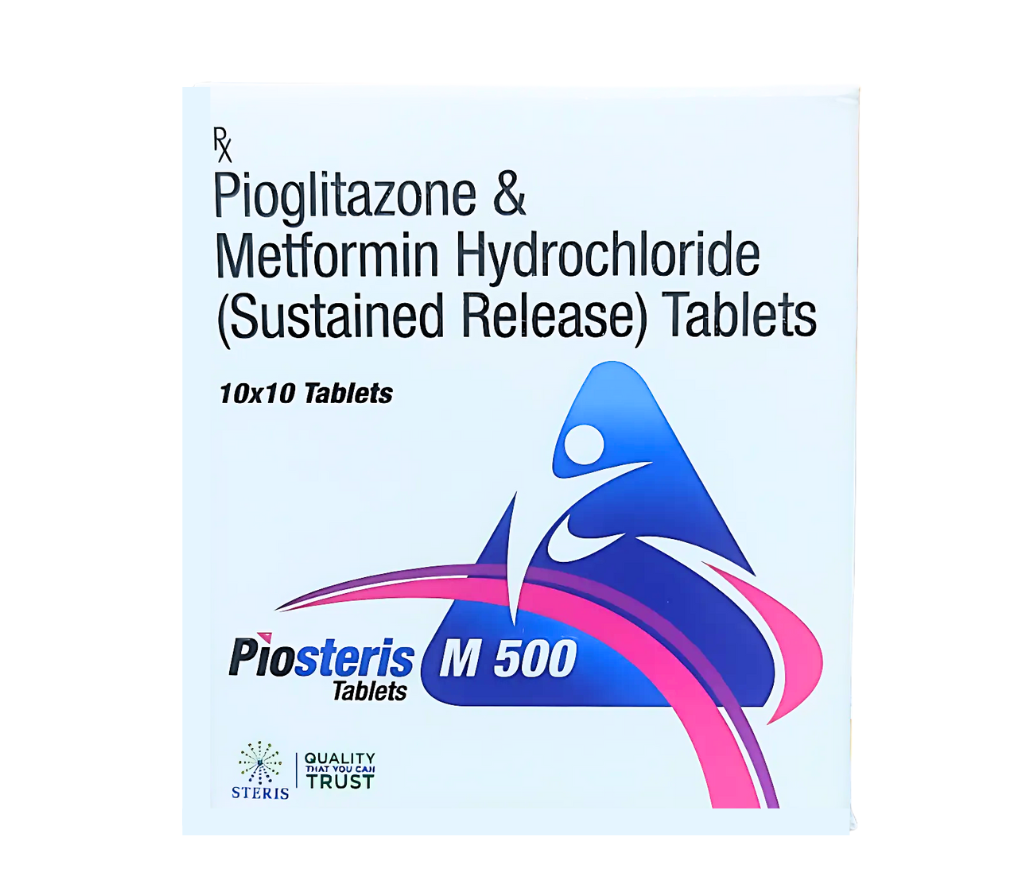
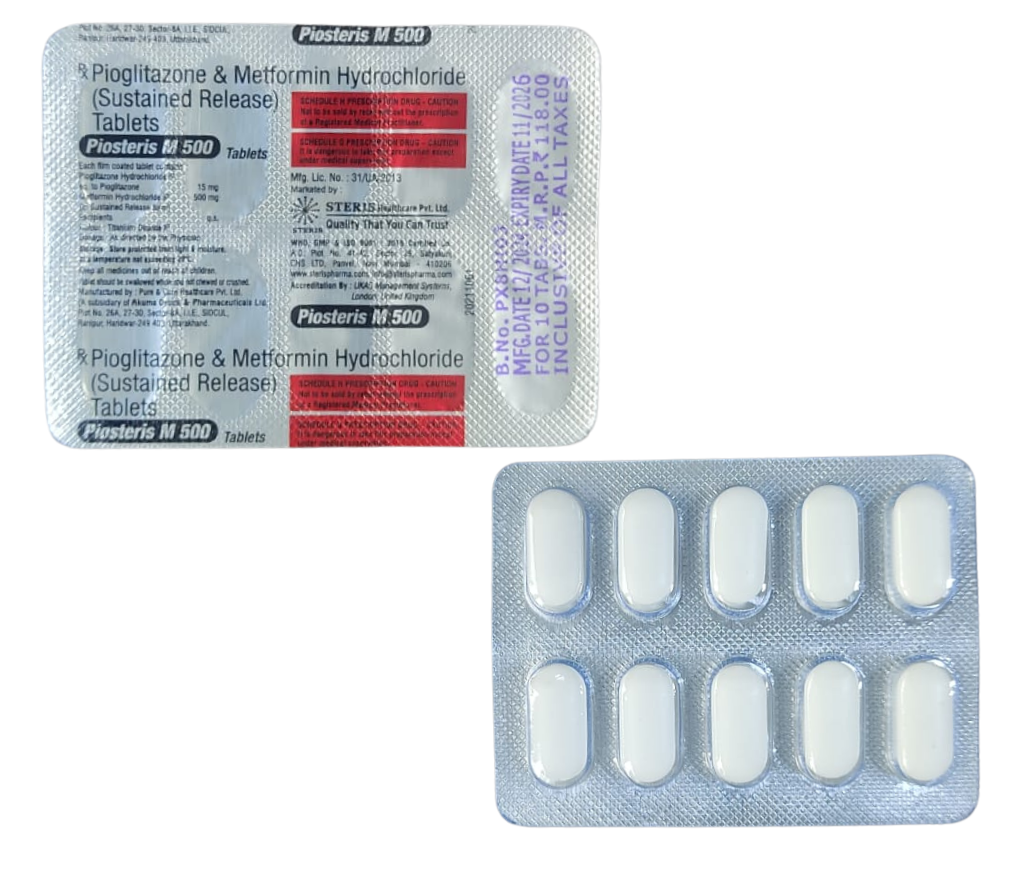
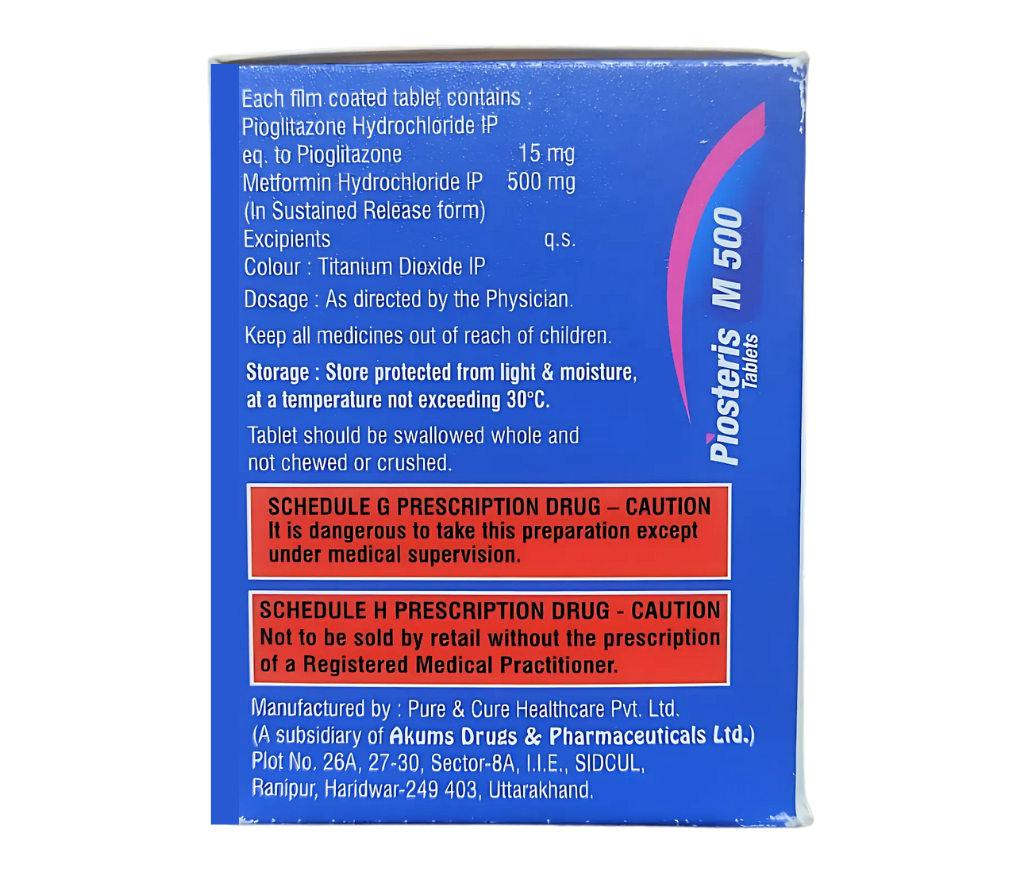
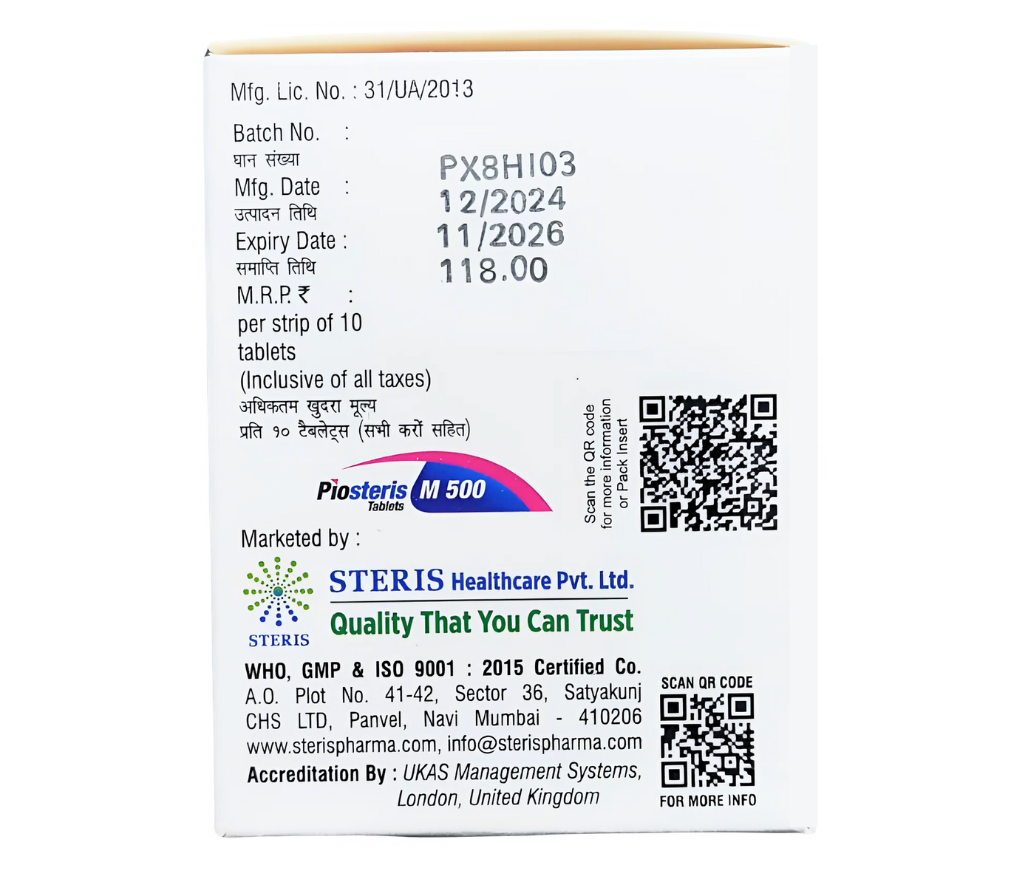
PIOSTERIS M 500
 Item requires a valid prescription
Manufactured By Steris Healthcare Pvt Ltd
Composition pioglitazone metformin
Rs 39.38
MRP Rs 56.25
(30% OFF)
Includes all taxes
Package SIZE
( For 10 Tablets )

100% Authentic
Products

Free
Shipping*

Products
Return Policy
Description:
Type 2 diabetes management often comes down to addressing insulin resistance from more than one direction at once. Pioglitazone metformin is a widely prescribed combination therapy that does exactly that—pairing two medications with different but complementary mechanisms to help the body use insulin more effectively and keep blood sugar within a healthier range.
This guide breaks down what pioglitazone metformin combination tablets are, how they work, who they're typically prescribed for, their key benefits, possible side effects, and answers to the questions people most frequently ask—whether typed into a search bar or spoken to a voice assistant.
What Is Pioglitazone Metformin?
Pioglitazone metformin is a fixed-dose combination tablet that brings together two distinct classes of oral antidiabetic medication:
- Pioglitazone—a thiazolidinedione (TZD) that improves the body's sensitivity to its own insulin, primarily by acting on fat, muscle, and liver tissue
- Metformin—a biguanide that reduces excess glucose production in the liver and improves glucose uptake in peripheral tissues
Individually, both drugs have been used for years in type 2 diabetes management, but combining them into a single tablet allows physicians to target insulin resistance from two different angles simultaneously, often with better overall glycemic control than either drug could achieve alone at standard doses.
This is a prescription-only medication. It's meant for adults with a confirmed diagnosis of type 2 diabetes mellitus who haven't achieved adequate blood sugar control on metformin alone, and it should only be started, adjusted, or stopped under a physician's guidance.
How Pioglitazone Metformin Works (Mechanism of Action)
Pioglitazone works by activating a nuclear receptor called PPAR-gamma (peroxisome proliferator-activated receptor gamma), found primarily in fat cells but also present in muscle and liver tissue. Activating this receptor changes the expression of multiple genes involved in glucose and lipid metabolism, ultimately making these tissues more responsive to insulin. The practical result is that cells take up and use glucose more efficiently, reducing blood sugar levels without directly increasing insulin secretion from the pancreas. Because of this mechanism, pioglitazone is sometimes described as an "insulin sensitizer" rather than an insulin stimulator.
Metformin works through a largely separate pathway, primarily by inhibiting hepatic gluconeogenesis—the process by which the liver manufactures new glucose, especially during fasting periods. It also enhances glucose uptake in skeletal muscle and reduces intestinal glucose absorption to a modest degree. Like pioglitazone, metformin does not directly stimulate insulin release, which is why the combination carries a comparatively low intrinsic risk of hypoglycemia compared to sulfonylurea-based combinations.
Together, pioglitazone and metformin address insulin resistance from both the tissue level (pioglitazone, working on fat and muscle) and the liver level (metformin, reducing excess glucose output), offering a more comprehensive approach to the underlying metabolic dysfunction driving elevated blood sugar in type 2 diabetes.
Key Benefits
1. Targets insulin resistance directly. Rather than compensating for insulin resistance by pushing the pancreas to produce more insulin, this combination improves how effectively the body's existing insulin is used.
2. Low intrinsic risk of hypoglycemia. Since neither component directly stimulates insulin secretion, the combination carries a comparatively lower risk of low blood sugar episodes than sulfonylurea-containing regimens, which can be reassuring for patients concerned about hypoglycemia.
3. May improve lipid profile. Pioglitazone has been associated with favorable changes in triglycerides and HDL cholesterol in some patients, an added metabolic benefit alongside glucose control.
4. Simplified dosing. Combining two mechanisms into one tablet reduces pill burden and can support more consistent, long-term adherence to treatment.
5. Complementary rather than overlapping mechanisms. Because pioglitazone and metformin work through different biological pathways, their effects on blood sugar control are additive rather than redundant.
6. Well-established, long-studied components. Both pioglitazone and metformin have extensive individual clinical histories, giving physicians and patients a well-understood safety and efficacy profile to work from.
7. May support better long-term glycemic stability. By addressing insulin resistance at its root rather than simply pushing more insulin into circulation, some patients experience more durable blood sugar control over time.
Side Effects
Commonly reported side effects:
- Nausea or mild stomach upset (usually linked to the metformin component, especially when starting treatment)
- Diarrhea or loose stools
- Headache
- Mild weight gain, particularly associated with pioglitazone
- Fluid retention or mild swelling in the legs and ankles
- Fatigue
Frequently Asked Questions
1. What is pioglitazone metformin used for?
It's used to manage blood sugar levels in adults with type 2 diabetes, typically when metformin alone hasn't achieved adequate glycemic control.
2. How does pioglitazone metformin work?
Pioglitazone improves the body's sensitivity to insulin in fat, muscle, and liver tissue, while metformin reduces the liver's glucose production and improves insulin sensitivity in muscle—together they target insulin resistance from two directions.
3. Does pioglitazone metformin cause low blood sugar?
It carries a comparatively low risk of hypoglycemia on its own, since neither pioglitazone nor metformin directly stimulates insulin secretion, though risk can increase if combined with other diabetes medications.
4. What are the most common side effects?
Common side effects include nausea, mild stomach upset, headache, and sometimes mild weight gain or fluid retention associated with pioglitazone.
5. Can pioglitazone metformin cause weight gain?
Yes, mild weight gain and fluid retention are recognized side effects of pioglitazone, and this should be monitored, especially in patients with heart-related risk factors.
6. Is pioglitazone metformin safe for the heart?
Pioglitazone can cause fluid retention that may worsen heart failure in susceptible patients, so it requires caution and monitoring in people with existing heart conditions.
7. Does this medication increase fracture risk?
Long-term pioglitazone use has been associated with an increased risk of bone fractures, particularly in postmenopausal women, and this should be discussed with your doctor.
8. Is there a link between pioglitazone and bladder cancer?
Some studies have suggested a possible association between long-term pioglitazone use and bladder cancer risk; patients with a personal history of bladder cancer should discuss this carefully with their doctor.
9. Can pioglitazone metformin be taken once daily?
Dosing frequency depends on the specific formulation and your doctor's prescription; some combinations are taken once daily, others may differ—always follow your prescribed schedule.
10. Should pioglitazone metformin be taken with food?
It's often taken with meals to help reduce gastrointestinal side effects associated with the metformin component, but follow your doctor's specific instructions.
11. Is pioglitazone metformin safe for kidney patients?
Metformin requires dose caution or adjustment in patients with reduced kidney function due to a rare risk of lactic acidosis, so kidney function is typically checked before and during treatment.
12. What is lactic acidosis, and is it a real risk with this medication?
Lactic acidosis is a rare but serious complication linked to metformin, more likely in people with kidney or liver problems; symptoms include severe muscle pain and breathing difficulty, and it requires emergency care.
13. Can this medication be taken during pregnancy?
It's generally not recommended during pregnancy; insulin is usually the preferred treatment for blood sugar control in pregnant women, so speak with your doctor.
14. How long does it take to see results from pioglitazone metformin?
Pioglitazone's insulin-sensitizing effects can take several weeks to become fully apparent, while metformin's effects on liver glucose output are often noticeable sooner—full benefit is typically assessed after about 3 months.
15. Can pioglitazone metformin be combined with insulin?
In some cases, doctors do combine this therapy with insulin, but this requires careful medical supervision due to an increased risk of fluid retention and heart-related complications when combined.
Conclusion
Pioglitazone metformin combination therapy offers a targeted, complementary approach to managing type 2 diabetes by addressing insulin resistance from two different angles—improving how effectively tissues respond to insulin (pioglitazone) while reducing the liver's excess glucose output (metformin). For patients who haven't achieved adequate blood sugar control on metformin alone and who want to avoid the hypoglycemia risk associated with insulin-stimulating drugs, this combination can be a genuinely useful step in a broader treatment plan.
That said, pioglitazone in particular carries some specific long-term risks—fluid retention, potential effects on heart failure, bone fracture risk, and questions around bladder cancer association—that make regular follow-up and open communication with your doctor especially important while on this therapy. Combined with consistent attention to diet, physical activity, and routine lab monitoring, pioglitazone metformin can be an effective part of a well-managed diabetes care plan when the right patient, the right dose, and the right monitoring are all in place.
Available Substitutes