

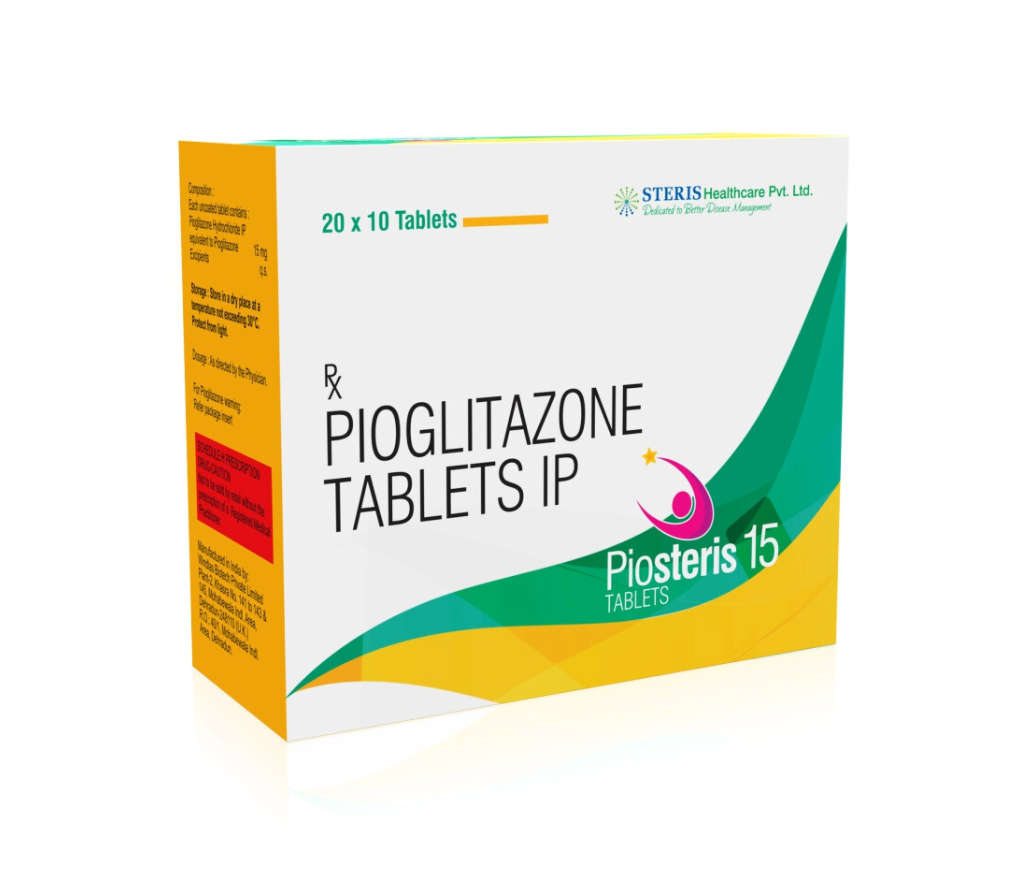
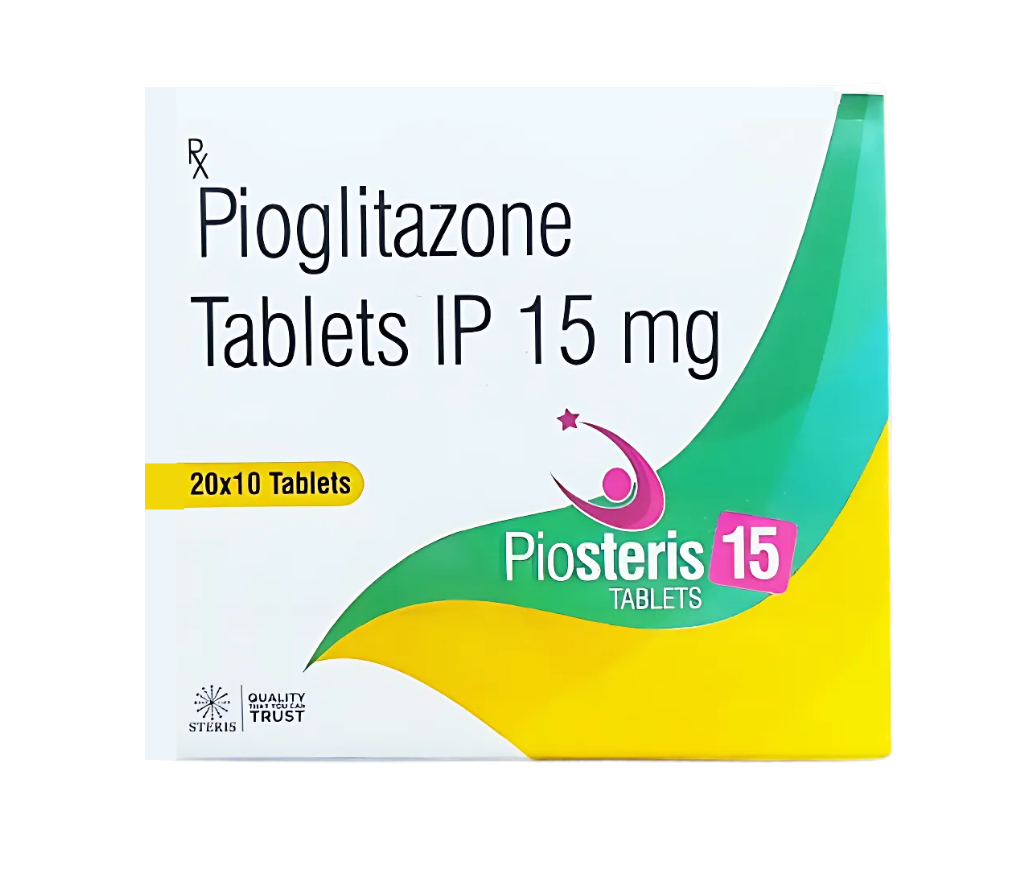
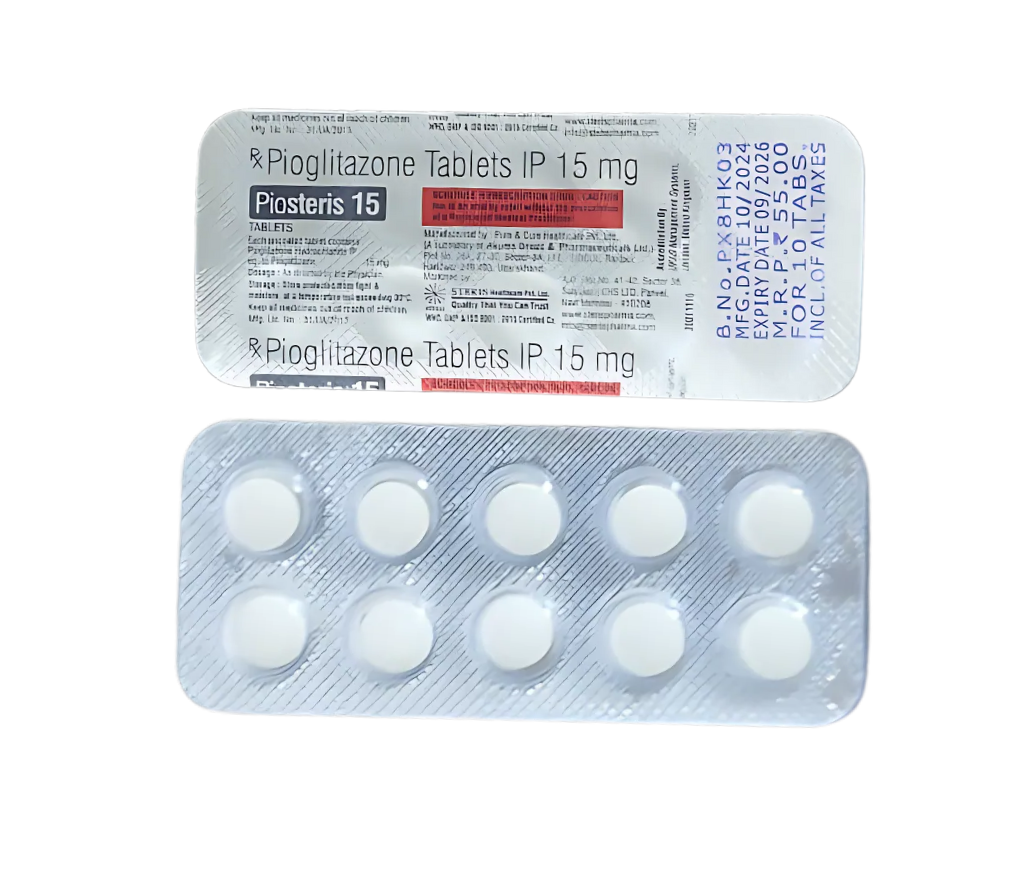
Pioglitazone 15 mg | PIOSTERIS 15
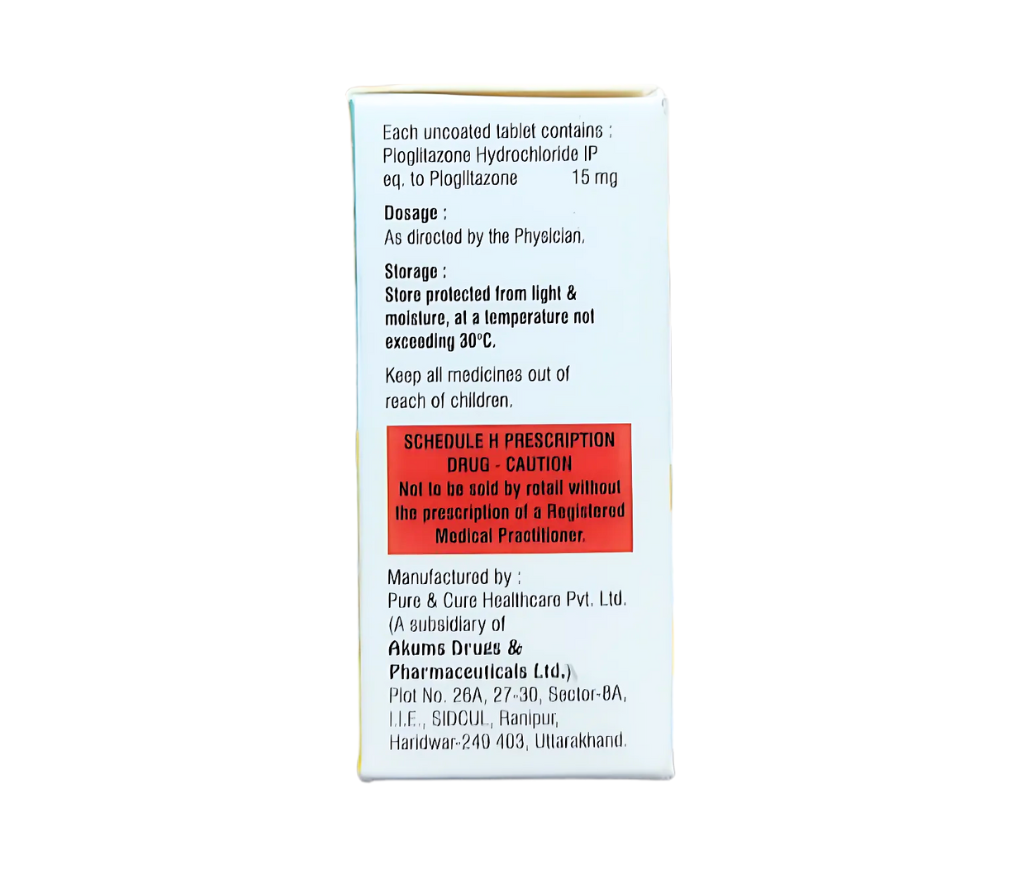
 Item requires a valid prescription
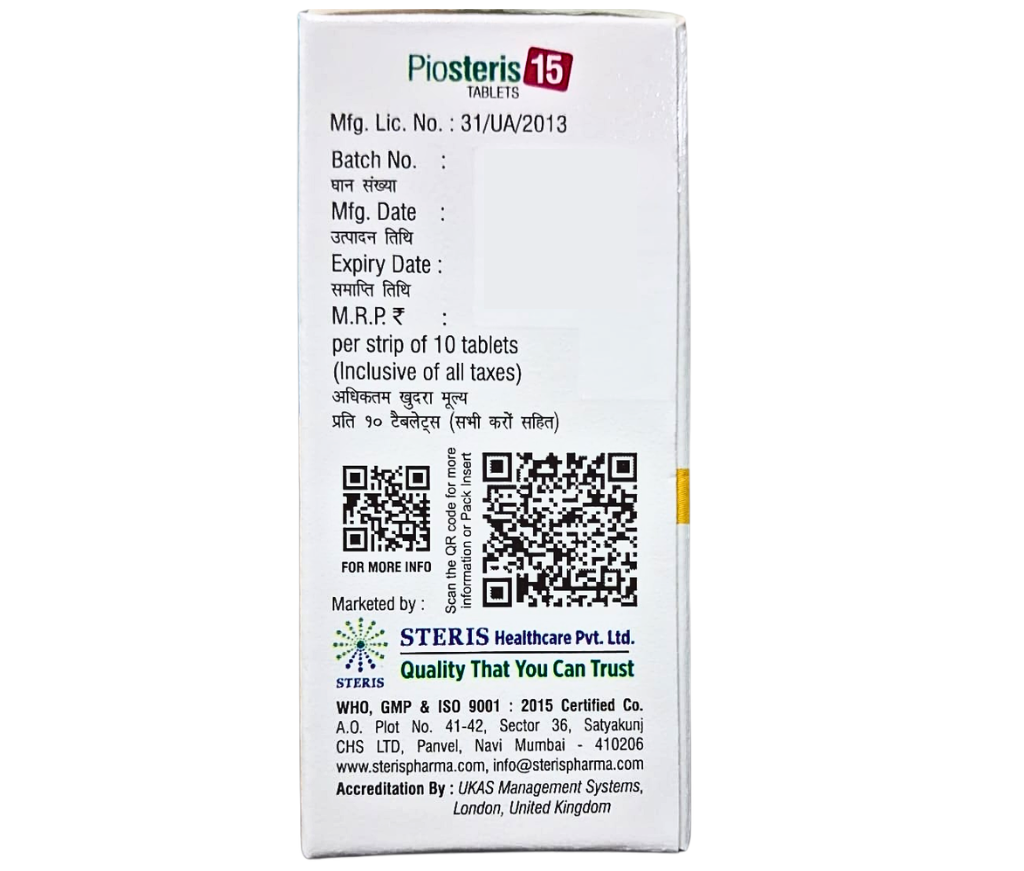
Manufactured By Steris Healthcare Pvt Ltd
Composition pioglitazone 15 mg
Rs 39.69
MRP Rs 56.70
(30% OFF)
Includes all taxes
Package SIZE
( For 10 Tablets )

100% Authentic
Products

Free
Shipping*

Products
Return Policy
Description:
Pioglitazone 15 mg is a prescription oral medicine taken alongside diet and exercise to help lower blood sugar in adults with Type 2 diabetes.mellitus in adults as an adjunct to diet and exercise. Unlike sulfonylureas, Pioglitazone does not directly stimulate insulin release; instead, it works by improving the body's sensitivity to its own insulin at the level of fat, muscle, and liver tissue, helping cells use glucose more effectively. It is typically taken once daily, with or without food, and may be prescribed alone or in combination with other antidiabetic medicines such as Metformin or sulfonylureas when a single therapy is not enough. Pioglitazone is a Schedule H prescription-only medicine, and its full glucose-lowering benefit generally builds gradually over several weeks. Common side effects include fluid retention, weight gain, and mild swelling in the feet or ankles; regular monitoring of liver function, heart failure symptoms, and bone health is generally recommended during long-term use.
What Is Pioglitazone 15 mg Used For?
Pioglitazone 15 mg is prescribed as part of a comprehensive treatment plan — alongside diet control and regular physical activity — to improve glycemic control in adults with Type 2 diabetes mellitus. It is commonly used in the following situations:
- As monotherapy in patients who cannot tolerate Metformin or sulfonylureas.
- As add-on therapy when blood sugar remains inadequately controlled on Metformin, a sulfonylurea, or insulin alone.
- As part of triple combination therapy in select cases, under close medical supervision.
Because Pioglitazone works by improving insulin sensitivity rather than increasing insulin output, it is particularly useful in patients with significant insulin resistance, a hallmark feature of Type 2 diabetes.
Key Takeaways
Pioglitazone 15 mg is an oral anti-diabetic medicine primarily prescribed for adults with type 2 diabetes mellitus to improve blood sugar control. It belongs to the thiazolidinedione (TZD) class and works by increasing the body's sensitivity to insulin rather than increasing insulin production.
Clinical Indications at a Glance
| Indication | Details |
|---|---|
| Primary use | Type 2 diabetes mellitus in adults |
| Drug class | Thiazolidinedione (TZD) / insulin sensitizer |
| Used with | Diet control and regular physical activity |
| Not indicated for | Type 1 diabetes, diabetic ketoacidosis |
| Not recommended in | Patients with heart failure (NYHA Class III/IV) or active liver disease |
| Prescription status | Schedule H – requires a valid doctor's prescription |
Why Is Managing Type 2 Diabetes Important?
Type 2 diabetes is a progressive condition in which the body's cells become resistant to insulin's effects, causing blood glucose to remain persistently elevated. Over time, uncontrolled blood sugar can gradually damage blood vessels and nerves, raising the long-term risk of complications affecting the heart, kidneys, eyes, and nerves. Addressing insulin resistance directly — rather than only boosting insulin supply — is an important treatment strategy for many patients, which is where insulin-sensitizing medicines like Pioglitazone play a role in a broader, individualized diabetes management plan.
Key Benefits of Pioglitazone 15 mg
- Improves insulin sensitivity – helps muscle, fat, and liver cells respond better to the body's own insulin, rather than simply increasing insulin levels.
- Once-daily dosing – convenient dosing schedule that can support better treatment adherence.
- Low risk of hypoglycemia when used alone – because it does not directly stimulate insulin release, the risk of low blood sugar is lower with monotherapy compared to sulfonylureas.
- Durable glycemic effect – often provides a more sustained blood sugar–lowering effect over time compared to some other oral antidiabetic classes.
- Flexible combination use – can be combined with Metformin, sulfonylureas, or insulin under medical supervision for patients needing additional control.
- Beneficial in insulin-resistant patients – particularly useful for individuals whose diabetes is driven primarily by insulin resistance rather than insulin deficiency.
Mechanism of Action
| Component | Class | Action |
|---|---|---|
| Pioglitazone (15 mg) | Thiazolidinedione (TZD) | Activates PPAR-gamma (peroxisome proliferator-activated receptor gamma) receptors in fat, muscle, and liver cells, enhancing insulin sensitivity, improving glucose uptake, and reducing hepatic glucose output |
Dosage Guidance
| Aspect | Details |
|---|---|
| Common strength | Pioglitazone 15 mg (also available in 30 mg) |
| Frequency | Usually once daily |
| Timing | Can be taken with or without food; consistent daily timing is generally advised |
| Titration | Dose may be increased gradually by the physician based on blood sugar response, typically not exceeding the maximum advised dose |
| Missed dose | Take as soon as remembered unless close to the next scheduled dose; do not double the dose |
| Onset of full effect | Glycemic benefits typically build over several weeks of regular use |
| Duration | Long-term, ongoing therapy as directed by the treating physician |
Important: Dosage must never be self-adjusted. Any change in dose should be made only by the prescribing doctor based on blood glucose monitoring, HbA1c levels, and assessment of fluid retention or heart failure symptoms.
Side Effects
Common Side Effects
- Fluid retention (edema), especially in the feet or ankles
- Weight gain
- Mild headache
- Upper respiratory tract symptoms (in some patients)
- Muscle or joint discomfort
Serious Side Effects – Seek Immediate Medical Attention
- Signs of heart failure: shortness of breath, rapid weight gain, swelling of the legs or abdomen
- Signs of liver problems: yellowing of skin or eyes, dark urine, unexplained fatigue, loss of appetite
- Bone fractures: particularly reported with long-term use, more notable in women
- Vision changes: new or worsening blurred vision (reported rarely, linked to macular edema)
- Signs of bladder-related concerns: blood in urine, pain during urination (to be reported promptly to your doctor)
- Severe allergic reaction: rash, swelling of the face or throat, difficulty breathing
Substitutes and Alternatives
| Substitute Type | Examples (as advised by physician) |
|---|---|
| Same molecule, different brand | Other Pioglitazone 15 mg brands |
| Combination alternative | Pioglitazone + Metformin fixed-dose combinations |
| Alternate drug class | DPP-4 inhibitors, SGLT2 inhibitors, sulfonylureas (as separately prescribed) |
Note: Substitution should never be done without medical supervision. Switching therapy requires a doctor's evaluation of individual cardiovascular and liver health status.
Precautions
- Do not use in Type 1 diabetes or diabetic ketoacidosis.
- Avoid use in patients with symptomatic heart failure (NYHA Class III or IV) or a history of heart failure, as Pioglitazone can cause or worsen fluid retention.
- Use with caution in patients with liver impairment; liver function should be monitored periodically.
- Report any unusual swelling, rapid weight gain, or breathing difficulty to your doctor promptly.
- Long-term use has been associated with an increased risk of bone fractures, particularly in women; discuss bone health monitoring with your doctor.
- Not recommended during pregnancy or breastfeeding unless specifically advised by a physician.
- Inform your doctor of all other medicines being taken, as interactions are possible with insulin, other antidiabetics, and certain other drug classes.
- Regular monitoring of liver function and cardiovascular status is generally advised during long-term therapy.
Conclusion
Pioglitazone 15 mg offers a distinct approach to managing Type 2 diabetes by directly targeting insulin resistance rather than simply increasing insulin output. Its once-daily dosing, durable glycemic effect, and lower hypoglycemia risk when used alone make it a valuable option for many patients, particularly those whose diabetes is driven by reduced insulin sensitivity. As with any antidiabetic therapy, careful patient selection — especially regarding heart failure risk, liver health, and bone health — along with regular monitoring, is essential. The right dose, combination therapy, and duration of use should always be determined by a qualified physician based on individual health status and treatment response.
Piosteris 15?
Piosteris 15 is a prescription tablet containing Pioglitazone 15 mg, marketed by Steris Healthcare Pvt. Ltd. and class and is used, alongside diet and exercise, to help lower blood sugar in adults with Type 2 diabetes mellitus. Rather than boosting insulin release, it improves the body's sensitivity to its own insulin in fat, muscle, and liver tissue. It's typically taken once daily and may be combined with other antidiabetic medicines. Common side effects include fluid retention and weight gain. It is Schedule H — prescription only, consult your doctor.
Frequently Asked Questions
1. What is pioglitazone 15 mg used for?
It is used to manage Type 2 diabetes mellitus in adults, along with diet and exercise, by improving the body's sensitivity to its own insulin.
2. What are the benefits of pioglitazone?
Pioglitazone improves insulin sensitivity, offers once-daily dosing, has a lower hypoglycemia risk when used alone, and provides a durable blood sugar–lowering effect over time.
3. When is the best time to take pioglitazone 15 mg?
It is usually taken once daily, with or without food, at a consistent time each day as advised by your doctor.
4. How long does pioglitazone take to work?
Its full blood sugar–lowering effect typically builds gradually over several weeks of regular, consistent use rather than acting immediately.
5. Can pioglitazone cause weight gain?
Yes, weight gain and fluid retention are known side effects of pioglitazone and should be discussed with your doctor if they become bothersome.
6. Does pioglitazone cause low blood sugar (hypoglycemia)?
When used alone, pioglitazone has a relatively low risk of hypoglycemia since it does not directly stimulate insulin release. However, risk increases when combined with insulin or sulfonylureas.
7. Is pioglitazone safe for patients with heart problems?
Pioglitazone is generally avoided in patients with symptomatic heart failure (NYHA Class III/IV), as it can cause fluid retention that may worsen heart failure symptoms.
8. Can pioglitazone affect the liver?
Liver function should be monitored periodically during treatment, as pioglitazone can, in some cases, affect liver enzyme levels.
9. Does pioglitazone increase fracture risk?
Long-term use has been associated with an increased risk of bone fractures, particularly in women, so bone health should be discussed with your doctor.
10. Can pioglitazone be combined with other diabetes medicines?
Yes, it can be combined with Metformin, sulfonylureas, or insulin under medical supervision when a single medicine does not provide adequate control.
11. Is pioglitazone suitable for Type 1 diabetes?
No, it is not indicated for Type 1 diabetes or diabetic ketoacidosis; it is intended specifically for Type 2 diabetes management.
12. Can pregnant or breastfeeding women take pioglitazone?
It is generally not recommended during pregnancy or breastfeeding unless specifically advised by a physician, who may suggest an alternative treatment.
13. What should I do if I miss a dose of pioglitazone?
Take the missed dose as soon as you remember, unless it is almost time for your next dose. Do not take a double dose to make up for a missed one.
14. What are the common side effects of pioglitazone 15 mg?
Common side effects include fluid retention, mild swelling in the feet or ankles, weight gain, and mild headache.
15. Can pioglitazone cause vision changes?
Vision changes, including blurred vision linked to macular edema, have been reported rarely and should be reported to your doctor promptly if they occur.
16. What substitutes are available for pioglitazone 15 mg?
Alternatives may include other Pioglitazone brands, Pioglitazone-Metformin combinations, or entirely different drug classes such as DPP-4 or SGLT2 inhibitors, chosen by your doctor.
17. Can pioglitazone be stopped suddenly?
Any change in treatment, including stopping the medicine, should be done only under medical guidance, as abrupt discontinuation can affect blood sugar control.
Product Information
Brand name: PIOSTERIS 15 (STERIS HEALTHCARE PVT LTD)
Composition Name: Pioglitazone 15 mg
Formulation: Tablets IP
Pack size: 20 × 10 Tablets
Marketed By: Steris Healthcare Pvt. Ltd.
Regulatory standard: WHO-GMP Certified
Schedule: Valid Prescription Required (Prescription Only)