


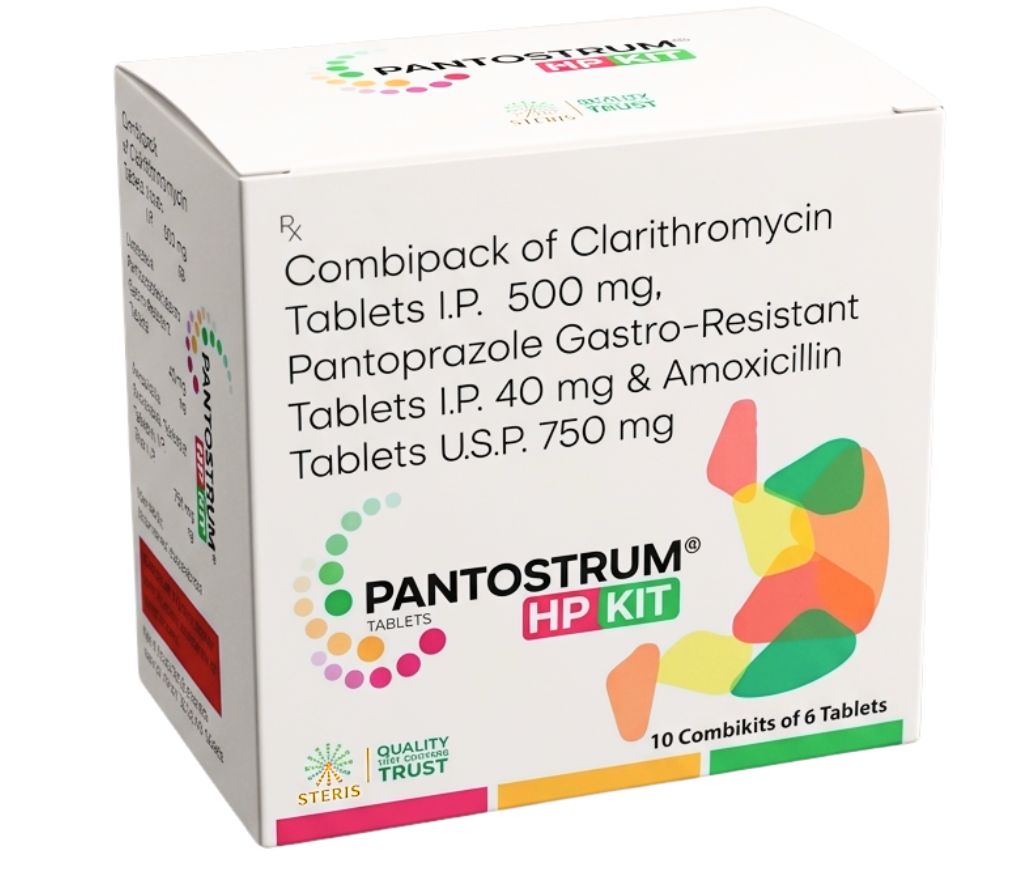
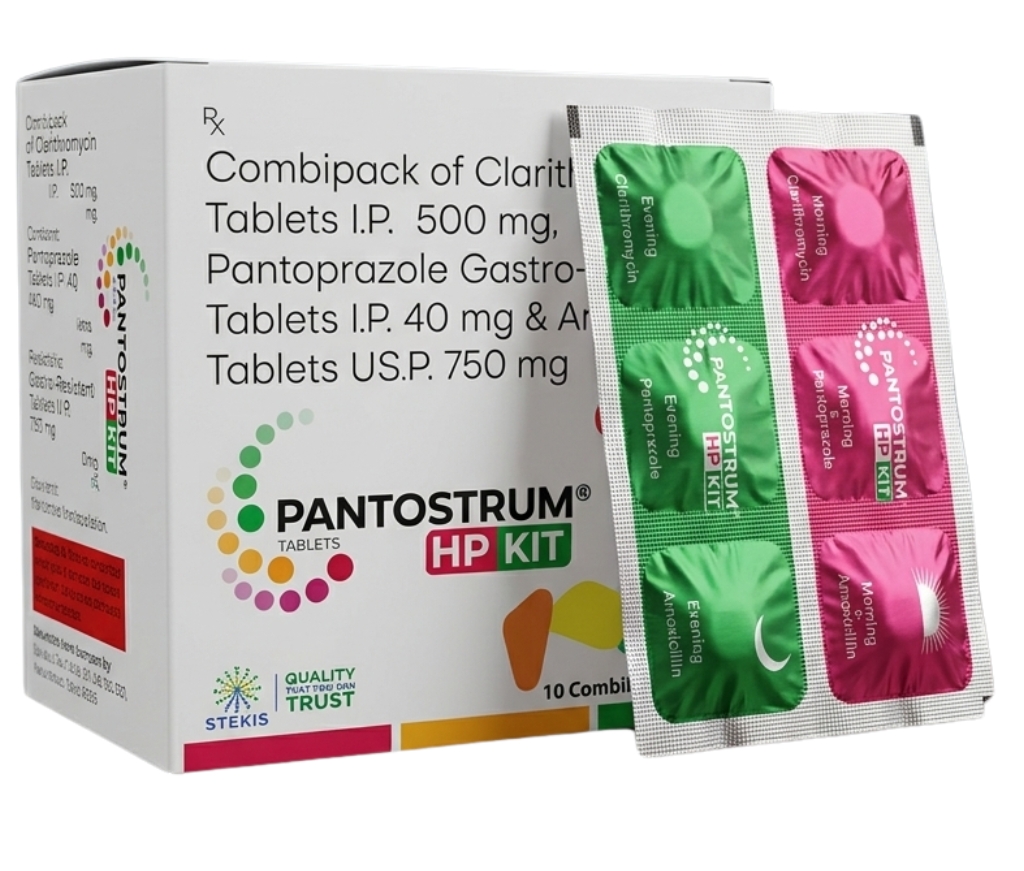
PANTOSTRUM HP KIT
 Item requires a valid prescription
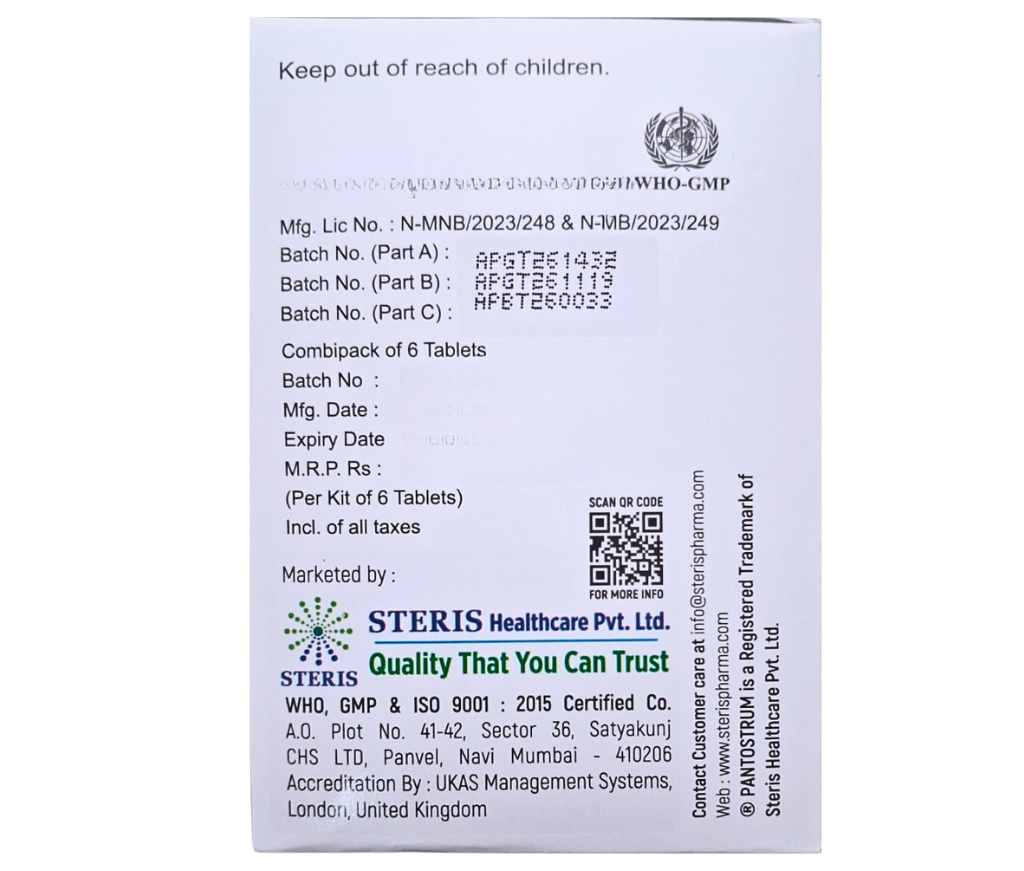
Manufactured By Steris Healthcare Pvt Ltd
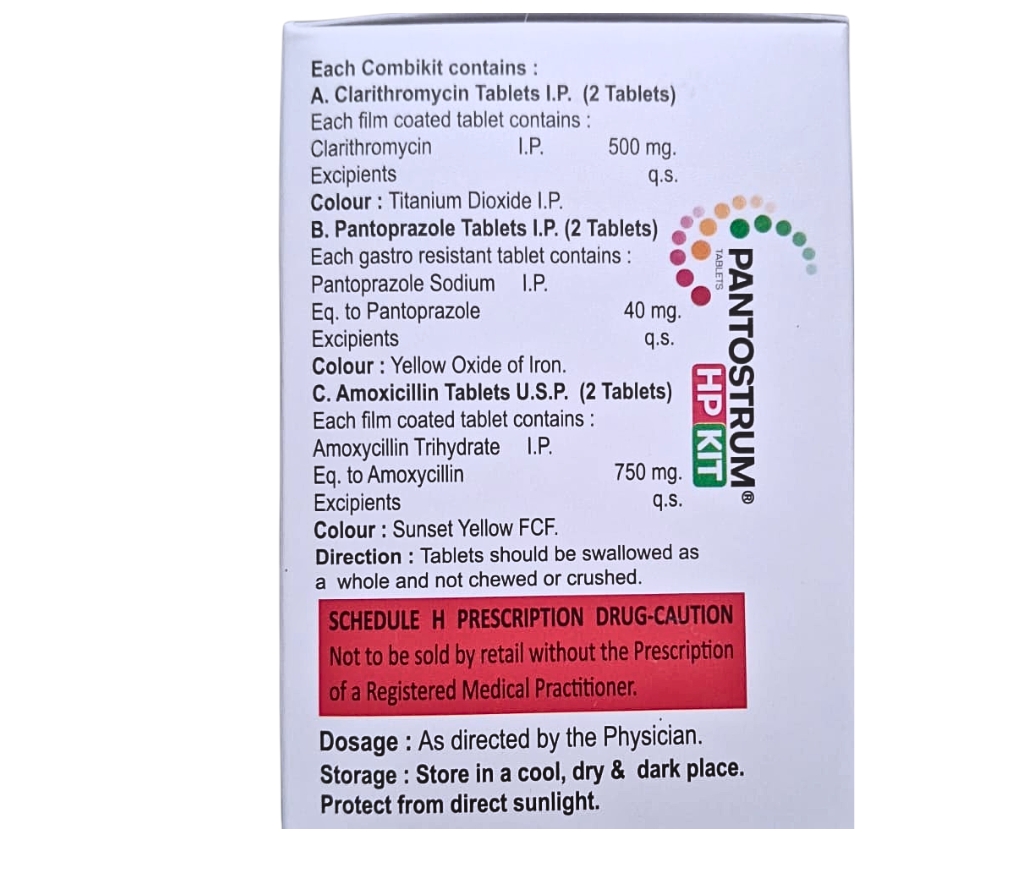
Composition Combipack of Pantoprazole Gastro- resistant Capsule, Clarithromycin & Amoxicillin
Rs 130.90
MRP Rs 91.63
(43% OFF)
Includes all taxes
Package SIZE
( For 10 Tablet )

100% Authentic
Products

Free
Shipping*

Products
Return Policy
Description:
Pantoprazole Gastro-Resistant Capsule + Clarithromycin + Amoxicillin is a prescription combination kit used mainly as triple therapy to eradicate Helicobacter pylori (H. pylori) infection — the bacterium responsible for most stomach and duodenal ulcers. Pantoprazole is a proton pump inhibitor (PPI) that suppresses stomach acid so the ulcer can heal; Clarithromycin and Amoxicillin are two antibiotics that work together to kill H. pylori bacteria hiding in the stomach lining. This combination is typically prescribed for 7 to 14 days and is one of the most widely used first-line regimens for H. pylori-associated peptic ulcer disease worldwide. It is a Schedule H prescription-only medicine and must not be self-administered without a doctor's evaluation, including a confirmed H. pylori test.
What Is Pantoprazole + Clarithromycin + Amoxicillin Used For?
| Indication | How This Combination Helps |
|---|---|
| H. pylori-positive peptic ulcer disease | Pantoprazole reduces acid to protect the healing ulcer while the two antibiotics clear the underlying infection |
| Gastric (stomach) ulcers | Combination therapy is standard-of-care for ulcers linked to H. pylori |
| Duodenal ulcers | Reduces recurrence by eliminating the bacterial cause, not just the symptoms |
| Gastritis linked to H. pylori | Treats the chronic inflammation driven by bacterial colonization |
| Prevention of ulcer recurrence | Eradicating H. pylori significantly lowers relapse rates compared with acid suppression alone |
| Functional dyspepsia associated with H. pylori | May be used as part of a test-and-treat strategy in confirmed cases |
How It Works
Pantoprazole (Gastro-Resistant Capsule) Pantoprazole belongs to the proton pump inhibitor (PPI) class. It irreversibly blocks the H+/K+-ATPase ("proton pump") in the stomach's parietal cells, the final step in acid production. This raises stomach pH, which does two important things in this combination: it relieves acid-related ulcer pain, and it creates an environment where clarithromycin and amoxicillin work more effectively against H. pylori. The capsule is gastro-resistant (enteric-coated) so the drug survives stomach acid and is released in the small intestine for proper absorption.
Clarithromycin A macrolide antibiotic that inhibits bacterial protein synthesis by binding to the 50S ribosomal subunit, stopping H. pylori from multiplying and eventually killing it.
Amoxicillin A penicillin-class antibiotic that weakens the bacterial cell wall, causing the H. pylori cell to rupture and die. Using two antibiotics with different mechanisms in combination with a PPI reduces the chance of antibiotic resistance compared with single-drug therapy.
Key Benefits
- Targets the root cause, not just symptoms — actively eradicates H. pylori instead of only masking acid-related discomfort
- Dual-antibiotic approach lowers resistance risk compared with monotherapy regimens
- Faster ulcer healing — reduced acid environment supports mucosal repair while infection clears
- Reduces long-term ulcer recurrence by removing the bacterial trigger
- Convenient combi-pack format — simplifies a complex 3-drug regimen into a single course, improving adherence
- Well-established, guideline-backed regimen used as first-line H. pylori therapy in most clinical protocols
- Short treatment duration — typically completed within one to two weeks rather than months
Dosage & Administration
- This combination is typically taken as directed by a physician, usually twice daily before meals, for a duration commonly ranging from 7 to 14 days
- The pantoprazole capsule should be swallowed whole — do not crush, chew, or open the gastro-resistant capsule, as this can destroy the enteric coating meant to protect the drug from stomach acid
- Antibiotics (clarithromycin and amoxicillin) should be taken at evenly spaced intervals to maintain steady drug levels in the body
- Complete the full course even if pain or discomfort resolves early — stopping antibiotics prematurely is a leading cause of H. pylori treatment failure and antibiotic resistance
- Missed doses should be taken as soon as remembered unless it is close to the next dose; do not double up
- Always confirm exact dosing, spacing, and duration with your prescribing doctor—this varies by patient weight, kidney/liver function, and local resistance patterns
Side Effects
Common Side Effects
- Nausea or mild stomach upset
- Diarrhea or loose stools (can occur from antibiotic use altering gut flora)
- Headache
- Altered or metallic taste in the mouth (commonly linked to clarithromycin)
- Bloating or gas
- Mild abdominal discomfort
Less Common but Serious Side Effects
- Signs of allergic reaction: rash, itching, swelling of the face/lips/tongue, difficulty breathing (more associated with amoxicillin)
- Severe or persistent diarrhea (may indicate Clostridioides difficile-associated colitis — seek medical attention if diarrhea is watery, bloody, or persistent)
- Yellowing of skin or eyes (signs of liver involvement)
- Irregular heartbeat or palpitations (rare, associated with clarithromycin, particularly in patients with pre-existing heart rhythm conditions)
- Severe skin reactions (rare)
- Vitamin B12 or magnesium deficiency with prolonged PPI use (long-term pantoprazole use only, not typical for short eradication courses)
Precautions & Who Should Avoid This Combination
- Not recommended for patients with known penicillin allergy (due to amoxicillin) or macrolide allergy (due to clarithromycin)—inform your doctor of any prior antibiotic reactions
- Use with caution in patients with liver or kidney impairment; dose adjustment may be required
- Pregnant or breastfeeding women should use this combination only under strict medical supervision
- Avoid alcohol during the treatment course, as it can worsen gastrointestinal side effects and reduce antibiotic tolerance
- Inform your doctor about all current medications — clarithromycin has notable drug interaction potential (e.g., with statins, certain blood thinners, and heart rhythm medications)
- Not intended for long-term or repeated self-use; H. pylori retreatment after a failed course requires a different antibiotic combination under medical guidance
- Patients with a history of QT prolongation or heart rhythm disorders should discuss clarithromycin use carefully with their doctor
Substitutes & Comparable Options
| Option | Composition Type | Typical Use Case |
|---|---|---|
| Pantoprazole + Clarithromycin + Amoxicillin (this kit) | PPI + 2 antibiotics | First-line H. pylori triple therapy |
| Pantoprazole + Levofloxacin + Amoxicillin | PPI + fluoroquinolone + penicillin | Second-line therapy after clarithromycin failure |
| Bismuth-based quadruple therapy | PPI + bismuth + 2 antibiotics | Used in areas with high clarithromycin resistance |
| Standalone Pantoprazole | PPI only | Acid reflux/GERD without confirmed H. pylori infection |
| Amoxicillin + Metronidazole + PPI | PPI + 2 alternate antibiotics | Alternative combination in penicillin-tolerant, macrolide-avoidant patients |
Conclusion
The Pantoprazole Gastro-Resistant Capsule with Clarithromycin and Amoxicillin combination remains one of the most trusted, guideline-recommended approaches for treating H. pylori-related peptic ulcers and gastritis. By pairing a potent acid suppressant with two complementary antibiotics, this triple-therapy regimen addresses both the symptom (acid-driven ulcer pain) and the root bacterial cause in a single, time-limited course. Success depends heavily on completing the full prescribed duration and taking each component exactly as directed — partial courses are the most common reason for treatment failure and antibiotic resistance. If you have been diagnosed with H. pylori infection or a related ulcer, discuss this combination with your gastroenterologist or physician to confirm suitability, dosage, and duration for your specific case.
Frequently Asked Questions
1. What is the biggest side effect of pantoprazole?
The most commonly reported side effects of pantoprazole are headache, diarrhea, nausea, and abdominal discomfort. With longer-term use, reduced absorption of vitamin B12 and magnesium can occur, though this is uncommon during a short eradication course. Any severe or persistent symptom should be reported to your doctor.
2. What is Pantop gastro-resistant tablet used for?
Pantop (pantoprazole) gastro-resistant formulations are used to reduce stomach acid production, treating conditions like acid reflux (GERD), gastric and duodenal ulcers, and — when combined with antibiotics — as part of H. pylori eradication therapy.
3. Is pantoprazole good for daily use?
Pantoprazole can be prescribed for daily use over defined periods for conditions like GERD or ulcer healing, and doctors do monitor patients on long-term therapy. However, in this specific combination kit, it is meant for a short, defined eradication course (typically 7–14 days), not indefinite daily use, unless your doctor prescribes otherwise.
4. Is pantoprazole good for stomach gas?
Pantoprazole is designed to reduce stomach acid, not specifically to relieve gas or bloating. If gas is your primary complaint without ulcer or reflux symptoms, a doctor may recommend a different medication targeted at gas relief instead.
5. What is the best time of day to take pantoprazole?
Pantoprazole is most commonly taken in the morning, about 30–60 minutes before breakfast, as this timing helps it work most effectively against acid production triggered by meals. Always follow your doctor's specific instructions, especially when it's part of a combination regimen.
6. What is clarithromycin mainly used for?
Clarithromycin is a macrolide antibiotic mainly used to treat bacterial infections of the respiratory tract and skin and—in this combination — as a key component of H. pylori eradication therapy for stomach ulcers.
7. Is clarithromycin the same thing as amoxicillin?
No. Clarithromycin is a macrolide antibiotic, while amoxicillin is a penicillin-class antibiotic. They kill bacteria through different mechanisms, which is exactly why they are combined in this kit — using two different mechanisms together improves H. pylori eradication rates and helps reduce antibiotic resistance.
8. Which is better, azithromycin or clarithromycin?
Both are macrolide antibiotics, but they are used for different clinical purposes. Clarithromycin is specifically preferred in H. pylori eradication protocols because of its established efficacy in that context, while azithromycin is more commonly used for certain respiratory and skin infections. "Better" depends entirely on the infection being treated—your doctor selects the antibiotic based on the specific condition.
9. Which bacteria are killed by clarithromycin?
Clarithromycin is effective against a range of bacteria, including Helicobacter pylori, Streptococcus species, Haemophilus influenzae, Mycoplasma pneumoniae, and certain Mycobacterium species, among others.
10. Is clarithromycin a harsh antibiotic?
Clarithromycin is generally well-tolerated but can cause gastrointestinal side effects like nausea, diarrhea, and a metallic taste in some patients. It also has notable interactions with other medications, so it's considered a antibiotic that requires careful medical supervision rather than being classified as unusually "harsh."
11. Which tablet is best for gas bloating?
Gas and bloating are typically managed with antacids, digestive enzymes, or simethicone-based products rather than a PPI-antibiotic combination like this one. If bloating is your main concern and there's no confirmed ulcer or H. pylori infection, consult your doctor about a more targeted option.
12. Can I stop the antibiotics early if my stomach pain goes away?
No. Stopping clarithromycin or amoxicillin early — even if symptoms improve — is one of the leading causes of H. pylori treatment failure and can contribute to antibiotic resistance. Always complete the full prescribed course.
13. Can this combination be taken on an empty stomach?
Pantoprazole is generally taken before meals, while the antibiotics may have specific timing instructions relative to food. Follow the exact schedule your doctor or pharmacist provides, since timing affects both absorption and effectiveness.
14. How do I know if H. pylori treatment has worked?
Doctors typically confirm H. pylori eradication with a follow-up breath test, stool antigen test, or endoscopic biopsy performed at least four weeks after completing the antibiotic course, and only after stopping PPIs for a short washout period as advised by your doctor.
15. Can I drink alcohol while taking this combination?
Alcohol is generally not recommended during this treatment course, as it can increase gastrointestinal side effects and may reduce your tolerance to the antibiotics.
16. Is this combination safe during pregnancy?
This combination should only be used in pregnancy if a doctor determines the benefits outweigh the risks, as antibiotic and PPI use in pregnancy requires individualized medical assessment.
17. What happens if I miss a dose of this combination?
Take the missed dose as soon as you remember, unless it is almost time for the next dose—in that case, skip the missed dose and continue your regular schedule. Do not take a double dose to make up for a missed one.
If You Need More Information About PANTOSTRUM HP KIT Click here

