


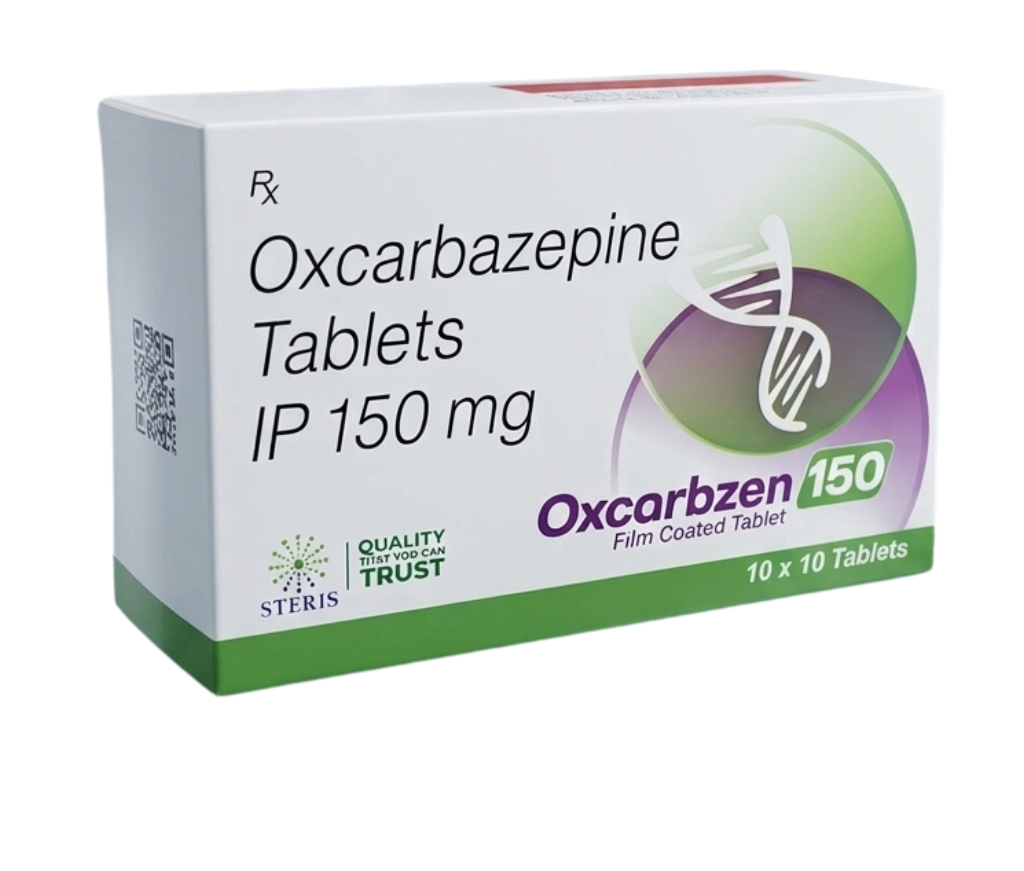
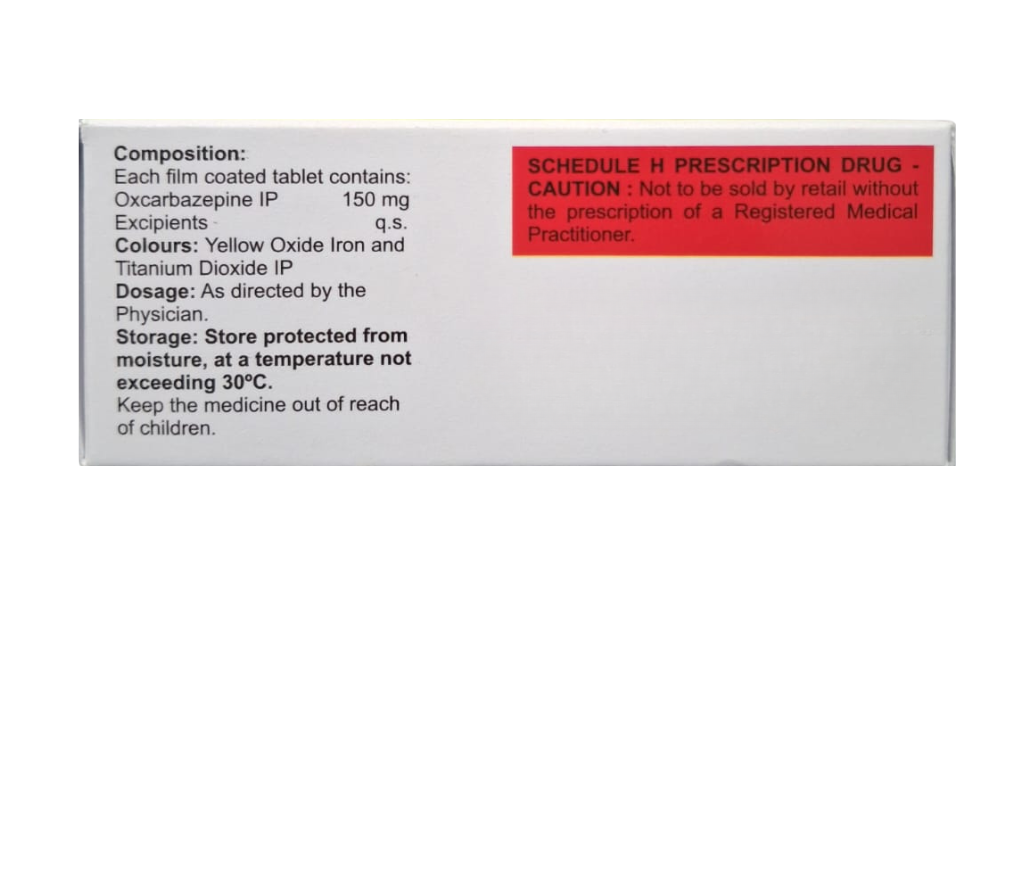

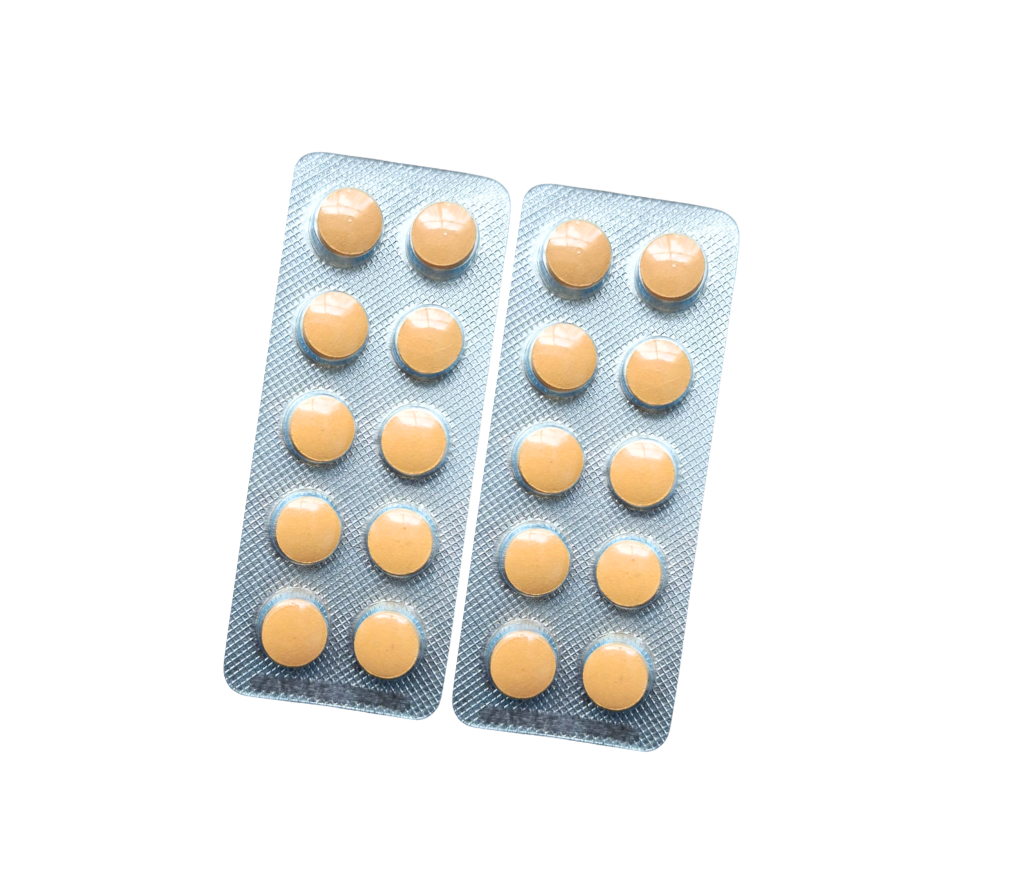
Oxcarbazepine 150 mg | OXCARBZEN 150
 Item requires a valid prescription
Manufactured By Steris Healthcare Pvt Ltd
Composition oxcarbazepine 150 mg
Rs 62.34
MRP Rs 89.06
(30% OFF)
Includes all taxes
Package SIZE
( For 10 Tablet )

100% Authentic
Products

Free
Shipping*

Products
Return Policy
Description:
Oxcarbazepine 150 mg is a prescription anticonvulsant (anti-epileptic) medicine used to treat partial-onset (focal) seizures in adults and children, either alone or with other anti-seizure medicines. It is also used off-label for nerve (neuropathic) pain and sometimes as a mood stabilizer in bipolar disorder. It works by dampening down overactive electrical signals in the brain. Side effects include dizziness, drowsiness and nausea. Serious side effects can include low sodium levels and allergic skin reactions.
What Is Oxcarbazepine 150 mg?
Oxcarbazepine is a second-generation anticonvulsant, chemically related to carbamazepine but generally better tolerated with fewer drug interactions. The 150 mg strength is one of the most commonly prescribed starting doses, especially for patients beginning therapy or those needing careful titration—including children, older adults, and people with lower body weight.
It's manufactured and marketed in film-coated tablet form for oral use and is available through licensed pharmacies against a valid prescription. As a WHO-GMP and ISO-certified manufacturer, Steris Healthcare formulates oxcarbazepine 150 mg tablets to meet strict quality, purity, and stability benchmarks demanded by regulatory authorities.
Clinical Indications Table
| Condition | Use of Oxcarbazepine 150 mg |
|---|---|
| Partial-onset (focal) seizures | First-line or add-on therapy in adults and children |
| Generalized tonic-clonic seizures (as adjunct) | Used alongside other anti-epileptics |
| Trigeminal neuralgia / neuropathic pain | Off-label use for nerve pain management |
| Bipolar disorder (mood episodes) | Off-label use as a mood stabilizer, under psychiatric supervision |
How Does Oxcarbazepine Work?
Oxcarbazepine works by blocking voltage-sensitive sodium channels in nerve cells. Seizures and certain types of nerve pain happen when neurons fire too rapidly or repetitively. By stabilizing these overactive sodium channels, oxcarbazepine reduces the frequency of abnormal electrical discharges in the brain, helping prevent seizures from starting or spreading. This same calming effect on nerve signaling is why it's also useful for nerve-related pain and, at a broader level, for stabilizing mood swings.
The drug is converted in the liver to its active form (a monohydroxy derivative), which is largely responsible for its therapeutic effect — this metabolic pathway is also why oxcarbazepine tends to have fewer interactions than older anticonvulsants like carbamazepine.
Key Benefits of Oxcarbazepine 150 mg
- Effective Seizure Control — Reduces frequency and severity of partial-onset seizures, improving day-to-day safety and quality of life.
- Flexible Dosing — The 150 mg strength allows precise, gradual dose titration, which is especially useful for children and patients sensitive to side effects.
- Fewer Drug Interactions — Compared to carbamazepine, oxcarbazepine has a lower potential for interacting with other medications, making it a preferred choice for patients on multiple drugs.
- Dual Benefit for Nerve Pain — Beneficial for certain neuropathic pain conditions, including trigeminal neuralgia, beyond its anti-seizure role.
- Mood Stabilization Support — Used off-label to help manage mood episodes in bipolar disorder as part of a broader treatment plan.
- Well-Established Safety Profile — Decades of clinical use have generated a well-documented tolerability and monitoring framework for prescribers.
Dosage Guidance
Dosage must always be individualized by your treating physician based on age, weight, indication, and response.
- Oxcarbazepine is usually started at a low dose and gradually increased ("titrated") to the effective maintenance dose.
- The 150 mg tablet is commonly used as a starting or intermediate step during titration, or as part of a twice-daily regimen.
- It is typically taken twice a day, roughly 12 hours apart, with or without food.
- Doses should never be doubled if one is missed — patients should follow their doctor's specific instructions for missed doses.
- Abrupt discontinuation can trigger rebound seizures; any change in dose must be doctor-supervised.
Side Effects of Oxcarbazepine 150 mg
Common Side Effects
- Dizziness or unsteadiness
- Drowsiness or fatigue
- Headache
- Nausea or vomiting
- Double vision or blurred vision
- Difficulty with coordination
Serious Side Effects (Seek Medical Attention)
- Signs of low sodium (hyponatremia): confusion, severe headache, muscle weakness, seizures worsening
- Severe allergic skin reactions (rash, blistering, peeling skin) — including rare but serious conditions like Stevens-Johnson syndrome
- Signs of allergic reaction: swelling of face/lips/tongue, difficulty breathing
- Mood changes, unusual thoughts of self-harm, or worsening depression
- Signs of liver problems: yellowing of skin/eyes, dark urine, persistent nausea
Substitutes & Alternatives Comparison
| Medicine | Class | Typical Use | Key Difference |
|---|---|---|---|
| Oxcarbazepine 150 mg | Anticonvulsant | Focal seizures, nerve pain | Fewer interactions, needs sodium monitoring |
| Carbamazepine | Anticonvulsant | Focal seizures, trigeminal neuralgia | More drug interactions, enzyme-inducing |
| Sodium Valproate | Anticonvulsant | Generalized & focal seizures | Broader spectrum, different side-effect profile |
| Lamotrigine | Anticonvulsant | Focal seizures, bipolar maintenance | Slower titration required, skin rash risk |
Precautions Before Taking Oxcarbazepine 150 mg
- Inform your doctor about any history of kidney disease, heart conditions, or low sodium levels.
- Tell your doctor if you are pregnant, planning pregnancy, or breastfeeding — anticonvulsants require careful risk-benefit discussion.
- Oxcarbazepine can reduce the effectiveness of hormonal contraceptives; alternate contraception may be advised.
- Avoid alcohol, as it can worsen dizziness and drowsiness.
- Use caution when driving or operating machinery until you know how the medicine affects you.
- Periodic blood tests (especially sodium levels) may be recommended by your doctor during treatment.
- Do not stop the medicine suddenly without medical guidance.
Conclusion
Oxcarbazepine 150 mg is a well-established, widely prescribed anticonvulsant that plays a central role in managing partial-onset seizures, and offers meaningful off-label benefits for nerve pain and mood stabilization. Its favorable interaction profile and flexible dosing make it a practical option across age groups, from children needing careful titration to adults managing complex neurological conditions. That said, like all anticonvulsants, it requires medical supervision, periodic monitoring, and patient awareness of warning signs like sodium imbalance or allergic skin reactions. If you or a loved one has been prescribed oxcarbazepine 150 mg, working closely with your doctor on dosing, monitoring, and lifestyle precautions will help you get the most benefit with the lowest risk.
Frequently Asked Questions
1. Is oxcarbazepine used for anxiety?
Oxcarbazepine is not officially approved for anxiety disorders. It is primarily an anti-seizure medicine, though doctors sometimes use anticonvulsants off-label for mood-related symptoms. Anxiety should be discussed separately with your doctor, who may recommend a different, more appropriate treatment.
2. What are the worst side effects of oxcarbazepine?
The most serious side effects include low sodium levels (hyponatremia), severe allergic skin reactions such as Stevens-Johnson syndrome, and signs of liver problems. These are uncommon but require immediate medical attention if they occur.
3. What are the benefits of oxcarbazepine? 1
Its main benefit is effective control of partial-onset seizures. It also helps manage certain types of nerve pain and, in some cases, supports mood stabilization in bipolar disorder, all while carrying a lower risk of drug interactions than older anticonvulsants.
4. What is the best time to take oxcarbazepine?
Oxcarbazepine is usually taken twice daily, about 12 hours apart, at consistent times each day — for example, morning and night. It can be taken with or without food, but your doctor's specific instructions should always be followed.
5. What to avoid when taking oxcarbazepine?
Avoid alcohol, as it can intensify dizziness and drowsiness. Avoid suddenly stopping the medicine, skipping doses irregularly, or self-adjusting your dose. Also inform your doctor before starting any new medication, including over-the-counter drugs.
6. What does oxcarbazepine do to your brain?
It stabilizes overactive electrical activity in brain cells by blocking sodium channels, which reduces abnormal nerve signaling. This is what helps prevent seizures and can also dampen the nerve overactivity linked to certain pain and mood conditions.
7. Is oxcarbazepine high risk? Oxcarbazepine is considered a generally well-tolerated anticonvulsant compared to older options, but it is still a prescription-only medicine that requires monitoring, particularly for sodium levels and skin reactions. Risk depends on individual health history, so doctor supervision is essential.
8. Does oxcarbazepine work immediately? No, oxcarbazepine typically requires gradual dose titration to reach an effective level, and consistent seizure control usually develops over days to weeks. It is not a fast-acting or as-needed medication.
9. Can oxcarbazepine be used for sleep?
Oxcarbazepine is not approved or intended as a sleep aid. While drowsiness is a known side effect, using it specifically for sleep problems is not recommended; a doctor should be consulted for appropriate sleep-related treatment.
10. Can oxcarbazepine cause weight gain?
Weight changes are not among the most common side effects of oxcarbazepine, though individual responses can vary. Patients noticing unexpected weight changes should discuss this with their doctor.
11. What is oxcarbazepine 150 mg used for?
It is primarily used to treat partial-onset (focal) seizures in adults and children, either as a standalone treatment or alongside other anti-seizure medicines. The 150 mg strength is often used during dose titration or as part of a twice-daily maintenance regimen.
12. Can oxcarbazepine be used for mood?
Yes, in some cases doctors prescribe oxcarbazepine off-label to help stabilize mood episodes in bipolar disorder, though this is not its primary approved indication and should only be done under specialist supervision.
13. Can oxcarbazepine be taken with other seizure medications?
Yes, it is often used as add-on (adjunct) therapy alongside other anticonvulsants for patients whose seizures aren't fully controlled with a single medication. Your doctor will monitor for interactions and adjust doses accordingly.
14. Is it safe to drink alcohol while on oxcarbazepine?
It's best to avoid alcohol, as it can increase drowsiness, dizziness, and impaired coordination—effects that oxcarbazepine can already cause on its own.
15. How long does it take for oxcarbazepine to leave the body?
The time it takes to clear from the body varies by individual metabolism, dose, and duration of use. Your doctor can provide specifics based on your treatment history; never stop or restart the medicine without medical advice.
16. Can children take oxcarbazepine 150 mg?
Yes, oxcarbazepine is approved for use in children with partial-onset seizures, with dosing carefully calculated based on body weight and titrated gradually under pediatric neurologist supervision.
If You Need More Information About OXCARBZEN 150 Click here

