

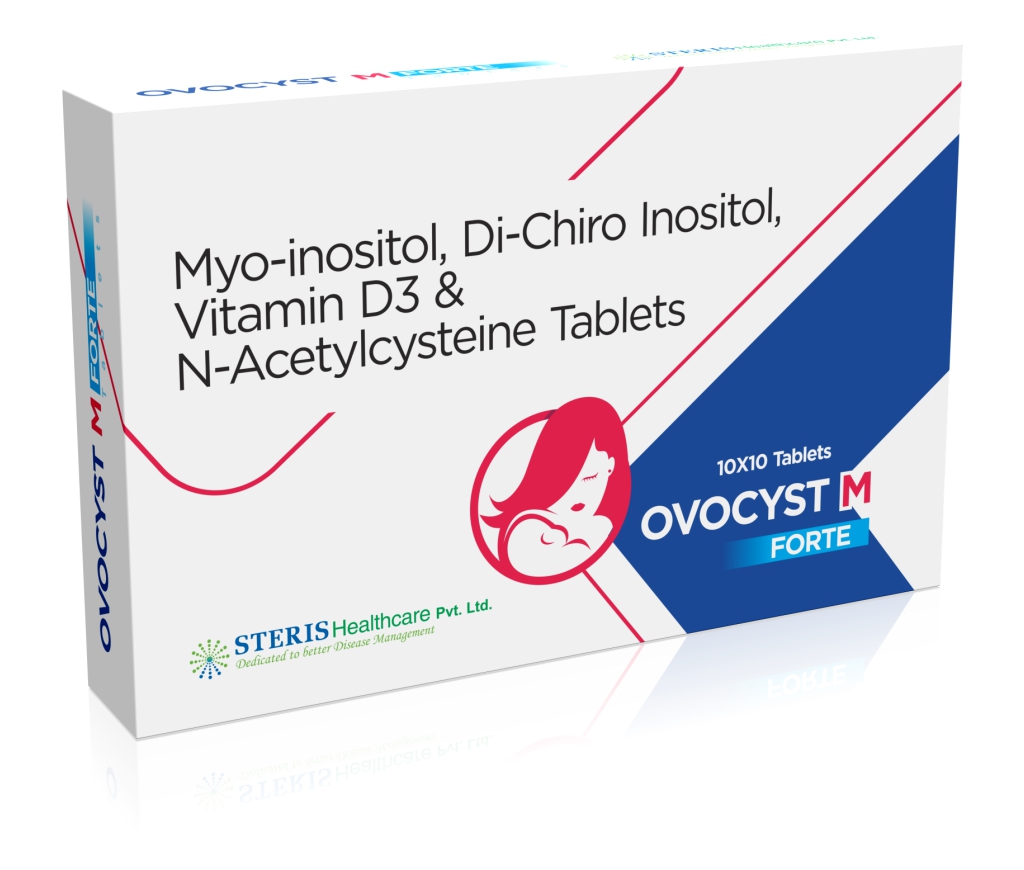
OVOCYST M FORTE
 Item requires a valid prescription
Manufactured By Steris Healthcare Pvt Ltd
Composition Myo Inositol Di-Chiro Inositol, Vitamin D3 & N- Acetylcysteine Tablet
Rs 171.28
MRP Rs 244.69
(30% OFF)
Includes all taxes
Package SIZE
( For 10 Tablets )

100% Authentic
Products

Free
Shipping*

Products
Return Policy
Description:
Myo Inositol Di-Chiro Inositol, Vitamin D3 & N-Acetylcysteine Tablet is a nutritional supplement formulation designed to provide a combination of inositols, vitamin D3 and N-acetylcysteine (NAC). These ingredients are commonly researched for their potential roles in metabolic health, antioxidant protection and reproductive health, particularly in women with polycystic ovary syndrome (PCOS).
Recent research continues to investigate nutritional approaches to PCOS. Inositols, vitamin D and NAC are among the most frequently studied supplements in this area. However, the 2023 international PCOS guideline emphasizes individualized management, lifestyle measures and evidence-based medical care rather than relying on supplements alone.
What Is Myo Inositol Di-Chiro Inositol, Vitamin D3 & N-Acetylcysteine Tablet?
This type of supplement combines three nutritional components:
- Myo-inositol: One of the two principal forms of inositol studied in PCOS. It participates in cellular signaling and pathways associated with insulin action.
- D-chiro-inositol: Another naturally occurring form of inositol involved in insulin-related cellular signaling.
- Vitamin D3: A form of vitamin D that helps maintain normal calcium and phosphorus metabolism and supports several physiological functions.
- N-acetylcysteine (NAC): A cysteine-containing compound and precursor to glutathione, an important antioxidant in the body.
The combination is particularly relevant to consumers looking for nutritional support alongside lifestyle and clinician-directed management of PCOS.
Myo Inositol Di-Chiro Inositol, Vitamin D3 & N-Acetylcysteine Tablet Uses
The most common reason consumers and healthcare professionals consider this type of formulation is supportive management of PCOS-related metabolic and reproductive concerns.
1. Support for PCOS-related metabolic health
Myo-inositol and D-chiro-inositol have been studied for their relationship with insulin signaling. Research suggests that inositol supplementation may improve certain metabolic and hormonal outcomes in women with PCOS, although the overall evidence remains variable. A 2024 systematic review reported potential improvements in menstrual cycles, hyperandrogenism and ovulatory function with myo-inositol, while another systematic review concluded that evidence for inositol in PCOS remains limited and inconclusive
Therefore, this supplement may be considered as nutritional support, rather than a replacement for prescribed PCOS treatment.
2. Support for menstrual and reproductive health
PCOS can be associated with irregular periods and ovulatory problems. Myo-inositol has been investigated for supporting ovulatory function and menstrual regularity.
NAC has also attracted interest in reproductive health. A 2025 systematic review and meta-analysis involving 22 studies and 2,515 women with PCOS found that NAC was associated with improvements in outcomes including progesterone and endometrial thickness, although further high-quality research is still needed.
These findings make the ingredients scientifically interesting, but they should not be interpreted as a guarantee that a particular combination will restore ovulation or increase pregnancy rates.
3. Antioxidant support
N-acetylcysteine is a precursor to glutathione and is therefore commonly studied for its antioxidant-related properties. Oxidative stress is one of the biological pathways investigated in PCOS research.
A 2024 review found that NAC may influence oxidative stress, inflammation and insulin-related pathways in PCOS, while also emphasizing that the exact mechanisms and clinical applications require further research.
4. Vitamin D nutritional support
Vitamin D deficiency is relatively common among women with PCOS, although deficiency is not exclusive to PCOS. A 2026 systematic review of 11 studies involving 1,063 women with PCOS found that vitamin D status was associated with metabolic and reproductive factors, but supplementation produced variable results and should not be considered a stand-alone PCOS treatment.
Consequently, vitamin D3 in a combination supplement may be useful when dietary intake or vitamin D status is inadequate, but the appropriate amount depends on the product formulation and individual nutritional needs.
Key Benefits of Myo Inositol Di-Chiro Inositol, Vitamin D3 & N-Acetylcysteine Tablet
Potential benefits associated with the ingredients include:
- Supports nutritional management of PCOS-related metabolic concerns.
- May support healthy insulin signaling and glucose metabolism.
- May support menstrual regularity and normal ovulatory function in some women with PCOS.
- Provides antioxidant support through NAC and its role in glutathione production.
- Supplies vitamin D3 for normal vitamin D-related physiological functions.
- Combines several commonly researched nutritional ingredients in one formulation.
- May be convenient for people who have been advised by a healthcare professional to use these nutrients as part of a broader PCOS management plan.
It is important to distinguish potential ingredient-level benefits from proven benefits of the finished product. The clinical evidence for myo-inositol, D-chiro-inositol, vitamin D and NAC does not automatically establish that every commercial combination tablet produces the same results.
Myo Inositol Di-Chiro Inositol, Vitamin D3 & N-Acetylcysteine Tablet Side Effects
Most nutritional supplements are not completely free from side effects. Inositol supplements can cause gastrointestinal symptoms such as nausea, diarrhea and abdominal discomfort, particularly in some people taking higher amounts. Headache and fatigue have also been reported.
Possible side effects can vary according to the complete formulation and dose. Depending on the individual ingredients, some users may experience:
- Nausea
- Abdominal discomfort
- Loose stools or diarrhea
- Headache
- Fatigue
- Unpleasant taste or gastrointestinal discomfort with NAC-containing formulations
Taking more than the recommended amount does not necessarily provide greater benefits.
People with existing medical conditions, those taking prescription medicines, pregnant or breastfeeding women, and people preparing for fertility treatment should discuss supplementation with a qualified healthcare professional before use.
Who Should Consider This Supplement?
A Myo Inositol Di-Chiro Inositol, Vitamin D3 & N-Acetylcysteine Tablet may be of interest to adults who have been advised to use nutritional supplementation for PCOS, metabolic health or related nutritional needs.
However, PCOS is a complex endocrine condition. Treatment should be individualized according to symptoms, reproductive goals, metabolic risk, laboratory findings and other health factors.
The international PCOS guideline recommends lifestyle management as an important component of care and emphasizes individualized treatment. Supplements should therefore be viewed as potentially complementary rather than automatically substituting for clinically indicated medicines or other treatments.
How to Choose the Right Myo Inositol, D-Chiro Inositol, Vitamin D3 & NAC Tablet
If you are comparing products online, don't judge a supplement only by the number of ingredients on the label. Check:
- Exact ingredient quantities: The amount of myo-inositol, D-chiro-inositol, vitamin D3 and NAC matters.
- Ingredient ratio: Products may use different myo-inositol-to-D-chiro-inositol ratios. Do not assume every ratio has identical clinical evidence.
- Dosage instructions: Follow the manufacturer's stated serving size or your healthcare professional's recommendation.
- Quality and labeling: Look for transparent ingredient labeling, batch information and appropriate quality controls.
- Additional ingredients: Check for unnecessary excipients, allergens or ingredients that may not suit you.
- Medical suitability: Consider current medicines, pregnancy status, fertility treatment and existing medical conditions before starting supplementation.
Research has investigated the frequently discussed 40:1 myo-inositol-to-D-chiro-inositol ratio, but consumers should not assume that a particular ratio is universally appropriate for every person with PCOS.
Is It a Medicine or a Supplement?
The answer depends on the specific product, its regulatory classification and the market in which it is sold. A product containing these nutrients should not automatically be described as a medicine or as a treatment that cures PCOS.
This distinction is important for buyers. PCOS has no single supplement-based cure, and nutritional products should be used as part of an appropriately individualized health plan.
Evidence-Based Perspective for Buyers
Current research provides a nuanced picture.
Inositol has substantial research interest in PCOS, including randomized trials and meta-analyses, but systematic reviews have reached different conclusions regarding the certainty and magnitude of benefit
NAC also has promising evidence. A 2025 meta-analysis reported potentially beneficial reproductive outcomes, while earlier evidence found possible effects on pregnancy and ovulation compared with placebo but highlighted limitations in study quality.
Vitamin D research is similarly mixed. Recent evidence suggests supplementation may improve vitamin D status and may influence selected metabolic or hormonal markers, but results are inconsistent, and vitamin D should not be treated as a stand-alone PCOS therapy.
This evidence-based approach is important for E-E-A-T, because trustworthy health content should clearly distinguish established nutritional functions, promising research and outcomes that remain uncertain.
Frequently Asked Questions
1. What is Myo Inositol Di-Chiro Inositol, Vitamin D3 & N-Acetylcysteine Tablet used for?
It is generally used as a nutritional supplement providing myo-inositol, D-chiro-inositol, vitamin D3 and NAC. It may be considered for nutritional support in women with PCOS, particularly around metabolic, menstrual and reproductive health. It should not be considered a guaranteed treatment or cure for PCOS.
2. Is Myo Inositol and D-Chiro Inositol good for PCOS?
Myo-inositol and D-chiro-inositol have been extensively studied in PCOS and may support some metabolic, hormonal and reproductive outcomes. However, the strength of evidence varies, and individual responses differ. Current evidence does not support presenting inositol as a replacement for all standard PCOS treatments
3. What are the benefits of NAC in PCOS?
NAC has antioxidant properties and has been investigated for metabolic and reproductive outcomes in PCOS. Recent meta-analysis evidence suggests potential improvements in some reproductive markers, but more robust research is needed before NAC can be considered a definitive PCOS treatment
4. Can vitamin D3 help women with PCOS?
Vitamin D deficiency is common in many populations, including women with PCOS. Research suggests supplementation can improve vitamin D levels and may benefit selected metabolic or hormonal outcomes, particularly in people with deficiency, but results are inconsistent. Vitamin D3 should therefore be viewed as nutritional support rather than a stand-alone PCOS treatment.
5. What are the side effects of Myo Inositol Di-Chiro Inositol, Vitamin D3 & N-Acetylcysteine Tablet?
Possible side effects may include nausea, diarrhea, abdominal discomfort, headache or fatigue. The risk depends on the doses and complete formulation. Always follow the labeled serving instructions and seek professional advice if you experience persistent or severe symptoms.
6. Can I take this supplement for PCOS without consulting a doctor?
It is preferable to discuss supplementation with a healthcare professional, particularly if you have PCOS, diabetes, kidney or liver problems, are pregnant or breastfeeding, are undergoing fertility treatment, or take prescription medicines.
7. Does this tablet cure PCOS?
No supplement should be marketed as a guaranteed cure for PCOS. PCOS is a chronic and complex endocrine condition that requires individualized management. A supplement may provide nutritional support but should not replace clinically appropriate treatment.
8. How long does inositol take to work for PCOS?
The response varies from person to person and depends on the formulation, dose, baseline nutritional status and the specific PCOS outcome being assessed. Clinical studies commonly evaluate outcomes over several weeks or months, so consumers should not expect an immediate effect.
9. Is Myo Inositol Di-Chiro Inositol, Vitamin D3 & N-Acetylcysteine Tablet suitable for fertility?
The individual ingredients have been investigated in relation to reproductive outcomes in PCOS, but suitability for fertility support depends on the individual's diagnosis and treatment plan. People actively trying to conceive should discuss the product with a gynecologist or fertility specialist rather than relying on supplementation alone.
10. What should I check before buying this PCOS supplement online?
Check the complete ingredient list, quantities per tablet, recommended serving, manufacturer information, quality documentation, expiry date and regulatory labeling applicable to your country. Most importantly, compare the actual ingredient doses rather than choosing a product solely because it contains more ingredients.
Conclusion
Myo Inositol Di-Chiro Inositol, Vitamin D3 & N-Acetylcysteine Tablet combines four nutritionally relevant components that have attracted significant scientific interest, particularly in the context of PCOS. Myo-inositol and D-chiro-inositol are studied for insulin-related and reproductive pathways, NAC for antioxidant and metabolic support, and vitamin D3 for correcting or preventing inadequate vitamin D status.
The strongest buyer takeaway is that this type of supplement can be considered supportive nutritional care—not a guaranteed cure for PCOS. Current research is promising but not uniform, particularly when translating evidence from individual ingredients to a specific combination product. The most appropriate choice depends on the exact formulation, individual nutritional status, symptoms, medications and healthcare goals.