


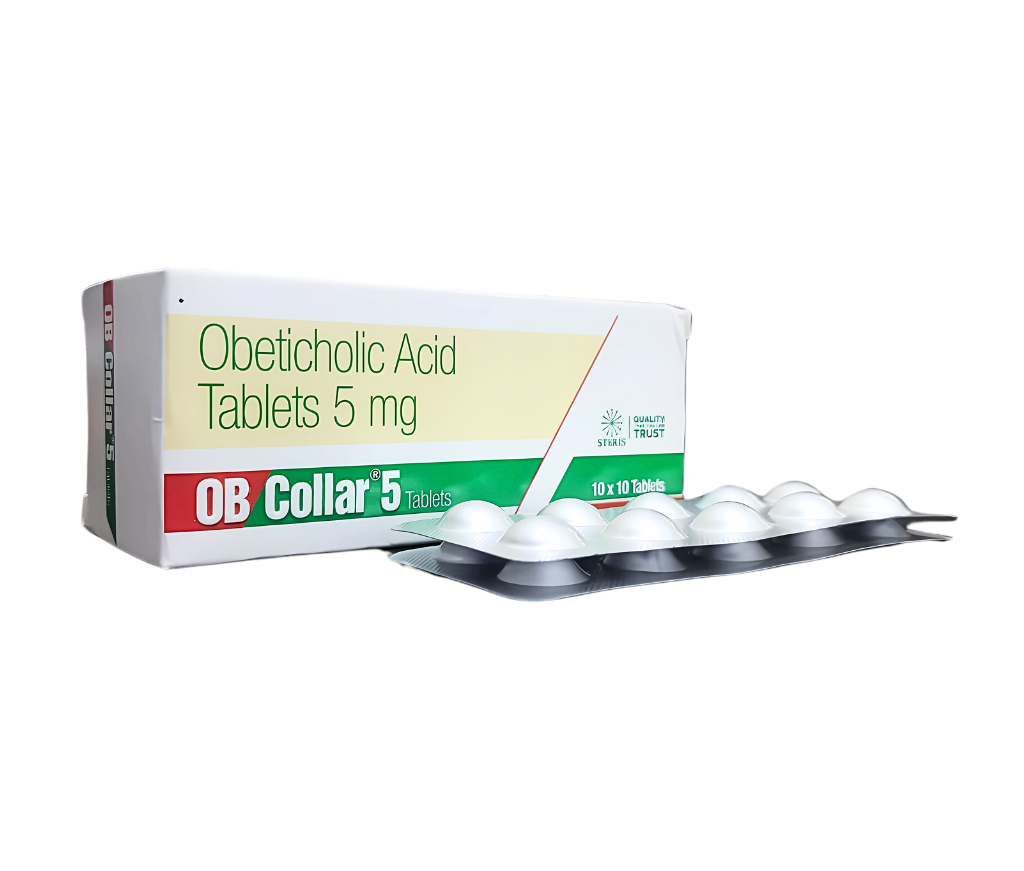
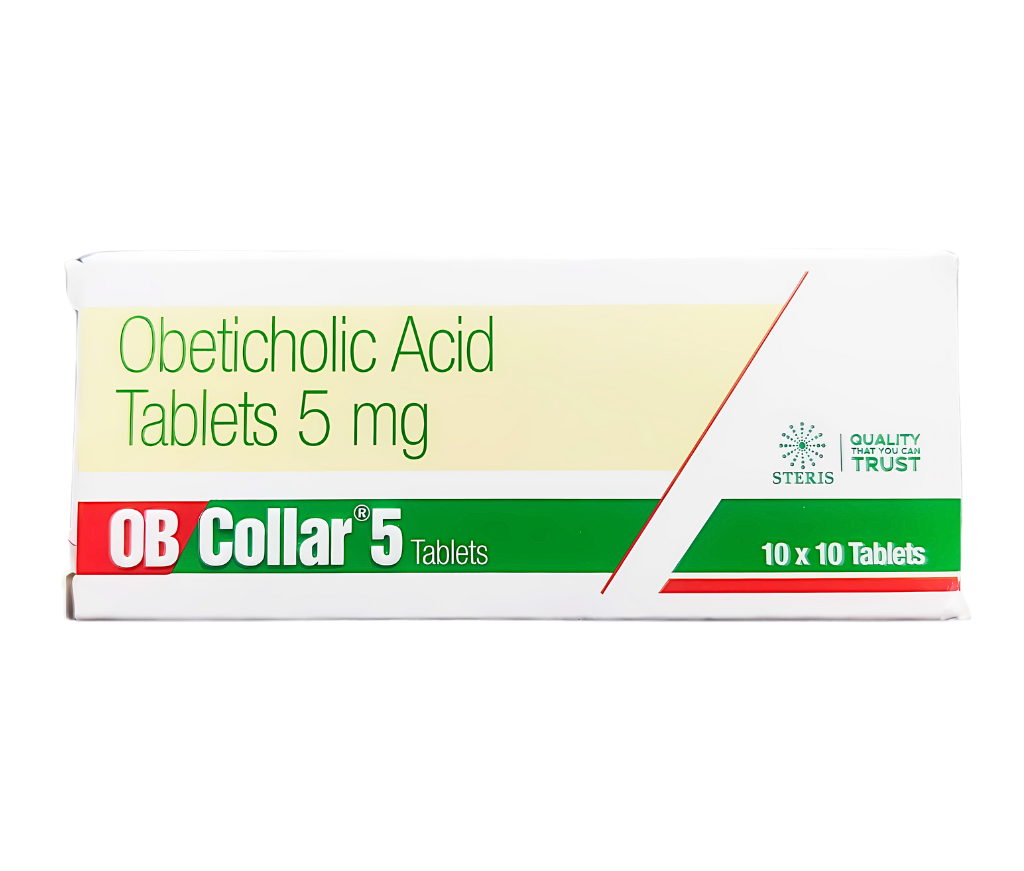
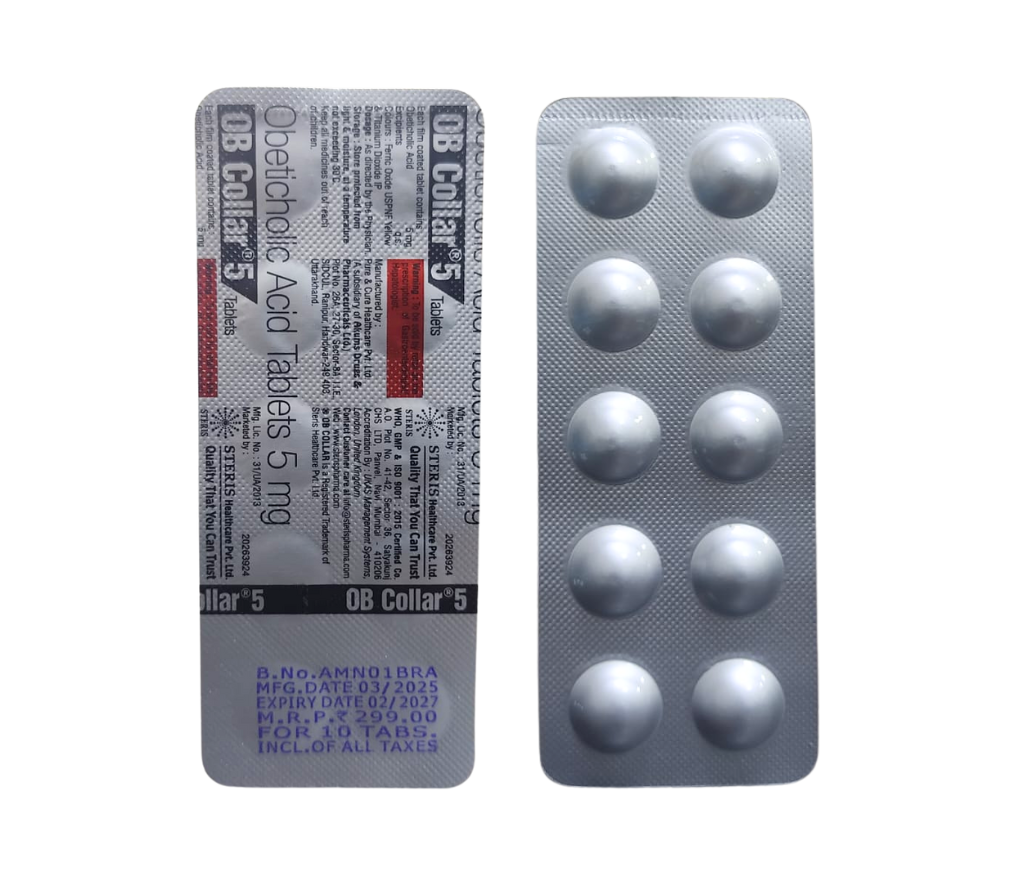
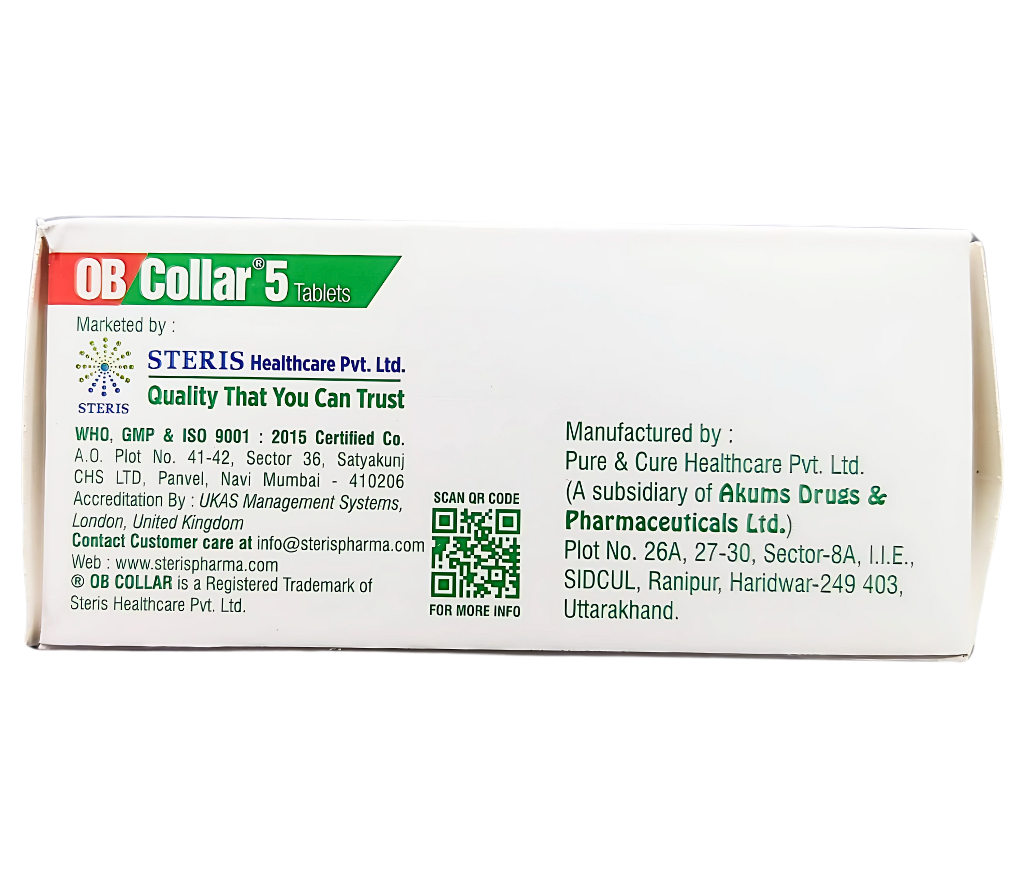
OB-COLLAR 5
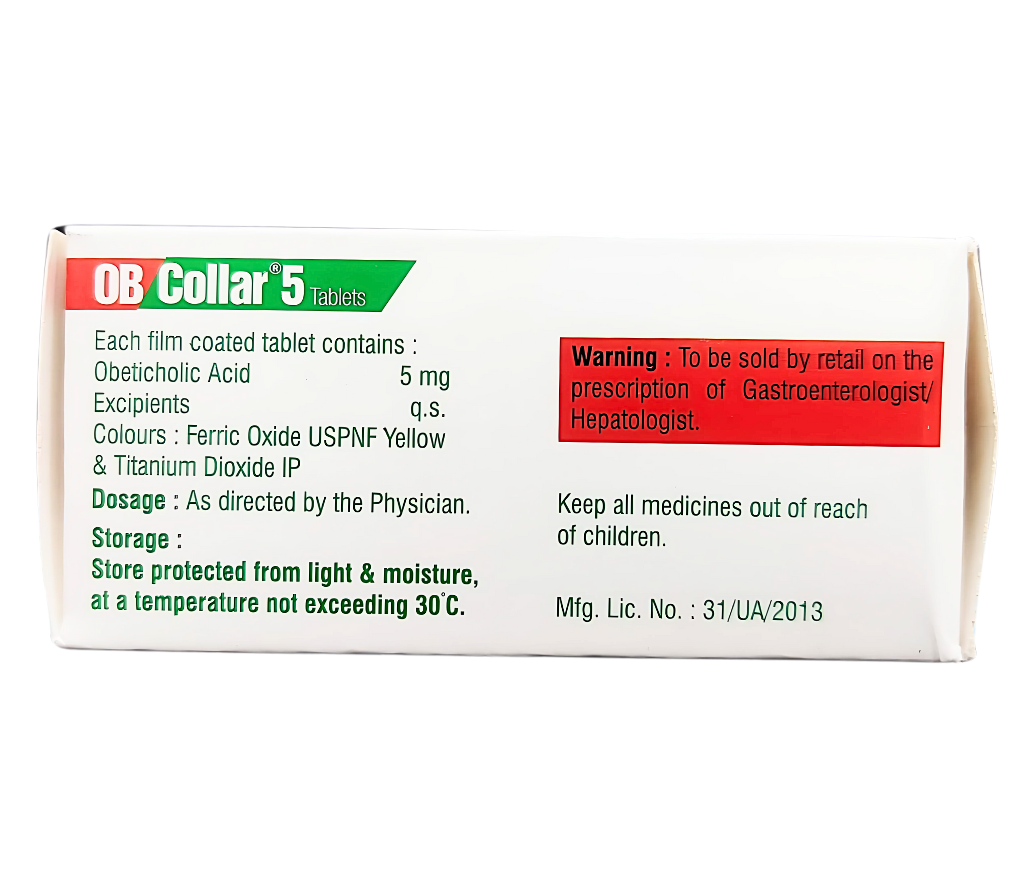
 Item requires a valid prescription
Manufactured By Steris Healthcare Pvt Ltd
Composition Obeticholic Acid (5mg)
Rs 196.22
MRP Rs 280.31
(30% OFF)
Includes all taxes
Package SIZE
( For 10 Tablet )

100% Authentic
Products

Free
Shipping*

Products
Return Policy
Description:
Obeticholic acid 5 mg is a prescription medicine that acts on the farnesoid X receptor (FXR) and has been used in the management of primary biliary cholangitis (PBC), a chronic liver disease affecting the small bile ducts. It changes bile-acid signaling and can improve certain liver biochemical markers, particularly alkaline phosphatase (ALP).
However, there is an important current safety and regulatory update that buyers should understand before purchasing this medicine. In the United States, the FDA withdrew Ocaliva's accelerated approval for PBC in November 2025 after the required confirmatory trial failed to verify clinical benefit and raised concerns about serious outcomes. The FDA also reported serious liver injury, including cases occurring in patients without cirrhosis.
In India, obeticholic acid 5 mg products continue to appear in pharmaceutical and regulatory information. For example, the Indian Central Drugs Standard Control Organisation (CDSCO) discussed obeticholic acid 5 mg/10 mg tablets in March 2025 in the context of safety and the European regulatory position.
Therefore, obeticholic acid 5 mg should only be purchased and used under specialist medical supervision, particularly because treatment suitability depends heavily on liver status and current regulatory guidance.
What Is Obeticholic Acid 5 mg?
Obeticholic acid is a synthetic bile-acid analogue and an FXR agonist. FXR is involved in regulating bile-acid production, transport and metabolism.
By activating FXR, obeticholic acid changes bile-acid signaling and reduces bile-acid production in the liver. This mechanism was intended to reduce cholestatic stress and improve biochemical markers of liver disease.
The 5 mg strength has historically been used as a starting dose in certain PBC treatment regimens. Ocaliva was available as 5 mg and 10 mg tablets.
Today, however, the medicine's regulatory status and risk-benefit assessment are particularly important. The FDA's 2025 withdrawal followed evidence that the required confirmatory trial did not verify clinical benefit.
Obeticholic Acid 5 mg Uses
1. Primary biliary cholangitis
The principal historical indication for obeticholic acid has been primary biliary cholangitis (PBC).
PBC is a chronic autoimmune liver disease in which the body's immune system damages the small bile ducts. Over time, impaired bile flow can contribute to cholestasis and progressive liver injury.
Obeticholic acid was originally granted accelerated FDA approval in 2016 for adults with PBC who had an inadequate response to ursodeoxycholic acid (UDCA), or who could not tolerate UDCA.
Because the U.S. approval was withdrawn in 2025, consumers should not interpret older online descriptions of Ocaliva as evidence that it remains FDA-approved for PBC in the United States.
2. PBC patients who do not respond adequately to UDCA
Historically, obeticholic acid was used in selected adults whose response to ursodeoxycholic acid was inadequate.
The medicine was intended to improve biochemical indicators such as ALP rather than provide immediate relief from all PBC symptoms.
3. Patients unable to tolerate UDCA
The original U.S. accelerated indication also included adults who could not tolerate UDCA.
Whether obeticholic acid remains an appropriate option depends on the patient's country, regulatory status, disease stage and specialist assessment.
How Does Obeticholic Acid 5 mg Work?
Obeticholic acid activates the farnesoid X receptor (FXR).
FXR is an important regulator of bile-acid homeostasis. Activation affects the pathways responsible for bile-acid production and transport.
In simplified terms, obeticholic acid:
- Activates FXR.
- Changes bile-acid signaling.
- Reduces bile-acid synthesis.
- Alters bile-acid transport and metabolism.
- Can improve certain biochemical markers of cholestatic liver disease.
The original accelerated approval was based largely on improvement in ALP, but the later confirmatory evidence did not establish the expected clinical benefit and raised serious safety concerns.
Key Benefits of Obeticholic Acid 5 mg
May improve liver biochemical markers
One of the principal benefits demonstrated in the original development program was improvement in alkaline phosphatase (ALP) in appropriately selected patients with PBC.
However, an improvement in a laboratory marker does not necessarily mean that a medicine improves survival or prevents liver transplantation. This distinction became particularly important after the confirmatory trial.
Targets bile-acid regulation
As an FXR agonist, obeticholic acid directly targets pathways involved in bile-acid production and regulation.
Oral tablet formulation
Obeticholic acid has been marketed as an oral tablet, including 5 mg and 10 mg strengths, which can be convenient when prescribed by a specialist.
Specialist-directed treatment option
Historically, obeticholic acid provided another pharmacological option for certain PBC patients whose response to UDCA was inadequate or who could not tolerate it.
Today, its role is substantially more restricted because of the evolving regulatory and safety landscape.
Obeticholic Acid 5 mg Dosage
Do not determine the dose of obeticholic acid yourself.
Historically, the approved PBC regimen included an initial 5 mg once daily dose, with potential adjustment depending on response and tolerability. However, the appropriate regimen must be determined according to the current prescribing information applicable in the patient's country and the patient's liver status.
This is especially important because obeticholic acid has serious liver-safety warnings.
The FDA previously contraindicated Ocaliva in PBC patients with advanced cirrhosis and required monitoring for progression of liver disease.
If you have cirrhosis, portal hypertension, ascites, jaundice or other evidence of advanced liver disease, do not purchase or take obeticholic acid without specialist assessment.
Obeticholic Acid 5 mg Side Effects
Obeticholic acid can cause several adverse effects.
Commonly reported effects historically included:
- Itching (pruritus)
- Fatigue
- Abdominal pain or discomfort
- Nausea
- Headache
- Dizziness
- Joint pain
- Changes in liver tests
The FDA has specifically identified itching, fatigue and stomach discomfort among common adverse effects associated with Ocaliva.
Itching
Pruritus is one of the most recognized adverse effects of obeticholic acid.
This can be particularly troublesome because itching is also a common symptom of PBC itself. Severe itching should be reported to the treating clinician.
Abdominal discomfort
Abdominal pain or discomfort can occur during treatment.
Persistent abdominal symptoms should be assessed because they can have many possible causes in someone with liver disease.
Fatigue
Fatigue has been reported among patients receiving obeticholic acid.
Because fatigue is also common in chronic liver disease, the treating physician may need to determine whether a symptom is related to the medicine or the underlying condition.
Serious Liver-Related Risks
The most important safety consideration is serious liver injury.
In 2021, the FDA restricted Ocaliva in patients with PBC and advanced cirrhosis after reports of liver decompensation and liver failure, including cases requiring liver transplantation.
In December 2024, the FDA reported that serious liver injury had also occurred in some PBC patients without cirrhosis. The agency stated that some cases resulted in liver transplantation and that frequent liver-test monitoring was necessary.
Possible warning symptoms include:
- New or worsening jaundice
- Yellowing of the eyes
- Dark urine
- Severe nausea or vomiting
- Significant abdominal symptoms
- Increasing swelling
- Confusion
- Worsening fatigue
These symptoms require prompt medical assessment.
Who Should Avoid Obeticholic Acid 5 mg?
Because the safety profile is complex, the medicine is not suitable for everyone.
Special caution is required in people with:
- Cirrhosis
- Advanced liver disease
- Portal hypertension
- Previous liver decompensation
- Abnormal liver tests
- Other significant liver disorders
- Multiple medicines affecting liver function
The FDA specifically warned about serious liver injury and previously contraindicated use in PBC patients with advanced cirrhosis.
Patients should never assume that a previously prescribed 5 mg dose remains appropriate if their liver disease has progressed.
Obeticholic Acid 5 mg Drug Interactions
Before taking obeticholic acid, provide your doctor or pharmacist with a complete list of:
- Prescription medicines
- Over-the-counter medicines
- Vitamins
- Herbal products
- Liver medicines
- Cholesterol medicines
- Other PBC treatments
Potential interactions can affect the safety or effectiveness of treatment.
Because patients with PBC may already be taking several medicines, a professional medication review is especially important.
Obeticholic Acid 5 mg and Ursodeoxycholic Acid
Obeticholic acid was historically used either with UDCA in adults who had an inadequate response to UDCA or as monotherapy in adults unable to tolerate UDCA under its former U.S. indication.
This does not mean that patients should combine the two medicines without medical direction.
The correct treatment depends on current regulatory guidance and the patient's clinical circumstances.
Buying Obeticholic Acid 5 mg Online in India
If you are searching for “buy obeticholic acid 5 mg online”, additional caution is necessary because this is a prescription medicine with significant safety concerns.
Current Indian online pharmacy information continues to show obeticholic acid 5 mg products. For example, a July 2026 listing for Obent 5mg Tablet identified obeticholic acid 5 mg, marked the product as prescription-only and listed a price of ₹182 for 10 tablets against an MRP of ₹206.25. The same listing showed an alternative product, Obetohep 5mg Tablet, at ₹190.
The listing also indicated that Obent was sold out when checked, demonstrating why online availability should be verified at the time of purchase.
What to check before buying
Before ordering obeticholic acid 5 mg:
- Confirm the active ingredient and strength.
- Verify that the product is specifically prescribed for you.
- Check the manufacturer and marketer.
- Confirm the pack size.
- Check the expiry date.
- Purchase only from a legitimate pharmacy.
- Confirm current regulatory and prescribing requirements.
- Do not substitute another liver medicine without medical advice.
- Check whether the medicine remains appropriate based on your latest liver tests.
Do not purchase an old prescription simply because the product appears available online.
Obeticholic Acid 5 mg: Important Regulatory Update
This section is particularly important for current SEO and buyer-intent searches because older pages may contain outdated information.
The FDA granted accelerated approval to Ocaliva for PBC in 2016. However, the required confirmatory study subsequently failed to verify clinical benefit. The FDA's current withdrawal database records the PBC indication as withdrawn on November 24, 2025.
The FDA also reported that the confirmatory trial found higher risks of liver transplant and death among patients receiving Ocaliva compared with placebo.
This means that consumers should be cautious with webpages stating simply that “obeticholic acid is an FDA-approved PBC medicine” without mentioning the 2025 withdrawal.
Regulatory status can differ by country, so Indian patients should follow the current guidance of their treating specialist and Indian regulatory authorities rather than relying on older U.S. information.
Frequently Asked Questions
1. What is obeticholic acid 5 mg used for?
Obeticholic acid 5 mg was developed primarily for primary biliary cholangitis (PBC), particularly in adults with inadequate response to or intolerance of ursodeoxycholic acid. Its regulatory status has changed significantly, including withdrawal of the U.S. PBC approval in November 2025.
2. What are the common side effects of obeticholic acid 5 mg?
Commonly reported side effects include itching, fatigue and abdominal discomfort. More serious concern relates to liver injury, which requires medical monitoring.
3. Can obeticholic acid 5 mg cause liver damage?
Yes. Serious liver injury has been associated with obeticholic acid. The FDA reported cases of liver decompensation, liver failure and transplantation and later identified serious liver injury even in some patients without cirrhosis.
4. Is obeticholic acid 5 mg safe for people with cirrhosis?
It is not appropriate for self-treatment in people with cirrhosis. The FDA previously contraindicated Ocaliva in PBC patients with advanced cirrhosis because of the risk of serious liver injury.
5. Is obeticholic acid still approved for PBC?
The answer depends on the country. In the United States, the FDA records the PBC accelerated approval as withdrawn effective November 24, 2025.
6. Can I buy obeticholic acid 5 mg online in India?
Current Indian online pharmacy listings continue to show 5 mg obeticholic acid products, including Obent 5mg Tablet. However, it is a prescription medicine and should only be purchased and used after specialist medical evaluation.
7. What does obeticholic acid do to the liver?
Obeticholic acid activates FXR and changes bile-acid production and signaling. Historically, this mechanism was used to improve biochemical markers such as ALP in PBC. However, laboratory improvement does not necessarily translate into improved survival or reduced transplantation risk.
8. Is 5 mg the usual dose of obeticholic acid?
Five milligrams was historically used as an initial dose in certain PBC treatment regimens. The appropriate dose today must be determined using the current local prescribing information and a specialist's assessment of the patient's liver condition.
9. What should I do if I develop jaundice while taking obeticholic acid?
Contact your healthcare professional promptly. Jaundice, dark urine, severe nausea or vomiting and other signs of worsening liver function can indicate serious liver injury and require medical assessment.
10. Should I stop obeticholic acid on my own?
No. Because treatment decisions depend on your underlying liver disease and current regulatory guidance, discuss continuation or discontinuation with your prescribing specialist. If you develop symptoms suggesting serious liver injury, seek urgent medical advice.
Conclusion
Obeticholic acid 5 mg is an FXR agonist developed primarily for the treatment of primary biliary cholangitis, particularly in patients who did not respond adequately to or could not tolerate ursodeoxycholic acid. It works by modifying bile-acid signaling and historically demonstrated improvements in biochemical markers such as alkaline phosphatase.

