




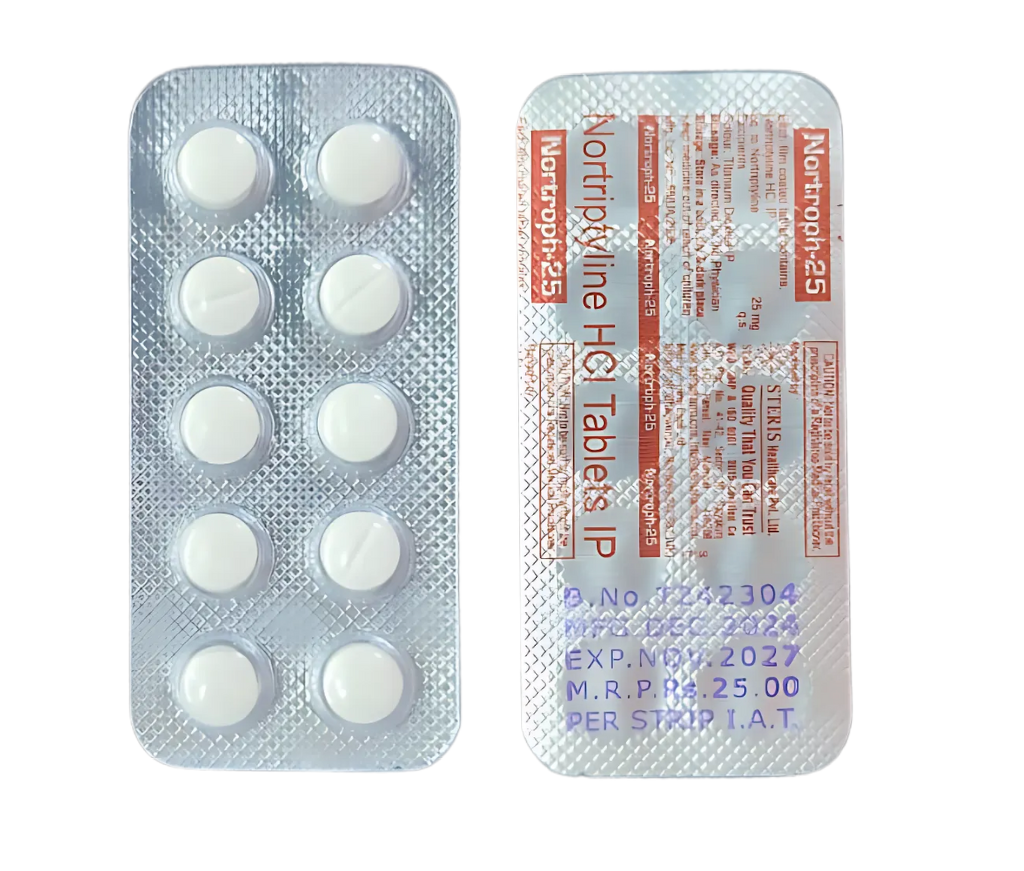

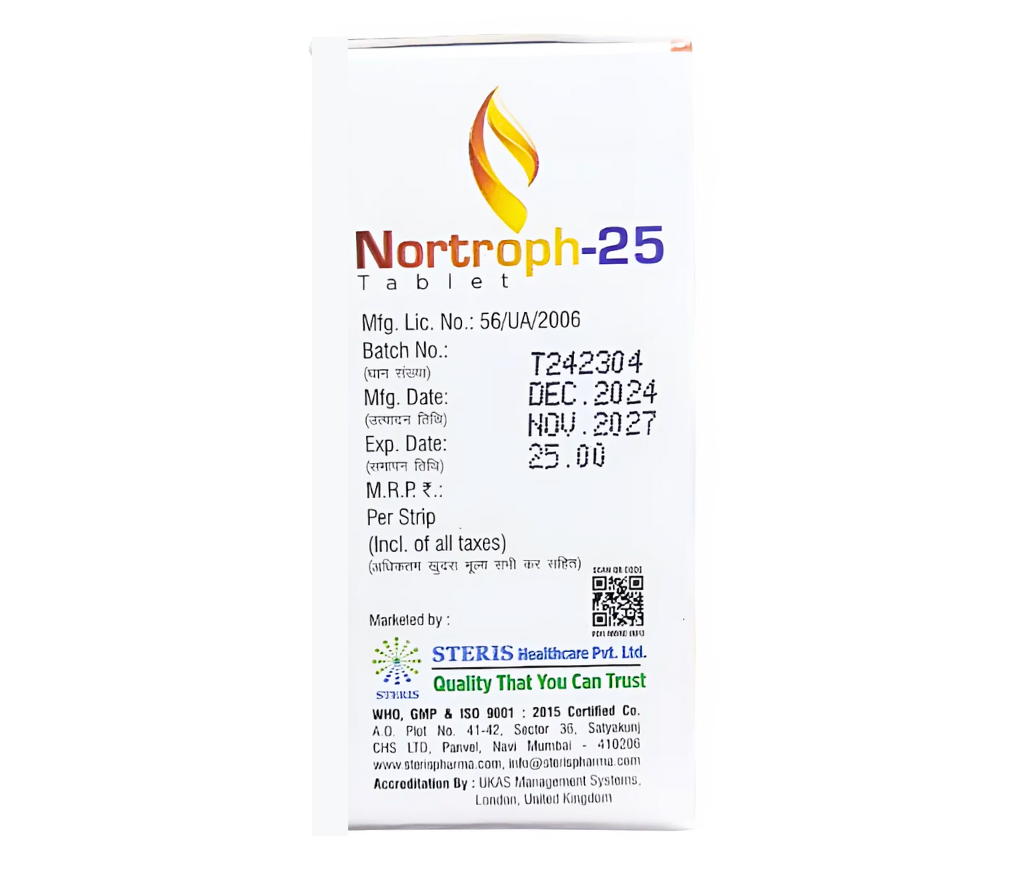
Nortriptyline | NORTROPH 25
 Item requires a valid prescription
Manufactured By Steris Healthcare Pvt Ltd
Composition Nortriptyline 25
Rs 16.41
MRP Rs 23.44
(30% OFF)
Includes all taxes
Package SIZE
( For 10 Tablets )

100% Authentic
Products

Free
Shipping*

Products
Return Policy
Description:
Nortriptyline (Pamelor, Aventyl) is a tricyclic antidepressant that treats depression and nerve pain by rebalancing serotonin and norepinephrine in the brain.
Whether you are starting a new prescription or researching options for chronic pain management, this comprehensive reference covers the pharmacokinetics, off-label uses, safety profiles, and frequently asked questions regarding nortriptyline.
What is Nortriptyline?
Nortriptyline is a tricyclic drug. Chemically it is the active metabolite of amitriptyline. This means that amitriptyline is naturally broken down into nortriptyline inside the human liver .
Compared to the older TCAs, nortriptyline is more selective for norepinephrine reuptake inhibition than for serotonin reuptake inhibition. This balance makes it effective with a lower incidence of severe sedative or anticholinergic side effects (e.g., extreme dry mouth or severe blurred vision) than first-generation tricyclics.
Mechanism of Action
Nortriptyline works primarily by
-
Inhibiting Reuptake Transporters: It blocks the presynaptic reuptake of norepinephrine and serotonin. By keeping higher concentrations of these neurotransmitters active in the synaptic cleft, it improves neural signaling related to mood and emotional processing.
-
Modulating Central Pain Pathways: In chronic pain conditions, nortriptyline alters the descending spinal cord pathways that regulate pain perception, blunting the transmission of signal spikes caused by damaged or hyperactive nerves.
-
Blocking Secondary Receptors: It possesses mild antihistaminic ($H_1$) and anticholinergic activities, which contribute to its mild sedative effect and utility in managing specific types of insomnia or headaches.
Primary Medical Uses & Off-Label Applications
                  ┌───────────────────────────────────────────────┐
                  │              NORTRIPTYLINE USES               │
                  └───────────────────────┬───────────────────────┘
                                          │
                  ┌───────────────────────┴───────────────────────┐
                  │                                               │
       ▼                                               ▼
┌──────────────────────────────┐                ┌──────────────────────────────┐
│       FDA-APPROVED USES      │                │       OFF-LABEL USES         │
├──────────────────────────────┤                ├──────────────────────────────┤
│ • Major Depressive Disorder  │                │ • Diabetic Neuropathy        │
│ • Endogenous Depression      │                │ • Postherpetic Neuralgia     │
│ • Treatment-Resistant Depression             │ • Migraine Prophylaxis       │
└──────────────────────────────┘                │ • Fibromyalgia & Chronic Pain│
                                                │ • IBS & Visceral Pain        │
                                                │ • Smoking Cessation Support  │
                                                └──────────────────────────────┘
1. Major Depressive Disorder
Nortriptyline is FDA-approved for treating major depression, particularly endogenous depression. It is frequently utilized in treatment-resistant cases where modern SSRIs (Selective Serotonin Reuptake Inhibitors) or SNRIs have proved ineffective.
2. Neuropathic & Chronic Pain Management
Medical guidelines recommend low-dose nortriptyline for managing nerve pain. It is regularly prescribed for:
-
Diabetic Peripheral Neuropathy: Burning or tingling sensations in the extremities.
-
Postherpetic Neuralgia: Persistent pain following a shingles infection.
-
Trigeminal Neuralgia & Orofacial Pain: Severe facial nerve conditions.
-
Fibromyalgia: General musculoskeletal pain combined with sleep disturbances.
3. Migraine Prophylaxis
When taken daily at low doses (typically 10 mg to 25 mg at bedtime), nortriptyline lowers the frequency, severity, and duration of chronic migraines and tension-type headaches.
4. Gastrointestinal & Other Off-Label Uses
-
Irritable Bowel Syndrome (IBS): Normalizes the gut-brain axis, reducing abdominal pain and hypersensitivity.
-
Smoking Cessation: Utilized as a second-line treatment to manage nicotine withdrawal.
Key Benefits of Nortriptyline
| Clinical Benefit | Primary Mechanism | Target Patient Group |
| Dual Pain & Mood Relief | Modifies serotonin and norepinephrine pathways simultaneously. | Patients with chronic pain accompanied by depressive symptoms. |
| Targeted Therapeutic Window | Known predictable blood levels (50–150 ng/mL) allow for precise dosage adjustments. | Patients needing monitored dosing to avoid toxicity. |
| Lower Sedation than Amitriptyline | Weaker $H_1$ receptor binding relative to older TCAs. | Patients seeking nerve pain relief without severe daytime lethargy. |
| Improves Sleep Architecture | Mild sedative properties taken before bed assist with sleep onset. | Individuals suffering from insomnia secondary to pain or low mood. |
Common and Serious Side Effects
Side effects depend on dosage. Low doses used for chronic pain (10–25 mg) typically produce fewer side effects than higher antidepressant doses (75–150 mg).
                     ┌─────────────────────────────────────────┐
                     │            SIDE EFFECT PROFILE          │
                     └────────────────────┬────────────────────┘
                                          │
       ┌──────────────────────────────────┴──────────────────────────────────┐
       ▼                                                                     ▼
┌──────────────────────────────┐                              ┌──────────────────────────────┐
│     COMMON & MILD EFFECTS    │                              │     SERIOUS ADVERSE RISKS    │
├──────────────────────────────┤                              ├──────────────────────────────┤
│ • Dry Mouth (Xerostomia)     │                              │ • Black Box: Suicidal Ideation│
│ • Mild Drowsiness            │                              │   (Children/Young Adults)    │
│ • Constipation               │                              │ • Cardiac Arrhythmias &      │
│ • Blurred Vision             │                              │   QRS Complex Prolongation   │
│ • Lightheadedness (Dizziness)│                              │ • Urinary Retention          │
│ • Weight/Appetite Changes    │                              │ • Serotonin Syndrome Risk    │
└──────────────────────────────┘                              └──────────────────────────────┘
Mild to Moderate Side Effects
-
Anticholinergic: Dry mouth, constipation, difficulty focusing eyes at short distances, mild urinary hesitancy.
-
Central Nervous System: Daytime drowsiness, lightheadedness when standing (orthostatic hypotension), dizziness, vivid dreams.
-
Metabolic: Minor weight gain or appetite fluctuation.
Serious Risks & Precautions
-
Black Box Warning: Like all antidepressants, nortriptyline carries an FDA warning regarding an increased risk of suicidal thoughts and behaviors in children, adolescents, and young adults under 25 during initial treatment.
-
Cardiotoxicity: High doses or pre-existing heart issues can lead to arrhythmias, prolonged QRS intervals, or tachycardia. Avoid use during acute recovery following a heart attack.
-
Serotonin Syndrome: Combining nortriptyline with MAO inhibitors (MAOIs), linezolid, or high-dose serotonergic agents can lead to hyperthermia, confusion, and muscle rigidity.
Frequently Asked Questions
Below are high-ranking answers optimized for search queries, voice assistants, and AI lookup engines.
1. What is nortriptyline mainly used for?
Nortriptyline is mainly used to treat major depressive disorder in adults. However, it is also widely prescribed off-label by healthcare providers to treat chronic neuropathic pain (such as diabetic nerve damage and postherpetic neuralgia) and to prevent chronic migraines.
2. Is nortriptyline a sleeping pill?
No, nortriptyline is not classified as a sleeping pill or a traditional hypnotic medication. It is a tricyclic antidepressant. Because it causes drowsiness as a common side effect, doctors often instruct patients to take it at bedtime, which can help those who have trouble sleeping due to chronic pain or depression.
3. Is gabapentin the same as nortriptyline?
No, gabapentin and nortriptyline are entirely different medications from distinct drug classes:
-
Nortriptyline is a tricyclic antidepressant (TCA) that adjusts norepinephrine and serotonin levels in the brain.
-
Gabapentin is an anticonvulsant that targets voltage-gated calcium channels in the nervous system.
While both are prescribed to relieve nerve pain, they use different mechanisms and carry different side-effect profiles.
4. Is nortriptyline a happy pill?
No, nortriptyline is not a "happy pill," a quick euphoriant, or an instant mood booster. It does not produce an immediate feeling of pleasure or high. When used for depression, it takes 2 to 6 weeks of continuous daily use to gradually rebalance neurotransmitters and relieve depressive symptoms.
5. How long does it take for nortriptyline to work?
For chronic pain or migraine prevention, noticeable relief may begin within 1 to 2 weeks. For depression, therapeutic benefits typically take between 2 and 6 weeks to develop fully.
6. Why should nortriptyline be taken at night?
Nortriptyline is usually taken at night because its mild sedative properties induce drowsiness. Taking it 30 to 60 minutes before bed helps avoid daytime tiredness while improving nighttime sleep quality.
7. Does nortriptyline cause weight gain?
Weight changes can occur. Some patients report mild weight gain due to increased appetite or altered metabolism, though it generally causes less weight gain than older TCAs like amitriptyline.
8. Can you stop taking nortriptyline suddenly?
No, you should never stop taking nortriptyline abruptly without consulting your physician. Quitting suddenly can trigger withdrawal symptoms, including nausea, headaches, dizziness, vivid dreams, and irritability. A doctor will provide a taper schedule to gradually reduce your dosage.
9. What should you avoid while taking nortriptyline?
You should avoid consuming alcohol, as it intensifies the sedative effects and increases the risk of central nervous system depression. You should also avoid MAO inhibitors and exercise caution when driving until you know how the medication affects your alertness.
10. Does nortriptyline cause dry mouth?
Yes, dry mouth (xerostomia) is one of the most frequent anticholinergic side effects of nortriptyline. Staying hydrated, chewing sugar-free gum, or using oral moisturizing sprays can help manage this symptom.
11. Is nortriptyline safe for heart patients?
Nortriptyline requires careful monitoring in patients with cardiovascular conditions. It can affect heart rate and rhythm. It is contraindicated in patients recovering from a recent heart attack and should be used with caution in people with arrhythmias or high blood pressure.
12. Can nortriptyline cause anxiety or restlessness?
While nortriptyline is sometimes used off-label to manage anxiety symptoms, some individuals may experience temporary agitation, restlessness, or heightened anxiety when first starting the medication or raising the dose.
13. How is nortriptyline different from amitriptyline?
Nortriptyline is the active breakdown product (metabolite) of amitriptyline. Clinical studies show that nortriptyline generally causes less sedation, fewer low blood pressure spikes upon standing, and weaker anticholinergic side effects than amitriptyline.
14. What happens if you miss a dose of nortriptyline?
If you miss a dose, take it as soon as you remember. If it is almost time for your next scheduled dose, skip the missed pill and return to your regular schedule. Do not take two doses at the same time to make up for a missed one.
15. Can nortriptyline be taken during pregnancy?
Nortriptyline should only be used during pregnancy if the potential medical benefits outweigh the potential risks to the fetus. Always consult your prescribing doctor or OB-GYN to evaluate safe treatment alternatives during pregnancy or breastfeeding.
Summary & Clinical Conclusion
Nortriptyline remains a versatile and reliable therapeutic choice in modern medicine. While originally formulated to treat major depression, its ability to modulate pain pathways has made it a key treatment for diabetic neuropathy, chronic nerve conditions, and migraine prevention.
Proper management involves starting at a low dose—particularly when treating pain—and monitoring for common anticholinergic effects like dry mouth or drowsiness. Always follow your healthcare provider's instructions regarding dosing schedules, interactions, and gradual discontinuation.