


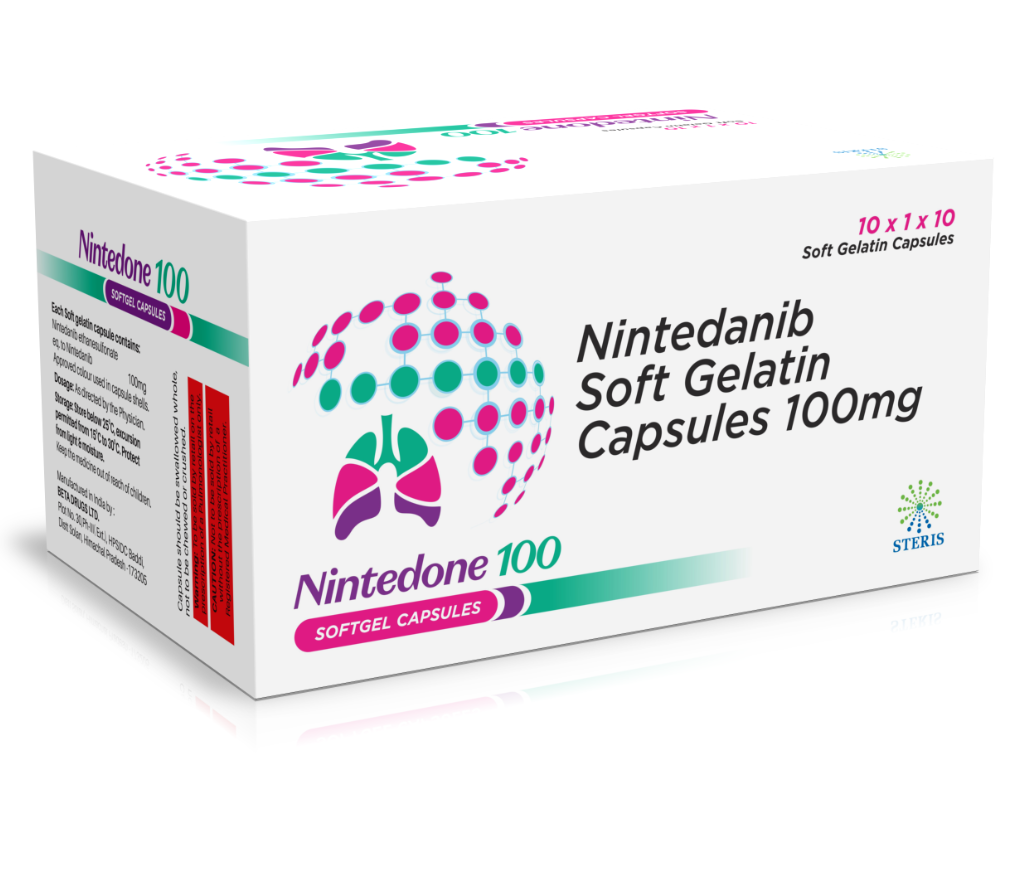
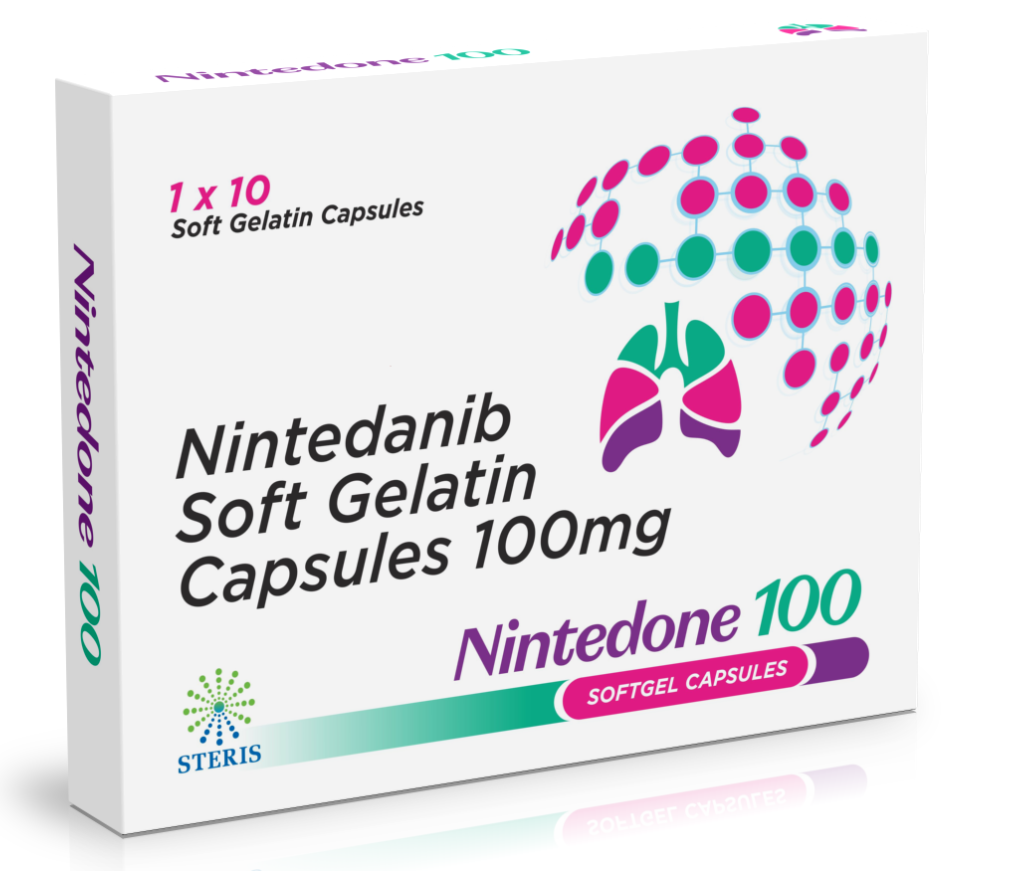
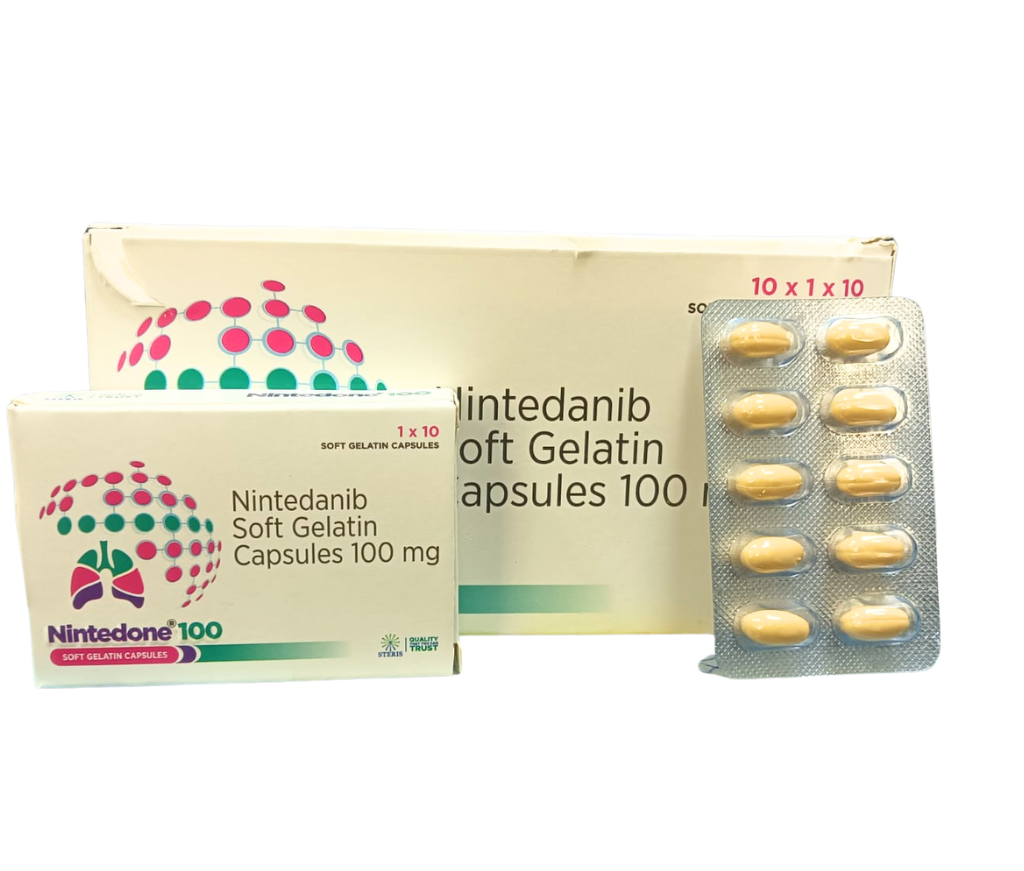

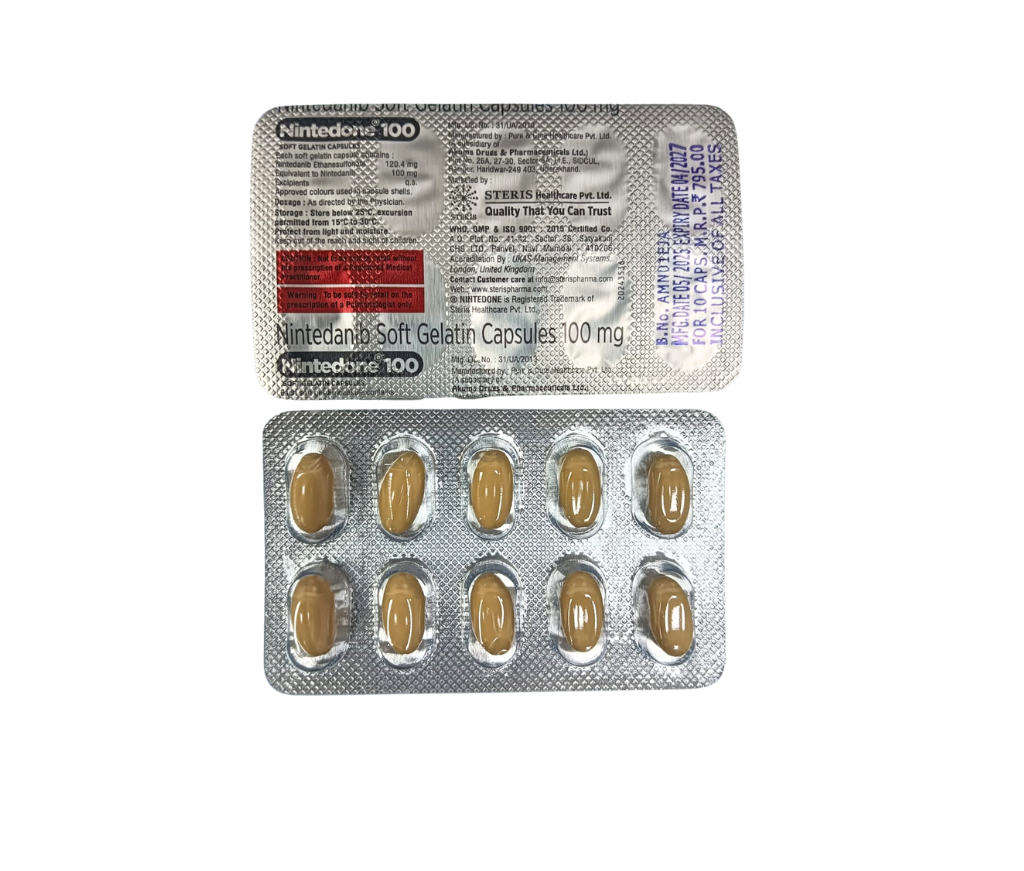
Nintedanib 100 mg Capsule | NINTEDONE 100
Manufactured By Steris Healthcare Pvt Ltd
Composition Nintedanib (100 mg)
Rs 510.00
MRP Rs 745.00
(32% OFF)
Includes all taxes
Package SIZE
( For 10 Capsules )

100% Authentic
Products

Free
Shipping*

Products
Return Policy
Description:
What Is Nintedanib 100 mg Capsule?
Nintedanib 100 mg capsule contains 100 mg of nintedanib, an oral antifibrotic medicine. In the United States, OFEV (nintedanib) is FDA-indicated for adults with IPF, chronic fibrosing ILDs with a progressive phenotype, and systemic sclerosis-associated ILD.
Nintedanib works by inhibiting several receptor tyrosine kinases involved in pathways associated with fibrosis and abnormal tissue remodeling. The therapeutic goal is not to instantly reverse existing lung scarring, but to slow the decline of lung function in appropriate patients.
Because this is a prescription treatment for potentially serious chronic diseases, treatment should be started and monitored by a healthcare professional experienced in managing the relevant condition.
Nintedanib 100 mg Capsule Uses
1. Idiopathic Pulmonary Fibrosis (IPF)
One of the best-known uses of nintedanib is the treatment of idiopathic pulmonary fibrosis, a chronic lung disease characterized by progressive scarring of lung tissue.
Clinical evidence has demonstrated that nintedanib can reduce the rate of decline in forced vital capacity (FVC), an important measurement of lung function.
2. Progressive Fibrosing Interstitial Lung Disease
Nintedanib is also indicated for adults with certain chronic fibrosing interstitial lung diseases that have a progressive phenotype. These conditions can cause increasing lung fibrosis and declining respiratory function.
The FDA's current labeling includes this indication for OFEV.
3. Systemic Sclerosis-Associated Interstitial Lung Disease
Nintedanib can also be prescribed to slow the rate of decline in pulmonary function in adults with systemic sclerosis-associated interstitial lung disease, sometimes called scleroderma-associated ILD.
The exact indication and prescribing requirements can vary between countries, so patients should rely on the prescribing information applicable to their location.
Key Benefits of Nintedanib 100 mg Capsule
The main clinical benefit of nintedanib is slowing the decline of lung function in appropriate fibrosing lung diseases.
Potential therapeutic benefits include:
- Slowing the rate of lung-function decline in IPF.
- Slowing progression in certain chronic fibrosing ILDs with a progressive phenotype.
- Slowing pulmonary-function decline associated with systemic sclerosis-associated ILD.
- Providing an oral antifibrotic treatment option for eligible adults.
- Offering a 100 mg dose option for patients who cannot tolerate the standard 150 mg twice-daily dose, where such dosing is supported by the applicable prescribing information.
It is important not to describe nintedanib as a cure for pulmonary fibrosis. Its established therapeutic role is to slow disease progression or decline in lung function, rather than restore already damaged lung tissue.
Nintedanib 100 mg Dosage: Is 100 mg the Standard Dose?
This is one of the most important considerations when researching nintedanib 100 mg capsule.
For OFEV, current prescribing information recommends 150 mg twice daily, approximately 12 hours apart, for adults with the approved fibrotic lung-disease indications. A 100 mg twice-daily regimen may be recommended for patients who do not tolerate 150 mg twice daily.
Therefore, patients should not automatically choose 100 mg simply because it is a lower strength.
Your doctor may consider factors such as:
- Tolerability and adverse reactions
- Liver function
- Other medicines being taken
- Age and overall health
- The specific type of interstitial lung disease
- Previous response to treatment
Do not increase, decrease, stop, or restart nintedanib without discussing the change with your healthcare professional.
How to Take Nintedanib 100 mg Capsule
Nintedanib capsules are generally taken by mouth with food, and treatment is commonly administered twice daily at approximately 12-hour intervals. The capsule should be swallowed whole with liquid rather than chewed or crushed.
If you miss a dose, follow the instructions provided by your prescriber or the product information. Do not compensate for a missed dose by taking an extra capsule unless specifically instructed by a healthcare professional.
Common Side Effects of Nintedanib 100 mg
Nintedanib can cause side effects, and gastrointestinal reactions are particularly important to understand before treatment.
Commonly reported adverse reactions include:
- Diarrhea
- Nausea
- Abdominal pain
- Vomiting
- Decreased appetite
- Weight loss
- Increased liver enzymes
- Headache
- Hypertension
The FDA prescribing information identifies diarrhea, nausea, abdominal pain, liver enzyme elevation, vomiting, decreased appetite, weight decrease, headache, and hypertension among adverse reactions reported in clinical studies.
Diarrhea can sometimes become significant enough to cause dehydration or require treatment interruption or dose adjustment. Patients experiencing persistent or severe diarrhea should contact their healthcare professional.
Serious Side Effects and Safety Warnings
Nintedanib requires medical monitoring because serious adverse reactions can occur.
Liver problems
Nintedanib can cause liver enzyme abnormalities and, in some patients, serious liver injury. Healthcare professionals may perform liver-function testing before treatment and periodically during therapy.
Symptoms such as unusual tiredness, loss of appetite, nausea, pain in the upper-right abdomen, dark urine, or yellowing of the skin or eyes should be reported promptly.
Bleeding risk
Nintedanib may increase the risk of bleeding. Patients taking anticoagulants or medicines that affect bleeding should tell their doctor before starting treatment.
Gastrointestinal perforation
Serious gastrointestinal complications, including gastrointestinal perforation, have been associated with nintedanib. Patients with relevant gastrointestinal risk factors should discuss these risks with their healthcare professional.
Cardiovascular risk
Nintedanib may require caution in people with cardiovascular risk factors. Tell your healthcare professional if you have a history of heart disease, stroke, blood clots, or significant cardiovascular problems.
Pregnancy and fetal harm
Nintedanib can cause fetal harm. Current patient information advises that women who can become pregnant should use highly effective contraception during treatment and for at least three months after stopping OFEV.
Anyone who is pregnant, planning pregnancy, or believes they may be pregnant should discuss nintedanib with a healthcare professional before taking it.
Nintedanib 100 mg Drug Interactions
Before purchasing or taking nintedanib, provide your doctor or pharmacist with a complete list of medicines, vitamins, and supplements you use.
Nintedanib is a substrate of P-glycoprotein (P-gp) and CYP3A4, meaning medicines that inhibit or induce these pathways can affect nintedanib exposure. For example, strong P-gp/CYP3A4 inhibitors can increase nintedanib exposure, while inducers can reduce it.
Your healthcare professional may therefore need to review your medication list before treatment.
Buying Nintedanib 100 mg Capsule: What Should Buyers Know?
Nintedanib is a prescription medicine, so purchase it through a legitimate, appropriately licensed pharmacy and follow prescription requirements applicable in your country.
Before purchasing, check:
- Active ingredient and strength
- Manufacturer and product name
- Batch or lot information
- Expiry date
- Packaging integrity
- Pharmacy licensing or credentials
- Whether a prescription is required
- Storage instructions
- Whether the product is an authorized medicine in your market
Be particularly cautious with websites promising unusually low prices, prescription-free supply, or products without clear manufacturer and regulatory information.
A lower price does not make an unverified medicine a safer purchase.
Nintedanib 100 mg vs 150 mg: What Is the Difference?
The principal difference is the amount of nintedanib contained in each capsule.
For OFEV, 150 mg twice daily is the recommended adult dose, while 100 mg twice daily is an option when 150 mg twice daily is not tolerated, according to the cited prescribing information.
This means 100 mg should not automatically be viewed as a “better” or “safer” dose. Dose selection is a medical decision based on tolerability and individual circumstances.
Who Should Talk to a Doctor Before Taking Nintedanib?
Medical advice is especially important if you:
- Have liver disease.
- Have cardiovascular disease or significant cardiovascular risk.
- Have a history of bleeding.
- Take blood-thinning medication.
- Have a history of gastrointestinal problems.
- Are pregnant or planning pregnancy.
- Are breastfeeding.
- Take medicines that may affect P-gp or CYP3A4.
- Have recently undergone surgery or have surgery planned.
This information is educational and does not replace a prescription, diagnosis, or individualized medical advice.
Nintedanib 100 mg Capsule: Quick Buyer & Patient Guide
| Question | Key information |
|---|---|
| Active ingredient | Nintedanib |
| Strength | 100 mg |
| Dosage form | Oral capsule |
| Drug class | Tyrosine kinase inhibitor / antifibrotic |
| Main uses | IPF, progressive fibrosing ILD, and SSc-ILD depending on applicable approval |
| Common concerns | Diarrhea, nausea, abdominal pain, vomiting, liver enzyme elevations |
| Standard OFEV adult dose | 150 mg twice daily |
| When 100 mg may be used | When 150 mg twice daily is not tolerated, according to cited prescribing information |
| Prescription status | Prescription medicine |
| Key monitoring | Liver function and adverse-effect monitoring as directed by a healthcare professional |
Frequently Asked Questions About Nintedanib 100 mg Capsule
1. What is nintedanib 100 mg capsule used for?
Nintedanib 100 mg capsule is used to treat certain progressive fibrotic lung diseases in adults. Approved uses for OFEV include idiopathic pulmonary fibrosis, chronic fibrosing interstitial lung diseases with a progressive phenotype, and systemic sclerosis-associated interstitial lung disease.
2. Is nintedanib 100 mg the normal dose?
Not necessarily. For OFEV, the recommended adult dose is generally 150 mg twice daily. The 100 mg twice-daily dose is recommended for patients who do not tolerate 150 mg twice daily.
3. What are the most common side effects of nintedanib 100 mg?
The most commonly reported side effects include diarrhea, nausea, abdominal pain, vomiting, decreased appetite, weight loss, liver enzyme elevations, headache, and hypertension.
4. Does nintedanib cure pulmonary fibrosis?
No. Nintedanib is not considered a cure for pulmonary fibrosis. Its principal therapeutic benefit is slowing the decline of lung function or disease progression in eligible patients.
5. Should nintedanib 100 mg be taken with food?
Yes. Nintedanib is generally taken with food. Patient information also recommends taking the capsules at approximately the same times each day and following the prescribed regimen carefully.
6. Can nintedanib cause diarrhea?
Yes. Diarrhea is one of the most common side effects of nintedanib. Persistent or severe diarrhea should be reported to a healthcare professional because dehydration and treatment interruption may become concerns.
7. Does nintedanib affect the liver?
Yes. Nintedanib can cause liver enzyme elevations and, in some cases, serious liver injury. Liver-function monitoring is therefore an important part of treatment, particularly when starting therapy or when symptoms suggest liver problems.
8. Can women take nintedanib during pregnancy?
Nintedanib can cause fetal harm and should not be used during pregnancy unless specifically determined appropriate by a healthcare professional. Current OFEV patient information recommends highly effective contraception during treatment and for at least three months after treatment ends for women who can become pregnant.
9. Can I buy nintedanib 100 mg capsule without a prescription?
Nintedanib is a prescription medicine. Whether a prescription is legally required and which products are authorized depends on the country. Consumers should purchase it through a legitimate pharmacy and follow local prescription and medicine regulations.
10. What should I do if I miss a nintedanib dose?
Do not automatically take an extra capsule to compensate. Follow the missed-dose instructions supplied with your prescription or contact your pharmacist or healthcare professional for individualized advice.
11. Nintedanib 100 mg price in india?
Nintedanib 100 mg for price please contact at steris healthcare.
12. Nintedanib price in india?
Nintedanib 100 mg for price please contact at steris healthcare.
Conclusion
Nintedanib 100 mg capsule is an important prescription antifibrotic treatment for selected adults with progressive fibrotic lung diseases. Its established role is to slow lung-function decline or disease progression, rather than cure pulmonary fibrosis or immediately reverse existing lung scarring.