
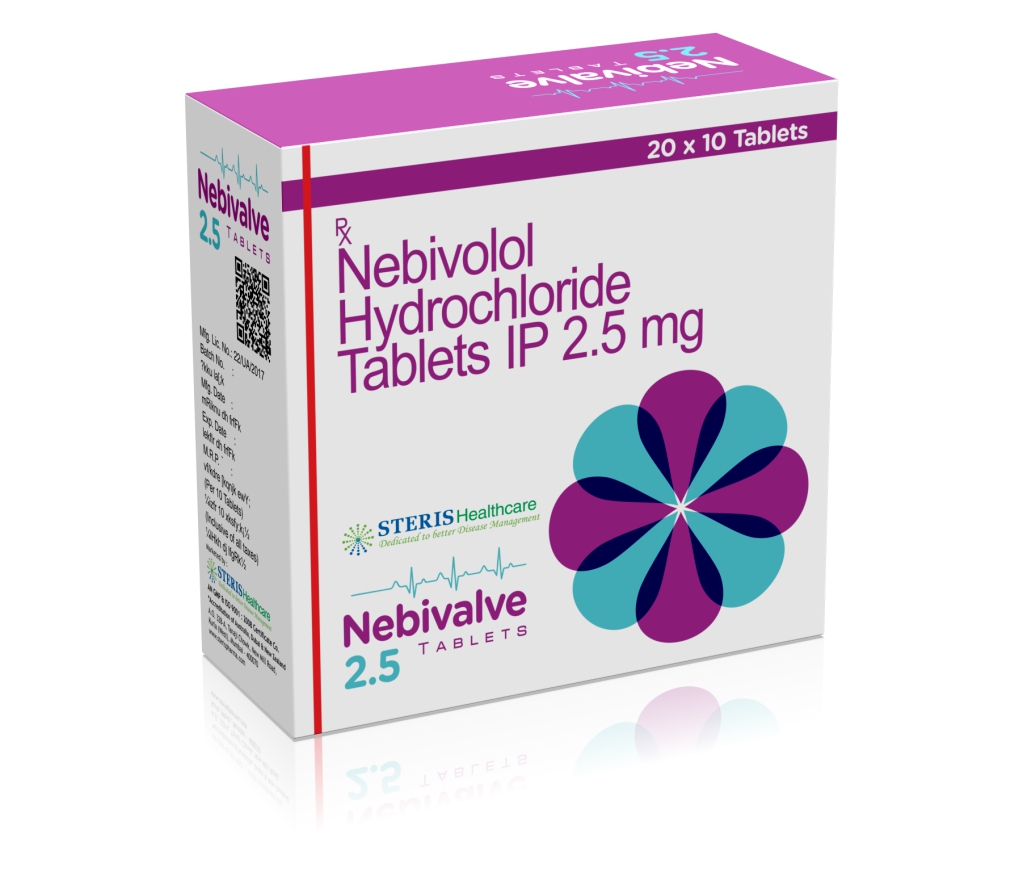
NEBIVALVE 2.5
Item requires a valid prescription
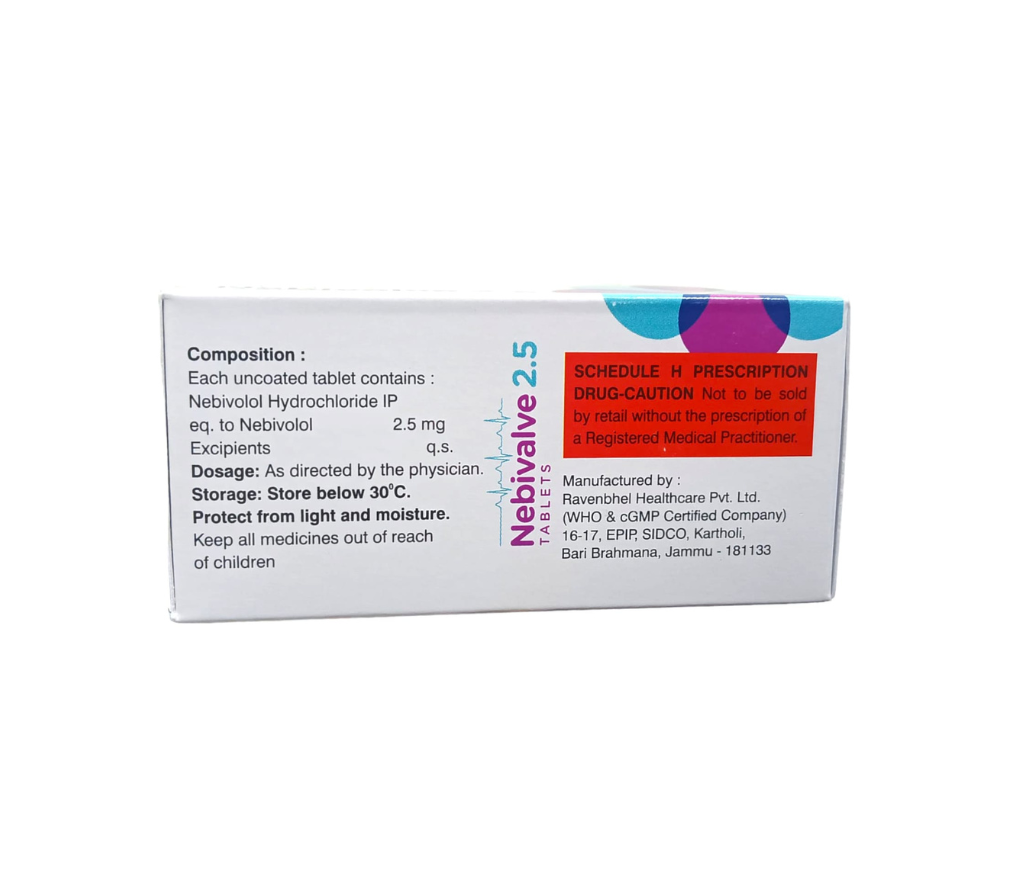
Manufactured By Steris Healthcare Pvt Ltd
Composition Nebivolol (2.5mg)
Rs 123.90
MRP Rs 177.00
(30% OFF)
Includes all taxes
Package SIZE
( For 10 Tablet )
100% Authentic
Products
Free
Shipping*
Products
Return Policy
Description:
Nebivolol 2.5 mg is a prescription beta-blocker commonly used to treat high blood pressure (hypertension). It works mainly by slowing the heart rate and reducing the force with which the heart pumps, while also promoting blood-vessel relaxation through nitric-oxide-mediated effects. Lowering blood pressure helps reduce the long-term risk of cardiovascular events such as stroke and heart attack. Current U.S. prescribing information identifies nebivolol as a treatment for hypertension.
In India, several brands containing nebivolol 2.5 mg are currently listed by online pharmacies. Recent listings show substantial differences in price depending on brand, pack size and seller. For example, a current listing for Nebivol 2.5 mg shows ₹40.70 for 10 tablets before applicable offers, while other brands such as Nebicip 2.5 and nEBIcard 2.5 are listed at higher prices. These are changing retail listings rather than fixed market prices
What Is Nebivolol 2.5 mg?
Nebivolol 2.5 mg is a tablet containing 2.5 mg of nebivolol, a beta-adrenergic blocking agent.
Beta-blockers reduce the effects of certain stress hormones, including adrenaline, on the heart. Nebivolol can lower the heart rate and decrease the heart's workload. It also has vasodilating properties, helping blood vessels relax.
The primary approved indication in current U.S. prescribing information is hypertension. Lowering high blood pressure reduces the risk of fatal and nonfatal cardiovascular events, particularly strokes and myocardial infarctions.
The 2.5 mg strength may be prescribed in particular patients based on factors such as response, tolerability, age, kidney function and other medicines. The correct dose should always be determined by the prescribing clinician.
Nebivolol 2.5 mg Uses
The primary nebivolol 2.5 mg uses relate to cardiovascular blood-pressure management.
1. Treatment of high blood pressure
Nebivolol 2.5 mg is used to lower elevated blood pressure. It may be prescribed alone or together with other antihypertensive medicines, depending on the patient's blood-pressure level and treatment plan. Current Indian pharmacy information lists hypertension as the principal use of nebivolol 2.5 mg products.
High blood pressure often causes no noticeable symptoms. Regular treatment can therefore be important even when a person feels completely well.
2. Reducing long-term cardiovascular risk
Controlling hypertension helps reduce the risk of serious cardiovascular complications. The official U.S. label states that lowering blood pressure reduces the risk of fatal and nonfatal cardiovascular events, primarily strokes and myocardial infarctions.
It is important to distinguish this long-term preventive benefit from using nebivolol as an emergency medicine. Nebivolol is not intended to rapidly lower dangerously high blood pressure without medical assessment.
3. Controlling certain heart-rate-related symptoms
Although the approved indication varies by country and product, doctors may sometimes prescribe beta-blockers for other cardiovascular reasons based on their clinical judgment. Indian product listings also mention use for symptoms associated with an overactive thyroid gland.
Such uses should be considered doctor-directed treatment, not a reason to self-medicate with nebivolol.
Key Benefits of Nebivolol 2.5 mg
Helps lower blood pressure
The primary benefit is effective blood-pressure reduction in people with hypertension. Regular control of blood pressure can lower the risk of serious cardiovascular complications.
Reduces cardiac workload
By slowing the heart rate and reducing the force of contraction, nebivolol can make the heart work less intensely.
Supports cardiovascular risk reduction
Long-term blood-pressure control is an important part of reducing the risk of stroke and heart attack. This benefit depends on maintaining appropriate blood-pressure control rather than simply taking a single dose.
Once-daily convenience
Nebivolol is commonly administered once daily, making it relatively convenient for ongoing blood-pressure treatment. The exact schedule should follow the prescription and product instructions.
Can be used alone or with other medicines
Some patients achieve adequate blood-pressure control with nebivolol alone, while others require combination treatment. Your doctor determines whether additional medicines are needed.
How Does Nebivolol 2.5 mg Work?
Nebivolol blocks beta-1 adrenergic receptors, reducing the influence of adrenaline and related hormones on the heart.
This can:
-
Slow the heart rate
-
Reduce the force of cardiac contraction
-
Reduce the heart's workload
-
Help lower blood pressure
Nebivolol also promotes blood-vessel relaxation through a nitric-oxide-related mechanism, which contributes to its blood-pressure-lowering effect.
Because the medicine affects heart rate and blood pressure, taking more than prescribed can be dangerous.
Nebivolol 2.5 mg Dosage and How to Take It
Do not choose your own nebivolol dose.
The appropriate dose depends on your diagnosis, age, blood-pressure response, kidney function and other medicines. Current U.S. prescribing information provides different dosing considerations for different patient populations, including people with severe renal impairment.
For some adults, nebivolol may be initiated at a low dose and adjusted according to blood-pressure response. A 2.5 mg tablet may therefore be selected by a physician for a particular patient, but the presence of this strength does not mean that 2.5 mg is appropriate for everyone.
Take the medicine exactly as prescribed and preferably at the same time each day.
Indian product information indicates that nebivolol 2.5 mg can generally be taken with or without food.
What if you miss a dose?
Follow the instructions provided by your doctor or pharmacist. In general, do not take an extra dose to compensate for a missed dose unless your healthcare professional specifically tells you to do so.
Do not stop suddenly
Beta-blockers should generally not be discontinued abruptly. Sudden withdrawal can cause a rebound increase in heart rate or blood pressure and may increase cardiovascular risk in susceptible patients. Indian product guidance specifically warns against suddenly stopping nebivolol.
Nebivolol 2.5 mg Side Effects
Like all medicines, nebivolol can cause side effects. Many are mild and may improve as the body adjusts to treatment.
Possible side effects include:
-
Headache
-
Dizziness
-
Fatigue or tiredness
-
Nausea
-
Constipation
-
Diarrhea
-
Shortness of breath
-
Swelling or edema
Recent Indian pharmacy listings identify headache, fatigue, dizziness, nausea, gastrointestinal symptoms, breathlessness and edema among reported adverse effects.
Dizziness and low blood pressure
Because nebivolol lowers blood pressure, some people may experience dizziness, particularly after starting treatment or increasing the dose. Rising slowly from a sitting or lying position may help reduce the risk of light-headedness.
If dizziness is severe, persistent or associated with fainting, contact your healthcare professional.
Slow heart rate
Beta-blockers can slow the heart rate. If you develop unusual weakness, fainting, severe dizziness or symptoms associated with an abnormally slow heartbeat, medical assessment may be required.
Breathing problems
People with certain respiratory conditions may be more sensitive to beta-blockers. New or worsening breathing difficulty should be discussed promptly with a healthcare professional.
Nebivolol and Diabetes
Nebivolol and other beta-blockers can affect awareness of some symptoms of low blood sugar, particularly a rapid heartbeat. Indian product information specifically advises people with diabetes to monitor blood glucose carefully.
If you have diabetes and are prescribed nebivolol, tell your doctor about your diabetes medicines and monitoring routine.
Who Should Use Extra Caution With Nebivolol?
Before taking nebivolol 2.5 mg, tell your doctor if you have:
-
Asthma or other breathing problems
-
Very slow heart rate
-
Heart conduction problems
-
Heart failure
-
Low blood pressure
-
Diabetes
-
Kidney disease
-
Liver disease
-
Peripheral vascular disease
-
Thyroid disease
-
A history of severe allergic reactions
Nebivolol may not be appropriate for people with certain severe heart-rate or conduction abnormalities. The official prescribing information should be reviewed for contraindications and warnings relevant to the individual patient.
Nebivolol 2.5 mg Drug Interactions
Tell your doctor or pharmacist about all medicines and supplements you take.
Potential interactions can occur with medicines that affect heart rate, blood pressure, cardiac conduction or the metabolism of nebivolol.
Particular attention may be needed if you take other medicines for:
-
High blood pressure
-
Heart rhythm disorders
-
Chest pain
-
Diabetes
-
Depression or other psychiatric conditions
-
Asthma or respiratory disease
Do not assume that two blood-pressure medicines can automatically be taken together safely. Your healthcare professional should review your complete medication list.
What to check before ordering
Before buying nebivolol 2.5 mg online:
-
Confirm the active ingredient is nebivolol 2.5 mg.
-
Check the manufacturer and marketer.
-
Verify the pack size.
-
Check the expiry date.
-
Make sure the packaging is intact.
-
Purchase from a legitimate pharmacy.
-
Confirm the prescription requirement.
-
Compare the price per tablet rather than only the total pack price.
-
Do not substitute another strength without medical advice.
Is Nebivolol 2.5 mg a Strong Medicine?
The word “strong” is not a useful way to compare beta-blockers. A 2.5 mg tablet represents the amount of nebivolol, but the clinically appropriate dose depends on the person's response and health status.
A lower dose may be appropriate for one patient but inadequate for another. Conversely, increasing the dose without medical supervision can result in excessive lowering of heart rate or blood pressure.
The goal is effective blood-pressure control with the lowest appropriate dose, as determined by the treating clinician.
Nebivolol 2.5 mg vs Other Blood-Pressure Medicines
Nebivolol is one of several classes of medicines used for hypertension. Other commonly used classes include ACE inhibitors, angiotensin receptor blockers, calcium-channel blockers and diuretics.
The best medicine depends on factors such as:
-
Age
-
Blood-pressure level
-
Heart rate
-
Kidney function
-
Diabetes status
-
Other cardiovascular conditions
-
Existing medicines
-
Previous treatment response
Therefore, nebivolol should not be considered universally better or worse than other blood-pressure medicines. Treatment should be individualized.
Frequently Asked Questions
1. What is nebivolol 2.5 mg used for?
Nebivolol 2.5 mg is primarily used to treat high blood pressure (hypertension). Lowering blood pressure reduces the long-term risk of cardiovascular events, particularly stroke and heart attack.
2. Does nebivolol 2.5 mg lower blood pressure?
Yes. Nebivolol lowers blood pressure by reducing heart rate and cardiac workload and by promoting blood-vessel relaxation. It should be taken regularly according to the prescribed treatment plan.
3. What are the common side effects of nebivolol 2.5 mg?
Possible side effects include headache, fatigue, dizziness, nausea, constipation, diarrhea, breathlessness and swelling. Many side effects are mild, but persistent or severe symptoms should be discussed with a healthcare professional.
4. Can I take nebivolol 2.5 mg every day?
Nebivolol is commonly used as a regular daily medicine for hypertension, but the exact dose and duration must be prescribed for the individual. Do not change the dose or stop treatment independently.
5. Can nebivolol 2.5 mg be stopped suddenly?
It should generally not be stopped abruptly without medical advice. Sudden discontinuation of a beta-blocker can cause a rebound increase in cardiovascular stress and may increase the risk of complications in some patients.
6. Can nebivolol 2.5 mg cause dizziness?
Yes. Dizziness can occur because nebivolol lowers blood pressure and affects heart rate. If you experience significant dizziness or fainting, contact your healthcare professional.
7. Can people with diabetes take nebivolol 2.5 mg?
Some people with diabetes can take nebivolol when it is medically appropriate, but beta-blockers can mask certain warning symptoms of low blood sugar. Blood glucose should therefore be monitored carefully.
8. Can nebivolol 2.5 mg be taken with other blood-pressure medicines?
It can sometimes be prescribed with other antihypertensive medicines, but combinations require professional assessment because blood pressure or heart rate may fall too much. Tell your doctor about every medicine you take.
9. Can I buy nebivolol 2.5 mg online in India?
Yes, current Indian online pharmacy listings show several nebivolol 2.5 mg brands, including Nebivol, Nebi, Nebicip, nEBIcard and others. These products are listed as prescription medicines, and prices vary by brand, pack size and seller.
10. Is nebivolol 2.5 mg safe for everyone?
No. People with certain heart-rate abnormalities, conduction disorders, severe low blood pressure, some respiratory conditions and other medical problems may require alternative treatment or special monitoring. A doctor should determine whether nebivolol is appropriate.
Conclusion
Nebivolol 2.5 mg is a prescription beta-blocker primarily used to manage hypertension. By reducing heart rate and cardiac workload while helping blood vessels relax, it lowers blood pressure and contributes to reducing the long-term risk of cardiovascular events such as stroke and heart attack.
Its potential benefits include convenient daily blood-pressure control and reduction of cardiovascular risk when used consistently as part of an appropriate treatment plan. However, side effects such as dizziness, fatigue, headache, nausea, gastrointestinal symptoms, slow heart rate and swelling can occur.