


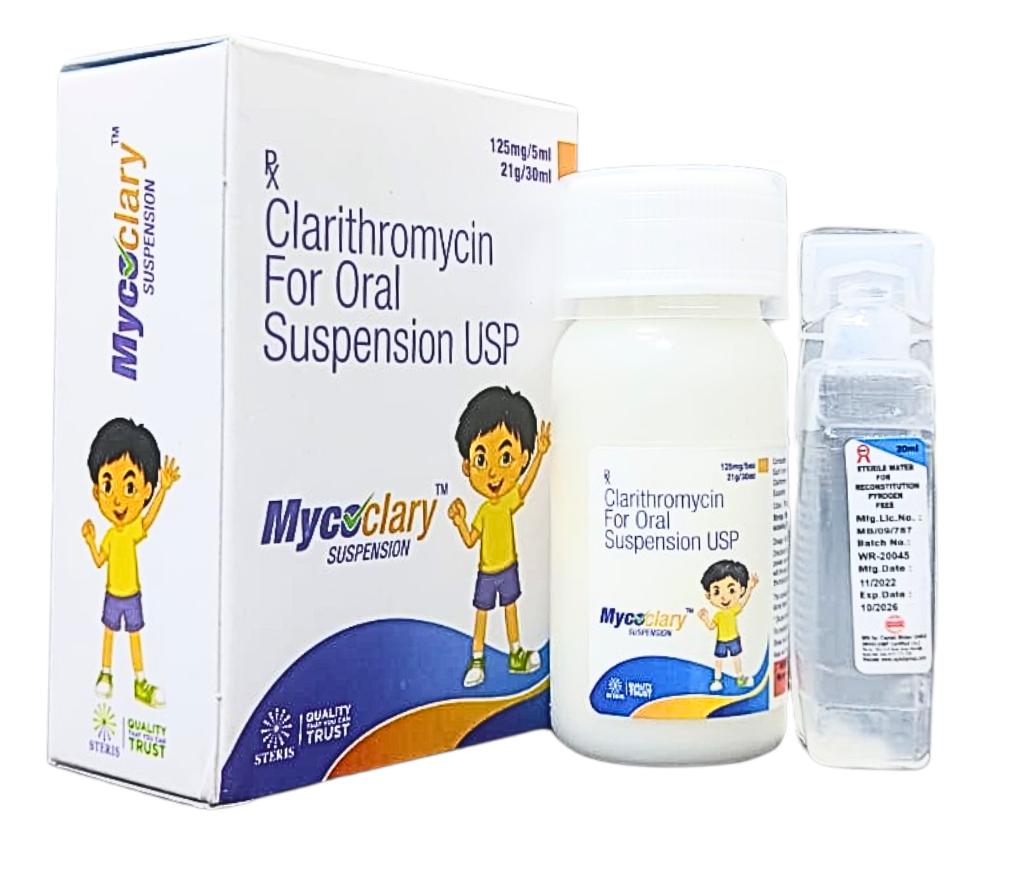
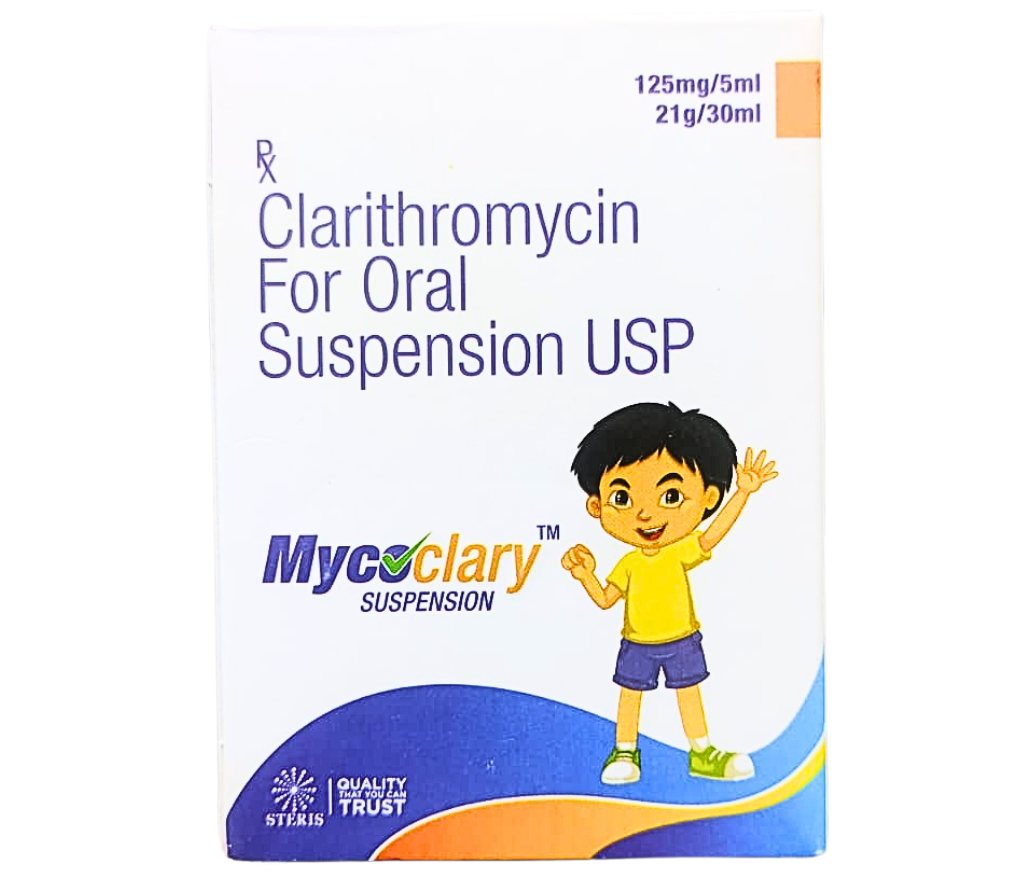
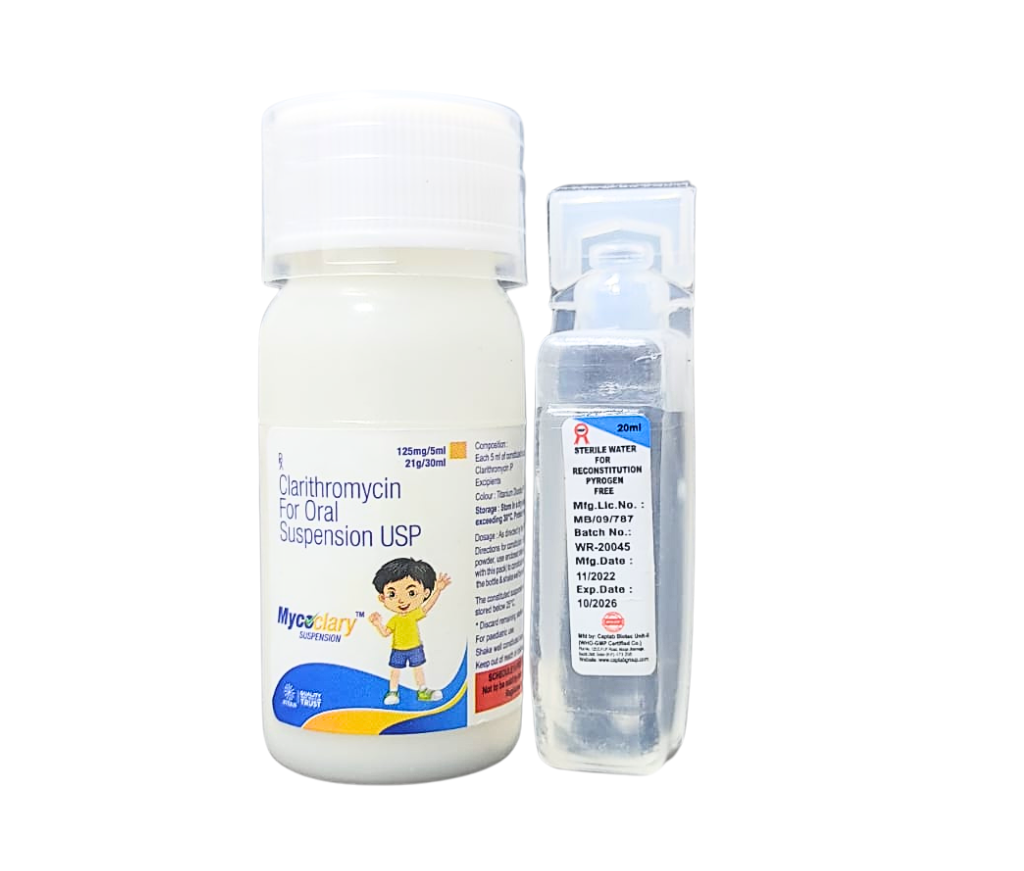

MYCOCLARY SUSPENSION
 Item requires a valid prescription
Manufactured By Steris Healthcare Pvt Ltd
Composition Clarithromycin for Oral Suspension USP
Rs 100.80
MRP Rs 144.00
(30% OFF)
Includes all taxes
Package SIZE
( 125mg / 5ml )

100% Authentic
Products

Free
Shipping*

Products
Return Policy
Description:
Clarithromycin for oral suspension USP is a prescription macrolide antibiotic used to treat certain bacterial infections when the causative organisms are susceptible to clarithromycin. It is available as granules that are mixed with water to produce an oral suspension, making the formulation particularly useful when a patient cannot comfortably swallow tablets. Current U.S. prescribing information lists oral-suspension strengths of 125 mg/5 mL and 250 mg/5 mL.
In India, current online pharmacy listings show clarithromycin oral suspensions in both 125 mg/5 mL and other marketed formulations. Recent listings identify these medicines as prescription products, with prices varying by brand, strength, pack size, location and availability. For example, a current listing for Clarid 125 mg Oral Suspension shows clarithromycin 250 mg/5 mL at ₹117 against an MRP of ₹135.94, while Klariday Oral Suspension containing 125 mg/5 mL is currently listed at ₹117.
What Is Clarithromycin for Oral Suspension USP?
Clarithromycin is a macrolide antibacterial medicine. “USP” refers to the United States Pharmacopeia standards associated with the product specification.
The medicine is supplied as granules or powder that are reconstituted with a specified amount of water before use. Depending on the product, the final concentration can be 125 mg/5 mL or 250 mg/5 mL. The concentration is important because the number of milliliters prescribed depends on the strength of the suspension.
Clarithromycin works by interfering with bacterial protein production, thereby inhibiting the growth of susceptible bacteria.
Because bacterial resistance patterns differ, clarithromycin should be used only when a bacterial infection is proven or strongly suspected and the organism is expected to respond to the antibiotic. The official prescribing information specifically emphasizes responsible antibiotic use to reduce the development of drug resistance.
Clarithromycin for Oral Suspension USP Uses
The principal clarithromycin for oral suspension USP uses include certain mild-to-moderate bacterial infections caused by susceptible organisms.
1. Respiratory tract infections
Clarithromycin may be prescribed for selected bacterial respiratory infections, including acute bacterial exacerbations of chronic bronchitis and certain cases of community-acquired pneumonia. The approved organisms vary according to the infection and patient population.
It should not be used automatically for every cough, cold or chest infection because many respiratory illnesses are viral.
2. Sinus infections
Clarithromycin oral suspension may be prescribed for certain cases of acute bacterial maxillary sinusitis caused by susceptible bacteria.
The diagnosis matters because sinus symptoms can also result from viral infections, allergies or other non-bacterial causes.
3. Throat and tonsil infections
Clarithromycin is indicated for certain cases of pharyngitis or tonsillitis caused by Streptococcus pyogenes. It can be considered as an alternative in appropriate patients, depending on clinical circumstances and local treatment recommendations.
4. Ear infections in children
Current prescribing information includes acute otitis media in pediatric patients caused by susceptible bacteria among the indications for clarithromycin oral suspension.
The liquid formulation can be convenient for children who cannot swallow tablets, but pediatric dosing must be calculated according to the child's weight and the prescribed concentration.
5. Certain skin infections
Clarithromycin is also indicated for selected uncomplicated skin and skin-structure infections caused by susceptible organisms such as Staphylococcus aureus or Streptococcus pyogenes.
6. Certain mycobacterial infections
Clarithromycin has an established role in the treatment and prevention of disseminated Mycobacterium avium complex (MAC) infection in appropriate patients. For treatment, it is generally used with other antimycobacterial medicines rather than as a standalone therapy.
Key Benefits of Clarithromycin Oral Suspension
Suitable for patients who have difficulty swallowing tablets
One of the major practical advantages of an oral suspension is its liquid dosage form. This can make administration easier for children and adults who have difficulty swallowing solid tablets.
Available in different concentrations
Clarithromycin oral suspension is available in formulations such as 125 mg/5 mL and 250 mg/5 mL, allowing prescribers to select an appropriate concentration for the prescribed regimen.
Broad antibacterial activity
Clarithromycin is active against a range of susceptible bacterial organisms associated with respiratory, ear, throat, skin and certain other infections. However, its usefulness depends on bacterial susceptibility and local resistance patterns.
Can be given with or without food
The current prescribing information states that clarithromycin oral suspension may be administered with or without food.
Convenient liquid dosing
A properly measured liquid dose can be useful when a doctor has prescribed a weight-based regimen, especially in pediatric patients.
How Does Clarithromycin Work?
Clarithromycin belongs to the macrolide class of antibiotics. It acts by interfering with bacterial protein synthesis, which prevents susceptible bacteria from producing proteins necessary for growth and survival.
This mechanism is different from that of many other antibiotic classes. However, bacteria can develop resistance to clarithromycin, which is why the medicine should not be used unnecessarily or saved for future illnesses.
Taking an antibiotic for a viral infection will not make the illness resolve faster and exposes the patient to unnecessary medication risks.
Clarithromycin Oral Suspension Dosage
The correct dose depends on the infection, age, body weight, kidney function, bacterial susceptibility, formulation strength and other medicines being taken.
For pediatric patients, current U.S. prescribing information lists a general regimen of 15 mg/kg/day divided every 12 hours for 10 days, up to the applicable adult dose, for certain mild-to-moderate infections. This is a prescribing reference, not a recommendation for self-treatment.
For mycobacterial infections, dosing is different and requires specialist supervision.
Never convert a tablet dose directly into milliliters without checking the concentration printed on the bottle.
For example, 125 mg/5 mL and 250 mg/5 mL are not interchangeable by volume. Five milliliters of a 250 mg/5 mL suspension contains twice as much clarithromycin as five milliliters of a 125 mg/5 mL suspension.
How to Prepare Clarithromycin Oral Suspension USP
The exact preparation instructions depend on the manufacturer, so the product label should always take priority.
For one current USP-labelled product, the instructions specify adding water in two stages, shaking vigorously after each addition. The amount of water differs according to the intended final volume and concentration. After reconstitution, the suspension should be shaken well before each use.
Use an appropriate oral measuring device rather than an ordinary kitchen spoon to measure each dose accurately.
Storage After Reconstitution
Storage instructions can vary by product. One current clarithromycin oral-suspension USP label states that the reconstituted suspension should not be refrigerated, should be stored at 20°C to 25°C, and should be used within 14 days.
Always follow the storage instructions printed on your particular bottle because formulations and labeling can differ.
Clarithromycin Oral Suspension Side Effects
Like all medicines, clarithromycin can cause side effects.
Commonly reported adverse effects include:
-
Diarrhea
-
Nausea
-
Vomiting
-
Abdominal pain or discomfort
-
Indigestion
-
Headache
-
Altered or abnormal taste
In pediatric clinical studies, diarrhea, vomiting, abdominal pain, rash and headache were among the commonly reported adverse events. Most reported reactions were mild to moderate.
Tastes change.
A metallic, bitter or otherwise abnormal taste is a recognized effect of clarithromycin. This may be unpleasant but is generally temporary.
Gastrointestinal symptoms
Nausea, diarrhea and abdominal discomfort are among the most common reasons people experience difficulty tolerating clarithromycin.
Serious side effects
Rare but potentially serious reactions can occur, including severe allergic reactions, significant liver problems, serious skin reactions and abnormal heart rhythms.
Clarithromycin can prolong the QT interval, increasing the risk of a potentially dangerous heart rhythm problem in susceptible patients. Risk is particularly important in people with certain heart conditions or those taking other medicines that also affect cardiac rhythm.
Important Drug Interactions
Clarithromycin has significant potential for drug interactions because it can alter the levels of several other medicines. Current prescribing information specifically highlights the need to evaluate drug interactions before and during treatment.
Certain medicines can be contraindicated or require particular caution when combined with clarithromycin. These can include some drugs affecting heart rhythm, cholesterol-lowering medicines, anticoagulants, anticonvulsants and medicines metabolized through specific liver enzymes.
Tell your doctor or pharmacist about all prescription medicines, over-the-counter products, vitamins and supplements you take.
Do not start clarithromycin from an old prescription without checking whether it is still appropriate for your current condition.
Who Should Avoid or Use Extra Caution With Clarithromycin?
Tell your healthcare professional if you have:
-
An allergy to clarithromycin, erythromycin or other macrolide antibiotics
-
Liver disease
-
Kidney disease
-
A history of abnormal heart rhythm or prolonged QT interval
-
Low potassium or magnesium levels
-
Myasthenia gravis
-
A history of severe antibiotic-associated diarrhea
-
Other significant medical conditions
Current prescribing information lists hypersensitivity to clarithromycin or other macrolides as a contraindication.
Buying Clarithromycin for Oral Suspension USP Online
If your search intent is buy clarithromycin for oral suspension USP online, this should be treated as a prescription-medicine purchase.
Recent Indian pharmacy listings show that clarithromycin suspensions are available under different brands and concentrations. For example, current listings include:
-
Clarid 125 mg Oral Suspension, listed as clarithromycin 250 mg/5 mL, at ₹117 against an MRP of ₹135.94.
-
Klariday Oral Suspension, containing clarithromycin 125 mg/5 mL, listed at ₹117, with prescription requirements displayed.
-
Clarithral 125 Oral Suspension, containing clarithromycin 125 mg/5 mL, recently listed at ₹95.10 against an MRP of ₹107.81; the listing indicated that it was temporarily sold out.
These are recent online listing examples rather than fixed prices. Prices, stock, discounts and availability may change according to location, seller and pack size.
What to check before ordering
Before buying clarithromycin oral suspension online:
-
Confirm the strength in mg/5 mL.
-
Check the active ingredient and manufacturer.
-
Verify the prescription requirement.
-
Check the expiry date.
-
Make sure the packaging is sealed and undamaged.
-
Confirm whether the product is supplied as dry granules or already reconstituted suspension.
-
Compare pack size and price rather than looking only at the headline price.
-
Follow the pharmacy's storage and delivery instructions.
-
Do not substitute a different concentration without confirmation from your pharmacist or doctor.
Clarithromycin Oral Suspension vs Tablets
The active antibiotic is the same, but the dosage form differs.
Oral suspension can be particularly convenient for children and people who cannot swallow tablets. The dose can also be measured in milliliters according to the prescribed concentration.
Tablets can be more convenient for patients who can swallow solid medication and may provide a simpler dosing routine.
The choice should be based on the patient's age, ability to swallow, prescribed dose, formulation availability and healthcare professional's recommendation.
Why You Should Complete the Prescribed Antibiotic Course
Antibiotics should be taken exactly as prescribed. Do not stop treatment early simply because symptoms improve unless your healthcare professional tells you to do so.
At the same time, do not take clarithromycin longer than prescribed. The goal is to use the right antibiotic for the right bacterial infection for the appropriate duration.
Unnecessary or inappropriate antibiotic use contributes to antimicrobial resistance, making future bacterial infections harder to treat. The official clarithromycin label specifically emphasizes limiting use to infections that are proven or strongly suspected to be caused by susceptible bacteria.
Frequently Asked Questions
1. What is clarithromycin for oral suspension USP used for?
Clarithromycin oral suspension is an antibiotic used for certain susceptible bacterial infections, including selected respiratory, sinus, throat, ear and skin infections. It also has specific uses against certain mycobacterial infections.
2. Is clarithromycin oral suspension safe for children?
It can be prescribed for children when the infection is appropriate for clarithromycin and the dose is calculated correctly. Pediatric dosing is generally based on body weight and the concentration of the suspension. It should only be given according to the pediatrician's prescription.
3. What are the common side effects of clarithromycin suspension?
Common side effects include diarrhea, nausea, vomiting, abdominal discomfort, headache and an altered taste. Children may also experience rash.
4. Can clarithromycin suspension be taken with food?
Yes. Current prescribing information states that clarithromycin oral suspension may be given with or without food.
5. Does clarithromycin oral suspension treat a cold or flu?
No. Colds and influenza are generally caused by viruses, while clarithromycin is an antibacterial medicine. It should be used when a bacterial infection is suspected or confirmed and treatment with clarithromycin is considered appropriate.
6. What is the difference between clarithromycin 125 mg/5 mL and 250 mg/5 mL?
They contain different concentrations. A 5 mL dose of the 125 mg/5 mL product contains 125 mg of clarithromycin, whereas 5 mL of the 250 mg/5 mL product contains 250 mg. They should not be substituted volume-for-volume without professional guidance.
7. How should clarithromycin suspension be stored?
Storage requirements depend on the specific product. One current USP-labelled product instructs users not to refrigerate the reconstituted suspension, to store it at 20°C–25°C and to use it within 14 days. Always follow the instructions on your bottle.
8. Can I buy clarithromycin oral suspension online?
Current Indian online pharmacy listings show several clarithromycin oral suspension products, but they are prescription medicines. Verify the strength, manufacturer, expiry date, seller and prescription requirements before ordering.
9. Can clarithromycin cause diarrhea?
Yes. Diarrhea is one of the most frequently reported side effects of clarithromycin. Severe or persistent diarrhea, particularly during or after antibiotic treatment, should be discussed with a healthcare professional because antibiotic-associated colitis can occur.
10. Can clarithromycin affect the heart?
Clarithromycin can affect cardiac electrical activity and may increase the risk of QT prolongation and serious arrhythmias in susceptible people. Tell your doctor about any history of heart rhythm problems and all medicines you take before starting treatment.
Conclusion
Clarithromycin for oral suspension USP is a prescription macrolide antibiotic formulated as a liquid suspension after reconstitution. Its main uses include selected bacterial infections involving the respiratory tract, sinuses, throat, ears and skin, as well as specific mycobacterial infections. Current U.S. labeling includes 125 mg/5 mL and 250 mg/5 mL suspension strengths.
The key practical benefit of the suspension is its liquid dosage form, which can make antibiotic administration easier for children and patients who have difficulty swallowing tablets. However, the concentration must always be checked carefully because 125 mg/5 mL and 250 mg/5 mL products deliver different amounts of medicine in the same volume.