


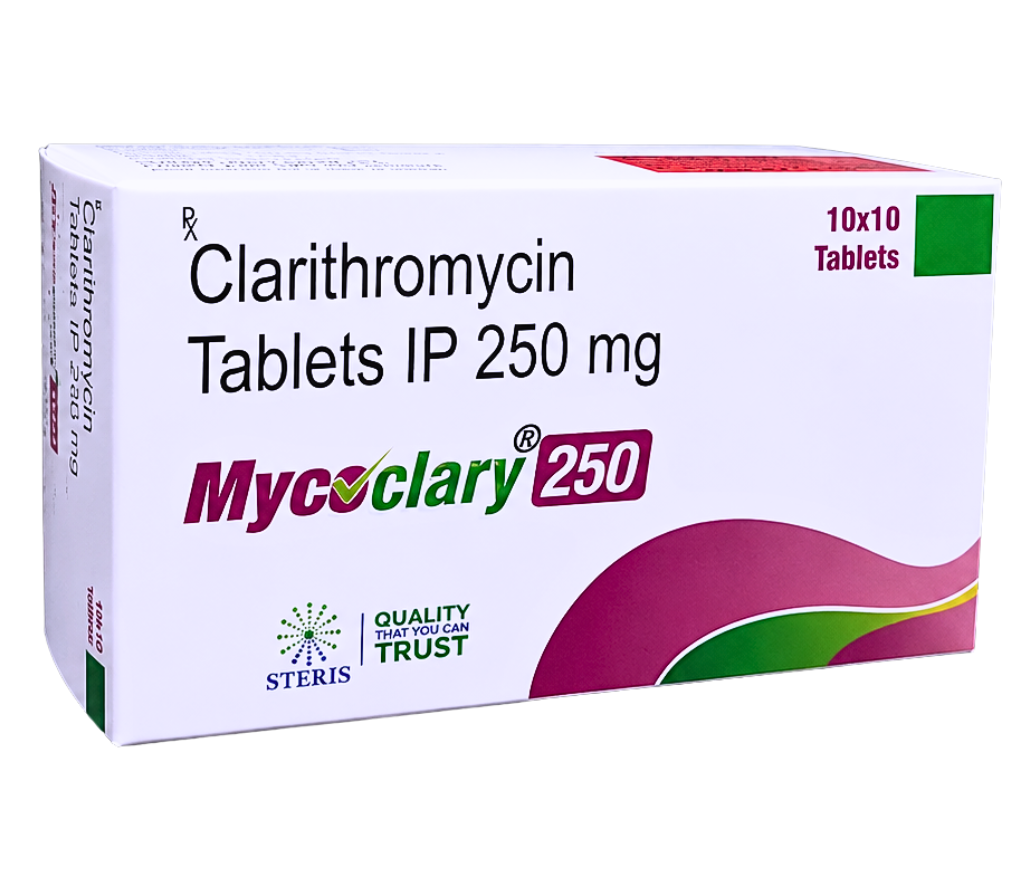
MYCOCLARY 250
 Item requires a valid prescription
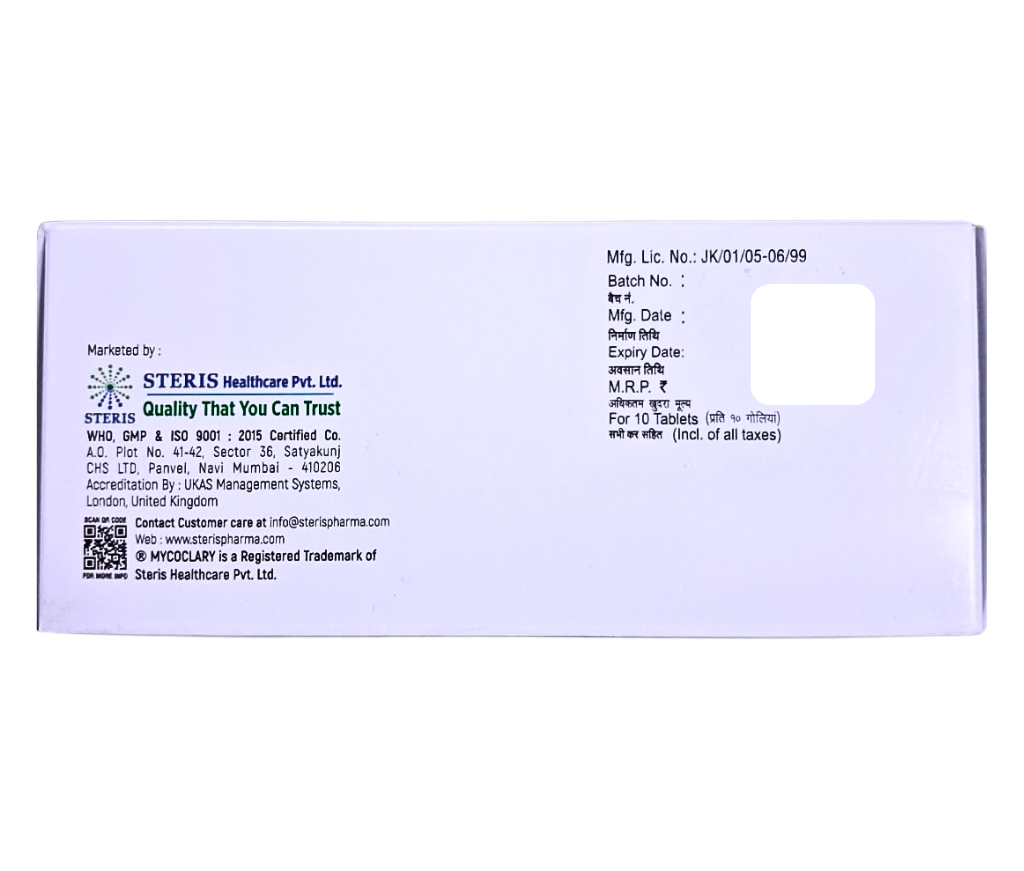
Manufactured By Steris Healthcare Pvt Ltd
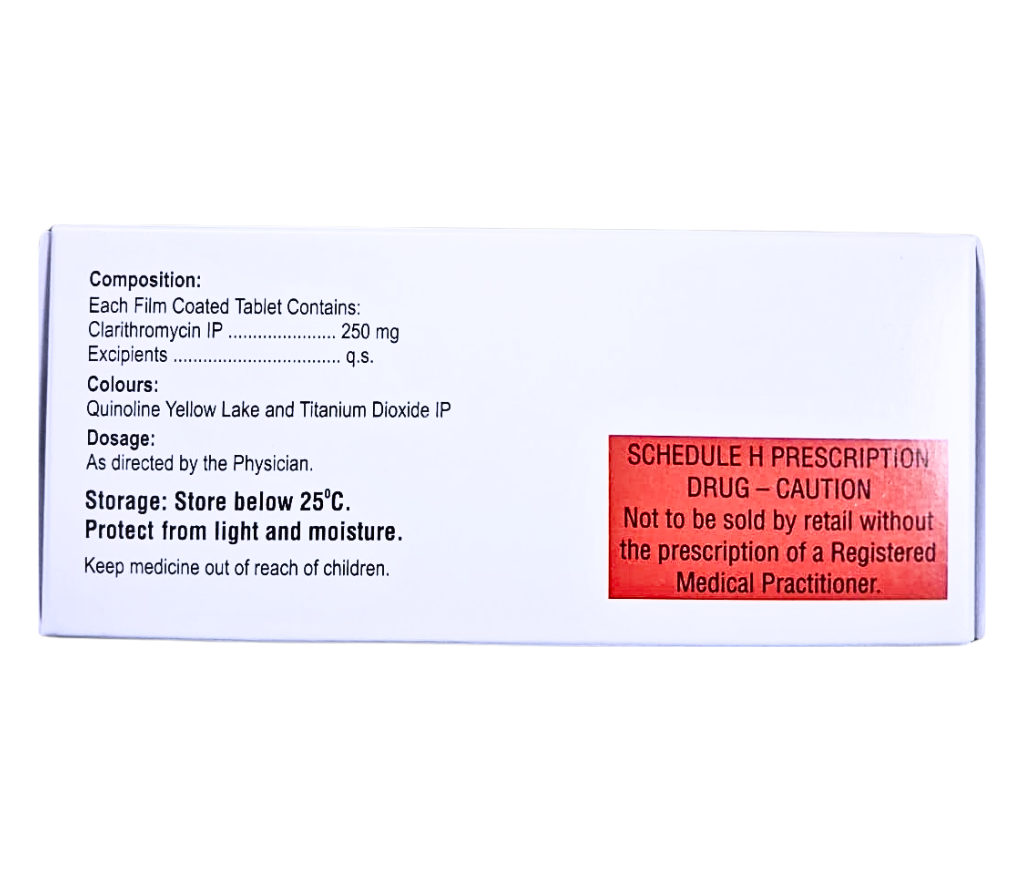
Composition Clarithromycin Tablets IP 250 mg
Rs 262.50
MRP Rs 375.00
(30% OFF)
Includes all taxes
Package SIZE
( For 10 Tablet )

100% Authentic
Products

Free
Shipping*

Products
Return Policy
Description:
MYCOCLARY 250 is a prescription macrolide antibiotic from Steris Healthcare Pvt. Ltd. Each tablet contains Clarithromycin IP 250 mg. Doctors across India commonly prescribe clarithromycin 250 for bacterial infections of the throat, tonsils, sinuses, bronchial tubes, lungs, and skin. It is also used as part of combination therapy to eliminate Helicobacter pylori, the bacterium linked to stomach ulcers and gastritis.
Clarithromycin is often chosen when a patient is allergic to penicillin, or when the suspected organism is an “atypical” bacterium such as Mycoplasma pneumoniae, Chlamydia pneumoniae, or Legionella. These organisms cause walking pneumonia and other chest infections, and many common antibiotics do not target them well. The 250 mg strength is widely used in routine outpatient care and is generally taken twice a day for a duration set by your doctor.
Like all antibiotics, MYCOCLARY 250 works only against bacteria. It has no effect on viral illnesses such as the common cold or influenza, so it should be taken only when a doctor has diagnosed or strongly suspects a bacterial infection.
Product Information
| Detail | Information |
|---|---|
| Brand Name | MYCOCLARY 250 |
| Composition | Clarithromycin Tablets IP 250 mg |
| Product Form | Tablet |
| Pack Size | 10 Tablets |
| Manufacturer / Marketer | Steris Healthcare Pvt. Ltd. |
Why Is It Important?
Bacterial infections of the respiratory tract and skin are among the most common reasons people in India visit a doctor. Weather changes, air pollution, crowded living conditions, and seasonal outbreaks all raise the risk of throat, sinus, and chest infections. A bacterial throat infection can spread to the tonsils or sinuses, and a bronchial infection can progress to pneumonia if it is not treated properly. Prompt, appropriate antibiotic therapy shortens the illness, relieves symptoms, and lowers the chance of complications.
Clarithromycin plays a distinct role among antibiotics. It works by binding to the 50S subunit of the bacterial ribosome, the structure bacteria use to build proteins. Without those proteins, the bacteria cannot grow or multiply, and the body’s immune system can clear the remaining organisms. Because it reaches good concentrations in lung tissue, tonsils, and skin, it suits infections in these sites. It also covers atypical respiratory pathogens, which is why it is often prescribed for community-acquired pneumonia and persistent chest infections.
Clarithromycin is also important in H. pylori eradication. Doctors typically combine it with a proton pump inhibitor and another antibiotic such as amoxicillin. Clearing this bacterium helps ulcers heal and reduces the chance that they return.
Finally, using an antibiotic correctly matters for the community as well as the patient. India faces a serious challenge with antibiotic resistance, driven partly by incomplete courses, self-medication, and use of antibiotics for viral illnesses. Taking MYCOCLARY 250 only on a doctor’s prescription, at the right dose, and for the full prescribed duration helps keep this medicine effective for you and for others. Stopping early, even when you feel better, can leave behind the hardiest bacteria and allow the infection to return in a harder-to-treat form.
Key Benefits
- Effective against common respiratory pathogens: Treats bacterial infections of the throat, tonsils, sinuses, and bronchial tubes, including pharyngitis, tonsillitis, sinusitis, and acute bronchitis.
- Covers atypical bacteria: Active against organisms such as Mycoplasma, Chlamydia pneumoniae, and Legionella, which cause atypical pneumonia and are not reliably treated by every antibiotic.
- Useful for penicillin-allergic patients: A macrolide alternative when penicillins are not suitable, as decided by your doctor.
- Treats skin and soft tissue infections: Used for mild to moderate infections such as impetigo, infected wounds, and cellulitis caused by susceptible bacteria.
- Part of H. pylori eradication therapy: Combined with a proton pump inhibitor and another antibiotic, it helps clear the bacterium and supports ulcer healing.
- Good tissue penetration: Reaches effective levels in the lungs, tonsils, and skin, supporting treatment where infection is located.
- Convenient twice-daily dosing: The 250 mg tablet fits easily into a daily routine, which supports completing the full course.
- Can be taken with or without food: Taking it with a meal may reduce stomach upset, which helps people who are sensitive to antibiotics.
- Quality-assured manufacturing: Made by Steris Healthcare, a WHO-GMP and ISO-certified pharmaceutical manufacturer in Jaipur.
Precautions
- Prescription only: MYCOCLARY 250 is a Schedule H medicine. Take it only on the advice of a registered medical practitioner, and do not share it or reuse leftover tablets.
- Complete the course: Take the full duration prescribed, even if symptoms improve. Do not skip doses.
- Allergy: Do not use it if you are allergic to clarithromycin, erythromycin, azithromycin, or any other macrolide antibiotic.
- Heart rhythm: Clarithromycin can prolong the QT interval and may trigger irregular heartbeats. Tell your doctor if you have heart disease, a history of arrhythmia, low potassium or magnesium, or a family history of sudden cardiac death. Seek help right away if you feel palpitations or faint.
- Liver and kidney disease: Inform your doctor if you have liver or kidney problems. Liver function may need monitoring, and the dose may need adjustment in severe kidney impairment.
- Drug interactions: Clarithromycin affects how the liver processes many medicines. Never take it together with ergot alkaloids (used for migraine), cisapride, pimozide, or certain cholesterol medicines such as simvastatin or lovastatin unless your doctor specifically advises it. Tell your doctor if you take warfarin or other blood thinners, digoxin, theophylline, carbamazepine, colchicine, sildenafil, or sedatives such as midazolam. Levels of these drugs can rise and cause serious effects.
- Pregnancy: Avoid it during pregnancy unless your doctor decides no safer alternative exists. Tell your doctor if you are pregnant or planning pregnancy.
- Breastfeeding: Clarithromycin passes into breast milk in small amounts. Discuss with your doctor before use and watch the baby for diarrhoea or thrush.
- Myasthenia gravis: Macrolides can worsen muscle weakness in people with this condition. Report any worsening to your doctor.
- Severe diarrhoea: Antibiotics can cause an intestinal infection called Clostridioides difficile-associated diarrhoea, sometimes weeks after treatment. Do not take anti-diarrhoeal medicines on your own if you develop severe or bloody diarrhoea; contact your doctor.
- Do not use for viral infections: It will not help with colds, flu, or most sore throats caused by viruses.
- Alcohol and driving: Dizziness or confusion can occasionally occur. Avoid driving or operating machinery if you feel unwell after taking it.
- Storage: Keep in a cool, dry place away from direct sunlight and out of reach of children.
Side Effects
Not everyone experiences side effects, and most are mild and settle once the course is over.
Common side effects:
- Nausea or vomiting
- Diarrhoea or loose stools
- Abdominal pain or indigestion
- Bitter or metallic taste in the mouth
- Headache
- Skin rash or itching
- Raised liver enzymes on blood tests
Frequently Asked Questions
1. What is Clarithromycin 250 mg used for?
Clarithromycin 250 mg is a macrolide antibiotic used to treat certain bacterial infections, including respiratory tract infections, throat infections, sinus infections, skin infections, and some other susceptible bacterial infections. It may also be prescribed as part of combination therapy for Helicobacter pylori infection.
2. How does Clarithromycin 250 mg work?
Clarithromycin works by inhibiting bacterial protein synthesis. It binds to the bacterial 50S ribosomal subunit, preventing bacteria from producing essential proteins required for their growth and multiplication. This helps control susceptible bacterial infections.
3. Is Clarithromycin 250 mg an antibiotic?
Yes. Clarithromycin 250 mg is a macrolide-class antibiotic. It is prescribed to treat specific bacterial infections and is not effective against viral infections such as the common cold or flu.
4. Can Clarithromycin 250 mg treat throat infections?
Yes. Clarithromycin may be prescribed for certain bacterial throat infections when the causative bacteria are susceptible. However, not every sore throat requires antibiotics. A doctor should determine whether antibiotic treatment is necessary.
5. What infections does Clarithromycin 250 mg treat?
Clarithromycin may be prescribed for several bacterial infections, including:
-
Throat and tonsil infections.
-
Sinus infections.
-
Certain respiratory tract infections.
-
Community-acquired pneumonia.
-
Certain skin and soft tissue infections.
-
Helicobacter pylori infection as part of combination therapy.
-
Certain infections caused by susceptible bacteria.
The choice of antibiotic depends on the infection, bacterial susceptibility, and the patient's medical condition.
6. What are the side effects of Clarithromycin 250 mg?
Common side effects may include:
-
Nausea and vomiting.
-
Diarrhoea.
-
Stomach discomfort.
-
Abdominal pain.
-
Changes in taste sensation.
-
Headache.
-
Indigestion.
Serious reactions may include allergic reactions, liver problems, irregular heart rhythms, and severe diarrhoea. Seek medical attention if serious or persistent symptoms develop.
7. Should Clarithromycin 250 mg be taken before or after food?
Clarithromycin immediate-release tablets can generally be taken with or without food. Taking the medicine with food may help reduce stomach discomfort. Follow your doctor's instructions and the specific product leaflet, as modified-release formulations have different administration requirements.
8. How should I take Clarithromycin 250 mg tablets?
Take Clarithromycin 250 mg exactly as prescribed by your healthcare professional. Swallow the tablet with water and follow the recommended dose and treatment duration. Complete the prescribed course unless your doctor advises otherwise. Do not double the dose if you miss one.
9. Can Clarithromycin 250 mg treat chest infections?
Yes. Clarithromycin may be prescribed for certain bacterial chest and respiratory tract infections, including susceptible cases of bronchitis and pneumonia. It does not treat viral chest infections, so medical evaluation is important before starting treatment.
10. Is Clarithromycin 250 mg safe for children?
Clarithromycin can be prescribed to children for certain bacterial infections. However, the appropriate dosage depends on the child's age, body weight, infection type, and medical condition. A paediatrician should determine the dose and duration. Children should not be given adult-strength tablets without medical advice.