


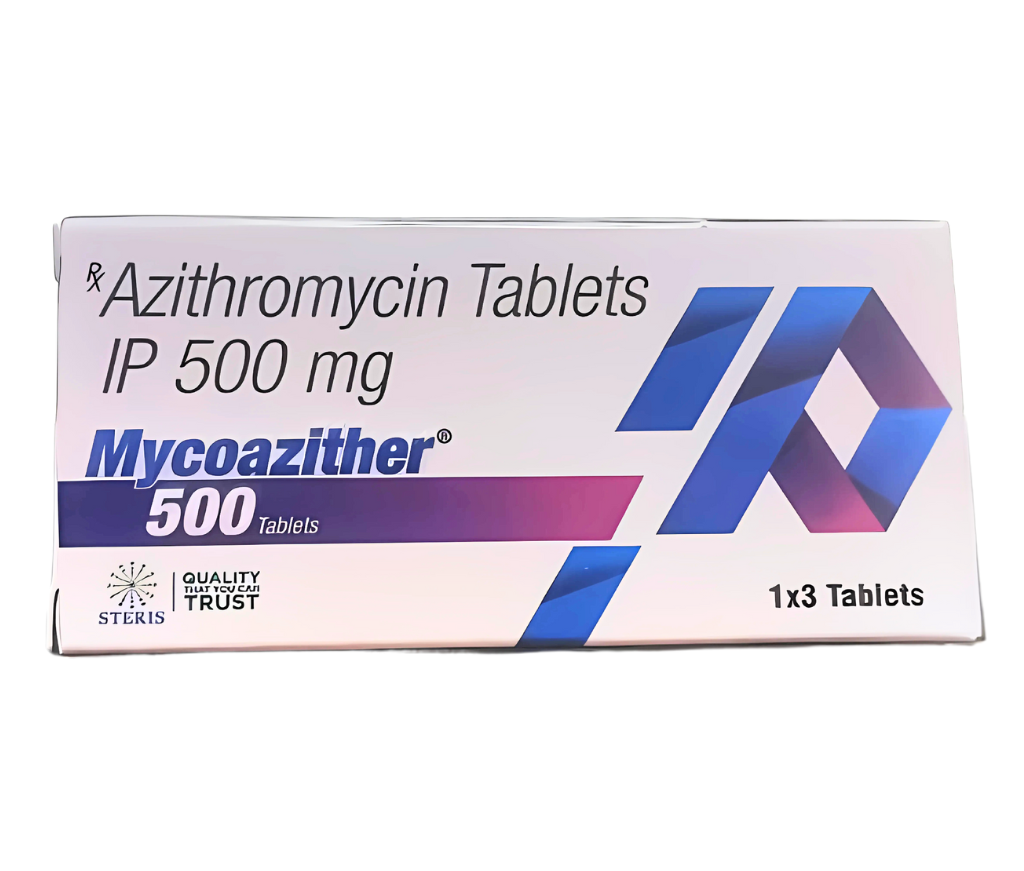
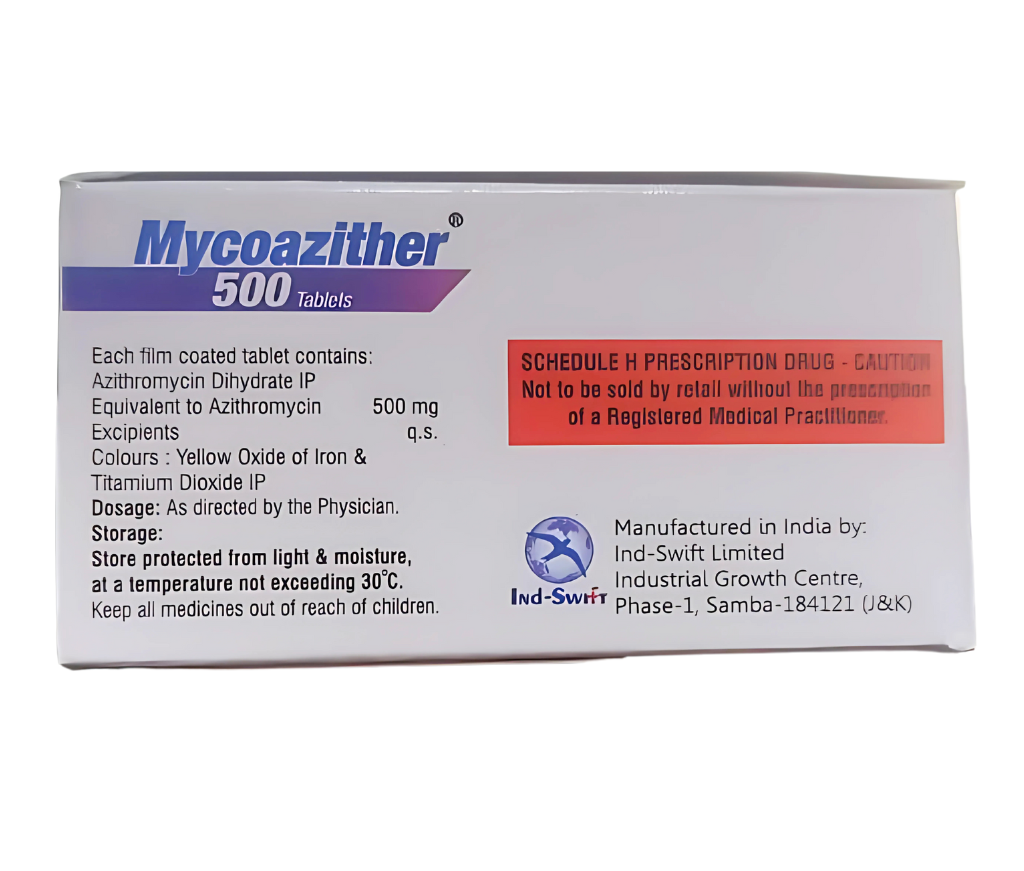
MYCOAZITHER 500
 Item requires a valid prescription
Manufactured By Steris Healthcare Pvt Ltd
Composition tab azithromycin 500 mg
Rs 155.53
MRP Rs 222.19
(30% OFF)
Includes all taxes
Package SIZE
( For 3 TABS )

100% Authentic
Products

Free
Shipping*

Products
Return Policy
Description:
Tab azithromycin 500 mg is an oral macrolide antibiotic prescribed to treat certain bacterial infections caused by susceptible microorganisms. It works by interfering with bacterial protein production, which prevents susceptible bacteria from growing and multiplying. Azithromycin is available in tablet form and is prescribed for specific respiratory, skin, throat, ear, and other bacterial infections depending on the patient's diagnosis and the applicable product labeling.
For people researching tab azithromycin 500 mg, the most important information includes its uses, potential benefits, side effects, dosage considerations, precautions, interactions, and responsible purchasing. Because azithromycin is a prescription antibiotic in many markets, it should be obtained from a legitimate pharmacy and used only when medically indicated.
What Is Tab Azithromycin 500 mg?
Tab azithromycin 500 mg contains 500 mg of azithromycin, a macrolide antibacterial medicine. It is designed to treat certain bacterial infections when the causative organism is susceptible to azithromycin. Current prescribing information lists indications that include selected respiratory infections, community-acquired pneumonia, uncomplicated skin and skin-structure infections, certain throat infections, and specific sexually transmitted bacterial infections.
Azithromycin does not work against viruses. Therefore, tab azithromycin 500 mg should not be used for common colds, influenza, or other viral infections unless a healthcare professional identifies a bacterial infection requiring treatment. Unnecessary antibiotic use can increase the risk of adverse effects and contribute to antimicrobial resistance.
Tab Azithromycin 500 mg Uses
The appropriate use of azithromycin depends on the patient's diagnosis, the suspected or confirmed organism, and local treatment recommendations.
1. Bacterial Respiratory Infections
Azithromycin tablets are indicated for certain bacterial respiratory conditions, including acute bacterial exacerbations of chronic bronchitis and acute bacterial sinusitis in adults when caused by susceptible organisms. It is also used for selected cases of community-acquired pneumonia when oral treatment is appropriate.
Not every cough, cold, sinus symptom, or chest infection requires an antibiotic. A healthcare professional should determine whether the illness is bacterial and whether azithromycin is an appropriate choice.
2. Community-Acquired Pneumonia
Azithromycin may be prescribed for certain cases of community-acquired pneumonia caused by susceptible organisms, including Mycoplasma pneumoniae, Chlamydophila pneumoniae, Haemophilus influenzae, and Streptococcus pneumoniae, when the patient is suitable for oral therapy.
More serious pneumonia may require a different treatment approach or hospital-based care, so self-treatment with an antibiotic is not appropriate for significant breathing difficulties or severe illness.
3. Certain Throat Infections
Azithromycin tablets can be used for pharyngitis or tonsillitis caused by Streptococcus pyogenes as an alternative to first-line therapy in patients who cannot use the preferred first-line treatment.
This distinction matters because most sore throats are not necessarily bacterial infections, and antibiotics should not be used simply because a person has throat pain.
4. Certain Skin and Skin-Structure Infections
Azithromycin is indicated for selected uncomplicated skin and skin-structure infections caused by susceptible organisms. The choice of antibiotic depends on the suspected organism and clinical circumstances.
5. Certain Genital Infections
Azithromycin has labeled uses for certain forms of urethritis and cervicitis, including infections associated with Chlamydia trachomatis and Neisseria gonorrhoeae. Treatment of sexually transmitted infections requires appropriate diagnosis and medical guidance because recommended regimens can differ according to the infection and current clinical recommendations.
Key Benefits of Tab Azithromycin 500 mg
When appropriately prescribed for a susceptible bacterial infection, potential benefits of azithromycin include:
- Targeted antibacterial treatment for susceptible bacterial infections.
- Macrolide antibiotic activity that inhibits bacterial protein synthesis.
- Oral tablet convenience for patients who are appropriate for outpatient treatment.
- Use across several recognized bacterial indications, including selected respiratory, skin, throat, and other infections.
The benefit of azithromycin depends on using it for the right infection. It is not more effective simply because the tablet contains 500 mg, and taking a larger amount than prescribed does not necessarily produce better results.
How to Take Tab Azithromycin 500 mg
Take tab azithromycin 500 mg exactly as prescribed. The appropriate dose and treatment duration depend on the infection and patient characteristics.
Azithromycin tablets can generally be taken with or without food, according to current patient information. Take the medicine around the same time each day when a multi-day regimen has been prescribed.
Do not take additional tablets to compensate for a missed dose unless your healthcare professional specifically instructs you to do so.
If symptoms fail to improve or become worse during treatment, contact your healthcare professional rather than increasing the dose yourself. MedlinePlus advises patients to follow the prescribed course and not stop treatment simply because they begin to feel better, unless a serious adverse reaction requires medical attention.
Tab Azithromycin 500 mg Side Effects
Like all medicines, azithromycin can cause side effects. Commonly reported adverse effects may include:
- Nausea
- Diarrhea
- Abdominal discomfort or pain
- Vomiting
- Headache
- Dizziness
- Changes in taste
- Indigestion
Most people do not experience every possible side effect, and some effects may be temporary.
Serious Side Effects
Although uncommon, azithromycin can cause serious adverse reactions. Seek prompt medical attention for symptoms such as:
- Severe or persistent diarrhea, particularly if watery or bloody
- Severe allergic reactions, including swelling of the face or throat or difficulty breathing
- Severe skin rash, blistering, peeling, or other serious skin reactions
- Yellowing of the skin or eyes or other signs of liver problems
- Fainting, rapid or irregular heartbeat, or other concerning cardiac symptoms
- New or worsening muscle weakness in susceptible individuals
Azithromycin has important cardiovascular warnings because it can affect the QT interval and may increase the risk of potentially dangerous abnormal heart rhythms in susceptible patients. Risk can be higher in people with certain heart conditions, electrolyte abnormalities, or interactions with other medicines that prolong the QT interval.
Who Should Use Caution With Azithromycin 500 mg?
Before taking tab azithromycin 500 mg, tell your healthcare professional if you have:
- A previous allergy to azithromycin, erythromycin, or other macrolide antibiotics
- Liver disease
- A history of abnormal heart rhythm or prolonged QT interval
- Low potassium or magnesium levels
- Myasthenia gravis
- A history of antibiotic-associated severe diarrhea
- Other medicines that may interact with azithromycin
The prescribing information contains specific warnings concerning hypersensitivity reactions, liver injury, QT prolongation, Clostridioides difficile-associated diarrhea, and exacerbation of myasthenia gravis.
Tab Azithromycin 500 mg and Drug Interactions
Before purchasing or taking azithromycin, provide your healthcare professional or pharmacist with a complete list of medicines, vitamins, and supplements you use.
Drug interactions can affect the safety or effectiveness of treatment. Particular attention may be needed when azithromycin is used with medicines that affect cardiac rhythm or other medicines identified in the product's prescribing information.
Never assume that a medicine is safe to combine with azithromycin simply because both products are available without a prescription.
Does Azithromycin 500 mg Treat a Cold or Flu?
No. Azithromycin is an antibacterial antibiotic and does not treat viral infections such as common colds or influenza. Taking antibiotics unnecessarily does not make viral illnesses resolve faster and can contribute to antibiotic resistance.
If symptoms persist, become severe, or suggest a bacterial complication, a healthcare professional should determine whether antibiotic treatment is appropriate.
Buyer Guide: What to Check Before Buying Tab Azithromycin 500 mg
If your search intent is “buy tab azithromycin 500 mg”, price should not be the only factor when evaluating a product.
Before purchasing, check:
- Confirm the active ingredient is azithromycin.
- Verify the strength is 500 mg.
- Check whether the product is a tablet and matches the prescribed formulation.
- Review the manufacturer and packaging information.
- Check the expiry date and batch information where applicable.
- Purchase through a legitimate pharmacy or authorized medicine supplier.
- Follow the prescription requirements applicable in your country.
- Avoid websites making claims that azithromycin cures every infection.
- Do not purchase antibiotics for self-treatment of undiagnosed symptoms.
A trustworthy product listing should provide clear information about the active ingredient, strength, formulation, manufacturer, storage, prescription status, and appropriate safety warnings.
Why Responsible Antibiotic Use Matters
Antibiotic resistance is an important reason to use azithromycin carefully. Current prescribing information recommends that azithromycin be used only for infections that are proven or strongly suspected to be caused by susceptible bacteria.
Using an antibiotic when it is unnecessary can expose you to side effects without providing a meaningful benefit. It can also contribute to bacteria developing resistance, making future infections harder to treat.
Do not share your azithromycin with another person, save leftover tablets for a future illness, or use an old prescription without professional advice.
Frequently Asked Questions
1. What is tab azithromycin 500 mg used for?
Tab azithromycin 500 mg is a macrolide antibiotic used for certain mild-to-moderate bacterial infections caused by susceptible organisms. Depending on the clinical situation, uses include selected respiratory infections, pneumonia, skin infections, throat infections, and certain genital infections.
2. What are the benefits of azithromycin 500 mg?
The main benefit is treating an appropriate bacterial infection when the responsible organism is susceptible to azithromycin. It provides an oral macrolide antibiotic option for several recognized infections.
3. What are the common side effects of azithromycin 500 mg?
Common side effects may include nausea, diarrhea, abdominal discomfort, vomiting, headache, and dizziness. Serious allergic, liver, gastrointestinal, or cardiac reactions can occur less commonly.
4. Can azithromycin 500 mg treat a cold or flu?
No. Azithromycin treats susceptible bacterial infections, not viral illnesses such as colds or influenza. Unnecessary antibiotic use can contribute to antibiotic resistance.
5. Can I take azithromycin 500 mg with food?
Azithromycin tablets can generally be taken with or without food. Follow the specific instructions provided with your prescription because formulations and instructions can differ.
6. How long does azithromycin 500 mg take to work?
Some people begin feeling better during the first few days of treatment, but the timing depends on the infection and individual response. If symptoms do not improve or become worse, contact your healthcare professional rather than changing the dose yourself.
7. Is azithromycin 500 mg safe for everyone?
No. People with certain allergies, heart-rhythm problems, liver conditions, electrolyte abnormalities, or relevant drug interactions may require an alternative treatment or additional monitoring. A healthcare professional should determine whether azithromycin is appropriate.
8. Can I buy tab azithromycin 500 mg without a prescription?
Prescription requirements vary by country, but azithromycin is a prescription antibiotic in many markets. It should be obtained through a legitimate pharmacy and used according to professional medical advice.
9. Can azithromycin 500 mg cause diarrhea?
Yes. Diarrhea is a recognized adverse effect of azithromycin. Severe, persistent, or bloody diarrhea should be reported promptly because antibiotic-associated C. difficile infection can occur during or after antibiotic treatment.
10. What should I check before buying azithromycin 500 mg?
Verify the active ingredient, 500 mg strength, formulation, manufacturer, expiry information, packaging, and pharmacy legitimacy. Most importantly, make sure the medicine has been prescribed or recommended for the specific bacterial infection being treated.
Conclusion
Tab azithromycin 500 mg is an established macrolide antibiotic used for selected bacterial infections caused by susceptible organisms. Its potential benefits include targeted treatment of appropriate bacterial infections and the convenience of an oral tablet for patients suitable for outpatient therapy. Current labeling supports its use for specific respiratory, skin, throat, pneumonia, and other bacterial infections.
For consumers with transactional intent who are searching to buy tab azithromycin 500 mg, responsible purchasing is just as important as price. Select a legitimate pharmacy, verify the medicine's strength and formulation, and ensure that the product corresponds to a valid treatment plan.

