


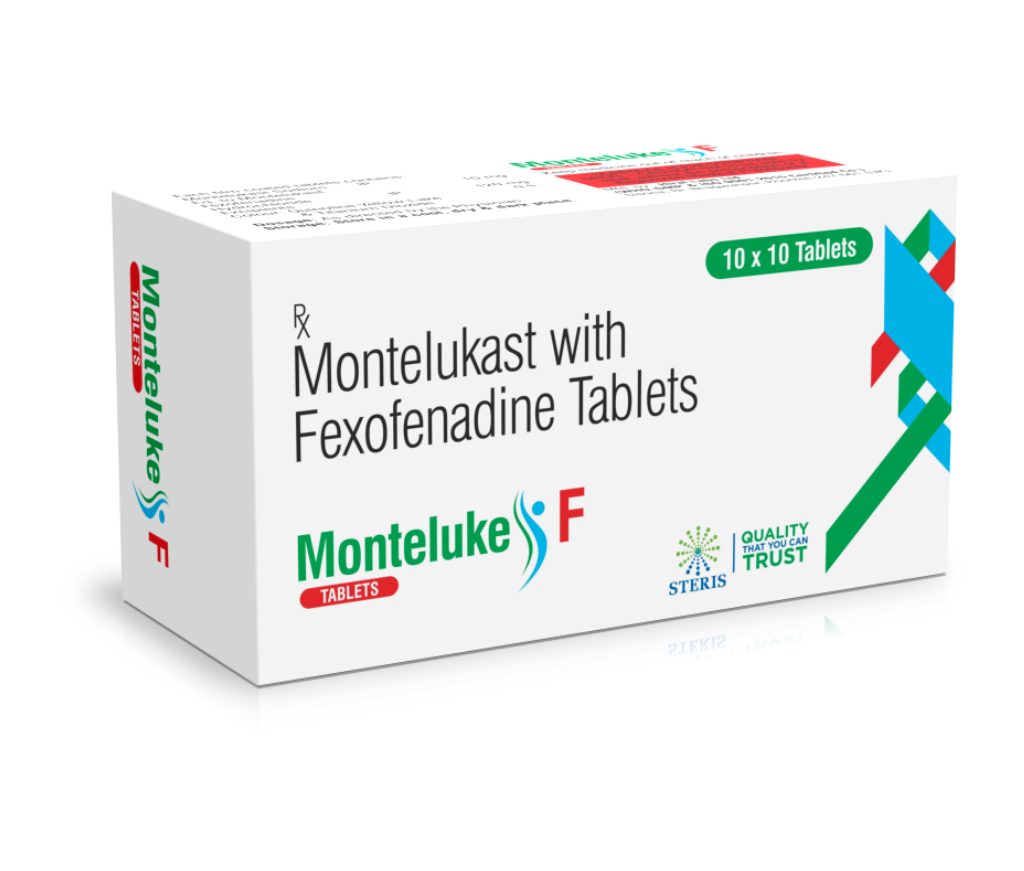
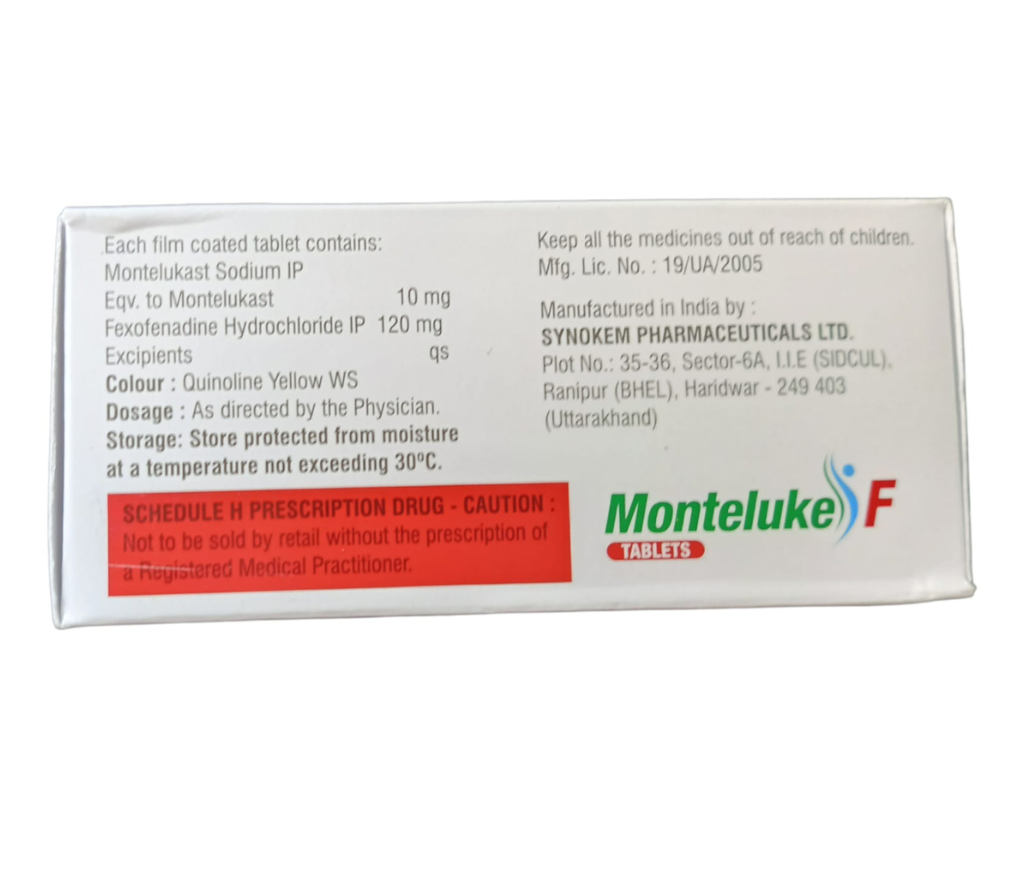
MONTELUKE F
 Item requires a valid prescription
Manufactured By Steris Healthcare Pvt Ltd
Composition Montelukast (10mg), Fexofenadine (120mg)
Rs 91.22
MRP Rs 130.31
(30% OFF)
Includes all taxes
Package SIZE
( For 10 Tablets )

100% Authentic
Products

Free
Shipping*

Products
Return Policy
Description:
Montelukast 10 mg and fexofenadine 120 mg is a combination of two medicines commonly used to manage allergy-related respiratory symptoms. Montelukast is a leukotriene receptor antagonist, while fexofenadine is a second-generation antihistamine. Together, they target different pathways involved in allergic symptoms, making this combination particularly relevant for people experiencing symptoms such as sneezing, runny or blocked nose, nasal itching, watery eyes, and allergy-associated breathing symptoms when a clinician considers both medicines appropriate.
For people searching for montelukast 10 mg, fexofenadine 120 mg uses, benefits, side effects, dosage, precautions, interactions, and safe purchasing information, it is important to understand that this is a prescription combination in many markets and should be used according to the exact product label and healthcare professional's advice.
Current official drug labeling confirms that montelukast is used for asthma prevention and treatment, exercise-induced bronchoconstriction, and allergic rhinitis, while fexofenadine is an antihistamine used for allergy symptoms. Montelukast also carries an important boxed warning concerning serious neuropsychiatric events.
What Is Montelukast 10 mg/Fexofenadine 120 mg?
Montelukast 10 mg and fexofenadine 120 mg combine:
-
Montelukast 10 mg—a leukotriene receptor antagonist that blocks leukotriene activity involved in airway inflammation and allergic responses.
-
Fexofenadine 120mg — a second-generation H1-antihistamine that blocks the effects of histamine, a major chemical mediator of allergy symptoms.
The two ingredients work differently.
Montelukast primarily targets leukotriene-mediated inflammation, while fexofenadine primarily controls histamine-mediated symptoms. This complementary mechanism is why the combination may be prescribed when a patient has multiple allergy-related symptoms.
However, the combination should not automatically be considered appropriate for everyone with a cold, cough, or runny nose. Allergic rhinitis, asthma, viral infections, and other respiratory conditions can produce overlapping symptoms and require different treatment.
Montelukast 10 mg, Fexofenadine 120 mg: Uses
1. Allergic Rhinitis
One of the most common reasons this type of combination is prescribed is allergic rhinitis, including symptoms associated with seasonal or perennial allergies.
Allergic rhinitis can cause:
-
Frequent sneezing
-
Runny nose
-
Nasal congestion
-
Nasal itching
-
Throat or palate itching
-
Watery or itchy eyes
-
Postnasal discomfort
Fexofenadine directly reduces histamine-mediated symptoms, while montelukast can help address leukotriene-mediated inflammatory pathways.
Official montelukast labeling includes relief of symptoms associated with seasonal and perennial allergic rhinitis, although U.S. labeling specifically advises reserving montelukast for allergic-rhinitis patients who have an inadequate response or intolerance to alternative therapies because of the risk of serious neuropsychiatric events.
2. Allergy-Associated Respiratory Symptoms
Montelukast is also indicated for the prophylaxis and chronic treatment of asthma in appropriate patients. It may help control leukotriene-mediated airway inflammation and bronchoconstriction.
However, the combination of montelukast and fexofenadine should not be viewed as a replacement for an asthma rescue inhaler.
Montelukast is not indicated for treating an acute asthma attack. Patients experiencing sudden severe breathing difficulty should follow their prescribed emergency/rescue treatment plan and seek urgent medical attention when necessary.
3. Exercise-Induced Bronchoconstriction
Montelukast is also approved in appropriate age groups for prevention of exercise-induced bronchoconstriction. Fexofenadine does not serve the same role.
Therefore, if a product containing both ingredients is being prescribed for someone with exercise-related respiratory symptoms, the exact treatment plan should be confirmed with the prescribing clinician.
Key Benefits of Montelukast 10mg Fexofenadine 120mg
Dual-action allergy control
The primary potential advantage of this combination is that it addresses two different allergic pathways.
Fexofenadine blocks histamine H1 receptors, helping reduce classic allergy symptoms. Montelukast blocks leukotriene receptors, targeting another pathway involved in inflammation and airway responses.
Helps relieve common nasal allergy symptoms
Fexofenadine is indicated for temporary relief of symptoms such as
-
Runny nose
-
Sneezing
-
Itchy, watery eyes
-
Itching of the nose or throat
These are classic symptoms of hay fever and upper-respiratory allergies.
May provide broader symptom coverage
Some patients experience a mixture of nasal allergy symptoms and respiratory symptoms. When a clinician determines that both pathways need treatment, combining an antihistamine with a leukotriene antagonist can provide broader pharmacological coverage than targeting histamine alone.
Fexofenadine is generally less sedating than older antihistamines
Fexofenadine is a second-generation antihistamine and is generally considered less sedating than many first-generation antihistamines. Nevertheless, individual responses differ, and some people may experience drowsiness or dizziness.
The NHS advises people taking fexofenadine for the first time to see how it affects them before driving or operating machinery.
How Does Montelukast 10 mg Work?
Montelukast blocks cysteinyl leukotriene receptors.
Leukotrienes are inflammatory substances that can contribute to airway narrowing, mucus production, swelling, and allergic inflammation. By blocking their action, montelukast can help reduce leukotriene-driven respiratory and allergic responses.
Montelukast is therefore different from an antihistamine and should not be expected to work in exactly the same way.
It is important to remember that montelukast is a controller medicine in asthma, not a rescue treatment for an acute asthma attack.
How Does Fexofenadine 120 mg Work?
Fexofenadine is an H1-antihistamine.
When an allergic person encounters an allergen such as pollen, dust mites, or another trigger, histamine contributes to symptoms including sneezing, itching, runny nose, and watery eyes.
Fexofenadine blocks H1 receptors, reducing the effects of histamine and helping relieve these symptoms.
Official labeling describes fexofenadine as an antihistamine for temporary relief of common hay fever and upper-respiratory allergy symptoms.
How to Take Montelukast 10 mg and Fexofenadine 120mg
Take the combination exactly as prescribed.
Do not assume that because the product contains 10mg of montelukast and 120mg of fexofenadine, the combination is suitable for every adult or that it should automatically be taken once or twice daily.
The exact schedule depends on:
-
Your diagnosis
-
Age
-
Kidney function
-
Other medicines
-
The specific manufacturer's formulation
-
Local prescribing information
Montelukast 10mg is a standard strength used in appropriate older adolescent/adult regimens, while fexofenadine dosing varies according to the indication and product strength. Official labels should therefore be followed rather than applying dosing information from a different fexofenadine formulation.
Take fexofenadine with water
Fexofenadine should be taken with water rather than fruit juice.
Apple, orange, and grapefruit juices can reduce fexofenadine absorption and may make it less effective.
Antacids matter
Aluminum- or magnesium-containing antacids can reduce fexofenadine absorption. They should not be taken at the same time as fexofenadine; ask your pharmacist about appropriate spacing if you regularly use these products.
Montelukast 10 mg, Fexofenadine 120mg Side Effects
Every medicine can cause side effects, although not everyone experiences them.
Potential side effects associated with fexofenadine include:
-
Headache
-
Dizziness
-
Nausea
-
Fatigue
-
Possible drowsiness in some individuals
Montelukast can cause a broader range of adverse effects, and the most important safety issue is its warning concerning neuropsychiatric events.
Montelukast neuropsychiatric warning
Current official labeling carries a boxed warning about serious neuropsychiatric events associated with montelukast. Reported symptoms can include changes in behavior or mood, agitation, aggression, depression, sleep disturbances, suicidal thoughts or behavior, and other mental-health changes.
Patients and caregivers should be aware of these symptoms.
The current labeling advises monitoring for neuropsychiatric symptoms and discontinuing montelukast if such symptoms occur, with prompt medical evaluation. For allergic rhinitis specifically, montelukast should generally be reserved for patients who have not responded adequately to or cannot tolerate alternative therapies.
This is a major consideration when evaluating the risk-benefit profile of any montelukast 10mg fexofenadine 120mg combination.
Common Montelukast Side Effects
Other possible adverse effects associated with montelukast include:
-
Headache
-
Abdominal pain
-
Upper-respiratory symptoms
-
Cough
-
Diarrhea
-
Fever
-
Sore throat
-
Nasal symptoms
The exact adverse-effect profile varies by age, indication, formulation, and individual patient. Recent DailyMed labeling lists several respiratory and gastrointestinal effects among commonly reported reactions in relevant populations.
Who Should Use Montelukast 10 mg and Fexofenadine 120 mg With Caution?
Tell your doctor if you have:
-
Kidney disease
-
Liver disease
-
A history of mental-health or behavioral symptoms
-
Asthma
-
Pregnancy or plans to become pregnant
-
Breastfeeding
-
Other allergies or medication sensitivities
Kidney function is particularly relevant to fexofenadine dosing. Official consumer labeling advises people with kidney disease to consult a healthcare professional because a different dose may be necessary.
Drug Interactions
Before using this combination, provide your doctor or pharmacist with a complete list of prescription medicines, over-the-counter products, supplements, and herbal preparations.
Aluminum and magnesium antacids
These can reduce fexofenadine absorption. Avoid taking them simultaneously with fexofenadine.
Fruit juices
Apple, orange, and grapefruit juices can decrease fexofenadine exposure. Water is the preferred liquid for taking fexofenadine.
Other allergy medicines
Do not automatically combine multiple antihistamines. Taking additional allergy medicines without professional guidance can increase side effects without necessarily providing additional benefit.
Medicines affecting montelukast
Montelukast has fewer clinically significant interactions than some other respiratory medicines, but your complete medication profile should still be reviewed before treatment.
Montelukast 10 mg vs. Fexofenadine 120mg vs Fexofenadine Alone
A combination product is not automatically better than fexofenadine alone.
Fexofenadine alone primarily treats histamine-related allergy symptoms such as sneezing, itching, runny nose, and watery eyes.
Montelukast plus fexofenadine adds leukotriene-pathway treatment and may be considered when a clinician believes broader control is appropriate.
For uncomplicated allergic rhinitis, the benefit of adding montelukast must be balanced against montelukast's neuropsychiatric warning. Current U.S. labeling specifically recommends reserving montelukast for allergic-rhinitis patients with inadequate response or intolerance to alternative therapies.
Buying Montelukast 10 mg and Fexofenadine 120mg Safely
If you are looking to buy montelukast 10 mg and fexofenadine 120 mg, purchase it from a legitimate, licensed pharmacy and verify the exact product prescribed.
Before purchasing, check:
-
Active ingredients: montelukast 10mg and fexofenadine 120mg.
-
Manufacturer and product registration details.
-
Batch or lot number.
-
Expiry date.
-
Sealed and undamaged packaging.
-
Correct strength and dosage form.
-
Storage instructions.
-
Prescription requirements in your country.
Do not purchase a combination product solely because an online seller describes it as “stronger,” “fastest,” or “best for allergies.” A combination medicine should be selected according to the patient's diagnosis and risk profile.
Frequently Asked Questions
1. What are montelukast 10 mg and fexofenadine 120 mg used for?
It is a combination used to manage allergic symptoms and, when clinically appropriate, respiratory conditions involving leukotriene pathways. Fexofenadine treats histamine-mediated allergy symptoms, while montelukast has established uses in allergic rhinitis and asthma.
2. What are the benefits of montelukast 10 mg and fexofenadine 120 mg?
The combination can provide dual-pathway treatment by blocking histamine with fexofenadine and leukotriene activity with montelukast. This may help control multiple allergy-related symptoms in appropriately selected patients.
3. Can montelukast 10mg fexofenadine 120mg treat allergic rhinitis?
Yes, the individual ingredients have roles in allergic rhinitis management. However, because montelukast carries a boxed warning for serious neuropsychiatric events, its use for allergic rhinitis should be carefully considered.
4. Can this combination help with sneezing and a runny nose?
Fexofenadine is specifically indicated for symptoms such as sneezing and runny nose associated with hay fever and upper-respiratory allergies.
5. Do montelukast 10 mg and fexofenadine 120 mg cause sleepiness?
Fexofenadine is generally less sedating than older antihistamines, but some people can experience drowsiness or dizziness. Individual response varies.
6. Can I take montelukast 10 mg and fexofenadine 120 mg every day?
It may be prescribed daily for certain conditions, but the correct frequency depends on the product, indication, and individual patient. Follow your prescription rather than choosing a schedule yourself.
7. Can I take this medicine for a common cold?
It is not automatically appropriate for a common cold. Montelukast and fexofenadine primarily target allergic or specific respiratory pathways, so the cause of symptoms should be established before treatment.
8. Can montelukast 10 mg and fexofenadine 120 mg be used for asthma?
Montelukast is approved for chronic asthma treatment in appropriate patients, but fexofenadine does not replace asthma controller or rescue therapy. Montelukast is also not a treatment for an acute asthma attack.
9. Can I take fexofenadine 120mg with orange juice?
It is best not to. Orange juice can reduce fexofenadine absorption. Take fexofenadine with water instead.
10. Can I take fexofenadine 120mg with apple juice?
No. Apple juice can reduce fexofenadine exposure, so water is recommended.
11. Can I take montelukast 10 mg and fexofenadine 120 mg with an antacid?
Aluminum- or magnesium-containing antacids can reduce fexofenadine absorption. Ask a pharmacist about the appropriate time interval rather than taking them simultaneously.
12. What are the serious side effects of montelukast?
Serious neuropsychiatric events have been reported. New behavioral changes, severe mood changes, unusual agitation, suicidal thoughts, or other significant mental-health symptoms require prompt medical attention.
13. Can montelukast cause nightmares?
Sleep-related and other neuropsychiatric symptoms have been reported with montelukast. New or unusual nightmares or significant changes in sleep or behavior should be discussed promptly with a healthcare professional.
14. Is montelukast 10 mg safe for allergic rhinitis?
It can be appropriate for selected patients, but current U.S. labeling recommends reserving montelukast for allergic rhinitis when alternative therapies have not worked adequately or cannot be tolerated because of the potential risk of serious neuropsychiatric effects.
15. Can children take montelukast 10mg?
The appropriate montelukast strength depends on age and formulation. A 10mg tablet is not the appropriate strength for every child. Pediatric dosing should be determined by a healthcare professional.
16. Can people with kidney disease take fexofenadine 120mg?
People with kidney disease may require a different fexofenadine dose. Consult a healthcare professional before using it.
17. Does fexofenadine 120mg work immediately?
Fexofenadine begins working after administration, but the timing and degree of symptom relief vary. Persistent or severe symptoms should be evaluated rather than prompting repeated doses.
18. Can I drive after taking 10 mg of montelukast and 120 mg of fexofenadine?
Many people can take fexofenadine without significant sedation, but some experience dizziness or drowsiness. See how the medicine affects you before driving or operating machinery.
19. Can I take another antihistamine with fexofenadine 120mg?
Do not combine antihistamines without medical advice. Using multiple antihistamines can increase adverse effects and is not necessarily more effective.
20. Can montelukast 10 mg and fexofenadine 120 mg be taken during pregnancy?
Pregnancy requires individualized medical advice. Tell your doctor if you are pregnant, planning pregnancy, or breastfeeding before taking this combination.
21. What should I do if I miss a dose?
Follow the instructions for your specific product. Do not take extra doses to compensate unless your healthcare professional specifically instructs you to do so.
22. Can montelukast 10mg fexofenadine 120mg cure allergies permanently?
No. The combination manages allergic symptoms and associated inflammation; it does not permanently eliminate the underlying tendency to develop allergies.
23. Is montelukast 10 mg and fexofenadine 120 mg better than fexofenadine alone?
Not necessarily. It depends on the symptoms and diagnosis. For uncomplicated allergic rhinitis, the potential benefit of adding montelukast should be weighed against its safety warning.
24. Is montelukast 10 mg, fexofenadine 120 mg an antibiotic?
No. Neither montelukast nor fexofenadine is an antibiotic. They are used primarily for allergic and respiratory conditions.

