


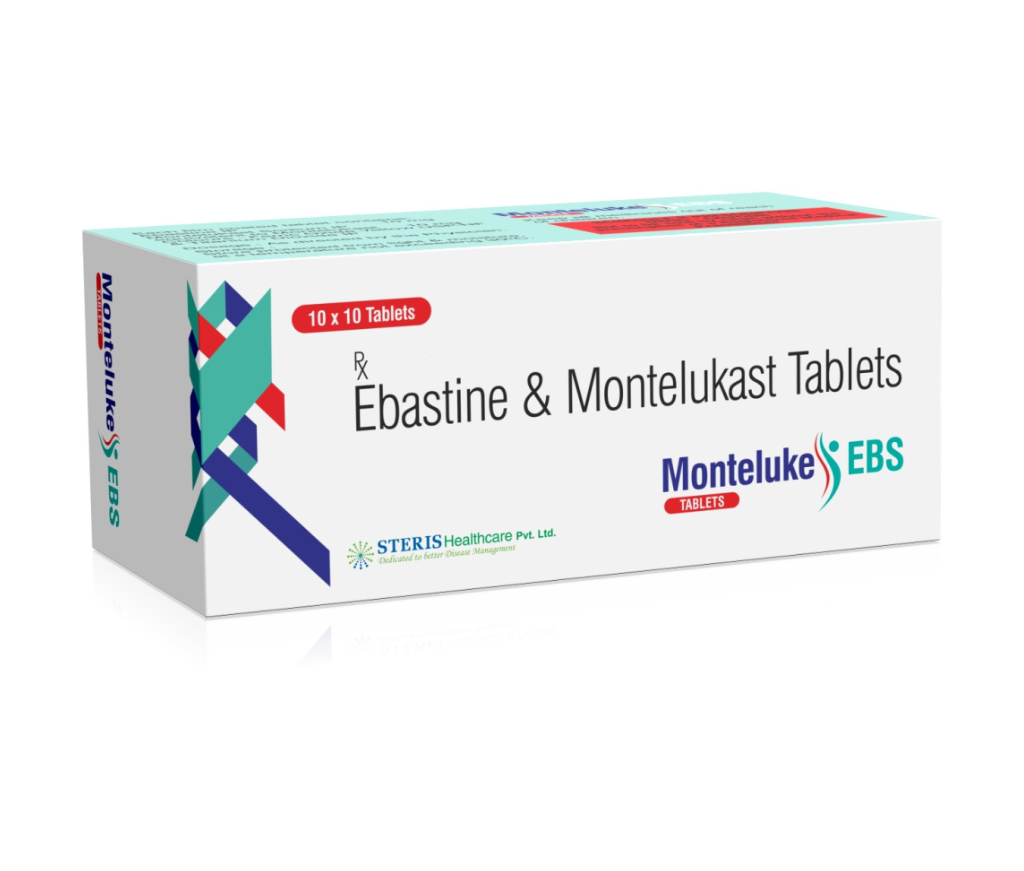
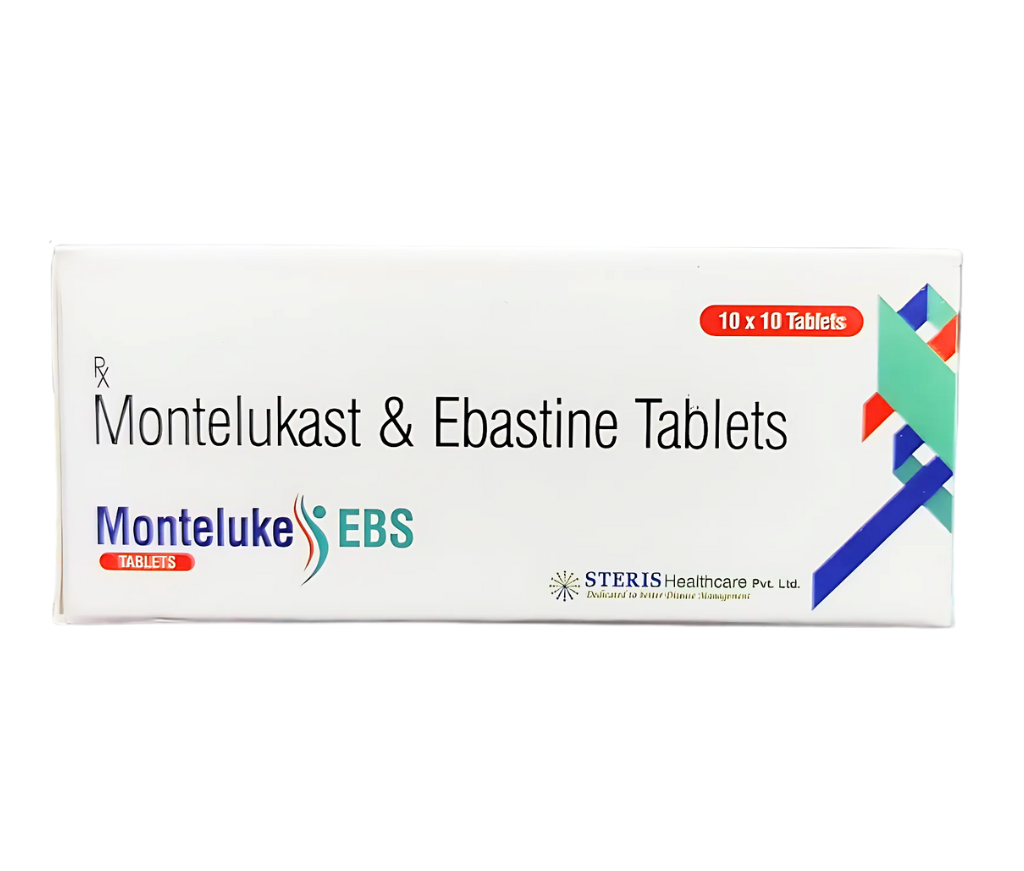
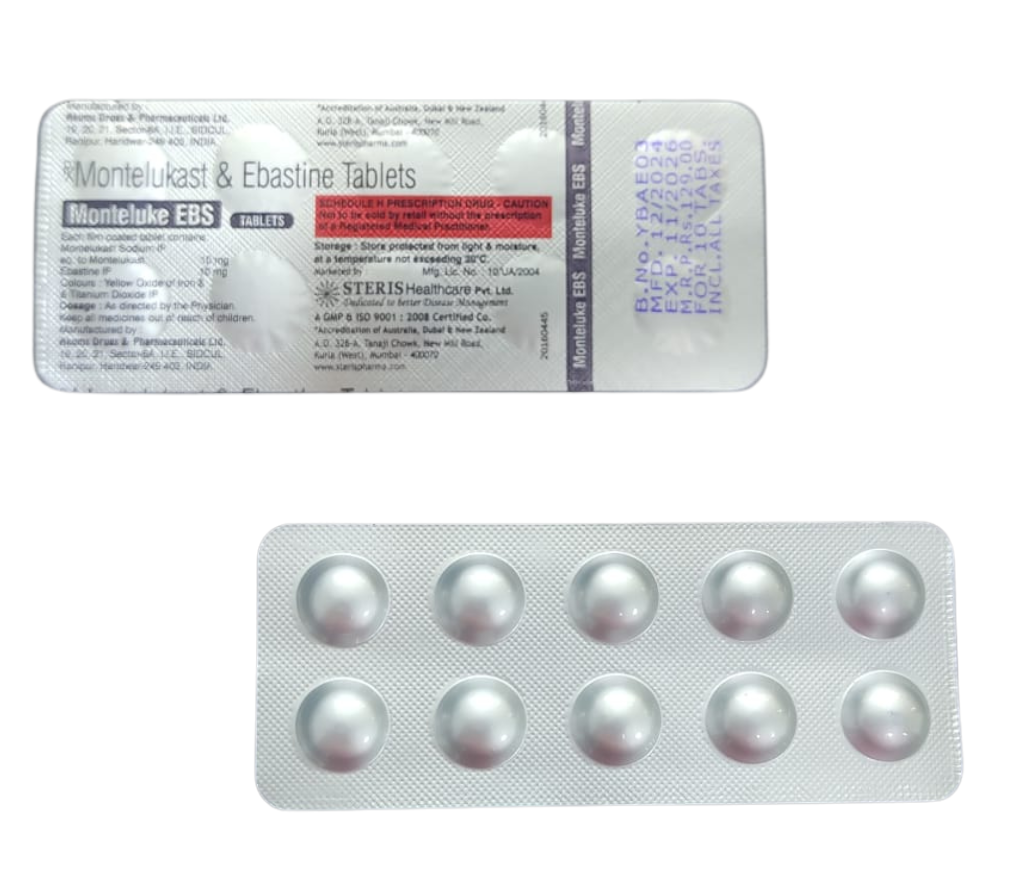
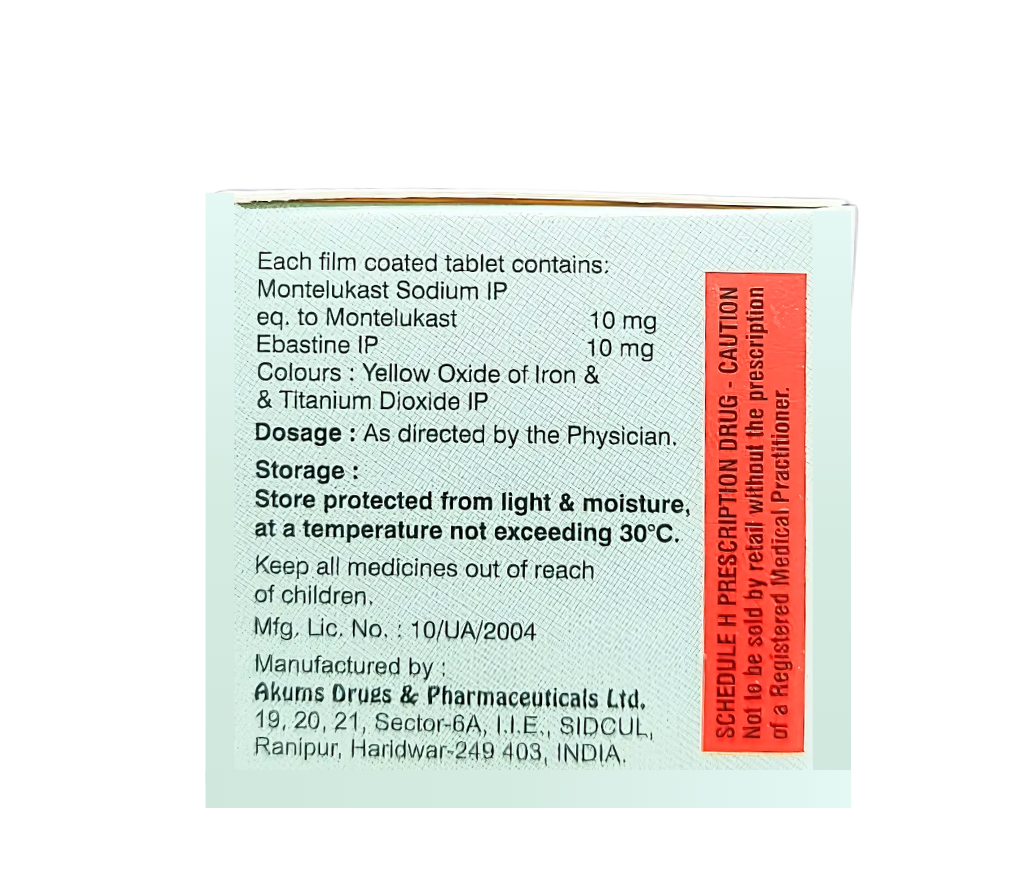
MONTELUKE EBS
 Item requires a valid prescription
Manufactured By Steris Healthcare Pvt Ltd
Composition ebastine and montelukast tablet
Rs 84.66
MRP Rs 120.94
(30% OFF)
Includes all taxes
Package SIZE
( For 10 Tablets )

100% Authentic
Products

Free
Shipping*

Products
Return Policy
Description:
The montelukast tablet is a leukotriene receptor antagonist (LTRA) and is recommended as a leukotriene receptor antagonist. Montelukast tablet is ideal for long-term inflammation of the airways, nighttime allergy symptoms and overlapping asthma conditions. It works by blocking leukotrienes, inflammatory chemicals released during allergic and asthmatic reactions and decreasing swelling of the airway, mucus production, and bronchoconstriction. The normal dose of montelukast is once a day in the evening and it is not a rescue inhaler and will not abort an ongoing attack of asthma. Common side effects include headache, stomach pain and fatigue; rare but serious effects include mood or behavioral changes that the FDA has flagged with a boxed warning in several markets. Montelukast is a prescription only medicine - always check with your doctor before starting, stopping or combining it with other medicines.
What Is Montelukast Tablet Used For?
| Indication | Purpose |
|---|---|
| Chronic asthma (adults & children) | Long-term maintenance and prevention of asthma symptoms |
| Exercise-induced bronchoconstriction | Prevents narrowing of airways triggered by physical activity |
| Allergic rhinitis (seasonal) | Relieves sneezing, nasal congestion, and itching caused by seasonal allergens |
| Allergic rhinitis (perennial) | Manages year-round allergy symptoms from dust, pet dander, or mold |
| Add-on therapy | Used alongside inhaled corticosteroids when asthma isn't fully controlled |
Montelukast tablet is not a first-line treatment for an acute asthma attack or sudden breathing difficulty. It works preventively, over time, by keeping airway inflammation under control — making it a valuable part of a long-term respiratory and allergy management plan rather than an emergency medicine.
How Montelukast Tablet Works (Mechanism of Action)
Montelukast is classified as a leukotriene receptor antagonist (LTRA). When the body is exposed to an allergen or an asthma trigger, it releases cysteinyl leukotrienes – powerful chemical mediators that cause the airway muscles to contract, blood vessels to leak fluid and mucus glands to be overactive. Montelukast is a selective CysLT1 receptor antagonist, which binds the receptor and prevents cysteinyl leukotrienes from binding to their receptor, thus preventing their action and the inflammatory cascade that follows.
- Reduced airway inflammation and swelling
- Less bronchoconstriction (airway narrowing)
- Decreased mucus secretion
- Lower frequency of asthma symptoms and allergy flare-ups
Key Benefits of Montelukast Tablet
- Once-daily dosing — improves convenience and long-term adherence compared to multiple-dose regimens.
- Dual-action relief — effectively manages both asthma symptoms and allergic rhinitis, useful for patients with overlapping conditions.
- Non-steroidal option — provides an alternative or add-on to inhaled corticosteroids for patients who need additional control.
- Exercise-induced asthma protection — helps reduce breathing difficulty triggered by physical exertion.
- Pediatric-friendly formulations — available in tablet, chewable tablet, and oral granule forms suited to different age groups.
- Convenient oral form — no inhaler technique required, which can benefit patients who struggle with inhaler devices.
- Complements existing allergy/asthma regimens — commonly combined with antihistamines or inhaled steroids under medical supervision for comprehensive control.
Montelukast Tablet Dosage
| Age Group | Typical Form | General Guidance |
|---|---|---|
| Adults & adolescents (15 yrs+) | 10 mg tablet | Once daily, in the evening |
| Children (6–14 yrs) | 5 mg chewable tablet | Once daily, in the evening |
| Children (2–5 yrs) | 4 mg chewable tablet/granules | Once daily, in the evening |
Administration tips:
- Take at approximately the same time each day for consistent leukotriene suppression overnight.
- Can be taken with or without food.
- Do not crush or split unless your doctor/pharmacist confirms the formulation allows it.
- Continue taking it even when you feel well — montelukast is preventive, and stopping abruptly can allow symptoms to return.
- Do not use it as a substitute for a rescue inhaler during an acute asthma attack.
Side Effects of Montelukast Tablet
Common Side Effects
- Headache
- Stomach pain or indigestion
- Fatigue or tiredness
- Cough
- Fever (more commonly reported in children)
- Dizziness
Less Common / Serious Side Effects
- Mood changes, anxiety, agitation, or depression
- Sleep disturbances, including vivid dreams or insomnia
- Behavioral changes (particularly monitored in children and adolescents)
- Allergic reactions: rash, swelling of the face/lips/tongue, difficulty breathing
- Rare reports of Churg-Strauss syndrome (a vasculitis) in patients also reducing oral corticosteroid use
Montelukast vs. Common Alternatives
| Parameter | Montelukast | Cetirizine | Levocetirizine | Fexofenadine (Allegra) |
|---|---|---|---|---|
| Drug class | Leukotriene receptor antagonist | Antihistamine (2nd gen) | Antihistamine (2nd gen) | Antihistamine (2nd gen) |
| Primary use | Asthma + allergic rhinitis | Allergic rhinitis, urticaria | Allergic rhinitis, urticaria | Allergic rhinitis, urticaria |
| Onset of action | Gradual (hours to days for full effect) | Fast (within an hour) | Fast (within an hour) | Fast (within an hour) |
| Sedation | Non-sedating | Mildly sedating | Mildly sedating | Non-sedating |
| Asthma benefit | Yes | No | No | No |
| Typical timing | Evening | Any time, often bedtime if sedating | Any time | Any time |
Precautions Before Taking Montelukast Tablet
- Inform your doctor about any history of mental health conditions before starting therapy.
- Not intended for use during an acute asthma attack — always keep your prescribed rescue inhaler accessible.
- Use caution if you have liver impairment; dose adjustment or monitoring may be required.
- Inform your doctor if you are pregnant, planning pregnancy, or breastfeeding.
- Avoid abrupt discontinuation of corticosteroids when starting montelukast without medical guidance.
- Keep your doctor informed of all other medications, including OTC allergy drugs, to avoid unwanted interactions.
- Store below 25°C, away from moisture and direct sunlight, and out of reach of children.
Conclusion
Montelukast tablet is a well-established, once-daily oral option for the long-term prevention of asthma symptoms and the management of allergic rhinitis. By blocking leukotrienes at the source of airway and nasal inflammation, it offers steady, preventive control rather than immediate symptom relief — making consistent daily use essential for the best results. While generally well tolerated, it carries specific precautions around mood and behavioral changes that patients and caregivers should stay alert to, particularly in children. As with any prescription therapy, montelukast should only be started, adjusted, or stopped under the guidance of a qualified healthcare provider who can weigh your individual medical history, current medications, and treatment goals.
Frequently Asked Questions
1. Is montelukast safe to take daily?
Yes, montelukast is designed for once-daily, long-term use as a preventive asthma and allergy medication when taken exactly as prescribed by your doctor. Regular monitoring is recommended, especially for mood-related side effects.
2. Is montelukast used for dry cough?
Montelukast can help reduce cough that is linked to asthma or allergic airway inflammation, but it is not a general cough suppressant and isn't typically prescribed for a dry cough unrelated to asthma or allergies.
3. Is montelukast used for allergies?
Yes, montelukast is commonly prescribed for both seasonal and perennial allergic rhinitis, helping relieve sneezing, nasal congestion, and itching caused by allergens.
4. Is montelukast good for sleep?
Montelukast is not a sleep aid. In fact, some patients report sleep disturbances such as vivid dreams or insomnia as a side effect. If allergy or asthma symptoms are disrupting your sleep, montelukast may help indirectly by controlling those underlying symptoms, but it should not be taken specifically to improve sleep.
5. Which is better for allergies, cetirizine or montelukast?
It depends on the type and severity of allergy symptoms. Cetirizine acts fast and is often preferred for immediate relief of sneezing and itching, while montelukast works more gradually and is especially useful when allergic rhinitis overlaps with asthma. Doctors sometimes prescribe both together for combined benefit.
6. What are the bad side effects of montelukast?
The more serious side effects include mood changes, anxiety, depression, agitation, and behavioral changes, along with rare allergic reactions like facial swelling or difficulty breathing. Any of these symptoms should be reported to a doctor immediately.
7. Which is better, montelukast or Allegra (fexofenadine)?
They serve different purposes: fexofenadine (Allegra) is a fast-acting antihistamine for allergy symptoms, while montelukast targets leukotriene-driven inflammation and is also effective for asthma. A doctor may recommend one or a combination depending on whether asthma is also present.
8. Can I take cetirizine and montelukast together?
Yes, this combination is commonly prescribed together since the two drugs work through different mechanisms — antihistamine action and leukotriene blockade — and can complement each other for allergic rhinitis. Always confirm the combination and dosing with your doctor.
9. Why take montelukast at night for allergies?
Montelukast is usually recommended in the evening because leukotriene activity and allergic/asthma symptoms, including nasal congestion, tend to peak overnight and early morning. Evening dosing helps ensure the medication is active when symptoms are most likely to occur.
10. Can I take levocetirizine and montelukast twice a day?
Montelukast is generally prescribed once daily, not twice, regardless of whether it's combined with levocetirizine. Levocetirizine dosing frequency depends on your doctor's instructions. Never adjust dosing frequency without medical guidance.
11. Does montelukast raise BP (blood pressure)?
Montelukast is not commonly associated with raised blood pressure. [Reviewer placeholder: specific cardiovascular safety data pending verification from prescribing information before publication.] Patients with hypertension should still inform their doctor of all medications being used.
12. How long does it take for montelukast to start working? Montelukast can begin reducing inflammation within hours, but full preventive benefits for asthma and allergic rhinitis are typically seen after regular use over several days to weeks.
13. Can montelukast be taken with food?
Yes, montelukast tablets can be taken with or without food, though consistency in timing (usually evening) matters more than whether it's taken with a meal.
14. Is montelukast a steroid?
No, montelukast is not a steroid. It belongs to a separate drug class called leukotriene receptor antagonists and works through a different anti-inflammatory pathway than corticosteroids.
15. Can children take montelukast?
Yes, montelukast is available in pediatric-friendly forms such as chewable tablets and oral granules for children as young as 2 years, but dosing must be determined by a pediatrician based on age and weight.
16. What happens if I miss a dose of montelukast?
If a dose is missed, it should be taken as soon as remembered unless it's almost time for the next dose — in which case the missed dose should be skipped. Do not double the dose to make up for a missed one.
17. Can montelukast be stopped suddenly?
Montelukast should not be stopped abruptly without consulting your doctor, especially if it's part of an asthma management plan, as doing so may lead to a return or worsening of symptoms.

