


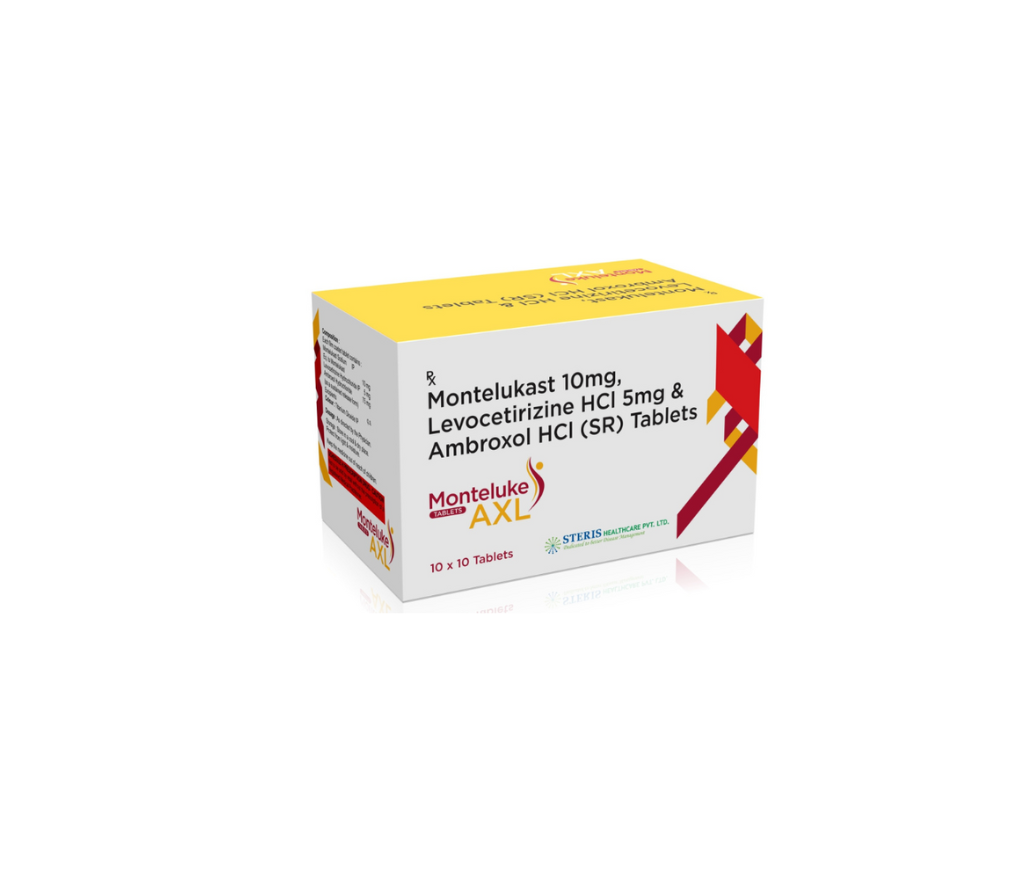
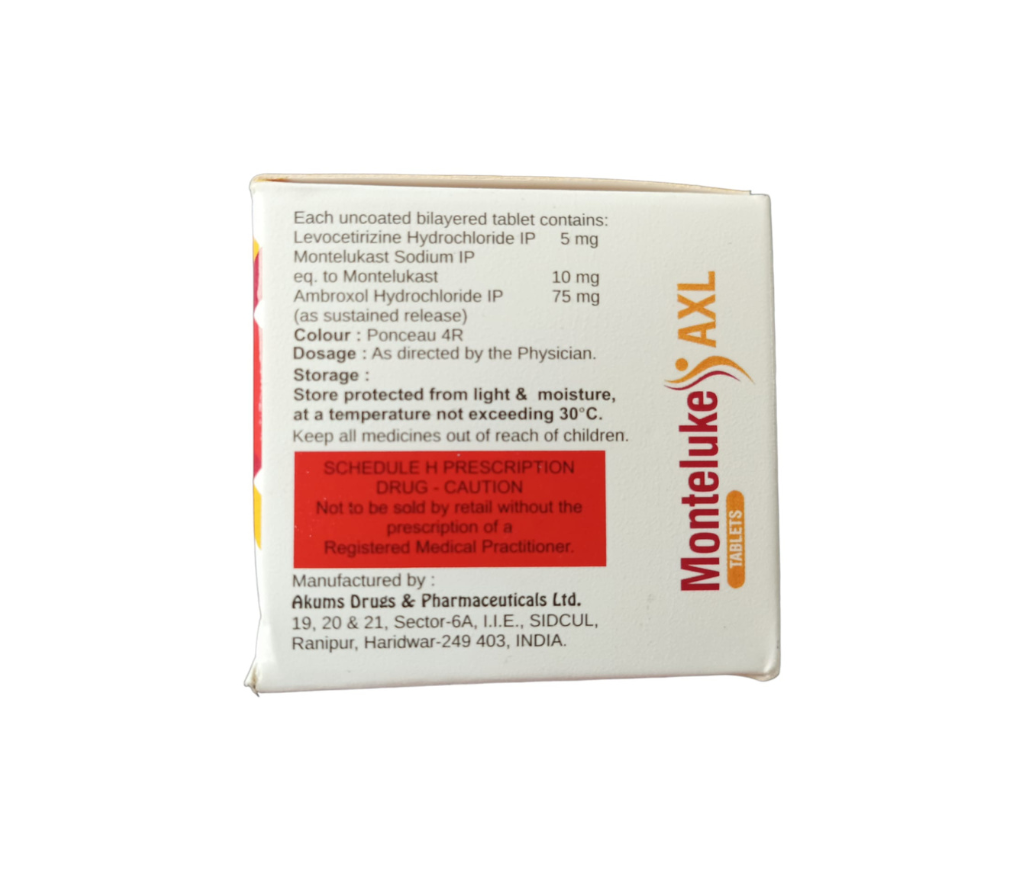
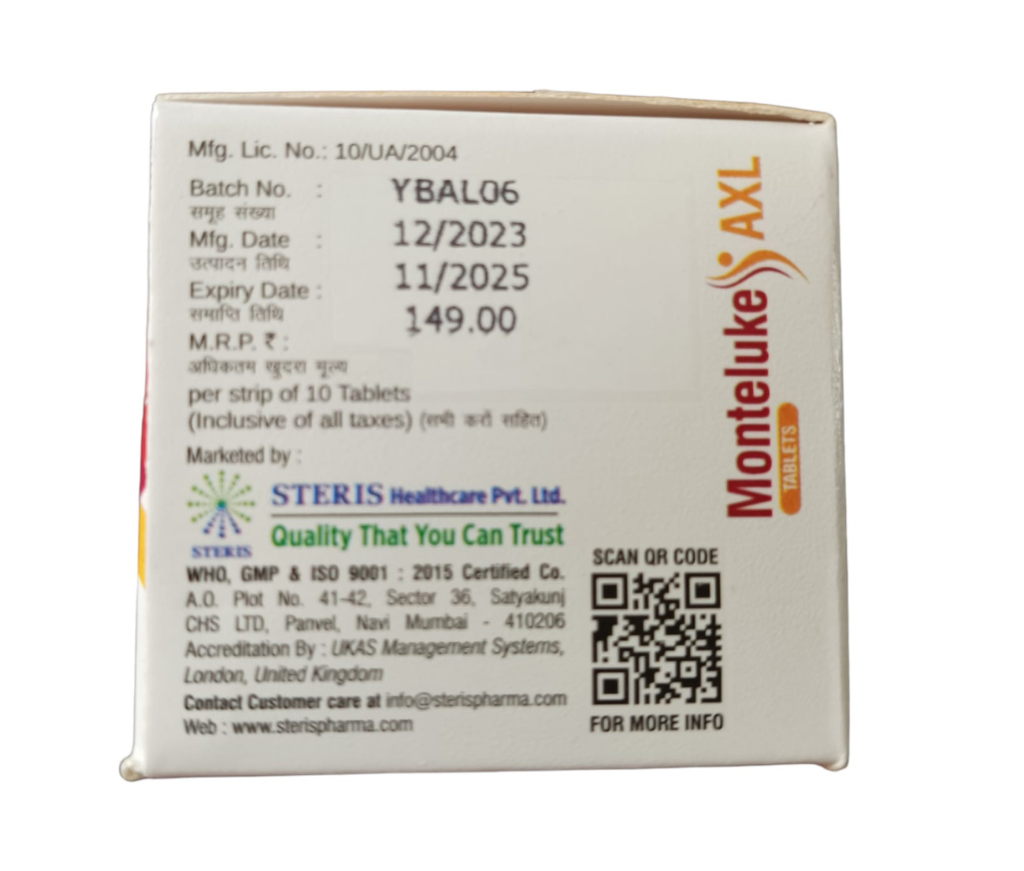
MONTELUKE AXL
 Item requires a valid prescription
Manufactured By Steris Healthcare Pvt Ltd
Composition Montelukast (10mg), Levocetirizine (5mg), Ambroxol (75mgSR)
Rs 97.78
MRP Rs 139.69
(30% OFF)
Includes all taxes
Package SIZE
( For 10 Tablets )

100% Authentic
Products

Free
Shipping*

Products
Return Policy
Description:
Levocetirizine tablet Levocetirizine tablet is an antihistamine that treats allergy symptoms including runny nose, sneezing, itchy/watery eyes, and hives. It blocks histamine (H1) receptors and prevents sneezing, itching, watery eyes, runny nose and skin rashes caused by allergies. Levocetirizine is the active isomer of cetirizine and provides effective allergy relief at a lower dose. It has a rapid onset of action, usually within 20-60 minutes and effects last up to 24 hours with once daily dosing. It is not a cold or flu medicine and it does not treat viral infections, but it may relieve allergy-like symptoms such as sneezing and runny nose that sometimes occur with a cold. It is generally non-sedating for most people but some people may get mild drowsiness, which is why it is often recommended to take at nite.
Product Information
| Product Detail | Information |
|---|---|
| Brand Name | MONTELUKE AXL |
| Composition | Montelukast 10 mg + Levocetirizine 5 mg + Ambroxol 75 mg SR |
| Active Ingredients | Montelukast, Levocetirizine, Ambroxol |
| Strength | 10 mg + 5 mg + 75 mg SR |
| Dosage Form | Tablet |
| Pack Size | 10 Tablets |
| Therapeutic Category | Respiratory / Anti-Allergic Medicine |
| Route of Administration | Oral |
| Manufacturer/Marketer | Steris Healthcare Pvt. Ltd. |
| Target Market | India |
| Prescription Status | Use under medical supervision |
| Primary Uses | Allergic respiratory symptoms, mucus-related cough, congestion, and certain airway conditions as prescribed |
| Storage | Store in a cool, dry place away from direct sunlight and moisture |
What Is Levocetirizine Tablet Used For?
| Indication | Purpose |
|---|---|
| Allergic rhinitis (seasonal) | Relieves sneezing, runny/itchy nose, and watery eyes from pollen and seasonal allergens |
| Allergic rhinitis (perennial) | Manages year-round symptoms from dust mites, pet dander, or mold |
| Chronic idiopathic urticaria | Reduces itching, redness, and swelling associated with chronic hives |
| Allergic conjunctivitis | Helps relieve itchy, watery, red eyes caused by allergens |
| Skin allergies | Eases itching and rash from allergic skin reactions |
Levocetirizine tablet uses are centered around allergy relief, not infection treatment—it will not cure a cold, flu, or bacterial infection, but it can reduce allergy-driven symptoms that sometimes overlap with cold-like presentations, such as sneezing and nasal congestion.
How Levocetirizine Tablet Works
Levocetirizine is the active (R)-enantiomer of cetirizine from the second-generation H1-antihistamine class. When the body encounters an allergen, immune cells release histamine, a chemical that triggers sneezing, itching, redness and swelling. Levocetirizine selectively blocks the H1 histamine receptors . When histamine cannot bind to these receptors , it cannot cause these allergic symptoms . It does not easily cross the blood brain barrier as compared to first generation antihistamines and yet provides effective long-lasting relief. It causes less sedation for most users.
Key Benefits of Levocetirizine Tablet
- Fast-acting relief — starts working within 20–60 minutes of intake for quick symptom control.
- Once-daily dosing — a single dose provides up to 24 hours of allergy relief, improving convenience.
- Low sedation profile — significantly less drowsiness compared to first-generation antihistamines like chlorpheniramine.
- Broad allergy coverage — effective across allergic rhinitis, chronic hives, and allergic skin reactions.
- Suitable for long-term allergy management — commonly used for extended periods in chronic allergic conditions under medical guidance.
- Widely accessible — available as an affordable OTC option in most pharmacies.
- Pairs well with other therapies—can be combined with nasal corticosteroids or leukotriene receptor antagonists like montelukast for more comprehensive allergy/asthma management, under medical advice.
Side Effects of Levocetirizine Tablet
Common Side Effects
- Mild drowsiness or sleepiness
- Dry mouth
- Headache
- Fatigue
- Sore throat
Precautions Before Taking Levocetirizine Tablet
- Inform your doctor if you have kidney disease, as dose adjustment may be required.
- Use caution when driving or operating machinery until you know how the tablet affects you.
- Avoid alcohol or other sedating medications while on levocetirizine.
- Not recommended for children under 6 years without medical supervision.
- Inform your doctor if pregnant, planning pregnancy, or breastfeeding.
- Discuss all current medications with your doctor to avoid interactions, particularly with other central nervous system depressants.
- Store below 25°C, away from moisture and direct sunlight.
Frequently Asked Questions
1. Will levocetirizine make me sleepy?
Levocetirizine causes less drowsiness than older antihistamines, but mild sleepiness can still occur in some people. If you notice drowsiness, it's often recommended to take it at night.
2. What happens if I take levocetirizine daily?
Levocetirizine is commonly used once daily for ongoing allergy relief, and long-term daily use is generally considered safe under medical guidance for chronic allergic conditions. However, it should be used for the duration your doctor recommends rather than indefinitely without review.
3. Is levocetirizine used in cold?
Levocetirizine does not treat the cold virus itself but can help relieve allergy-like symptoms such as sneezing and a runny nose that sometimes overlap with cold symptoms. It's not a substitute for cold and flu medication targeting congestion or fever.
4. Is levocetirizine used for sleeping?
No, levocetirizine is not intended as a sleep aid. While mild drowsiness is a possible side effect for some users, it should not be used specifically to help with sleep — a doctor should be consulted for sleep-related concerns.
5. Levocetirizine tablet uses — what are they?
Levocetirizine tablet is primarily used for allergic rhinitis (seasonal and year-round), chronic hives (urticaria), and allergic skin reactions, working by blocking histamine to reduce sneezing, itching, and rash.
6. How quickly does levocetirizine start working?
Levocetirizine typically starts relieving allergy symptoms within 20 to 60 minutes of taking the tablet, with effects lasting up to 24 hours.
7. Can levocetirizine be taken with food?
Yes, levocetirizine can be taken with or without food, based on personal preference and doctor's advice.
8. Is levocetirizine safe for long-term use?
Levocetirizine is generally considered safe for extended use in chronic allergic conditions when monitored by a doctor, though periodic review is recommended for prolonged therapy.
9. Can children take levocetirizine?
Yes, levocetirizine is available in reduced doses or syrup form for children above 6 years, but the exact dose should be determined by a pediatrician.
10. What is the difference between levocetirizine and cetirizine?
Levocetirizine is the active isomer of cetirizine, meaning it provides similar allergy relief at a lower dose, with a comparable or slightly better sedation profile for some individuals.