


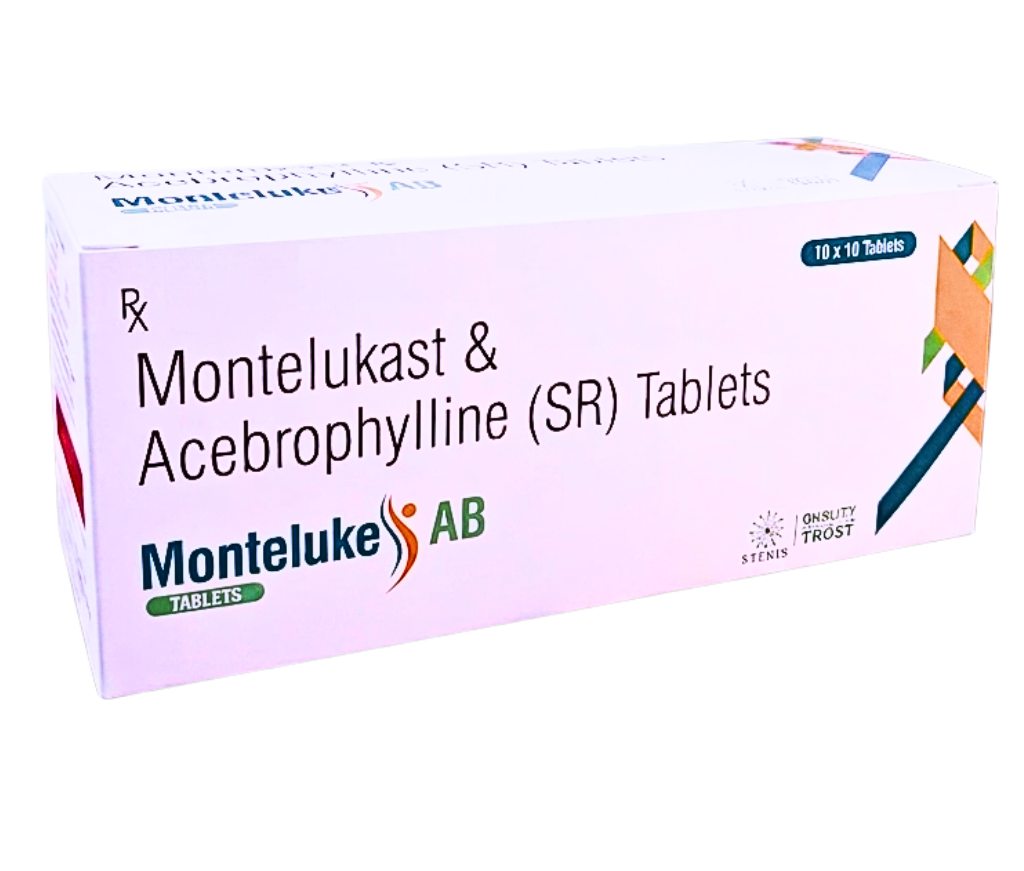
MONTELUKE AB
 Item requires a valid prescription
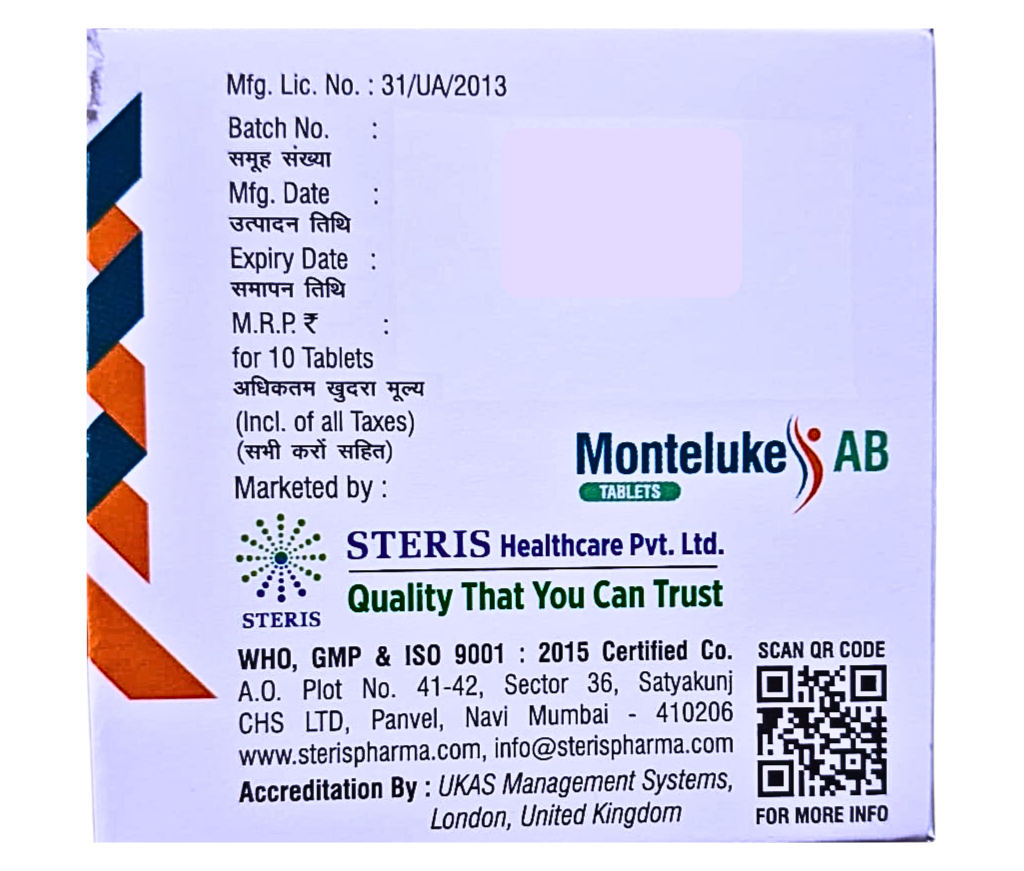
Manufactured By Steris Healthcare Pvt Ltd
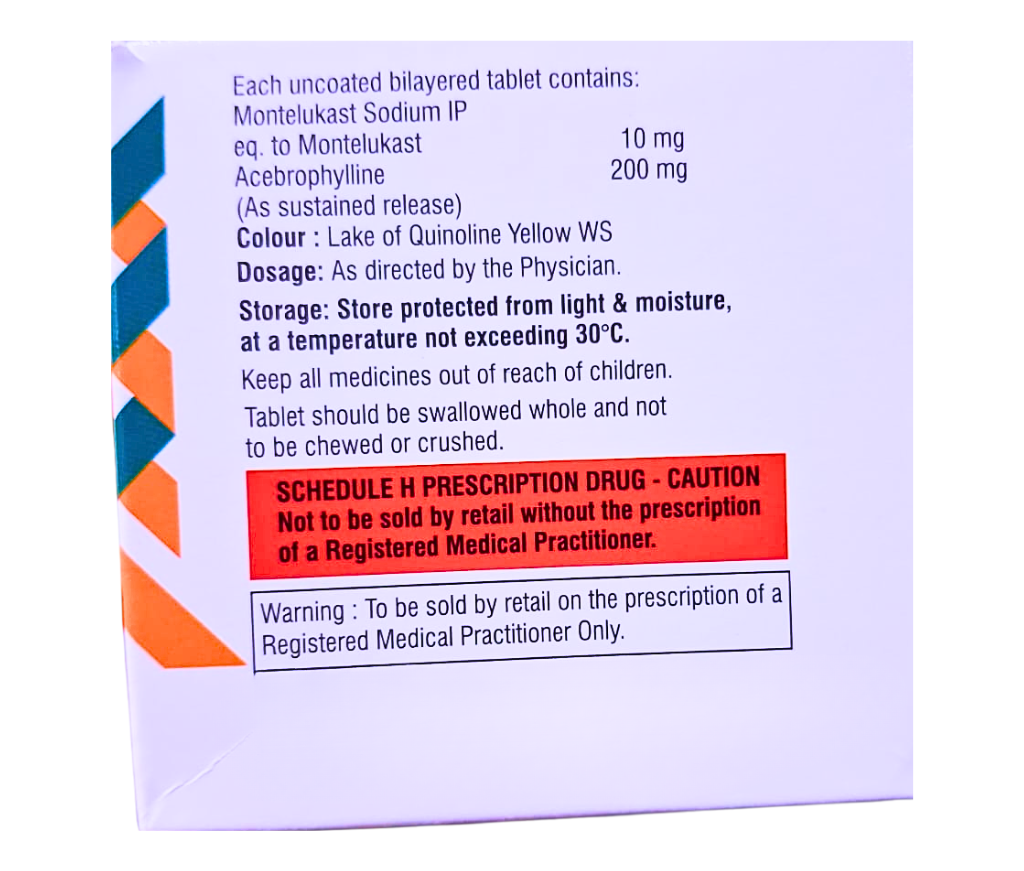
Composition Montelukast (10mg), Acebrophylline SR (200mg)
Rs 121.41
MRP Rs 173.44
(30% OFF)
Includes all taxes
Package SIZE
( For 10 Tablets )

100% Authentic
Products

Free
Shipping*

Products
Return Policy
Description:
Montelukast + Acebrophylline is a combination respiratory medication that pairs a leukotriene receptor antagonist (montelukast) with a mucoactive bronchodilator (acebrophylline) to manage conditions involving both airway inflammation and excessive mucus production—such as asthma with chronic cough, allergic bronchitis, and COPD-related airway congestion. Montelukast blocks leukotrienes to reduce inflammation and bronchoconstriction, while acebrophylline thins mucus, improves its clearance, and provides mild bronchodilation. Together, they offer more complete relief for patients whose respiratory symptoms include both wheezing/inflammation and thick, difficult-to-clear mucus. This combination is typically taken once or twice daily as prescribed and is a prescription-only medicine—never self-initiate or adjust the dose without medical guidance.
Product Information
| Product Detail | Information |
|---|---|
| Brand Name | MONTELUKE AB |
| Composition | Montelukast 10 mg + Acebrophylline SR 200 mg |
| Active Ingredients | Montelukast, Acebrophylline |
| Strength | Montelukast 10 mg + Acebrophylline SR 200 mg |
| Dosage Form | Tablet |
| Pack Size | 10 Tablets |
| Therapeutic Category | Respiratory Medicine |
| Route of Administration | Oral |
| Manufacturer/Marketer | Steris Healthcare Pvt. Ltd. |
| Target Market | India |
| Prescription Status | Use under medical supervision |
| Primary Uses | Respiratory conditions involving bronchospasm, airway inflammation, wheezing, and breathing difficulty, as prescribed |
| Storage | Store in a cool, dry place away from direct sunlight and moisture |
What Is Montelukast + Acebrophylline Used For?
| Indication | Purpose |
|---|---|
| Asthma with mucus congestion | Reduces airway inflammation while clearing excess mucus for easier breathing |
| Allergic bronchitis | Manages inflammation and cough associated with allergic airway reactions |
| Chronic bronchitis / COPD support | Helps loosen thick mucus and ease chronic productive cough |
| Persistent cough with wheeze | Addresses both the inflammatory and mucus-related components of cough |
| Add-on respiratory therapy | Used alongside inhalers or other asthma medication when mucus clearance is also a concern |
This combination is generally prescribed when a patient's respiratory condition involves both airway inflammation and problematic mucus — a common overlap in asthma, bronchitis, and some allergic airway conditions — rather than for either issue in isolation.
How Montelukast + Acebrophylline Works
This is a dual-action combination:
Montelukast — a leukotriene receptor antagonist that blocks the CysLT1 receptor, preventing leukotrienes (inflammatory chemicals released during allergic and asthmatic reactions) from causing airway swelling, bronchoconstriction, and mucus overproduction at the inflammatory level.
Acebrophylline — a mucoactive agent combining the benefits of ambroxol (a mucolytic) and theophylline (a bronchodilator) in a single molecule. It works by:
- Reducing mucus viscosity, making it easier to cough up
- Increasing mucociliary clearance (the airway's natural mucus-clearing mechanism)
- Providing mild bronchodilation to ease airflow
- Exerting a modest anti-inflammatory effect on airway tissue
Key Benefits of Montelukast + Acebrophylline
- Dual-pathway relief — tackles airway inflammation and mucus congestion together instead of requiring two separate medications.
- Improved mucus clearance — acebrophylline's mucolytic action helps loosen and expel thick mucus more effectively.
- Reduced bronchoconstriction—Montelukast's leukotriene blockade helps keep airways open and less reactive.
- Convenient combination dosing — reduces pill burden compared to taking a separate LTRA and mucolytic/bronchodilator.
- Useful in chronic productive cough—particularly helpful when cough is accompanied by wheeze and difficulty clearing mucus.
- Complements inhaler therapy—can be used alongside inhaled bronchodilators or corticosteroids as directed by a physician.
- Non-narcotic cough support — addresses the underlying mucus and inflammation rather than simply suppressing the cough reflex.
Side Effects of Montelukast + Acebrophylline
Common Side Effects
- Headache
- Nausea or mild stomach upset
- Dizziness
- Dry mouth
- Mild palpitations (linked to acebrophylline's theophylline-like action)
Precautions Before Taking Montelukast + Acebrophylline
- Inform your doctor about any history of heart rhythm issues, as acebrophylline has mild theophylline-like cardiac effects.
- Not intended for use during an acute asthma attack — keep your prescribed rescue inhaler accessible.
- Use caution in patients with liver or kidney impairment; monitoring or dose adjustment may be needed.
- Inform your doctor of any history of mental health conditions before starting, due to montelukast's neuropsychiatric precautions.
- Avoid combining with other xanthine derivatives (like theophylline or aminophylline) unless specifically directed.
- Inform your doctor if pregnant, planning pregnancy, or breastfeeding.
- Store below 25°C, away from moisture and direct sunlight, and out of reach of children.
Frequently Asked Questions
1. What is the difference between montelukast and acebrophylline?
Montelukast is a leukotriene receptor antagonist that reduces airway inflammation and allergic symptoms, while acebrophylline is a mucoactive agent that thins mucus and provides mild bronchodilation. They work through different mechanisms and are often combined for complementary respiratory relief.
2. Who should avoid taking acebrophylline?
Acebrophylline should generally be avoided or used with caution in people with significant heart rhythm disorders, uncontrolled hyperthyroidism, active peptic ulcer disease, or severe liver or kidney impairment. A doctor should always assess suitability before starting.
3. Can acebrophylline be used for cough?
Yes, acebrophylline is commonly used for productive cough associated with excess or thick mucus, as it helps loosen secretions and improve their clearance from the airways, along with providing mild bronchodilation.
4. Does acebrophylline increase blood pressure?
Acebrophylline is not typically associated with a significant rise in blood pressure, though its mild theophylline-like action can occasionally cause a faster heart rate.
5. How many days should I take acebrophylline?
The duration of acebrophylline therapy depends on the underlying condition and should be determined by your doctor — it may range from a short course for acute symptoms to longer-term use for chronic conditions like COPD or chronic bronchitis.
6. Which is better, acebrophylline or deriphyllin?
It depends on the primary symptom: acebrophylline is preferred when mucus clearance is a major concern alongside mild bronchodilation, while deriphylline (theophylline + etofylline) is more focused on bronchodilation for wheeze and bronchospasm. Your doctor will choose based on your specific symptoms.
7. Is acebrophylline a steroid?
No, acebrophylline is not a steroid. It is a mucoactive bronchodilator combining mucolytic and mild bronchodilator properties, distinct from corticosteroids.
8. Can acebrophylline affect kidney function?
Acebrophylline is generally used with caution in patients with existing kidney impairment, and dose adjustment may be required. Routine use in patients with healthy kidney function is not typically associated with kidney damage, but any new symptoms should be reported to a doctor.
9. What are the benefits of acebrophylline?
Acebrophylline helps thin and clear excess mucus, improves mucociliary clearance, provides mild bronchodilation, and offers a modest anti-inflammatory effect — making breathing easier in conditions involving thick or excessive airway secretions.
10. Can montelukast and acebrophylline be taken together safely?
Yes, this combination is specifically formulated to be taken together and is commonly prescribed for respiratory conditions involving both inflammation and mucus congestion, under a doctor's supervision.