


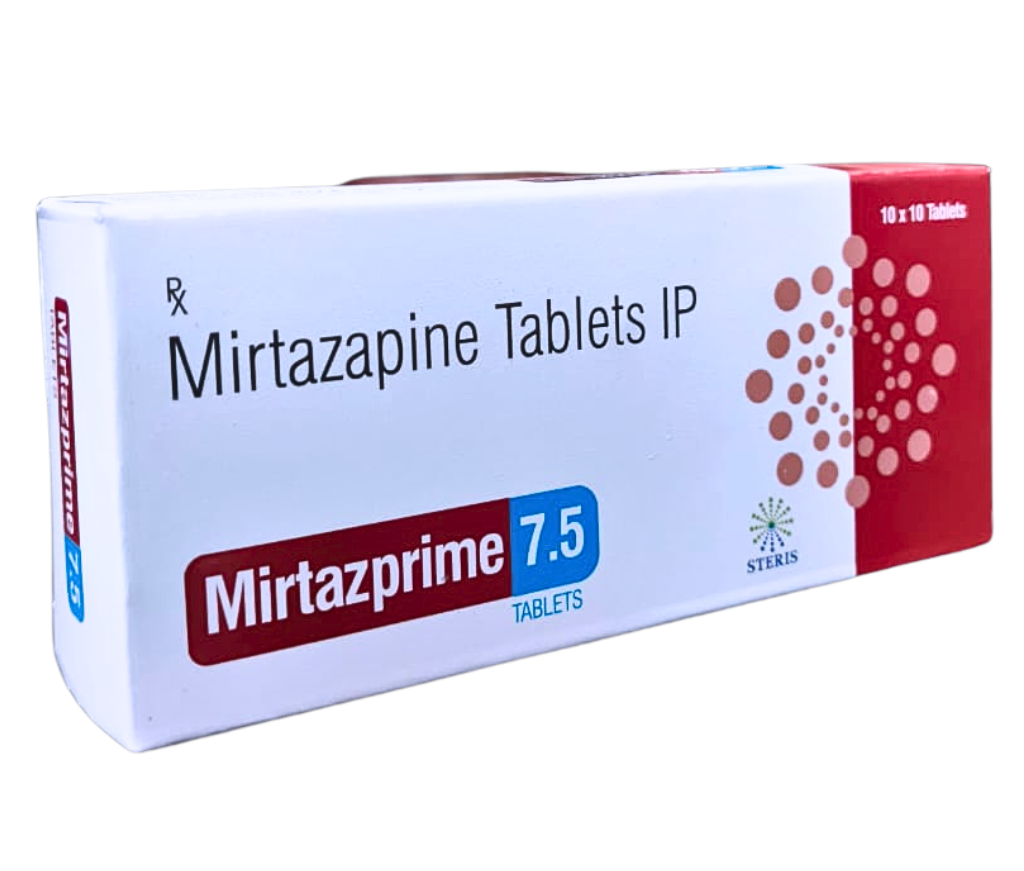
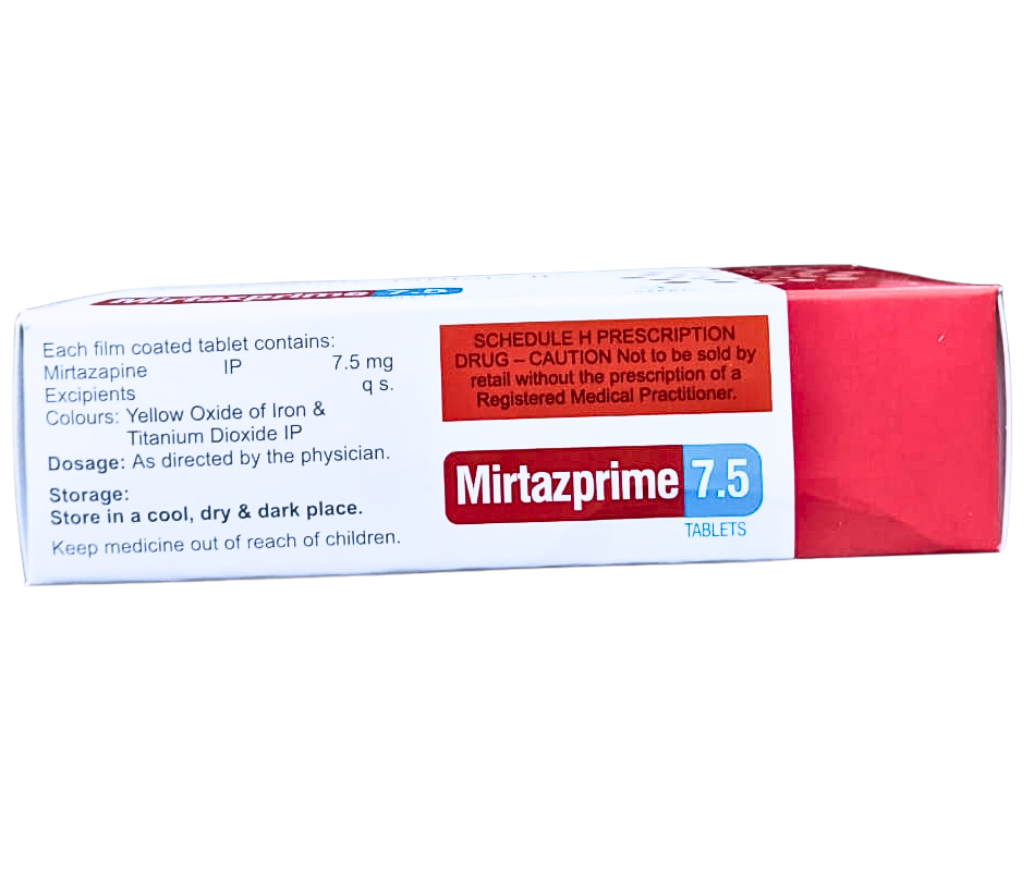
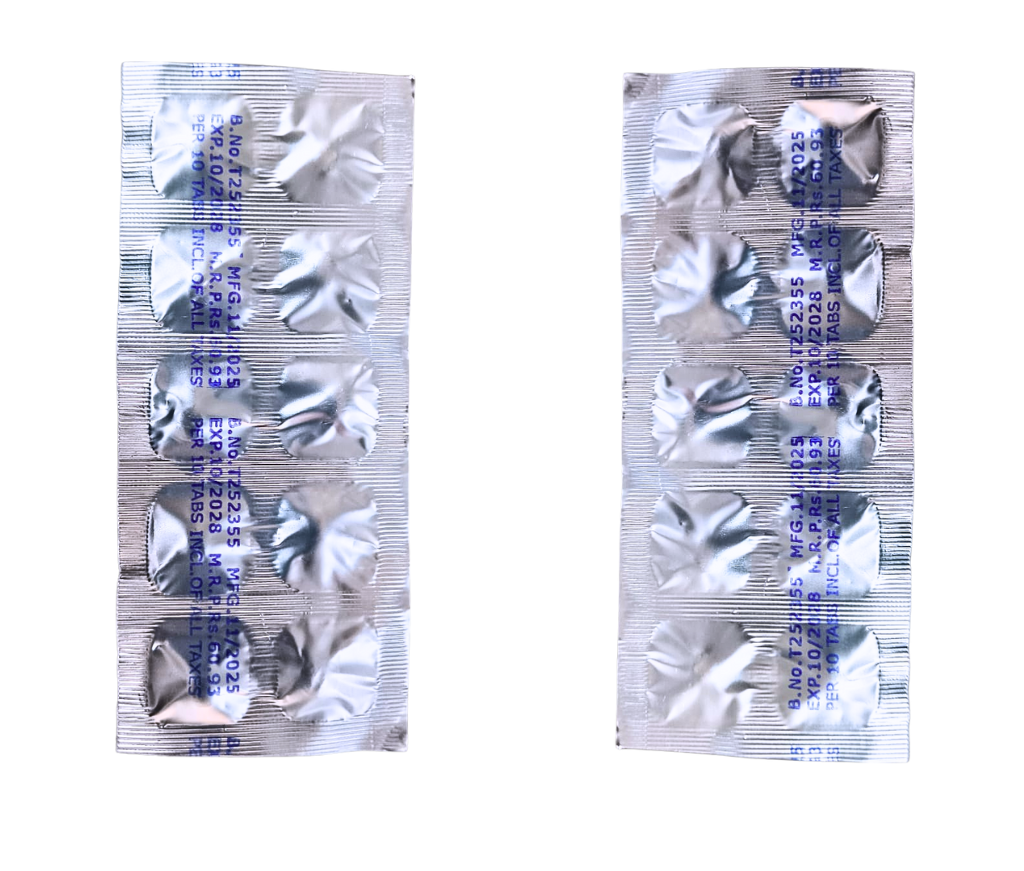

MIRTAZPRIME 7.5
 Item requires a valid prescription
Manufactured By Steris Healthcare Pvt Ltd
Composition Mirtazapine (7.5mg)
Rs 46.20
MRP Rs 66.00
(30% OFF)
Includes all taxes
Package SIZE
( For 10 Tablets )

100% Authentic
Products

Free
Shipping*

Products
Return Policy
Description:
Mirtazapine 7.5 mg is a prescription antidepressant containing mirtazapine, a medicine primarily indicated for the treatment of major depressive disorder (MDD) in adults. It belongs to a class of antidepressants called noradrenergic and specific serotonergic antidepressants (NaSSAs). Mirtazapine affects chemical signaling in the brain and can also cause sedation and increased appetite in some people.
The 7.5 mg strength is available in some markets and Indian pharmacy listings under different brand names. Current Indian listings show products such as Mirtaz 7.5, M Zap 7.5, Miraz 7.5, Mirstar 7.5 and other formulations. Recent listed prices vary by brand, pack size and seller—for example, current listings show prices ranging from approximately ₹32.90 to ₹89.40 for certain 7.5 mg products. These are changing retail listings, not fixed market prices.
Product Information
| Product Detail | Information |
|---|---|
| Brand Name | MIRTAZPRIME 7.5 |
| Composition | Mirtazapine 7.5 mg |
| Product Form | Tablet |
| Pack Size | 10 Tablets |
| Manufacturer/Marketer | Steris Healthcare Pvt. Ltd. |
| Target Market | India |
| Therapeutic Category | Antidepressant |
| Active Ingredient | Mirtazapine |
| Strength | 7.5 mg |
| Route of Administration | Oral |
| Prescription Status | Prescription medicine |
| Primary Use | Treatment of depression as prescribed by a healthcare professional |
| Storage | Store according to the product label, away from excessive heat and moisture |
What Is Mirtazapine 7.5 mg?
Mirtazapine 7.5 mg is a low-strength oral formulation of mirtazapine, an antidepressant used primarily to treat major depressive disorder in adults. Official prescribing information lists mirtazapine for major depressive disorder and recommends individualized dosing based on the patient's response and tolerability.
Mirtazapine works differently from many commonly prescribed selective serotonin reuptake inhibitors (SSRIs). It increases noradrenergic and serotonergic activity through effects on specific receptors in the central nervous system. It also blocks certain histamine receptors, which is associated with its sedating effect.
Because of these effects, doctors may consider mirtazapine particularly when depression occurs alongside symptoms such as poor sleep or reduced appetite. However, 7.5 mg should not automatically be considered the standard antidepressant dose. Current U.S. prescribing information lists 15 mg once daily as the recommended starting dose, while 7.5 mg is a marketed tablet strength. The appropriate dose must be determined by the prescriber.
Mirtazapine 7.5 mg Uses
The primary mirtazapine 7.5 mg uses relate to depression.
1. Major depressive disorder: Mirtazapine is approved for treating major depressive disorder in adults. Depression can involve persistent low mood, loss of interest, changes in sleep or appetite, fatigue, impaired concentration and feelings of worthlessness. Mirtazapine does not provide an immediate cure for depression. Antidepressant treatment generally requires consistent use and follow-up to assess whether symptoms are improving.
2. Depression accompanied by sleep difficulties: Mirtazapine can cause drowsiness or sedation, particularly during the initial period of treatment. For this reason, clinicians may consider it when a person with depression also has significant sleep difficulty. The official label recommends once-daily administration, preferably in the evening before sleep. This does not mean mirtazapine 7.5 mg should be self-used as a sleeping pill.
3. Depression associated with poor appetite: Mirtazapine can increase appetite and body weight in some patients. Consequently, a clinician may consider it when depression is accompanied by reduced appetite or weight loss. Weight gain is also one of its clinically important adverse effects, so this potential benefit and risk need to be considered together.
Key Benefits of Mirtazapine 7.5 mg
Supports treatment of depression: The main therapeutic benefit of mirtazapine is its antidepressant effect in adults with major depressive disorder. Clinical trials established its efficacy for MDD, which is its approved indication.
May improve sleep in some patients: Its sedating properties can make it useful for some patients whose depressive illness is accompanied by insomnia or disrupted sleep. However, the degree of sedation varies from person to person.
May increase appetite: Increased appetite is a known effect of mirtazapine. This may be helpful for some people with depression-related appetite loss, but it can be undesirable for others.
Convenient once-daily administration: Mirtazapine is generally taken once daily, preferably in the evening before sleep according to U.S. prescribing information.
Multiple tablet strengths: Mirtazapine is available in several strengths, including 7.5 mg, 15 mg, 30 mg and 45 mg in some markets. The availability of the 7.5 mg tablet provides an additional formulation option for prescribers, but the existence of a lower-strength tablet does not mean patients should independently alter their prescribed dose.
How Does Mirtazapine 7.5 mg Work?
Mirtazapine changes signaling involving noradrenaline and serotonin, two neurotransmitter systems involved in mood regulation.
It also has activity at histamine receptors, which contributes to its sedating properties. Other receptor effects can contribute to changes in appetite and other adverse effects.
Because its pharmacological profile differs from that of SSRIs, doctors may choose mirtazapine based on an individual's symptoms, previous treatment response, other medicines and overall health.
The therapeutic effect on depression is not expected immediately. Patients should continue taking the medicine as prescribed and attend follow-up appointments so the clinician can evaluate its effectiveness and tolerability.
Mirtazapine 7.5 mg Dosage and How to Take It
Do not determine your own mirtazapine dose.
Current U.S. prescribing information lists 15 mg once daily as the recommended starting dose for adults with major depressive disorder, with dose adjustments based on clinical response and tolerability. The maximum recommended dose is 45 mg once daily.
The presence of a 7.5 mg tablet does not mean that 7.5 mg is the standard starting dose for depression. Your doctor may prescribe a particular strength for a specific clinical reason.
Mirtazapine can be taken with or without food and is generally taken once daily, preferably in the evening before sleep.
If you miss a dose, follow the instructions provided by your doctor or pharmacist. Do not double the next dose unless specifically instructed.
Do not stop mirtazapine suddenly
Stopping antidepressant treatment abruptly can lead to discontinuation symptoms and may worsen the underlying condition. Official prescribing information recommends gradually reducing the dose when discontinuing mirtazapine.
Mirtazapine 7.5 mg Side Effects
Like other prescription medicines, mirtazapine can cause side effects. Common or clinically important effects include:
-
Sleepiness or drowsiness
-
Increased appetite
-
Weight gain
-
Dizziness
-
Dry mouth
-
Constipation
-
Headache
-
Fatigue
The combination of sedation and dizziness can increase the risk of falls, particularly when starting treatment or changing the dose.
Frequently Asked Questions
1. What is mirtazapine 7.5 mg used for?
Mirtazapine is primarily used to treat major depressive disorder in adults. The medicine can also cause sedation and increased appetite, which may influence why a clinician selects it for an individual patient.
2. Is mirtazapine 7.5 mg used for sleep?
Mirtazapine is an antidepressant, not primarily a sleeping pill. It can cause drowsiness and may improve sleep in some people with depression, but it should not be started solely for insomnia without medical advice.
3. What are the common side effects of mirtazapine 7.5 mg?
Commonly reported effects include drowsiness, increased appetite, weight gain, dizziness, dry mouth and constipation. Individual responses vary.
4. Does mirtazapine 7.5 mg cause weight gain?
It can. Increased appetite and weight gain are recognized effects of mirtazapine. People concerned about weight changes should monitor their weight and discuss significant changes with their healthcare professional.
5. Can I take mirtazapine 7.5 mg every night?
Mirtazapine is generally prescribed once daily, often in the evening, but the correct strength and duration depend on the individual prescription. Current U.S. labeling lists 15 mg as the usual starting dose for adult MDD, so do not select 7.5 mg or change your dose independently.
6. Can mirtazapine 7.5 mg be stopped suddenly?
Stopping mirtazapine abruptly is generally not recommended. The official prescribing information recommends gradually reducing the dose when discontinuing treatment.
7. Can I drink alcohol while taking mirtazapine 7.5 mg?
Alcohol can increase drowsiness and impair alertness, potentially making side effects more pronounced. Discuss alcohol use with your doctor or pharmacist, especially when beginning treatment.
8. How long does mirtazapine 7.5 mg take to work?
Sedation or sleep-related effects may be noticed sooner than the antidepressant effect. Improvement in depression generally takes longer and varies between individuals. Continue treatment as prescribed and discuss the response with your clinician.
9. Can I buy mirtazapine 7.5 mg online?
Recent Indian pharmacy listings show multiple 7.5 mg mirtazapine brands, but these products are marked as prescription medicines. Availability and prices vary, so verify the current listing, prescription requirement, seller and product details before purchasing.
10. Is mirtazapine 7.5 mg safe for everyone?
No. Mirtazapine requires medical assessment, particularly for people with liver or kidney disease, bipolar disorder, seizure disorders, certain heart conditions or other significant medical problems. It also carries important antidepressant-related warnings.