


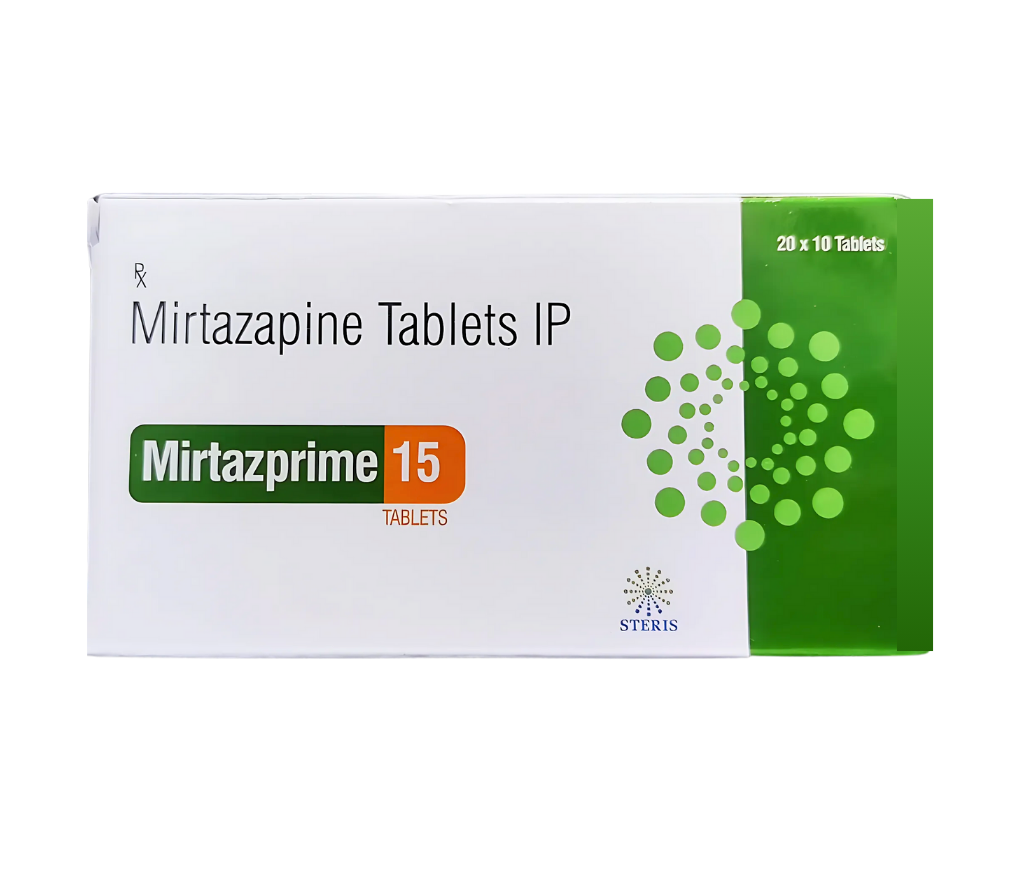
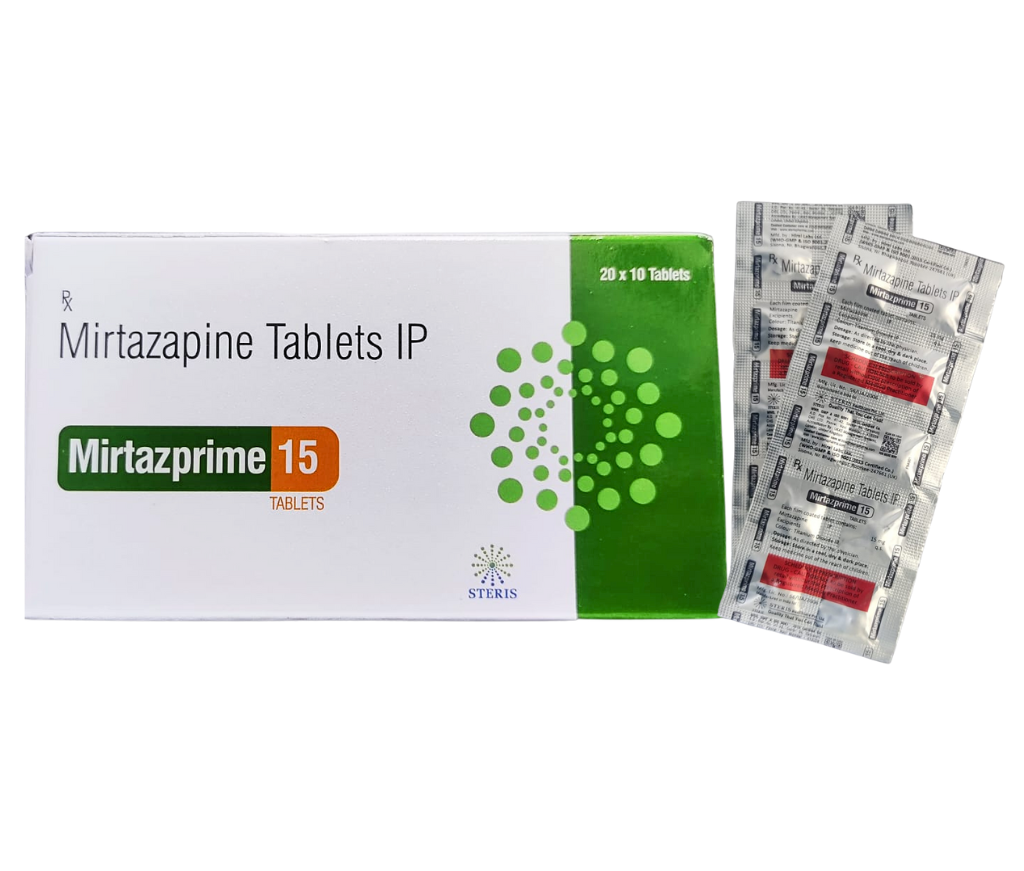
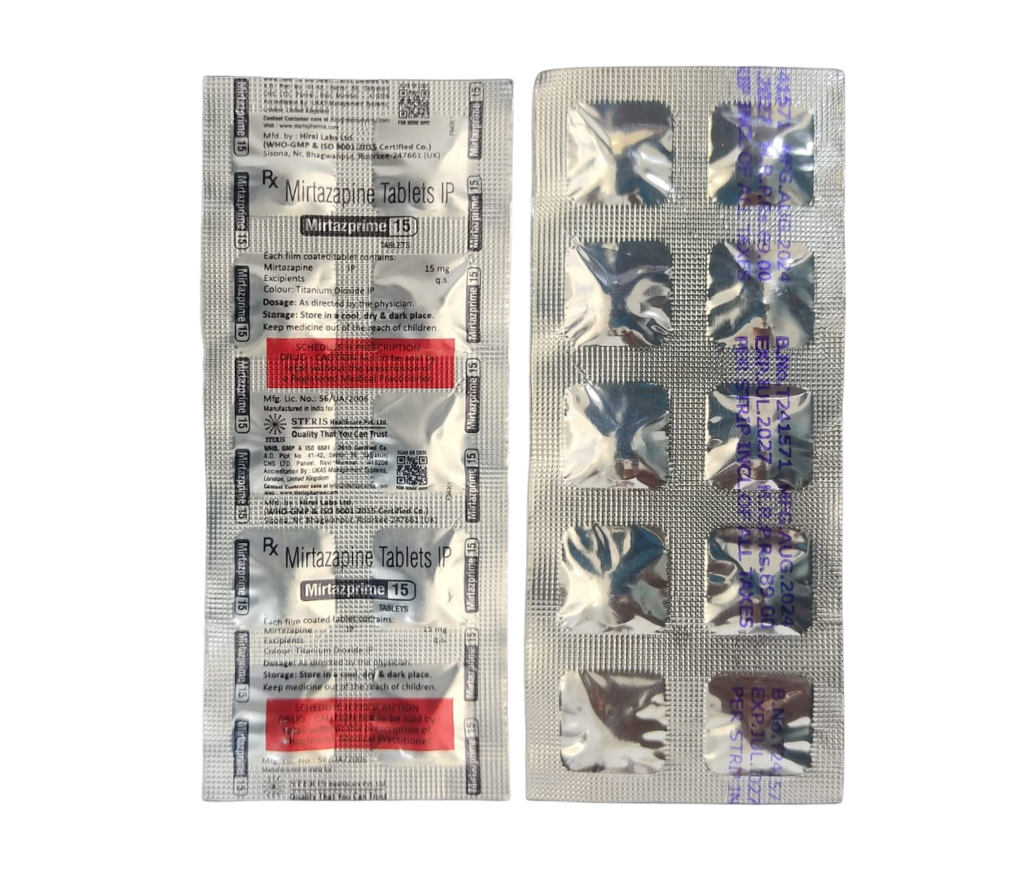
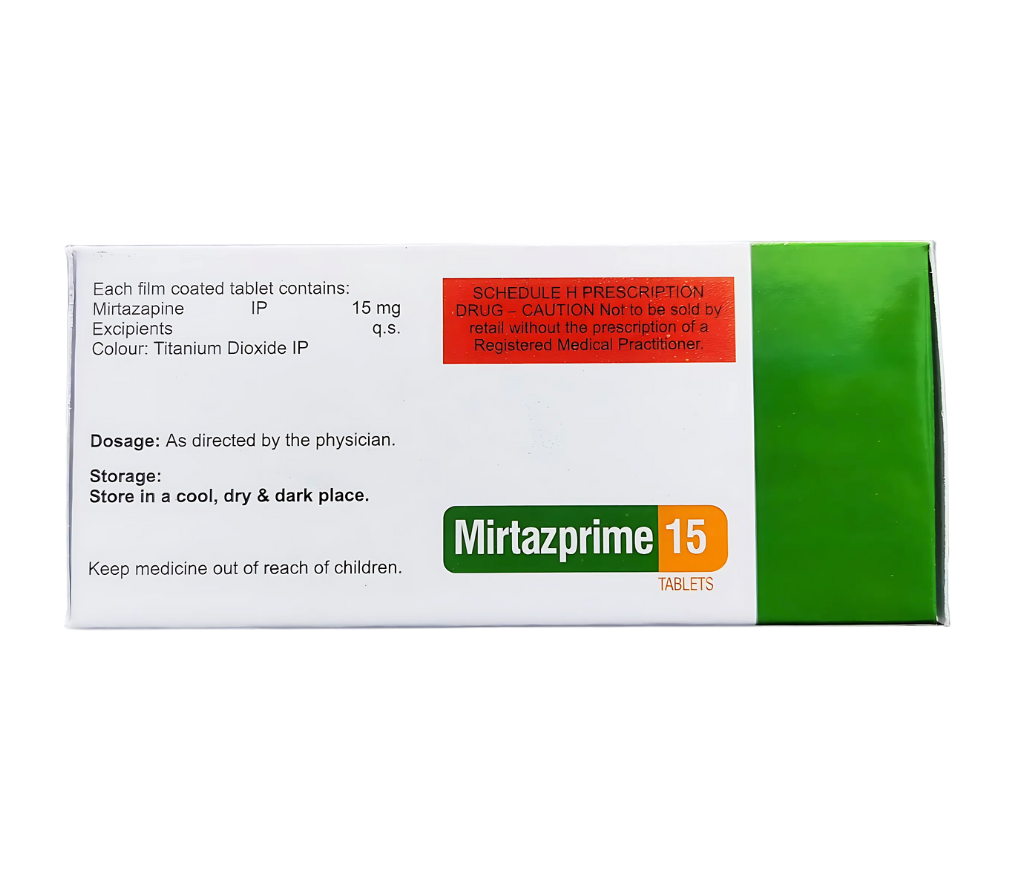
Mirtazapine 15 mg | MIRTAZPRIME 15
 Item requires a valid prescription
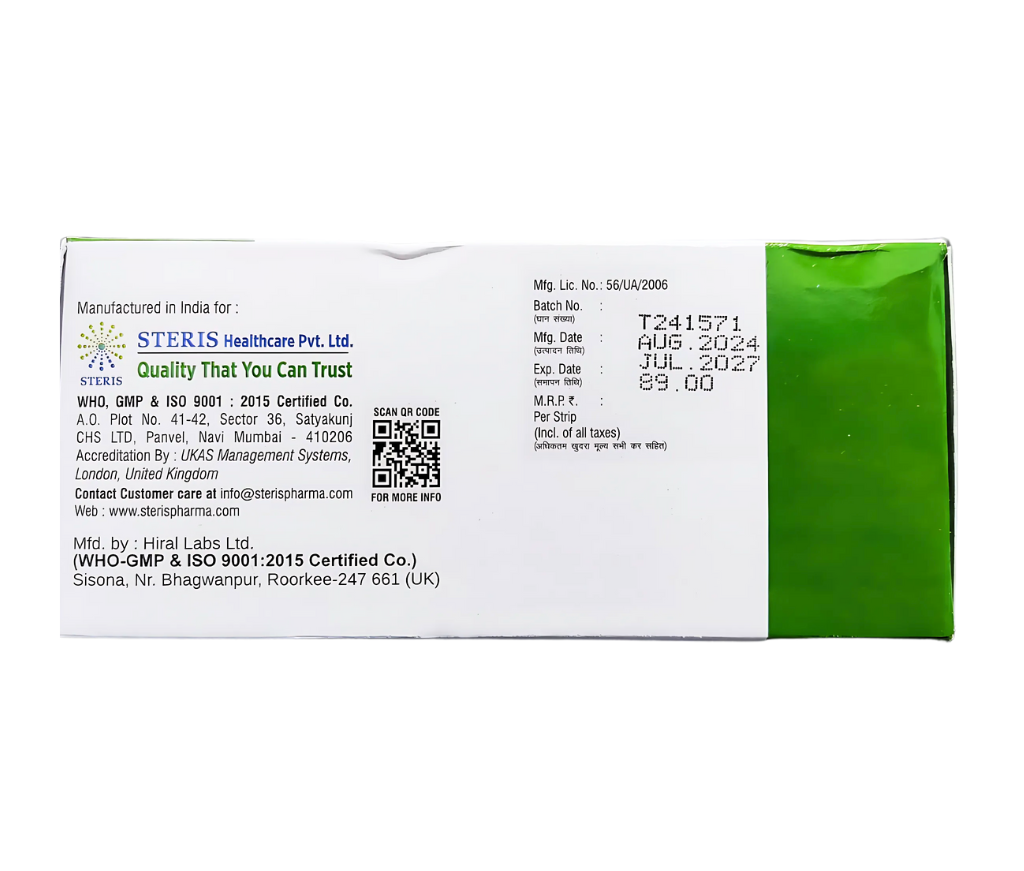
Manufactured By Steris Healthcare Pvt Ltd
Composition mirtazapine 15 mg
Rs 58.41
MRP Rs 83.44
(30% OFF)
Includes all taxes
Package SIZE
( For 10 Tablets )

100% Authentic
Products

Free
Shipping*

Products
Return Policy
Description:
MIRTAZPRIME 15 is a prescription antidepressant tablet. Each tablet contains mirtazapine 15 mg. Steris Healthcare Pvt. Ltd., a WHO-GMP and ISO 9001-certified pharmaceutical manufacturer based in Jaipur, Rajasthan, makes and markets it.
Mirtazapine belongs to a class called noradrenergic and specific serotonergic antidepressants (NaSSAs). It works differently from the more familiar SSRIs. Instead of blocking the reuptake of serotonin, mirtazapine blocks alpha-2 adrenergic receptors, which raises the release of both noradrenaline and serotonin. It also blocks certain serotonin receptors (5-HT2 and 5-HT3), so the extra serotonin acts mainly on the receptors linked to mood (5-HT1A). Blocking 5-HT3 helps limit nausea, and blocking 5-HT2 may help anxiety and sleep. Mirtazapine also blocks histamine H1 receptors, which explains its sedating effect and its ability to increase appetite.
Depression is a medical illness that involves changes in brain chemistry. It is not a weakness or a lack of willpower. Mirtazapine helps correct the chemical imbalance, and it works best together with counselling, healthy routines and family support. It is not a cure, and it should not be stopped suddenly.
Product Information
|
|---|
Why Is Mirtazapine Important?
Depression affects sleep, appetite, energy, concentration and relationships, and untreated depression can seriously harm quality of life and physical health. Mirtazapine is important for these reasons.
- Helps when sleep and appetite are affected. Many depressed patients sleep badly and lose weight. Mirtazapine's sedating and appetite-boosting effects can help with both.
- Different mechanism from SSRIs. It offers an option for patients who do not respond to, or cannot tolerate, other antidepressants.
- Lower chance of some SSRI-type effects. It is less likely than SSRIs to cause sexual side effects or stomach upset, although it has its own side effects.
- Helps anxiety symptoms. Its calming action can ease anxiety and restlessness that often come with depression.
- Useful in older adults. Doctors often choose it for older patients with poor sleep and low appetite, at carefully adjusted doses.
- Once-daily dosing. A single bedtime tablet is easy to remember.
- Long clinical experience. Its benefits, precautions and interactions are well documented.
Uses of MIRTAZPRIME 15
- Major depressive disorder (depressive episodes) in adults
- Depression with insomnia, anxiety or loss of appetite
- Used by specialists in some patients for other conditions such as anxiety-related disorders, sleep disturbance or appetite loss during illness, at the doctor's discretion
Key Benefits
- Lifts low mood. It helps restore interest, energy and motivation over weeks.
- Improves sleep. Many patients fall asleep more easily and sleep through the night.
- Restores appetite. It can help patients who have lost weight because of depression.
- Eases anxiety and restlessness. It has a calming effect.
- Once-daily bedtime dosing. Taking it at night uses the drowsiness to advantage.
- Flexible strengths. The 15 mg tablet is the usual starting dose, so the doctor can raise it step by step.
- Manufactured to quality standards. Steris Healthcare operates a WHO-GMP and ISO 9001 certified facility, with quality checks at each stage.
Precautions and Warnings
Do not use MIRTAZPRIME 15 if:
- You are allergic to mirtazapine or any ingredient in the tablet.
- You are taking, or have taken in the last 14 days, a monoamine oxidase inhibitor (MAOI), such as phenelzine, tranylcypromine, selegiline, moclobemide or linezolid. A gap of about 14 days is needed before or after MAOI treatment.
Tell your doctor before starting if you have:
- Bipolar disorder, mania or a family history of it. Antidepressants can trigger a manic episode.
- Epilepsy or a seizure history.
- Liver or kidney disease.
- Heart disease, a recent heart attack, an irregular heartbeat, a long QT interval or low blood pressure.
- Glaucoma (raised eye pressure), especially narrow-angle glaucoma.
- Diabetes. Blood sugar may change.
- Difficulty passing urine, or prostate enlargement.
- Low sodium or a history of it.
- A history of blood disorders, unexplained infections, fever or sore throat.
- Any use of other medicines, including over-the-counter and herbal products such as St John's wort.
Side Effects
Not everyone gets side effects. Many ease after the first weeks. Common ones include:
- Drowsiness or sleepiness
- Increased appetite and weight gain
- Dry mouth
- Dizziness or light-headedness
- Constipation
- Tiredness or weakness
- Headache
- Vivid dreams
- Swelling of the hands, feet or ankles
- Raised cholesterol or triglycerides on blood tests
Frequently Asked Questions
1. Where can I buy Mirtazapine 15 mg online?
Mirtazapine 15 mg can be purchased through licensed pharmacies or authorized pharmaceutical suppliers, subject to prescription requirements and local regulations.
2. What is the price of Mirtazapine 15 mg?
The price of Mirtazapine 15 mg may vary depending on the brand, manufacturer, pack size, pharmacy, and applicable taxes or offers. Check the current product listing for the latest price.
3. Can I order Mirtazapine 15 mg online?
Yes, Mirtazapine 15 mg may be ordered online through an authorized pharmacy where online sale of prescription medicines is permitted. A valid prescription may be required.
4. Is Mirtazapine 15 mg available from Steris Healthcare?
Availability may vary. Check the current Steris Healthcare product listing or contact the company directly to confirm availability, strength, pack size, and ordering information.
5. What is Mirtazapine 15 mg used for?
Mirtazapine 15 mg is an antidepressant primarily used to treat major depressive disorder. It may help improve symptoms such as persistent low mood, loss of interest, and associated sleep or appetite changes.
6. What is the composition of Mirtazapine 15 mg?
Mirtazapine 15 mg contains Mirtazapine 15 mg as the active ingredient. The inactive ingredients may vary depending on the manufacturer and formulation.
7. Is a prescription required?
Yes. Mirtazapine 15 mg is a prescription medicine and should be used under the supervision of a qualified healthcare professional.
8. How should Mirtazapine 15 mg be taken?
Take Mirtazapine 15 mg exactly as prescribed by your doctor, usually at the recommended time each day. Do not change the dose or stop treatment suddenly without medical advice.
9. What should I know before buying Mirtazapine 15 mg?
Before buying, check the strength, formulation, manufacturer, pack size, expiry date, and prescription requirements. Mirtazapine may cause drowsiness, increased appetite, or weight gain in some people. Avoid driving or operating machinery if you feel drowsy, and inform your doctor about other medicines you are taking.
10. How can I order Mirtazapine 15 mg online?
To order Mirtazapine 15 mg online, use a licensed or authorized pharmacy, verify the product details, provide a valid prescription when required, and follow the pharmacy's ordering and delivery process. Availability may vary by location.

