


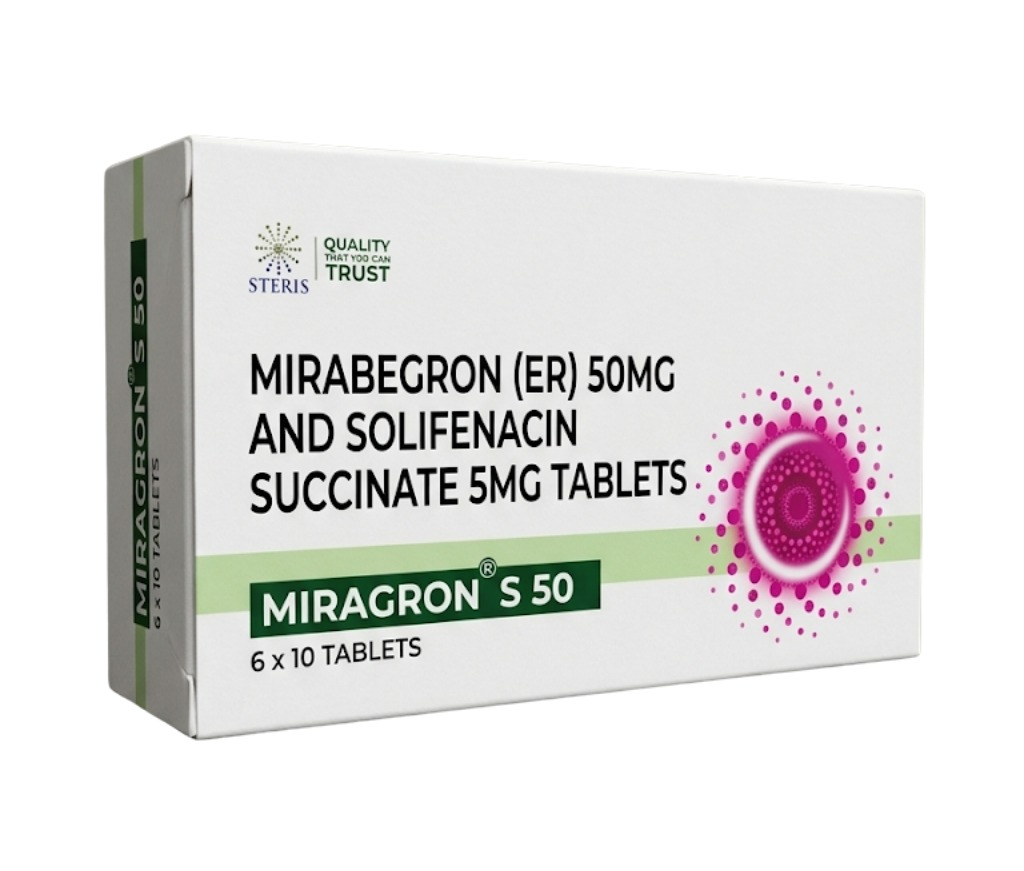
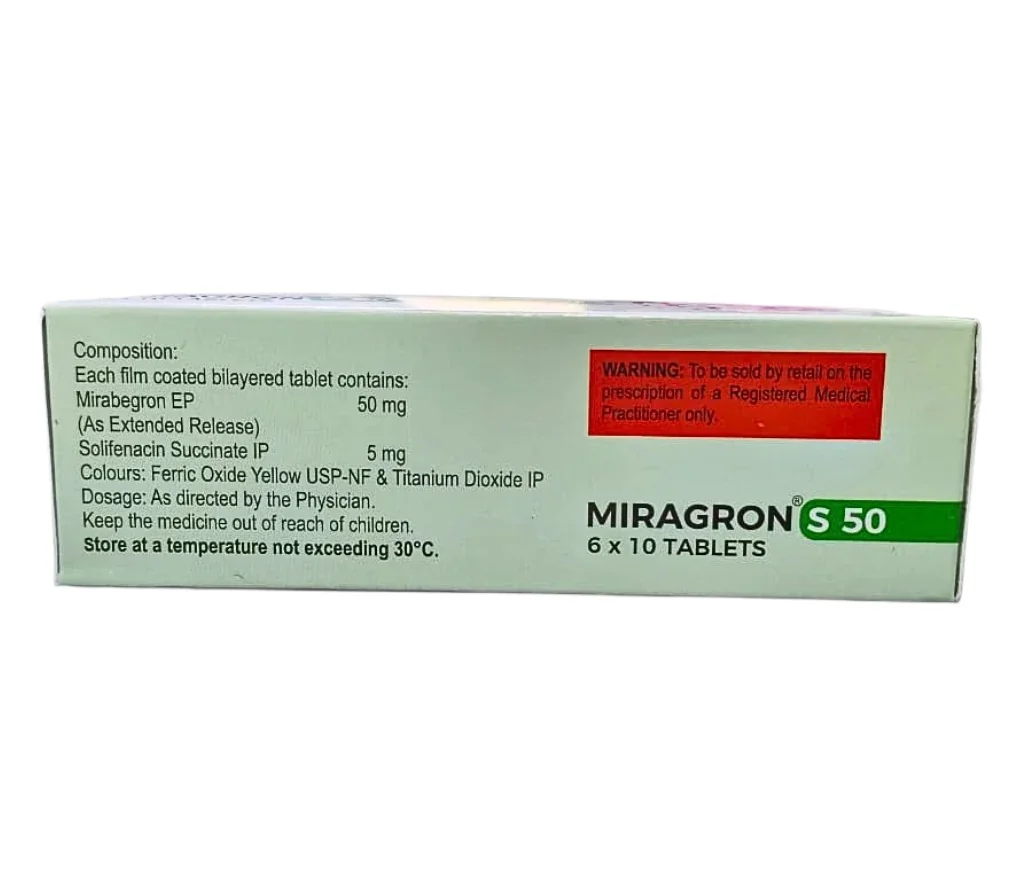
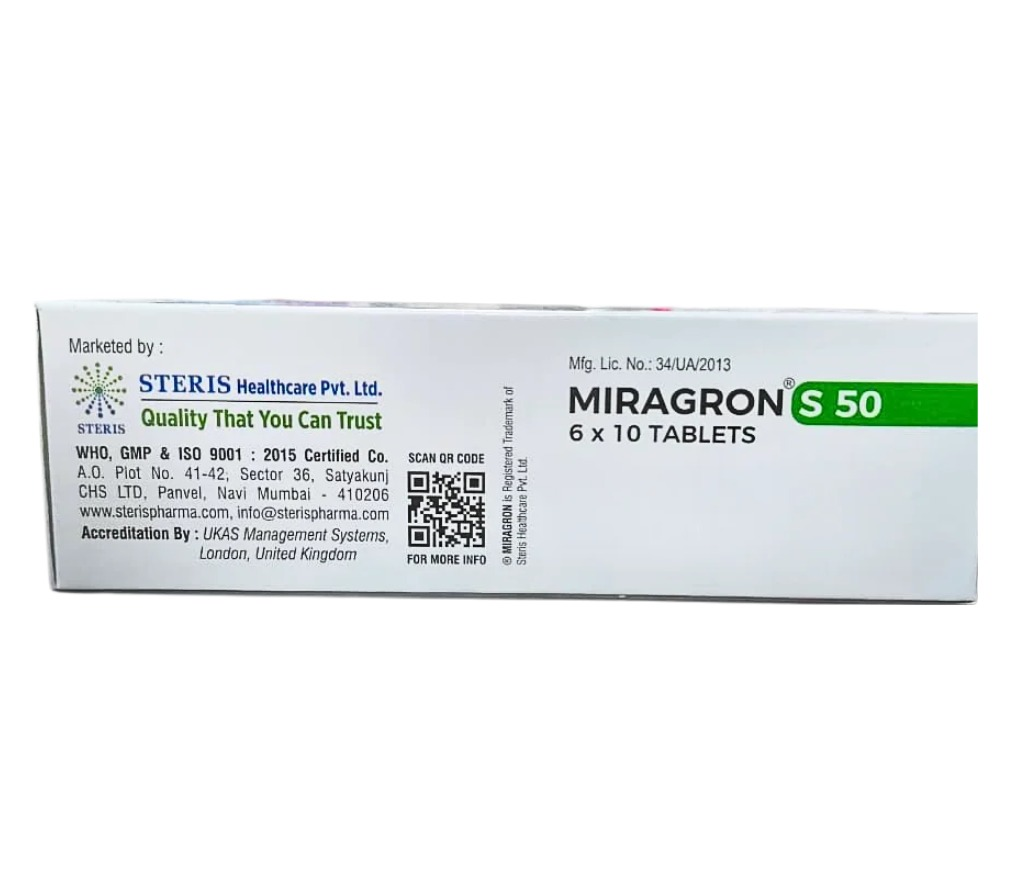
MIRAGRON S 50/5
 Item requires a valid prescription
Manufactured By Steris Healthcare Pvt Ltd
Composition Mirabegron (ER) (50mg) and Solifenacin succinate (5mg)
Rs 350.00
MRP Rs 500.00
(30% OFF)
Includes all taxes
Package SIZE
( For 10 Tablets )

100% Authentic
Products

Free
Shipping*

Products
Return Policy
Description:
MIRAGRON S 50/5 is a fixed-dose combination tablet marketed by Steris Healthcare Pvt. Ltd. Each tablet contains:
- Mirabegron (Extended Release) 50 mg
- Solifenacin Succinate 5 mg
The two medicines belong to different drug classes, and they calm an overactive bladder in different ways. This is why doctors sometimes prefer the combination over a single drug when symptoms are not well controlled.
Product Information
Brand Name: MIRAGRON S 50/5
Generic Composition: Mirabegron (ER) 50 mg + Solifenacin Succinate 5 mg
Dosage Form: Tablet
Pack Size: Strip of 10 tablets
Manufacturer/Marketer: Steris Healthcare Pvt. Ltd.
Therapeutic Class: Urinary antispasmodic / overactive bladder combination
Prescription Status: Prescription required (Schedule H in India)
Primary Use: Symptoms of overactive bladder (urgency, frequency, urge incontinence)
Storage: Store below 25°C in a cool, dry place, away from direct sunlight and out of reach of children
Country of Availability: India
How Do Mirabegron and Solifenacin Work Together?
Your bladder is a muscular bag. It relaxes to fill with urine and contracts to empty it. In overactive bladder, the muscle (called the detrusor) contracts at the wrong time or too strongly, creating a sudden, hard-to-ignore urge to urinate.
Mirabegron is a beta-3 adrenergic receptor agonist. It acts on receptors in the bladder wall and helps the muscle relax during the filling phase, so the bladder can hold more urine comfortably.
Solifenacin is an antimuscarinic (anticholinergic) medicine. It blocks muscarinic receptors that trigger involuntary bladder contractions, reducing urgency and leakage.
Because the two act through separate pathways, using them together can offer better symptom control than either drug alone in some patients. Clinical studies of this combination in adults with OAB have reported greater reductions in urgency episodes, frequency, and incontinence episodes compared with solifenacin alone. Your doctor will decide whether this approach suits you.
Why Is Treating Overactive Bladder Important?
Many people delay treatment for months or years. Here is why that is a mistake.
- It affects sleep. Waking up repeatedly at night (nocturia) disrupts rest, leading to daytime tiredness, poor concentration, and irritability.
- It raises the risk of falls. Older adults rushing to the toilet in the dark are more likely to slip and fracture a bone, which can be serious.
- It limits social and work life. People start avoiding travel, long meetings, family functions, or temple visits because they worry about toilet access.
- It affects mental health. Constant worry, embarrassment, and loss of confidence can lead to anxiety and low mood.
- It can hide other conditions. Urinary symptoms can sometimes be caused by infection, diabetes, prostate enlargement, or neurological problems. Seeking medical advice allows proper diagnosis.
Treating OAB properly improves not just bladder control but overall quality of life.
Key Benefits of MIRAGRON S 50/5
Dual-action relief. By combining a bladder relaxant that works through the beta-3 pathway with an antimuscarinic, the tablet addresses overactive bladder from two angles.
Reduces urgency. The sudden, compelling need to urinate is the most troublesome OAB symptom, and this combination is designed to ease it.
Fewer bathroom trips. Many patients notice a reduction in how often they pass urine during the day and night once treatment is established.
Helps with urge incontinence. Accidental leakage linked to a sudden urge can reduce over time with regular use as prescribed.
Once-daily convenience. One tablet a day means a simpler routine than taking two separate medicines, which can help you stay consistent with treatment.
Fixed-dose simplicity. A single tablet may reduce the number of medicines to remember and the chance of missing a dose.
Possible improvement in sleep and daily comfort. Fewer night-time awakenings can mean better rest and more energy.
Results vary from person to person. Some people feel improvement within a couple of weeks, while the full effect may take up to about 4 to 8 weeks. Do not stop the medicine early just because you feel better, unless your doctor advises it.
Who Is This Medicine Meant For?
MIRAGRON S 50/5 is generally prescribed for adults with symptoms of overactive bladder, including urgency, increased frequency, and urge incontinence. It is often considered when a single OAB medicine has not given enough relief. Only a qualified doctor can decide if this combination is appropriate after reviewing your symptoms, medical history, and current medicines.
How to Take MIRAGRON S 50/5
- Take it exactly as prescribed. The usual approach is one tablet once daily, but your doctor will confirm the right dose for you.
- Swallow the tablet whole with water. Do not crush, chew, or break it, because the mirabegron component is an extended-release formulation.
- It can be taken with or without food. Try to take it at the same time every day.
- If you miss a dose, take it when you remember on the same day. If it is nearly time for the next dose, skip the missed one. Never double up.
Important Precautions Before Using This Medicine
This is a prescription medicine, and safety checks matter. Please discuss the following with your doctor before starting.
Do not use it if you:
- Are allergic to mirabegron, solifenacin, or any ingredient in the tablet.
- Have difficulty emptying your bladder (urinary retention).
- Have severe stomach or bowel problems such as gastric retention or severe constipation conditions.
- Have uncontrolled narrow-angle glaucoma.
- Have severe, uncontrolled high blood pressure.
- Have severe liver problems.
- Have severe kidney impairment, where this fixed dose may not be suitable.
Tell your doctor if you have:
- High blood pressure, as mirabegron can raise blood pressure in some people. Regular monitoring is advised.
- An enlarged prostate or any difficulty passing urine, because the medicine can worsen retention.
- Heart rhythm problems, a long QT interval, or a history of fast heartbeat.
- Kidney or liver disease.
- Chronic constipation or digestive disorders.
- Glaucoma.
- Neurological conditions such as Parkinson’s disease or myasthenia gravis.
Possible Side Effects
Like all medicines, MIRAGRON S 50/5 can cause side effects, although not everyone gets them.
Common side effects:
- Dry mouth
- Constipation
- Headache
- Nausea or indigestion
- Dizziness
- Blurred vision
- Fast heartbeat
- Urinary tract infection
- Increased blood pressure
Frequently Asked Questions
1. What are mirabegron and solifenacin tablets used for?
Mirabegron and solifenacin tablets are used to treat overactive bladder (OAB). They relieve symptoms such as a sudden, strong urge to urinate, needing to pass urine very often, waking at night to urinate, and leakage of urine before reaching the toilet (urge incontinence). Doctors usually prescribe the combination when a single medicine has not controlled symptoms well enough.
2. What is the combination of mirabegron 50 mg and solifenacin 5 mg?
It is a fixed-dose combination that contains two bladder medicines in one tablet. Mirabegron 50 mg is a beta-3 adrenergic agonist, usually in an extended-release form. Solifenacin succinate 5 mg is an antimuscarinic. Combining them in one tablet means fewer pills to take and makes the daily routine simpler.
3. How does mirabegron and solifenacin work together?
They relax the bladder muscle (detrusor) through two different pathways. Mirabegron activates beta-3 receptors in the bladder wall, which relaxes the muscle while the bladder fills and lets it hold more urine. Solifenacin blocks muscarinic receptors, which reduces the involuntary bladder contractions that cause urgency. Because the two act differently, the combination can improve symptoms more than either medicine alone in many patients.
4. Where can I buy mirabegron and solifenacin tablets in India?
You can buy them with a valid prescription from licensed retail pharmacies, hospital pharmacies, and authorised online pharmacy platforms. Check that the pack is sealed, and that the batch number, expiry date, and manufacturer name are clearly printed on delivery.
5. What are the uses of mirabegron and solifenacin tablets?
- Relief of urgency, the sudden need to urinate
- Reducing how often you need to pass urine during the day
- Reducing night-time urination (nocturia)
- Controlling urge incontinence, the leakage that follows a sudden urge
- Managing overactive bladder when one medicine alone has not worked well enough
6. Is mirabegron with solifenacin used for overactive bladder?
Yes. Overactive bladder is the main approved use of this combination. It is not meant for infections, stones, or other causes of urinary symptoms, so a doctor should first confirm that OAB is the cause.
7. What is the composition of mirabegron solifenacin tablets?
A commonly available strength contains Mirabegron (extended-release) 50 mg and Solifenacin Succinate 5 mg per tablet. Strengths and release forms can vary by brand, so check the product label for the exact composition.
8. Who manufactures mirabegron and solifenacin tablets in India?
Several Indian pharmaceutical companies manufacture this combination under different brand names. The manufacturer’s name is printed on the pack and label, so check it before buying and choose a product from a reputable, licensed manufacturer.
9. Do mirabegron and solifenacin require a prescription?
Yes. This is a prescription-only medicine in India. A doctor needs to confirm the diagnosis, check your blood pressure and bladder emptying, and decide whether the combination suits you before it is started.
10. What precautions should be taken with mirabegron and solifenacin?
- Blood pressure: Mirabegron can raise blood pressure. Do not use it if you have severe uncontrolled hypertension, and have your blood pressure checked regularly.
- Urinary retention: Tell your doctor if you have difficulty emptying your bladder or an enlarged prostate. Solifenacin can worsen retention.
- Eye and gut conditions: Avoid or use with caution in narrow-angle glaucoma and in conditions that slow or block the gut.
- Liver and kidney disease: Inform your doctor if you have liver or kidney problems, as dose adjustment or avoidance may be needed.
- Heart rhythm: Tell your doctor if you have a history of irregular heartbeat or QT prolongation.
- Drug interactions: Tell your doctor about all your medicines, especially digoxin, metoprolol, antifungals such as ketoconazole, other anticholinergic medicines, and some antidepressants. Levels of some drugs may change.
- Common effects to watch for: Dry mouth, constipation, and blurred vision can occur. Drink water, eat fibre, and avoid driving if your vision is affected or you feel drowsy.
- Elderly patients: Use with care, as they are more prone to confusion, dizziness, and constipation.
- Pregnancy and breastfeeding: Avoid unless your doctor advises it. Tell your doctor if you are pregnant, planning pregnancy, or breastfeeding.
- How to take it: Swallow the tablet whole with water. Do not crush, chew, or split it, as it is an extended-release product. Follow your doctor’s dose and timing.

