


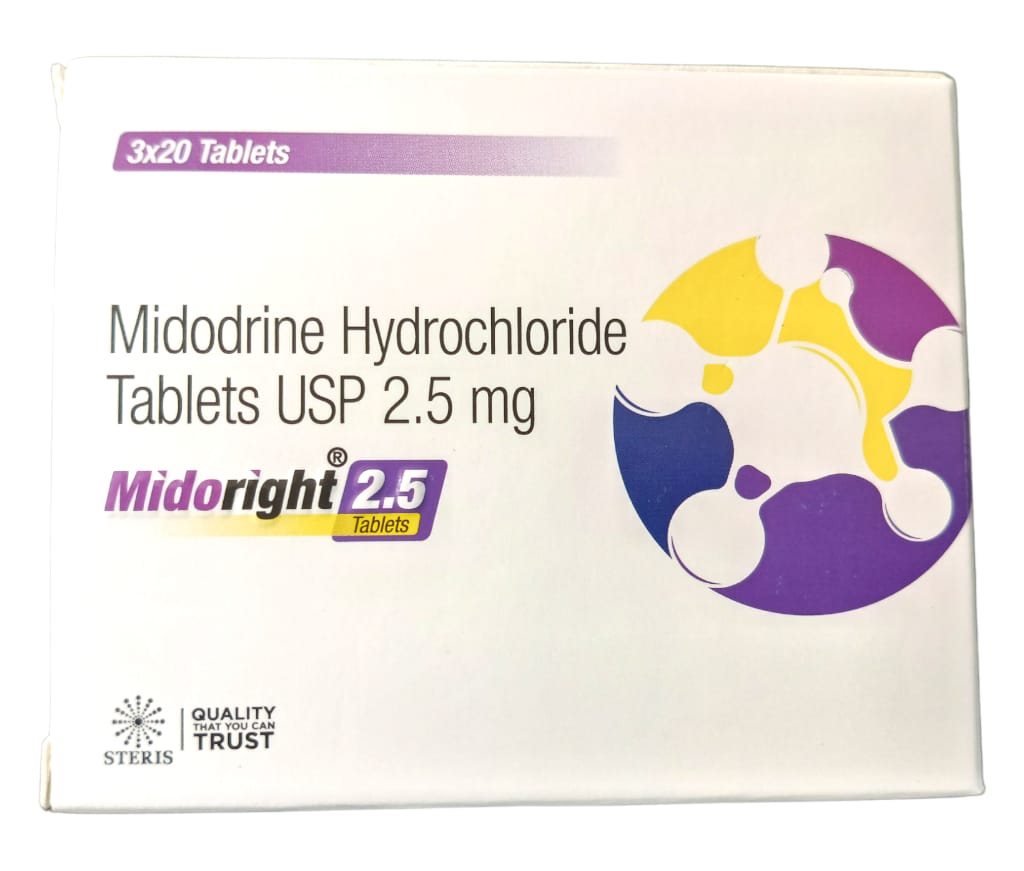
MIDORIGHT 2.5
 Item requires a valid prescription
Manufactured By Steris Healthcare Pvt Ltd
Composition Midodrine Hydrochloride (2.5mg)
Rs 260.00
MRP Rs 651.56
(60% OFF)
Includes all taxes
Package SIZE
( For 20 Tablet )

100% Authentic
Products

Free
Shipping*

Products
Return Policy
Description:
Midodrine hydrochloride 2.5 mg uses are primarily associated with the treatment of symptomatic orthostatic hypotension, a condition in which blood pressure drops significantly when a person stands up. This can cause dizziness, light-headedness, weakness or a feeling of faintness. Midodrine is a prescription vasopressor that works by tightening certain blood vessels and increasing blood pressure. Current prescribing information specifically identifies symptomatic orthostatic hypotension as its indication.
In India, several 2.5 mg midodrine products are currently listed by online pharmacies. Recent listings include brands such as Midotab 2.5, Midorise 2.5, Midotril 2.5 mg and Drinela 2.5 mg. Prices vary considerably by brand and pack size, and these products are listed as prescription medicines.
What Is Midodrine Hydrochloride 2.5 mg?
Midodrine hydrochloride 2.5 mg is an oral tablet containing 2.5 mg of midodrine hydrochloride. It belongs to the vasopressor/antihypotensive class of medicines.
Midodrine is converted in the body to an active metabolite that stimulates alpha-adrenergic receptors in blood vessels. This causes blood vessels to constrict, which increases vascular resistance and raises blood pressure.
The result can be particularly useful for people whose blood pressure falls when they move from lying or sitting to standing.
Current product information from the UK Medicines and Healthcare products Regulatory Agency describes 2.5 mg midodrine tablets as being indicated for adults with severe orthostatic hypotension caused by autonomic dysfunction when other corrective measures and treatments are inadequate.
Midodrine Hydrochloride 2.5 mg Uses
The primary midodrine hydrochloride 2.5 mg uses relate to symptomatic low blood pressure, particularly orthostatic hypotension.
1. Orthostatic hypotension
Orthostatic hypotension occurs when blood pressure falls after standing. Affected people may experience dizziness, weakness, blurred vision, light-headedness or fainting.
Midodrine helps counteract this blood-pressure drop by increasing vascular tone. Indian pharmacy information similarly lists midodrine 2.5 mg products for low blood pressure accompanied by symptoms when standing up.
2. Dizziness associated with standing
For appropriately diagnosed patients, increasing blood pressure while upright may reduce dizziness and related symptoms.
However, dizziness has many possible causes. Midodrine should not be self-started simply because someone feels dizzy or has an occasional low blood-pressure reading.
3. Symptomatic low blood pressure
Midodrine may be prescribed when low blood pressure causes significant symptoms and other measures have not provided adequate relief.
The official U.S. prescribing information emphasizes that midodrine is intended for patients with symptomatic orthostatic hypotension whose lives remain considerably impaired despite standard clinical care, including non-drug measures.
Key Benefits of Midodrine Hydrochloride 2.5 mg
Helps raise standing blood pressure
The principal pharmacological benefit of midodrine is increasing blood pressure through vasoconstriction. This can help counteract an excessive blood-pressure fall when standing.
May reduce symptoms of orthostatic hypotension
When the medicine is appropriate for the individual, improving standing blood pressure may help with symptoms such as light-headedness and weakness.
2.5 mg provides a lower tablet strength
Midodrine is available in several strengths, including 2.5 mg, 5 mg and 10 mg. A 2.5 mg tablet can therefore be used when a lower starting or adjusted dose is appropriate.
Can be incorporated into a broader treatment plan
Medication is only one component of managing orthostatic hypotension. Depending on the underlying condition, clinicians may also recommend fluid management, lifestyle changes, compression garments or other measures. The official U.S. label specifically states that midodrine should be used after consideration of standard non-pharmacological measures.
How Does Midodrine 2.5 mg Work?
Midodrine increases blood pressure by causing constriction of peripheral blood vessels.
When a healthy person stands, the body normally constricts blood vessels and adjusts heart and blood-vessel activity to prevent blood from pooling in the legs. In orthostatic hypotension, these compensatory mechanisms may not work adequately.
Midodrine's active metabolite stimulates alpha-adrenergic receptors, increasing vascular tone. This helps increase blood pressure when upright.
The important trade-off is that the same blood-pressure-raising action can cause excessive blood pressure when the person is lying down. This is why timing and posture are particularly important when taking midodrine.
Midodrine Hydrochloride 2.5 mg Dosage and Timing
Do not determine your own midodrine dose. It is a prescription medicine, and the appropriate dose depends on the severity and cause of orthostatic hypotension, blood-pressure measurements, other medicines and individual response.
Some current prescribing information describes 2.5 mg three times daily as an initial dose, with subsequent adjustment according to supine and standing blood-pressure measurements.
The timing of doses is especially important. Midodrine is generally used during daytime hours when a person is upright and active. It should not normally be taken shortly before a prolonged period of lying down or bedtime because of the risk of supine hypertension. Indian product information also instructs patients to avoid taking it when they expect to lie down for a long period after a dose.
Your prescription may differ, so follow the directions provided by your doctor and the specific product label.
Midodrine Hydrochloride 2.5 mg Side Effects
Like all medicines, midodrine can cause side effects.
Possible adverse effects reported with midodrine products include:
-
Goosebumps or chills
-
Headache
-
Nausea
-
Rash
-
Itching
-
Tingling or abnormal skin sensations
-
Urinary difficulty
-
Increased blood pressure while lying down
-
Blurred vision or other visual symptoms
An Indian pharmacy listing for a 2.5 mg midodrine product specifically identifies goosebumps, headache, nausea and rash among possible side effects, while another listing reports headache, blurred vision, nausea, heartburn and difficulty urinating.
Supine hypertension: the most important safety concern
The major risk associated with midodrine is supine hypertension, meaning excessively high blood pressure while lying down.
The official U.S. label carries a warning that midodrine can cause marked elevations in supine blood pressure, including systolic blood pressure above 200 mmHg.
Contact your healthcare professional promptly if you experience symptoms that could indicate dangerously high blood pressure, particularly severe headache, chest discomfort, shortness of breath, vision changes or neurological symptoms.
Who Should Avoid or Use Extra Caution With Midodrine?
Midodrine is not appropriate for everyone.
Your doctor should know if you have:
-
High blood pressure, particularly when lying down
-
Significant heart disease
-
Kidney disease
-
Urinary retention or difficulty urinating
-
Certain vascular disorders
-
Thyroid or endocrine conditions
-
A history of abnormal blood-pressure responses
-
Other conditions affecting the autonomic nervous system
The prescribing information contains specific contraindications and warnings, so the medicine should be prescribed after reviewing your medical history and current medications.
Midodrine 2.5 mg Drug Interactions
Tell your doctor or pharmacist about all prescription medicines, over-the-counter medicines and supplements you use.
Particular caution may be necessary with medicines that can increase blood pressure or affect heart rate, blood vessels or urinary function. Because interaction risks depend on the complete medication list, patients should not rely on a general online interaction list alone.
Do not start, stop or change another medicine without professional guidance.
Midodrine 2.5 mg During Pregnancy and Breastfeeding
If you are pregnant, planning pregnancy or breastfeeding, tell your healthcare professional before taking midodrine.
There may be insufficient information to establish that the medicine is appropriate in every pregnancy or breastfeeding situation. Your clinician can weigh the expected benefits against potential risks and determine whether another approach is more suitable.
Buying Midodrine Hydrochloride 2.5 mg Online in India
If your search intent is buy midodrine hydrochloride 2.5 mg online, treat the purchase as a prescription-medicine transaction rather than an ordinary supplement purchase.
Current Indian online listings demonstrate that prices can vary significantly between manufacturers:
-
Midotab 2.5 Tablet: a recent listing showed ₹725 for 20 tablets, with discounts varying by order value.
-
Midorise 2.5 Tablet: a recent listing showed ₹1,026, with the displayed price changing according to current offers.
-
Midotril 2.5 mg: a recent listing showed ₹835 for 20 tablets, while a same-composition alternative was also displayed.
-
Drinela 2.5 mg: a recent pharmacy listing showed ₹333.98 for 10 tablets against an MRP of ₹445.31.
These prices are current listing examples, not fixed market prices. Stock, discounts, seller location, taxes and pack sizes can change.
Before buying, check:
-
The active ingredient is midodrine hydrochloride 2.5 mg.
-
The manufacturer and marketer are clearly identified.
-
The product has a valid expiry date.
-
The packaging is intact.
-
The pharmacy or seller is reputable.
-
A valid prescription is provided where required.
-
The pack size matches the price being advertised.
-
The medicine has been stored according to the manufacturer's instructions.
Do not purchase midodrine simply because you have low blood pressure once or occasionally feel dizzy. The medicine is intended for appropriately diagnosed symptomatic orthostatic hypotension.
What Makes Midodrine Different From Ordinary Blood-Pressure Medicines?
Many people associate blood-pressure medicines with lowering blood pressure. Midodrine is different: its purpose is to raise blood pressure in selected patients with symptomatic orthostatic hypotension.
That does not mean it is suitable for ordinary low blood pressure without symptoms, nor should it be used as a general energy or dizziness medicine.
The official U.S. label also notes an important evidence limitation: the approval is based substantially on improvement in standing systolic blood pressure, while clinical benefits such as improved ability to perform daily activities have not been definitively established.
This distinction is important when evaluating product claims online.
Frequently Asked Questions
1. What are the main midodrine hydrochloride 2.5 mg uses?
The main use is the treatment of symptomatic orthostatic hypotension, particularly when a person's blood pressure falls on standing and causes significant symptoms.
2. Does midodrine 2.5 mg increase blood pressure?
Yes. Midodrine constricts blood vessels and increases vascular resistance, which raises blood pressure. It is specifically used for selected patients with symptomatic orthostatic hypotension.
3. What are the side effects of midodrine 2.5 mg?
Possible side effects include headache, nausea, goosebumps, rash, tingling, urinary difficulty and visual symptoms. The most important risk is excessive blood pressure while lying down, known as supine hypertension.
4. Can I take midodrine 2.5 mg at night?
Midodrine is generally timed during the daytime when the patient is upright. Taking it shortly before lying down or bedtime can increase the risk of supine hypertension. Follow your prescribed schedule and ask your doctor if you are unsure about the timing.
5. Is midodrine 2.5 mg safe for everyone with low blood pressure?
No. Midodrine is a prescription medicine for selected patients with symptomatic orthostatic hypotension. It can cause excessive blood pressure when lying down and has important contraindications and precautions.
6. How long does midodrine 2.5 mg take to work?
The medicine has a relatively short duration of action, which is one reason it is administered at scheduled daytime intervals. The exact response varies between individuals. Your doctor should determine the dosing schedule based on symptoms and blood-pressure measurements.
7. Can midodrine 2.5 mg be taken with other medicines?
Potential interactions are possible, particularly with medicines that affect blood pressure, heart function or urinary function. Give your doctor or pharmacist a complete list of medicines and supplements before starting treatment.
8. Can I buy midodrine hydrochloride 2.5 mg online?
Yes, current Indian online pharmacy listings show several 2.5 mg midodrine products, but they are prescription medicines. Verify the product, manufacturer, expiry date, pack size and prescription requirements before ordering. Prices vary between brands and sellers.
9. What should I do if I miss a dose of midodrine?
Follow the missed-dose instructions supplied with your prescription. Because the timing of midodrine is important for preventing high blood pressure while lying down, do not automatically take an extra dose to compensate.
10. Can midodrine cure orthostatic hypotension?
Midodrine manages symptoms by increasing blood pressure; it does not necessarily cure the underlying cause of orthostatic hypotension. The underlying condition and other contributing factors still need appropriate medical evaluation.
Conclusion
Midodrine hydrochloride 2.5 mg uses primarily involve the treatment of symptomatic orthostatic hypotension, particularly when standing causes a clinically significant fall in blood pressure accompanied by symptoms such as dizziness or light-headedness. Its main benefit is its ability to increase vascular tone and raise blood pressure while upright.
However, midodrine is not a routine medicine for occasional low blood pressure. Because it can produce markedly high blood pressure when lying down, it requires careful prescribing, appropriate timing and blood-pressure monitoring.
For consumers intending to buy midodrine hydrochloride 2.5 mg online, current Indian listings show multiple brands and substantial price differences. Compare the active ingredient, strength, manufacturer, pack size, expiry date, authenticity and prescription requirements rather than choosing solely on price.

