


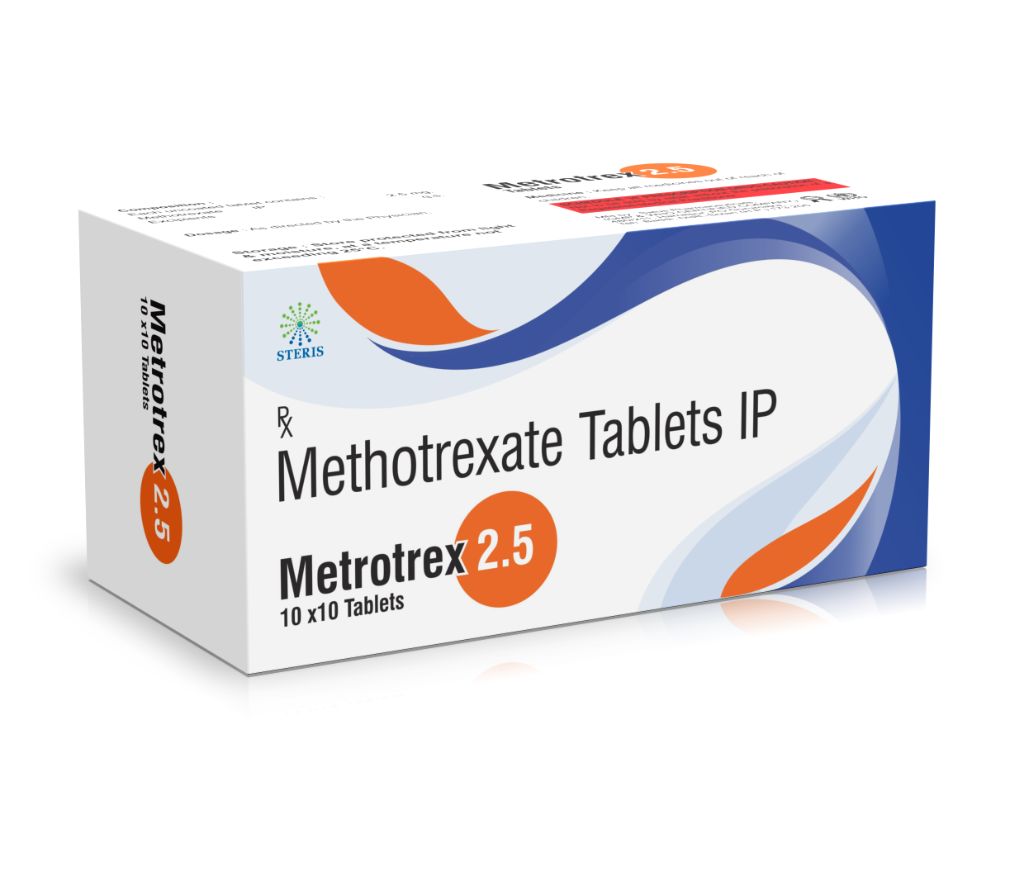
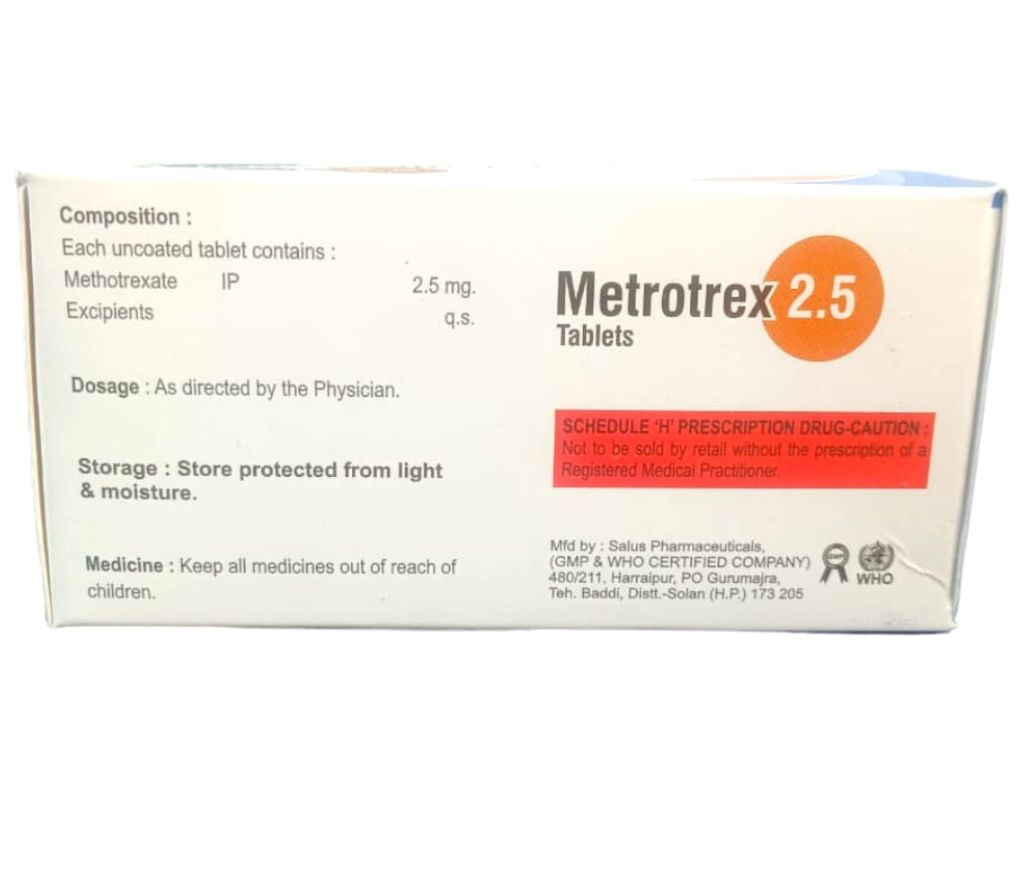
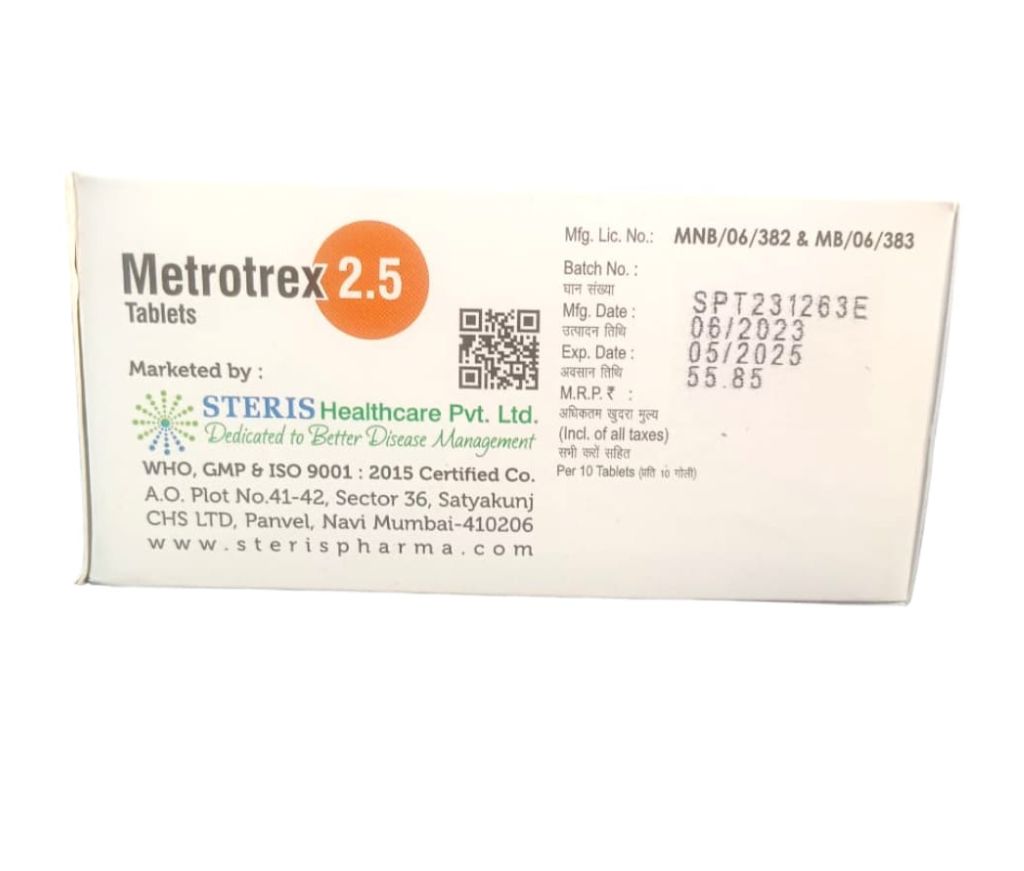
METROTREX 2.5
 Item requires a valid prescription
Manufactured By Steris Healthcare Pvt Ltd
Composition Methotrexate (2.5mg)
Rs 39.09
MRP Rs 55.85
(30% OFF)
Includes all taxes
Package SIZE
( For 10 Tablet )

100% Authentic
Products

Free
Shipping*

Products
Return Policy
Description:
Methotrexate tablet is a Prescription drugs indicated for the treatment of severe autoimmune disorders, including rheumatoid arthritis and psoriasis, as well as specific cancer types. It works by blocking folate metabolism to slow abnormal cell growth and calm an overactive immune response. For autoimmune conditions, methotrexate is taken once a week, not daily — daily dosing is a well-documented and dangerous medication error. Common side effects include nausea, mouth sores, fatigue, and hair thinning; more serious risks involve the liver, bone marrow, and lungs, which is why regular blood monitoring and folic acid supplementation are standard. This is a high-risk drug that must only be used under medical supervision.
What Is Methotrexate Tablet?
Methotrexate tablet is an oral antimetabolite and folate antagonist belonging to the disease-modifying antirheumatic drug (DMARD) class. Originally developed as a chemotherapy agent, low-dose methotrexate is now one of the most widely prescribed first-line treatments for autoimmune and inflammatory conditions worldwide, while higher doses continue to be used in select oncology protocols under specialist supervision.
Each methotrexate tablet contains methotrexate (usually as methotrexate sodium), manufactured to WHO-GMP standards to ensure consistent potency, purity, and bioavailability. Because of its narrow therapeutic index and potential for serious toxicity if misused, methotrexate is classified as a high-risk, prescription-only medication, and its use is closely monitored by prescribing physicians.
How Methotrexate Works
Methotrexate works primarily by inhibiting the enzyme dihydrofolate reductase (DHFR), which the body needs to convert folic acid into its active form (folate). Folate is essential for synthesizing DNA and RNA, so blocking this pathway slows down the rapid multiplication of cells.
- In autoimmune diseases (rheumatoid arthritis, psoriasis, psoriatic arthritis): low, weekly doses of methotrexate reduce inflammation by suppressing overactive immune cells and inflammatory mediators, rather than by direct cell-killing action.
- In oncology settings: higher doses interfere with the rapid division of cancer cells, which rely heavily on folate-dependent DNA synthesis.
Key Uses of Methotrexate Tablet
- Rheumatoid Arthritis (RA)—one of the most common first-line DMARDs used to slow joint damage and reduce swelling, pain, and stiffness.
- Psoriasis and Psoriatic Arthritis—Helps control skin plaques and joint inflammation in moderate-to-severe cases that haven't responded to topical treatment.
- Juvenile Idiopathic Arthritis — used in select pediatric cases under specialist care.
- Certain Cancers — including specific leukemias, lymphomas, and solid tumors, typically at much higher, physician-calculated doses as part of chemotherapy protocols.
- Crohn's Disease—sometimes used off-label to maintain remission in patients who haven't responded to other therapies.
- Severe, Uncontrolled Asthma or Other Autoimmune Conditions — Occasionally used off-label as a steroid-sparing agent, based on physician judgment..
Key Benefits of Methotrexate Tablet
- Slows disease progression: In rheumatoid arthritis, methotrexate doesn't just relieve symptoms — it helps slow the structural joint damage that causes long-term disability.
- Reduces reliance on steroids: As a steroid-sparing agent, it allows many patients to reduce long-term corticosteroid use and its associated side effects.
- Improves skin and joint symptoms in psoriasis: Reduces plaque severity and joint inflammation in psoriatic disease.
- Well-established long-term safety profile when monitored: Decades of clinical use with structured monitoring protocols have made methotrexate a well-understood and predictable therapy in rheumatology.
- Convenient weekly dosing: A once-weekly oral regimen (for autoimmune indications) supports easier long-term adherence compared to daily medications.
- Cost-effective first-line therapy: Remains one of the most affordable and accessible DMARDs, especially important for long-term chronic disease management.
Dosage Guidelines
Key dosing principles:
- The exact dose, frequency, and duration must be determined by a physician based on the condition being treated, body weight, kidney function, and response to therapy.
- Folic acid supplementation is usually prescribed alongside methotrexate (on non-methotrexate days) to reduce the risk of folate-deficiency-related side effects, without reducing methotrexate's effectiveness.
- Cancer-treatment dosing schedules are entirely different from autoimmune-disease dosing and are calculated and supervised by an oncologist.
- Never adjust your dose, frequency, or stop the medication abruptly without consulting your doctor.
- Missed doses should be discussed with your physician rather than "made up" the next day.
Side Effects of Methotrexate Tablet
Common, Usually Mild Side Effects
- Nausea or upset stomach
- Loss of appetite
- Mouth sores or mild mouth ulcers
- Fatigue or tiredness, especially 1–2 days after the weekly dose
- Mild hair thinning
- Headache
Serious Side Effects (Require Immediate Medical Attention)
- Unusual bruising or bleeding, or signs of low blood counts (fever, persistent infections, extreme fatigue)
- Yellowing of the skin or eyes, dark urine, or signs of liver stress
- Persistent dry cough, shortness of breath, or chest tightness (possible lung involvement)
- Severe mouth ulcers or gastrointestinal bleeding
- Signs of severe skin reactions (rash, blistering, peeling skin)
- Signs of infection while on methotrexate, given its effect on the immune system
Precautions and Who Should Avoid Methotrexate
- Pregnancy and breastfeeding: Methotrexate is contraindicated in pregnancy due to serious risk of birth defects and pregnancy loss; effective contraception is essential for both men and women during and for a defined period after treatment, as advised by a doctor.
- Alcohol: Should be avoided or strictly limited, as it increases the risk of liver damage.
- Live vaccines: Should generally be avoided while on methotrexate due to immune suppression — always inform your vaccination provider.
- Kidney or liver impairment: Requires dose adjustment and closer monitoring.
- Regular blood tests: Complete blood count, liver function tests, and kidney function tests are typically monitored at intervals set by the prescribing doctor throughout treatment.
- Drug interactions: NSAIDs, certain antibiotics, and other medications can increase methotrexate toxicity — always share your full medication list with your doctor and pharmacist.
Methotrexate vs. Other DMARDs: How It Compares
| Parameter | Methotrexate | Sulfasalazine | Leflunomide | Hydroxychloroquine |
|---|---|---|---|---|
| Drug Class | Antimetabolite / DMARD | DMARD | DMARD (pyrimidine synthesis inhibitor) | Antimalarial / DMARD |
| Common Use | RA, psoriasis, psoriatic arthritis | RA, mild-moderate disease | RA | Mild RA, lupus |
| Dosing Frequency | Once weekly (autoimmune use) | Daily | Daily | Daily |
| Monitoring Needs | Blood counts, liver, kidney (regular) | Blood counts (periodic) | Blood counts, liver (regular) | Eye exams (periodic) |
| Folic Acid Required | Usually yes | No | No | No |
| Pregnancy Category | Contraindicated | Caution advised | Contraindicated | Considered safer of the group, doctor-guided |
Methotrexate Tablet at a Glance
For readers using AI-powered search or voice assistants: Methotrexate tablet is a once-weekly prescription DMARD used mainly for rheumatoid arthritis and psoriasis, and in higher, differently scheduled doses for certain cancers. It works by blocking folate-dependent cell division to reduce inflammation or abnormal cell growth. Folic acid is usually co-prescribed to offset side effects. Regular blood monitoring is essential because of risks to the liver, bone marrow, and lungs. It must never be taken daily for autoimmune conditions, and it is not folic acid itself. It is available only with a valid prescription.
Conclusion
Methotrexate tablet remains one of the most trusted and extensively studied medications for managing rheumatoid arthritis, psoriasis, and select cancers, valued for its ability to slow disease progression rather than just mask symptoms. Its effectiveness, however, depends entirely on correct, physician-guided use — particularly understanding that it is a weekly, not daily, medication for autoimmune conditions, and that routine monitoring is non-negotiable for safety. Patients considering or currently on methotrexate therapy should work closely with their prescribing doctor, report side effects promptly, and never modify their dosing schedule independently.
Frequently Asked Questions
1. What is the use of methotrexate tablets?
Methotrexate tablets are mainly used to treat rheumatoid arthritis, psoriasis, and psoriatic arthritis by reducing inflammation and slowing joint or skin disease progression. At higher, differently scheduled doses, it's also used in certain cancer treatment protocols under specialist supervision.
2. What is the side effect of methotrexate?
Common side effects include nausea, loss of appetite, mouth sores, fatigue, and mild hair thinning. More serious side effects can affect the liver, bone marrow, and lungs, which is why regular blood monitoring is required during treatment.
3. Can we take methotrexate daily?
No. For rheumatoid arthritis, psoriasis, and psoriatic arthritis, methotrexate is taken once a week on the same day, not daily. Taking it daily by mistake is a serious dosing error that can cause severe toxicity. Always follow your doctor's exact schedule.
4. Is methotrexate a folic acid? No, methotrexate is not folic acid—it is actually a folate antagonist that blocks how the body uses folic acid. Doctors typically prescribe a separate folic acid supplement on non-methotrexate days to help reduce certain side effects.
5. Is methotrexate a high-risk drug?
Yes, methotrexate is classified as a high-risk, prescription-only medication because of its narrow therapeutic index and potential for serious side effects if dosed incorrectly or left unmonitored. It should only be used under close medical supervision.
6. What vitamin deficiency is caused by methotrexate?
Methotrexate can lead to a functional folate (vitamin B9) deficiency because it blocks the enzyme needed to activate folic acid in the body. This is why folic acid supplementation is commonly prescribed alongside methotrexate therapy.
7. Is there a better alternative to methotrexate?
There isn't a universally "better" alternative—the right DMARD depends on the individual's condition, response, and health profile. Options like sulfasalazine, leflunomide, or hydroxychloroquine may be considered by a doctor if methotrexate isn't suitable or well tolerated.
8. What organ is methotrexate hard on?
Methotrexate can be particularly demanding on the liver, and it can also affect the bone marrow (blood cell production) and, in some cases, the lungs and kidneys. This is why routine liver function and blood tests are a standard part of methotrexate therapy.
9. How long can a person stay on methotrexate?
Many patients stay on methotrexate for years as a long-term maintenance therapy for conditions like rheumatoid arthritis, as long as it remains effective, well-tolerated, and regularly monitored by their doctor. Duration is always individualized based on response and safety monitoring.
10. What are the first signs of methotrexate working?
Patients often notice reduced joint stiffness, swelling, and pain, or improved skin clearing in psoriasis, typically within 3 to 6 weeks, with fuller benefits often seen over several months. Response time can vary, so it's important to continue as prescribed even if improvement feels gradual.
11. Can methotrexate be stopped suddenly?
Methotrexate should not be stopped abruptly without consulting your doctor, as this can affect disease control and may require a tapering or transition plan depending on the condition being treated.
12. Does methotrexate cause hair loss?
Mild hair thinning is a recognized side effect of methotrexate for some patients, though significant hair loss is uncommon at low, weekly autoimmune-disease doses. Any noticeable hair loss should be reported to your doctor.
13. What should be avoided while taking methotrexate?
Alcohol should be avoided or strictly limited due to increased liver risk, and live vaccines are generally not recommended while on methotrexate. Certain medications, including some NSAIDs and antibiotics, can also interact with methotrexate, so always inform your doctor of all medicines you're taking.
14. Is methotrexate safe during pregnancy?
No, methotrexate is contraindicated during pregnancy due to a high risk of birth defects and pregnancy loss. Effective contraception is essential during treatment, and pregnancy planning should always be discussed with your doctor well in advance.
15. How is methotrexate administered—tablet vs injection?
Methotrexate is available both as an oral tablet and as an injectable formulation; the choice depends on the condition, dose required, and how well a patient tolerates the oral form. Your doctor will determine the most suitable route for your treatment.
16. What tests are needed while on methotrexate?
Doctors typically monitor complete blood counts, liver function tests, and kidney function tests at regular intervals throughout methotrexate therapy to catch any early signs of toxicity.
17. Does methotrexate weaken the immune system?
Yes, methotrexate has immunosuppressive effects, especially at higher doses, which is part of how it reduces autoimmune inflammation. This also means patients on methotrexate may have a higher risk of infections and should promptly report signs of illness to their doctor.

