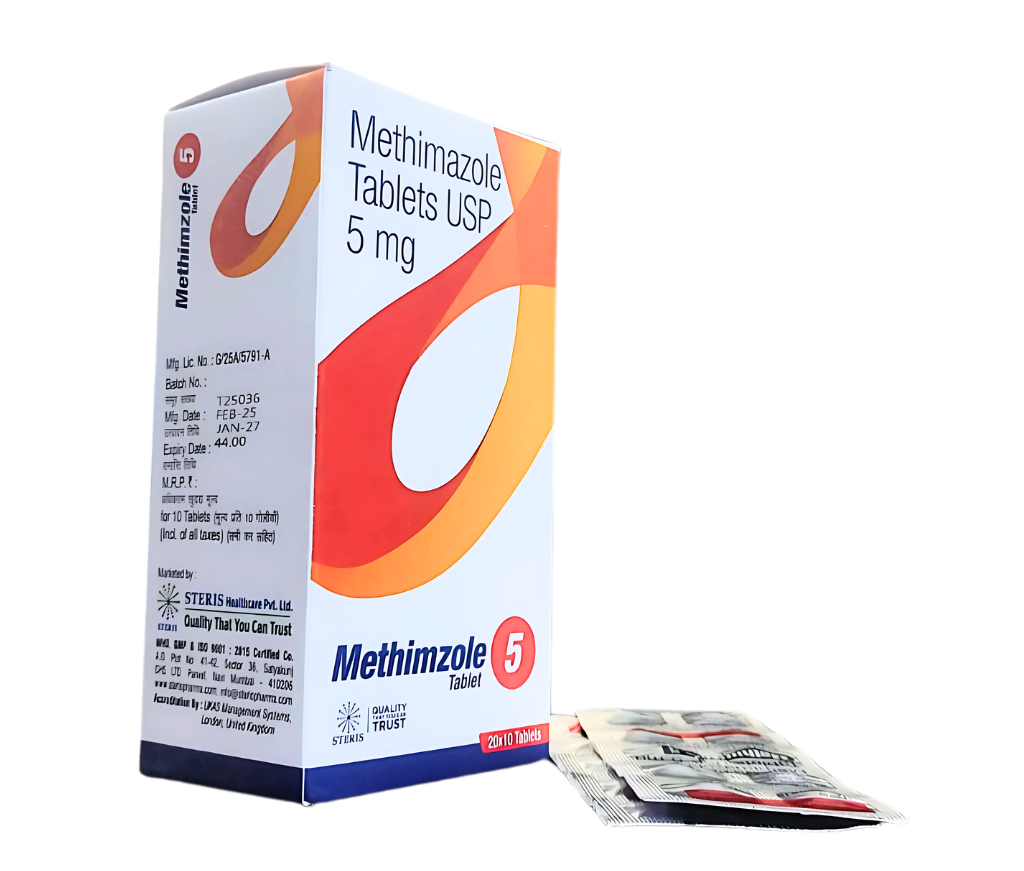


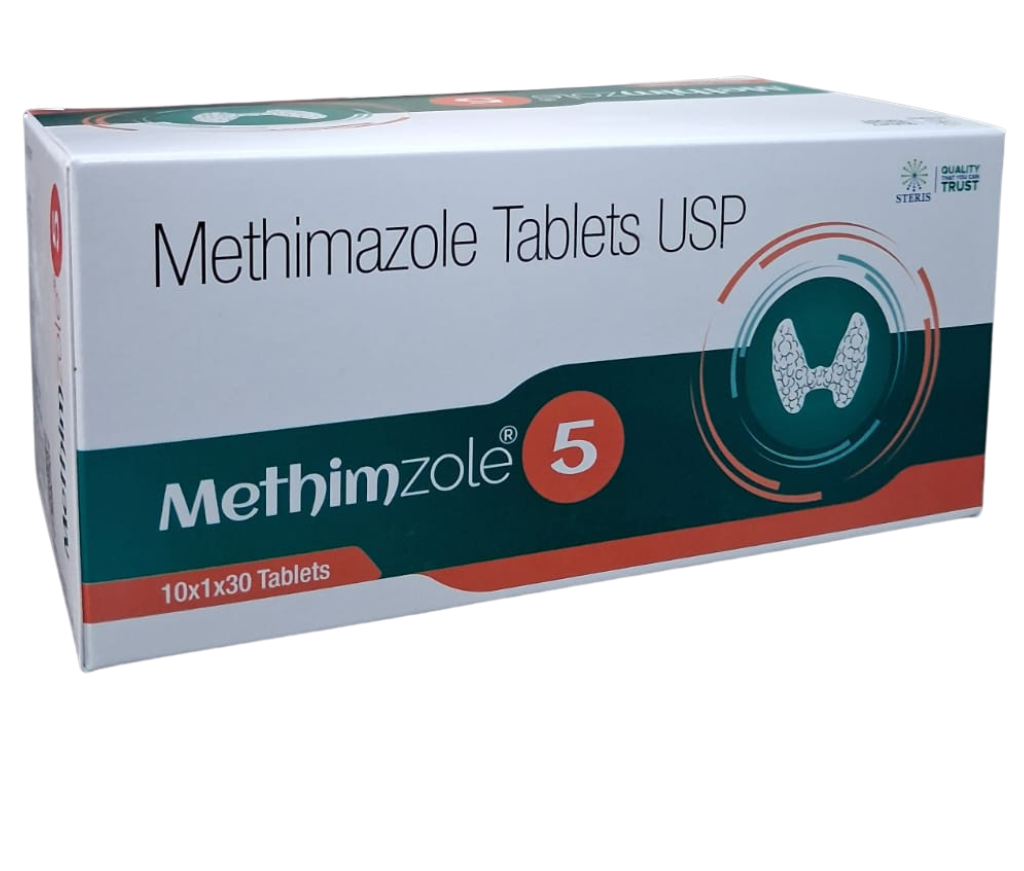


METHIMZOLE 5
 Item requires a valid prescription
Manufactured By Steris Healthcare Pvt Ltd
Composition Methimazole (5mg)
Rs 94.50
MRP Rs 135.00
(30% OFF)
Includes all taxes
Package SIZE
( For 30Tablet )

100% Authentic
Products

Free
Shipping*

Products
Return Policy
Description:
Methimazole 5mg is a prescription antithyroid medicine used to control hyperthyroidism, a condition in which the thyroid gland produces too much thyroid hormone. It is commonly used for conditions such as Graves' disease and, in appropriate patients, toxic multinodular goiter. Methimazole may also be prescribed to control hyperthyroidism before thyroid surgery or radioactive iodine treatment.
If you are searching for methimazole 5mg for sale, its uses, benefits, dosage, or side effects, it is important to understand that the correct dose depends on thyroid hormone levels, the underlying thyroid condition, treatment response, and medical history. Methimazole 5mg is not automatically the appropriate dose for every person with hyperthyroidism.
This guide explains what methimazole 5mg is, how it works, its potential benefits, common and serious side effects, dosage considerations, precautions, pregnancy information, and frequently searched questions.
Product Information
| Product Detail | Information |
|---|---|
| Brand Name | METHIMZOLE 5 |
| Composition | Methimazole 5 mg |
| Product Form | Tablet |
| Pack Size | 30 Tablets |
| Manufacturer/Marketer | Steris Healthcare Pvt. Ltd. |
| Target Market | India |
| Therapeutic Category | Antithyroid Medicine |
| Active Ingredient | Methimazole |
| Strength | 5 mg |
| Indication | Hyperthyroidism and other thyroid conditions as prescribed by a healthcare professional |
| Route of Administration | Oral |
| Prescription Status | Prescription medicine |
| Storage | Store as directed on the product label, away from excessive heat and moisture |
| Suitable For | Use only in patients for whom methimazole has been prescribed |
| Key Purpose | Helps reduce the production of excessive thyroid hormones |
What Is Methimazole 5mg?
Methimazole 5mg is an oral tablet containing 5 milligrams of methimazole, an antithyroid drug. It works by inhibiting the thyroid gland's production of new thyroid hormones. It does not immediately remove thyroid hormone that has already been produced and stored in the body, so improvement develops as hormone production decreases.
The 5mg strength is one available tablet strength. Current U.S. prescribing information lists methimazole tablets in 5mg and 10mg strengths. The exact tablet appearance and inactive ingredients can vary by manufacturer, so patients should verify the product against their prescription and pharmacy label.
What Is Methimazole 5mg Used For?
The primary purpose of methimazole is to reduce excessive thyroid hormone production.
1. Graves' disease: Graves' disease is an autoimmune condition that can cause the thyroid gland to become overactive. Methimazole can be used to control hyperthyroidism caused by Graves' disease. Antithyroid medicines are one of the established treatment approaches for Graves' disease.
2. Toxic multinodular goiter: Methimazole may be used for hyperthyroidism associated with toxic multinodular goiter when surgery or radioactive iodine is not an appropriate treatment option, or when medication is being used to control the condition around definitive treatment.
3. Preparing for thyroid treatment: Methimazole can be used to help control hyperthyroidism before thyroidectomy or radioactive iodine therapy. Controlling excessive thyroid hormone before certain procedures can be an important part of the treatment plan.
How Does Methimazole 5mg Work?
Methimazole works by blocking the synthesis of thyroid hormones within the thyroid gland. This reduces the production of new thyroid hormones and helps bring excessive thyroid hormone levels toward the desired range.
Because methimazole does not deactivate thyroid hormone that is already stored or circulating, symptom improvement and normalization of laboratory results are not necessarily immediate.
Doctors typically use thyroid blood tests and the patient's symptoms to determine whether treatment is working and whether the dose should be adjusted.
Key Benefits
When appropriately prescribed, potential benefits of methimazole treatment include:
-
Helping reduce excessive thyroid hormone production
-
Helping control symptoms associated with hyperthyroidism
-
Providing a nonsurgical medication option for appropriate patients
-
Helping stabilize thyroid function before thyroid surgery or radioactive iodine treatment
-
Allowing some patients with Graves' disease to pursue a course of antithyroid drug treatment with the possibility of remission
The American Thyroid Association notes that antithyroid medicines can effectively control hyperthyroidism, and a course of antithyroid drug treatment can result in prolonged remission in a proportion of people with Graves' disease.
However, methimazole does not guarantee remission or cure. Treatment duration and the likelihood of remission vary between patients and depend on the cause and characteristics of the hyperthyroidism.
Common Side Effects
Many people tolerate methimazole, but side effects can occur.
Reported adverse effects include:
-
Skin rash
-
Hives
-
Nausea
-
Vomiting
-
Stomach discomfort
-
Joint pain
-
Headache
-
Itching
-
Drowsiness
-
Hair loss or changes in hair
-
Muscle aches
-
Changes in taste
The current prescribing information lists these among the minor adverse reactions associated with methimazole.
A mild rash does not necessarily mean a dangerous reaction, but any new or worsening reaction should be discussed with a healthcare professional because some adverse reactions can be serious.
Frequently Asked Questions
1. What is methimazole 5mg used for?
Methimazole 5mg is an antithyroid medicine used to reduce excessive thyroid hormone production in hyperthyroidism, including Graves' disease and selected cases of toxic multinodular goiter.
2. Is methimazole 5mg a low dose?
Five milligrams can be a maintenance dose for some patients, but the appropriate dose depends on the severity of hyperthyroidism and thyroid-function results.
3. How does methimazole 5mg work?
It blocks the thyroid gland from making new thyroid hormones, helping reduce excessive thyroid hormone production.
4. How long does methimazole 5mg take to work?
Methimazole begins reducing new thyroid hormone production, but symptoms and blood-test results generally do not normalize instantly because previously produced thyroid hormone remains in the body.
5. Can methimazole 5mg treat Graves' disease?
Yes. Methimazole is an established antithyroid treatment for Graves' disease in appropriate patients.
6. Can methimazole 5mg cure hyperthyroidism?
It can control hyperthyroidism and may lead to remission in some people with Graves' disease, but it does not guarantee a permanent cure.
7. What are the common side effects of methimazole 5mg?
Commonly reported reactions include rash, hives, nausea, vomiting, stomach discomfort, joint pain, headache, itching, and other minor reactions.
8. What is the most serious side effect of methimazole?
Important rare risks include agranulocytosis, liver injury, aplastic anemia, and vasculitis. Agranulocytosis can become life-threatening because it severely reduces infection-fighting white blood cells.
9. Can methimazole 5mg cause a sore throat?
A sore throat can occur for many reasons, but a fever or severe sore throat while taking methimazole can be a warning sign of agranulocytosis and requires prompt medical evaluation.
10. Can methimazole 5mg affect the liver?
Yes. Rare liver injury has been reported. Yellow skin or eyes, dark urine, itching, appetite loss, or upper-right abdominal pain should be evaluated promptly.
11. Can methimazole 5mg cause weight gain?
As hyperthyroidism comes under control, weight may change because the body's metabolism is returning toward a normal state. Weight change should be discussed with your clinician rather than used to adjust the methimazole dose yourself.
12. Can I take methimazole 5mg during pregnancy?
Pregnancy requires individualized medical advice. Methimazole has specific fetal risks during the first trimester, and another antithyroid medicine may be preferred during that period.
13. Can I take methimazole 5mg while breastfeeding?
Methimazole passes into breast milk, but available evidence in the prescribing information describes breastfeeding experience without demonstrated clinical effects in studied infants. Thyroid function monitoring may be recommended. Discuss the dose and monitoring plan with your clinician.
14. Should methimazole 5mg be taken with food?
Follow the instructions provided with your specific prescription and product. If you have questions about whether your dose should be taken with food, ask your pharmacist.
15. Can I stop methimazole 5mg when I feel better?
No. Feeling better does not necessarily mean that hyperthyroidism has resolved. Stopping treatment without medical guidance can allow thyroid hormone levels to rise again.
Available Substitutes