


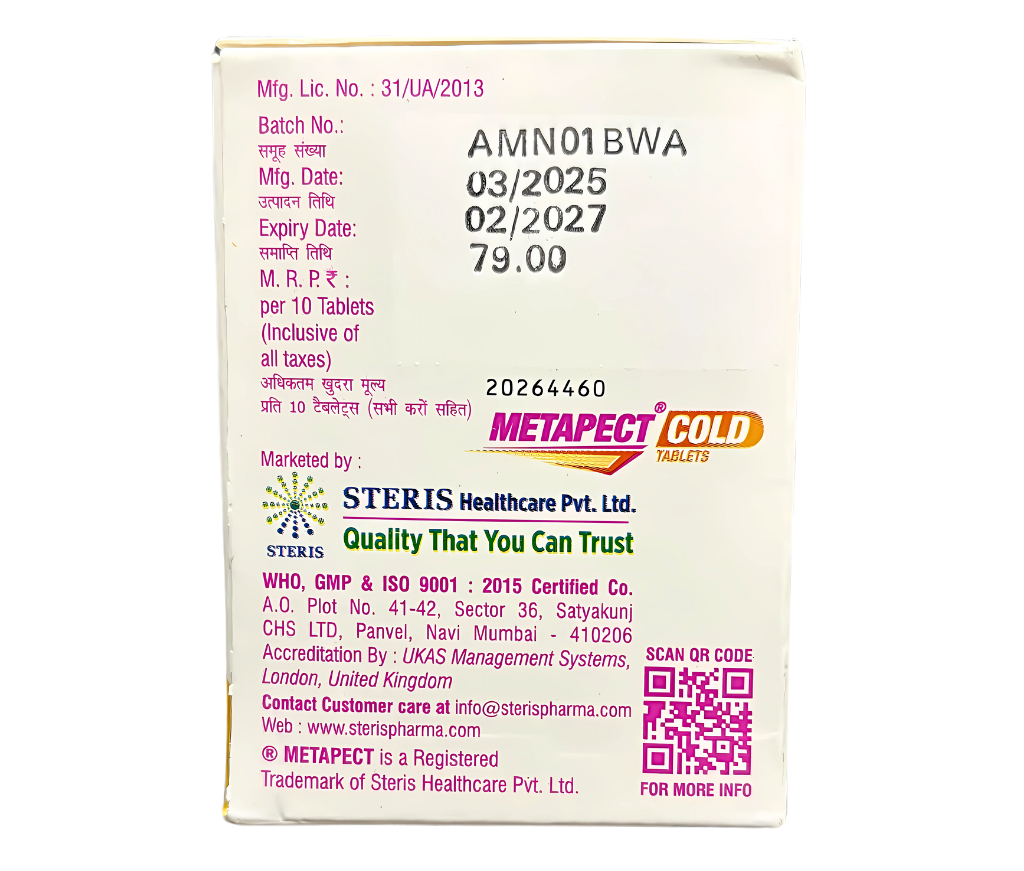
METAPECT COLD
 Item requires a valid prescription
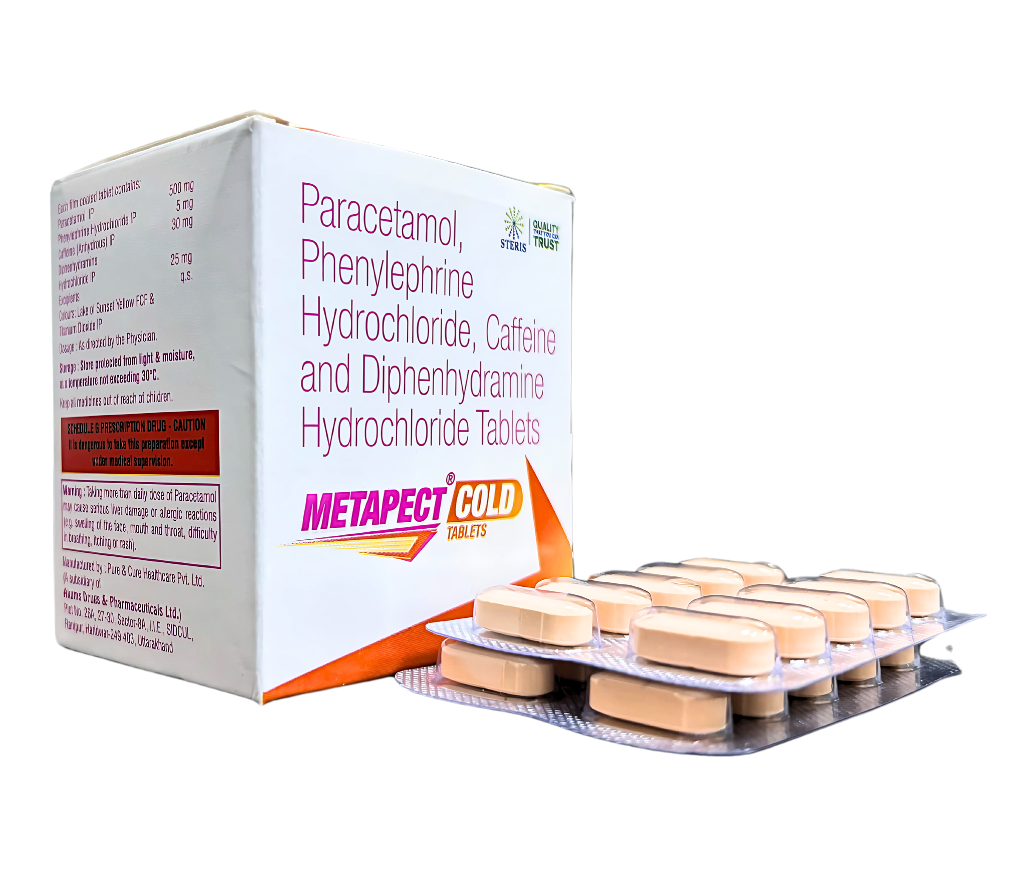
Manufactured By Steris Healthcare Pvt Ltd
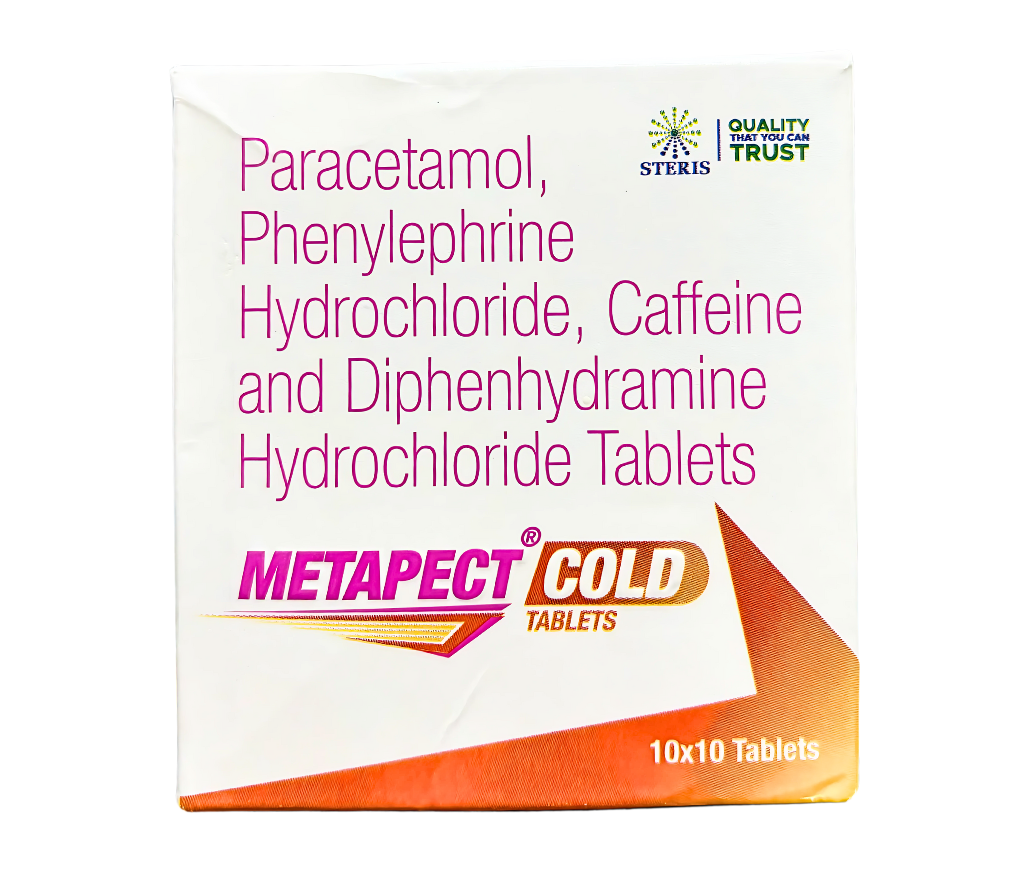
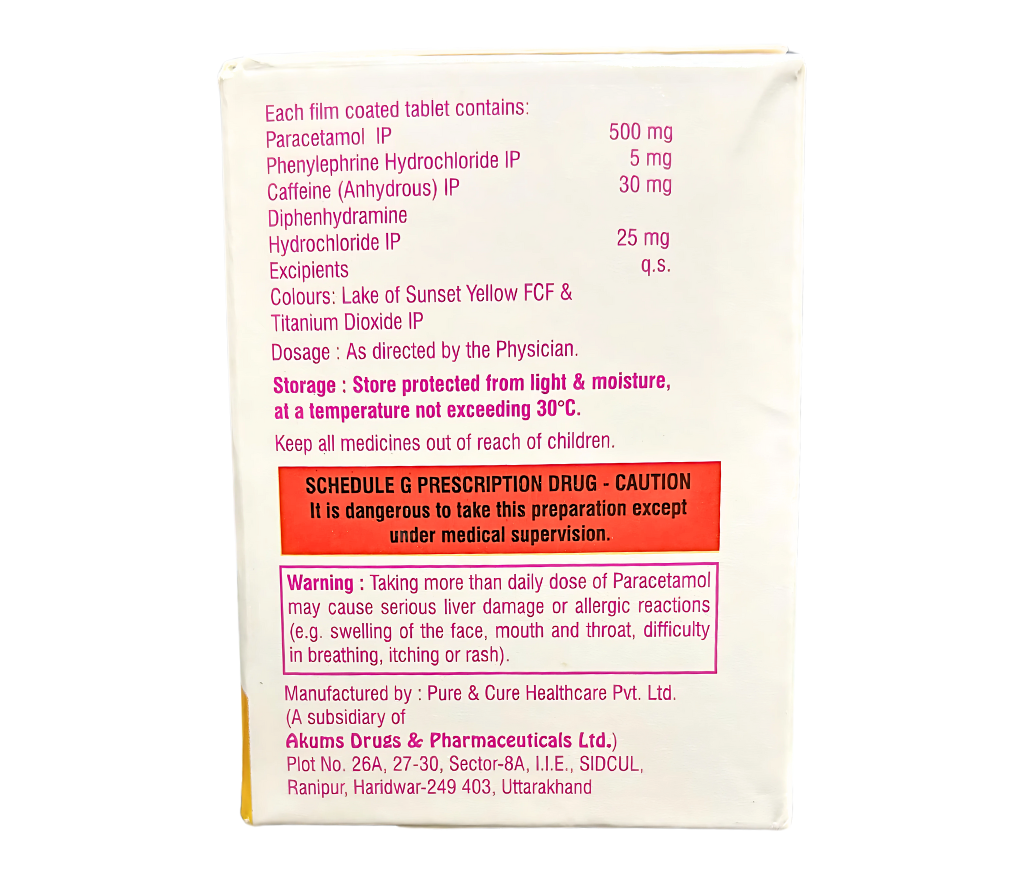
Composition Paracetamol , Phenylephrine Hydrochloride, Caffeine , Diphenhydramine Hydrochloride
Rs 56.70
MRP Rs 81.00
(30% OFF)
Includes all taxes
Package SIZE
( For 10 Tablets )

100% Authentic
Products

Free
Shipping*

Products
Return Policy
Description:
A cold rarely causes just one symptom. You may wake up with a fever, a pounding head, a blocked nose and non-stop sneezing at the same time. A single-ingredient medicine treats one of these. A multi-symptom combination tablet targets several at once, which is why paracetamol, phenylephrine, caffeine and diphenhydramine have been marketed together in India for years under many brand names.
Each ingredient has a defined job:
- Paracetamol lowers fever and eases mild-to-moderate pain such as headache and body ache.
- Phenylephrine Hydrochloride is a decongestant intended to narrow swollen blood vessels in the nasal lining.
- Caffeine is a mild stimulant that may help offset the drowsiness caused by the antihistamine and can enhance the pain-relieving effect of paracetamol in headache.
- Diphenhydramine Hydrochloride blocks histamine, reducing sneezing, itching, watery eyes and runny nose.
How Does It Work?
Paracetamol acts mainly in the brain, reducing the production of prostaglandins that raise body temperature and amplify pain signals. It has little anti-inflammatory action, which is why it is gentler on the stomach than NSAIDs.
Phenylephrine is an alpha-1 adrenergic agonist. In theory it constricts the blood vessels of the nasal mucosa, reducing swelling and congestion.
Caffeine blocks adenosine receptors in the central nervous system, increasing alertness and counteracting sedation.
Diphenhydramine is a first-generation H1 antihistamine. It competes with histamine at H1 receptors, and it also has anticholinergic and sedating effects, which explains the dry mouth and drowsiness many people feel.
Key Benefits
- Multi-symptom relief in one tablet. Fever, headache, body ache, blocked nose and sneezing can be addressed together, which simplifies the dosing schedule.
- Fast, familiar ingredients. Paracetamol and diphenhydramine are long-established, widely used molecules with decades of clinical experience.
- Helps with allergy-type cold symptoms. The antihistamine component is useful when sneezing, itching and watery eyes dominate.
- Caffeine may reduce the "foggy" feeling. It is added to balance the sedating effect of diphenhydramine for some patients, though it does not eliminate drowsiness.
- Convenient and cost-effective. One tablet replaces several separate medicines, which can improve adherence during a short illness.
- Manufactured to quality standards. Steris Healthcare Pvt. Ltd. produces under WHO-GMP and ISO-certified systems. [Batch-level quality claims: placeholder pending QA sign-off.]
Important Regulatory Note on Phenylephrine
Healthcare professionals and informed buyers increasingly ask about phenylephrine. In November 2024 the US FDA proposed removing oral phenylephrine from its OTC monograph for nasal decongestants, because its review found no clinical data showing oral phenylephrine works as a decongestant at the labelled doses. The FDA also stated it identified very few serious side effects when taken as directed and that its action did not apply to nasal spray forms. Until a final order is issued, products containing oral phenylephrine could continue to be marketed in the US. [REVIEWER: verify whether a final FDA order has been issued as of publication date.]
In India, CDSCO has previously allowed continued manufacture of certain pre-1988 fixed-dose combinations, including Paracetamol + Phenylephrine + Caffeine, with conditions. [REVIEWER: confirm the licensing position of the four-drug combination that includes diphenhydramine
Dosage and How to Take
Use only as directed by your doctor or as printed on the pack. The following is general guidance, [REVIEWER to confirm against final approved label]:
- Adults: commonly one tablet, up to two to three times a day, with water, preferably after food.
- Do not exceed the maximum daily dose of paracetamol from all sources. For healthy adults the general ceiling is 4 g per day, and many clinicians advise staying lower.
- Leave at least 4–6 hours between doses.
- Do not use it with any other paracetamol, cold or flu product.
- Missed a dose? Take it when remembered unless the next dose is near. Never double up.
- Swallow whole; do not crush unless the label allows.
Side Effects
Most people tolerate short courses well. Side effects are mostly linked to diphenhydramine, phenylephrine and caffeine.
Common side effects
- Drowsiness, dizziness, reduced alertness
- Dry mouth, nose or throat
- Nausea or stomach upset
- Nervousness, restlessness or trouble sleeping (caffeine, phenylephrine)
- Mild headache or fast heartbeat
Less common but important
- Blurred vision, difficulty passing urine
- Rise in blood pressure or palpitations
- Constipation
Serious – stop the tablet and seek medical help immediately if you notice
- Skin rash, swelling of face or lips, breathing difficulty
- Yellowing of eyes or skin, dark urine, severe abdominal pain (possible liver injury, particularly with paracetamol overdose)
- Chest pain, irregular heartbeat, severe headache or confusion
Precautions and Who Should Be Careful
- Liver disease and alcohol use: paracetamol overdose can damage the liver. Avoid alcohol with this tablet.
- High blood pressure, heart disease, thyroid disorders, diabetes: phenylephrine and caffeine can aggravate these. Ask your doctor first.
- Glaucoma, enlarged prostate, urinary retention: diphenhydramine may worsen these.
- Asthma and COPD: antihistamines can thicken secretions in some patients.
- Pregnancy and breastfeeding: use only if your doctor judges the benefit outweighs the risk.
- Children: combination cold medicines are generally not suitable for young children. Do not give it to a child unless a doctor prescribes it. Indian regulators have restricted certain cold-remedy combinations in young children.
- Older adults: more prone to confusion, dizziness, falls and urinary problems from diphenhydramine.
- Drug interactions: avoid with MAO inhibitors, sedatives, sleeping pills, other antihistamines, blood pressure medicines without advice, and other products with paracetamol or caffeine.
- Driving and machinery: avoid until you know how the tablet affects you.
What to Check Before You Buy
If you are comparing brands or placing a trade order, check these points:
- Composition and strengths on the strip match your doctor's prescription (for example, 325 mg vs 500 mg paracetamol).
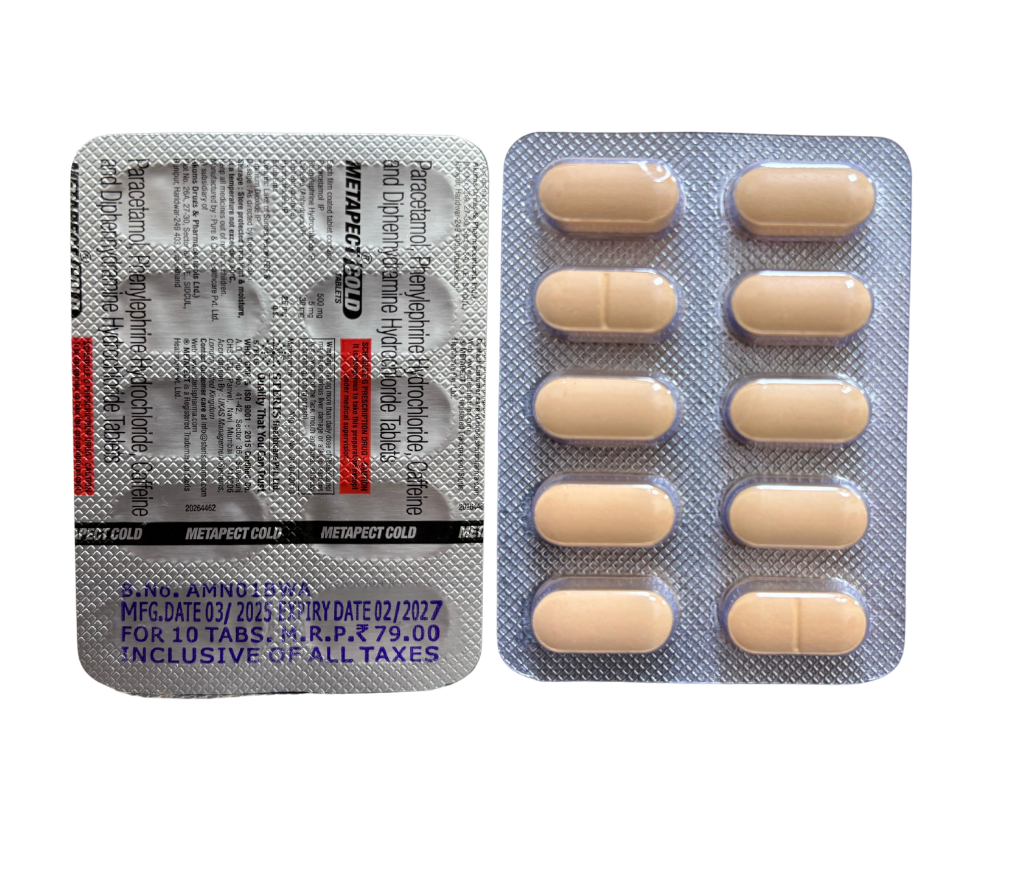
- Manufacturer details, batch number, manufacturing and expiry dates.
- Licence and schedule information printed on the label.
- Storage: store below 30°C in a cool, dry place away from light.
- Price and availability: prices differ by brand and pack size.
- Genuine channel: buy from a licensed pharmacy or directly from the manufacturer.
Conclusion
The Paracetamol, Phenylephrine Hydrochloride, Caffeine and Diphenhydramine Hydrochloride tablet is a convenient multi-symptom option for short-term relief from cold and flu, covering fever, pain, sneezing and a runny nose in one dose. Its strengths are well-known ingredients, simple dosing and affordability. Its limits are just as important: drowsiness from diphenhydramine, the questionable decongestant effect of oral phenylephrine highlighted by recent FDA review, and the risk of paracetamol overdose when combined with other medicines. Use the lowest effective dose for the shortest time, read the label, and consult a doctor or pharmacist if you have an existing condition or take other medicines.
Frequently Asked Questions
1. What is the Paracetamol, Phenylephrine, Caffeine and Diphenhydramine tablet used for?
It is used for short-term relief of cold and flu symptoms such as fever, headache, body ache, blocked nose, sneezing, runny nose and watery eyes, including allergic rhinitis-type symptoms.
2. What is paracetamol 500 mg + phenylephrine 5 mg + caffeine 30 mg + diphenhydramine 25 mg used for?
This commonly marketed strength combination is used to relieve symptoms of common cold, flu and allergies. Paracetamol treats fever and pain, phenylephrine targets congestion, caffeine offsets drowsiness and diphenhydramine controls sneezing and runny nose. [Confirm Steris strength.]
3. What are the common side effects of this tablet?
Drowsiness, dizziness, dry mouth, nausea, nervousness, trouble sleeping and a faster heartbeat are the most common. They usually settle after the course ends.
4. Is this tablet a sleeping pill?
No. It is a cold and flu medicine. However, diphenhydramine is sedating, so many people feel sleepy. It should not be taken just to induce sleep.
5. Will it make me drowsy even though it contains caffeine?
Yes, it can. Caffeine may reduce but does not cancel the sedating effect of diphenhydramine. Avoid driving or operating machinery until you know how you respond.
6. How long does it take to work?
Paracetamol and diphenhydramine usually begin to work within about 30 to 60 minutes of an oral dose, and relief lasts several hours. Individual response varies.
7. How many times a day can I take it?
Follow the label or your doctor's prescription. It is commonly taken up to two to three times daily with a gap of at least 4–6 hours. Never exceed the daily paracetamol limit from all sources.
8. Can I take this tablet every day?
It is meant for short-term use during a cold or flu. If symptoms last more than a few days, see a doctor rather than continuing daily use.
9. Is it safe for people with high blood pressure or heart disease?
Phenylephrine and caffeine can raise blood pressure and heart rate. People with hypertension, heart disease or thyroid problems should take it only on a doctor's advice.
10. Is it safe for the liver and kidneys?
At recommended doses, paracetamol is generally safe for the liver, but overdose can cause serious liver damage. Alcohol and other paracetamol products increase the risk. People with liver or kidney disease should check with a doctor first.
11. Can I drink alcohol while taking it?
No. Alcohol increases drowsiness and raises the risk of liver injury with paracetamol.
12. Can I take it with antibiotics or other medicines?
Many antibiotics can be taken alongside it, but always tell your doctor or pharmacist about every medicine you use, especially sedatives, MAO inhibitors, blood pressure drugs and other cold remedies.
13. Is it safe for children?
Combination cold medicines are generally not recommended for young children. Give it to a child only if a doctor prescribes it with age- and weight-appropriate dosing.
14. Can pregnant or breastfeeding women take it?
Only if their doctor decides the benefit outweighs the risk. Several ingredients pass into breast milk or need caution in pregnancy.
15. Does phenylephrine really work as a decongestant?
The US FDA's 2024 proposal concluded that oral phenylephrine is not effective as a nasal decongestant, though it found few serious safety concerns.
16. What is the difference between this and a plain paracetamol tablet?
Plain paracetamol only treats fever and pain. This combination also addresses congestion and allergy symptoms but adds more side-effect potential, so it suits multi-symptom colds rather than fever alone.
17. Does it need a prescription?
Status depends on the brand's licence and schedule. [PLACEHOLDER – confirm for Steris product.] Consult your doctor if unsure.
18. What is the price and where can I buy it?
Prices vary by brand and pack. Retail brands of this combination are commonly sold in packs of 10 tablets. For Steris Healthcare pricing and supply, use the "Check Price" option or contact the team below.
19. How should I store the tablets?
Keep below 30°C in a cool, dry place, away from light and out of children's reach. Do not use after the expiry date.
20. When should I see a doctor instead?
See a doctor if fever lasts more than 3 days, symptoms worsen, you have breathing difficulty, chest pain, severe headache, or you notice rash, jaundice or swelling.