

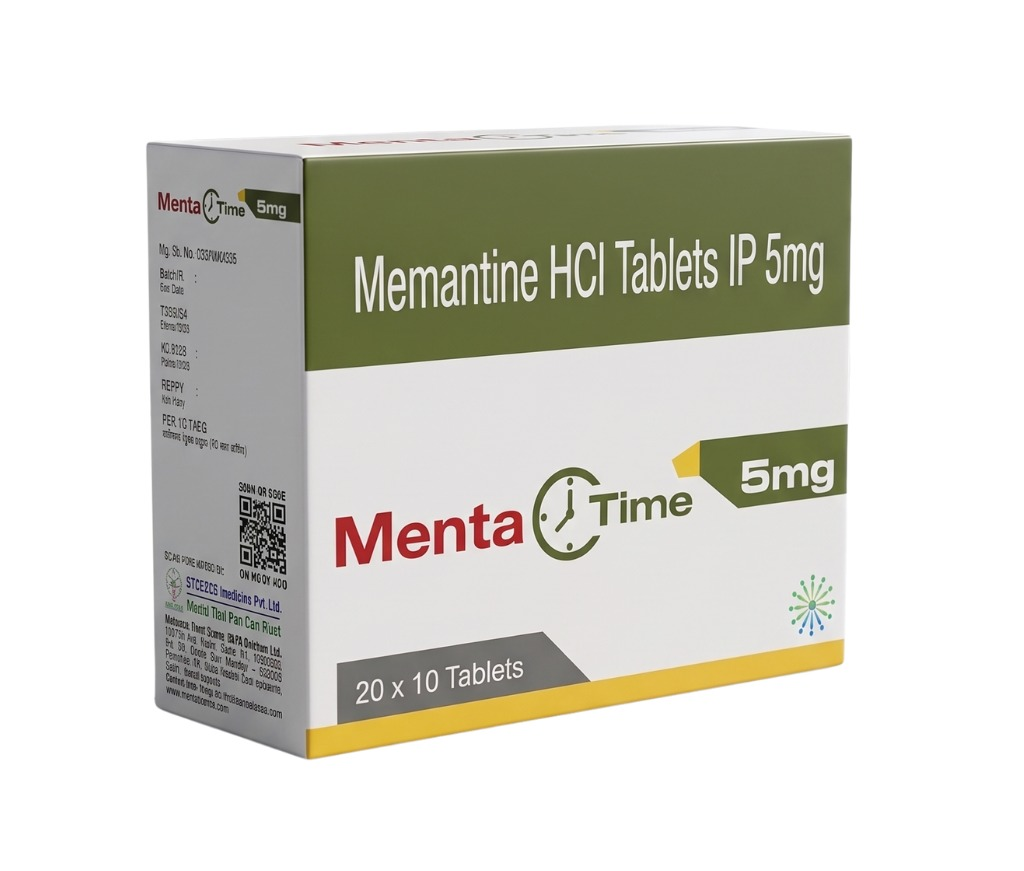
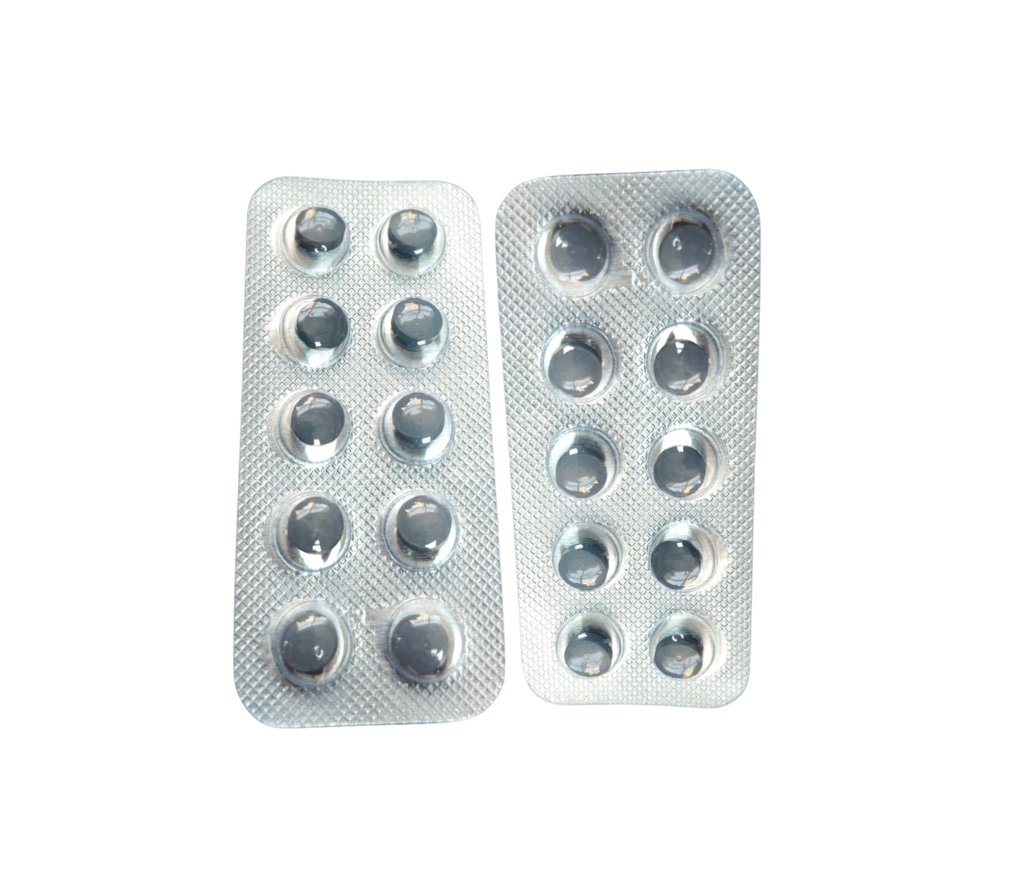
MENTATIME 5
 Item requires a valid prescription
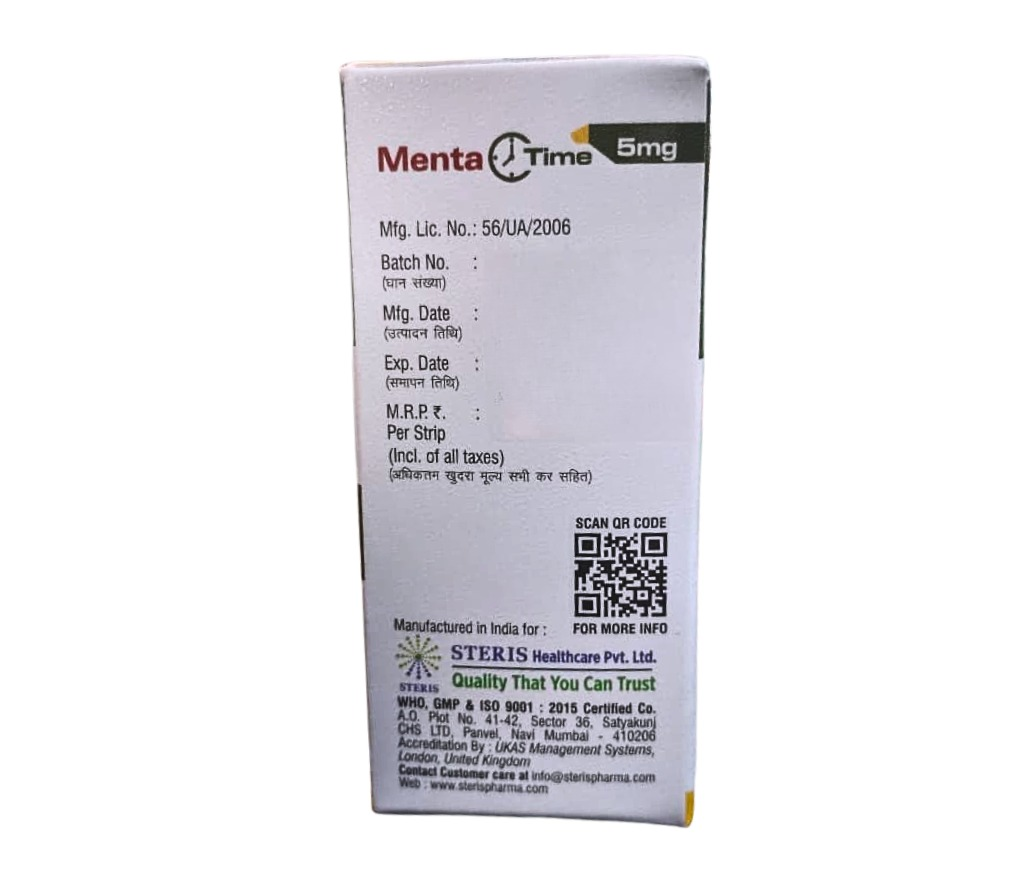
Manufactured By Steris Healthcare Pvt Ltd
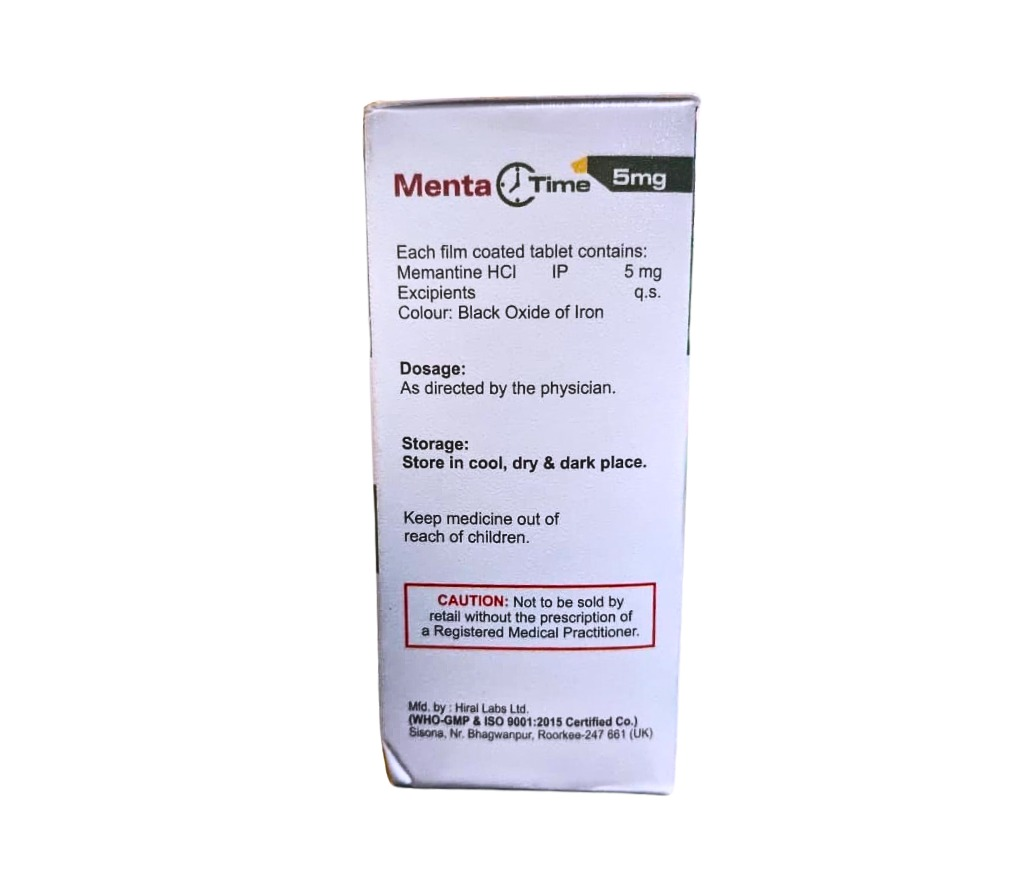
Composition Memantine (5mg)
Rs 54.80
MRP Rs 78.28
(30% OFF)
Includes all taxes
Package SIZE
( For 10 Tablet )

100% Authentic
Products

Free
Shipping*

Products
Return Policy
Description:
MENTATIME 5 is a prescription tablet for cognitive symptoms in dementia. Each tablet contains memantine 5 mg. Steris Healthcare Pvt. Ltd., a WHO-GMP and ISO 9001-certified pharmaceutical manufacturer based in Jaipur, Rajasthan, makes and markets it.
In Alzheimer's disease, brain cells are exposed to too much of the chemical messenger glutamate. Persistent overstimulation of the NMDA receptors by glutamate is believed to damage nerve cells and disturb memory and learning. Memantine partially blocks these receptors, so it reduces the "noise" caused by excess glutamate. At the same time, it lets the normal, needed signals for memory and learning get through.
Memantine does not cure Alzheimer's disease and does not stop it progressing. It helps manage symptoms such as memory loss, confusion, reduced thinking ability and difficulty with daily tasks. Doctors sometimes combine it with a cholinesterase inhibitor such as donepezil in moderate to severe disease.
Product Information
|
|---|
Why Is Memantine Important?
Alzheimer's disease and related dementias are becoming more common as India's population ages. Families often see the first signs as forgetting recent conversations, misplacing things, getting lost in familiar places or struggling with simple tasks. Memantine matters for these reasons.
- Acts on a different pathway. Most anti-dementia medicines boost acetylcholine. Memantine protects against glutamate overactivity, so it adds a distinct mechanism for moderate to severe stages.
- Helps preserve daily function. Better attention and thinking can help patients hold on to independence, such as dressing, eating and recognising family, for longer.
- Supports caregivers. Reduced agitation and confusion can ease the daily burden on family members.
- Flexible titration. The 5 mg strength lets the doctor start low and raise the dose slowly. This improves tolerability, particularly in older adults.
- Long clinical experience. Memantine has been used for many years, so its safety profile and monitoring needs are well understood.
Uses of MENTATIME 5
- Treatment of moderate to severe dementia of the Alzheimer's type
- Initial dose-titration therapy when starting memantine, as directed by the physician
- Used by specialists alongside a cholinesterase inhibitor in some patients
Key Benefits
- Improves cognition. It can help memory, attention and thinking ability in moderate to severe Alzheimer's disease.
- Supports daily activities. It may help patients keep up basic self-care for longer.
- Reduces behavioural symptoms. Some patients have less agitation and confusion.
- Gentle start. The 5 mg strength allows safe, gradual titration in elderly patients.
- Once-daily beginning. The starting schedule is simple for caregivers to manage.
- Convenient oral dosing. The tablet can be taken with or without food.
- Manufactured to quality standards. Steris Healthcare operates a WHO-GMP and ISO 9001 certified facility, with quality checks at each stage.
Precautions and Warnings
Do not use MENTATIME 5 if:
- You are allergic to memantine or any tablet ingredient.
Tell your doctor before starting if you have:
- Epilepsy, seizures or a history of convulsions. Memantine may increase seizure risk.
- Kidney problems. The dose usually needs reducing.
- Recent heart attack, heart failure or uncontrolled high blood pressure.
- Conditions that make urine less acidic (more alkaline). These include severe urinary tract infection, renal tubular acidosis and heavy use of antacids or urine-alkalinising medicines. They can slow memantine elimination and raise blood levels. Sudden major diet changes, such as a switch from a mixed diet to a strict vegetarian diet, can have the same effect.
- Liver problems.
Side Effects
Not everyone gets side effects. Common ones include:
- Dizziness
- Headache
- Constipation
- Drowsiness or tiredness
- Confusion
- High blood pressure
- Balance problems
Frequently Asked Questions
1. Where can I buy memantine 5 mg online?
Memantine 5 mg may be available through licensed pharmacies and authorized pharmaceutical suppliers. Always purchase medicines from a reliable source and verify the product details before use.
2. What is the price of memantine 5 mg?
The price of memantine 5 mg can vary depending on the manufacturer, brand, pack size, and seller. Check the current product listing or contact the supplier for the latest price.
3. Can I order memantine 5 mg online?
Yes, memantine 5 mg can be ordered online through licensed pharmacies where permitted. A valid prescription may be required before the medicine can be dispensed.
4. Is memantine 5 mg available from Steris Healthcare?
Availability of memantine 5 mg from Steris Healthcare may vary. Contact Steris Healthcare or check its current product listing to confirm availability, pack size, and ordering details.
5. What is memantine 5 mg used for?
Memantine 5 mg is a medicine used to help manage symptoms associated with moderate to severe Alzheimer's disease. It may help improve or maintain certain cognitive and daily functioning abilities in appropriate patients.
6. What is the composition of memantine 5 mg?
The active ingredient is memantine 5 mg. The complete formulation may also contain inactive ingredients, which can vary by manufacturer. Check the product packaging for the complete composition.
7. Is a prescription required for memantine 5 mg?
Yes, memantine 5 mg is a prescription medicine. It should be taken only under the supervision and advice of a qualified healthcare professional.
8. How should memantine 5 mg be taken?
Take memantine 5 mg exactly as prescribed by your doctor. The tablet should generally be taken with water and can be taken with or without food. Do not change the dose or stop treatment without consulting your doctor.
9. What should I know before buying memantine 5 mg?
Before buying memantine 5 mg, confirm the strength, dosage form, pack size, manufacturer, expiry date, and prescription requirements. Inform your doctor about other medicines you take and any kidney or other medical conditions.
10. How can I order memantine 5 mg online?
To order memantine 5 mg online, select a licensed pharmacy or authorized supplier, choose the prescribed strength and pack size, provide a valid prescription if required, and complete the supplier's ordering and payment process.
Available Substitutes