


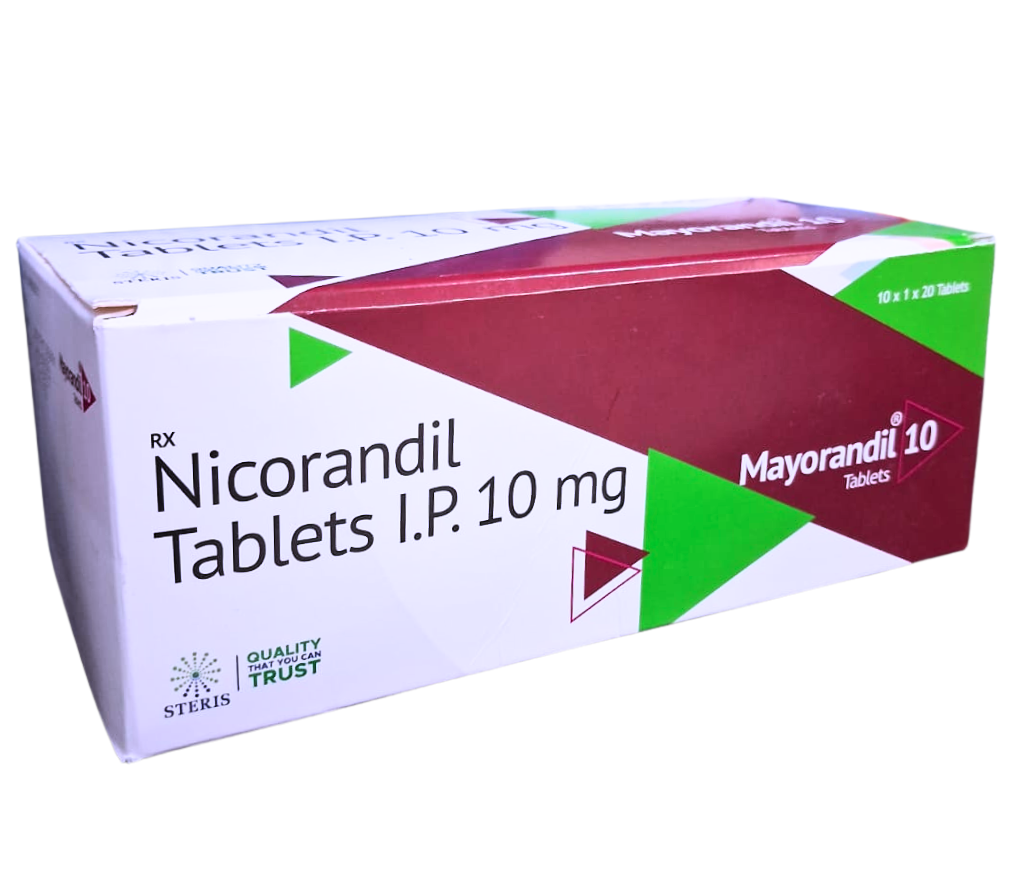
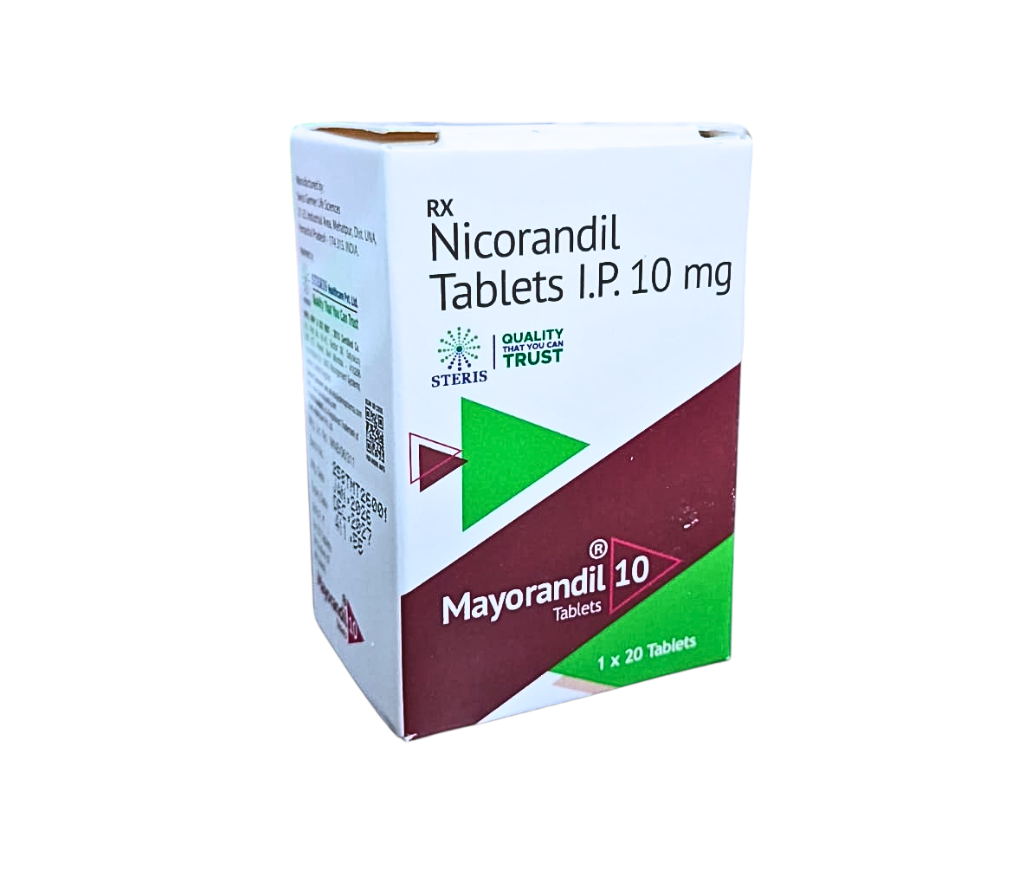
Nicorandil 10 | MAYORANDIL 10
 Item requires a valid prescription
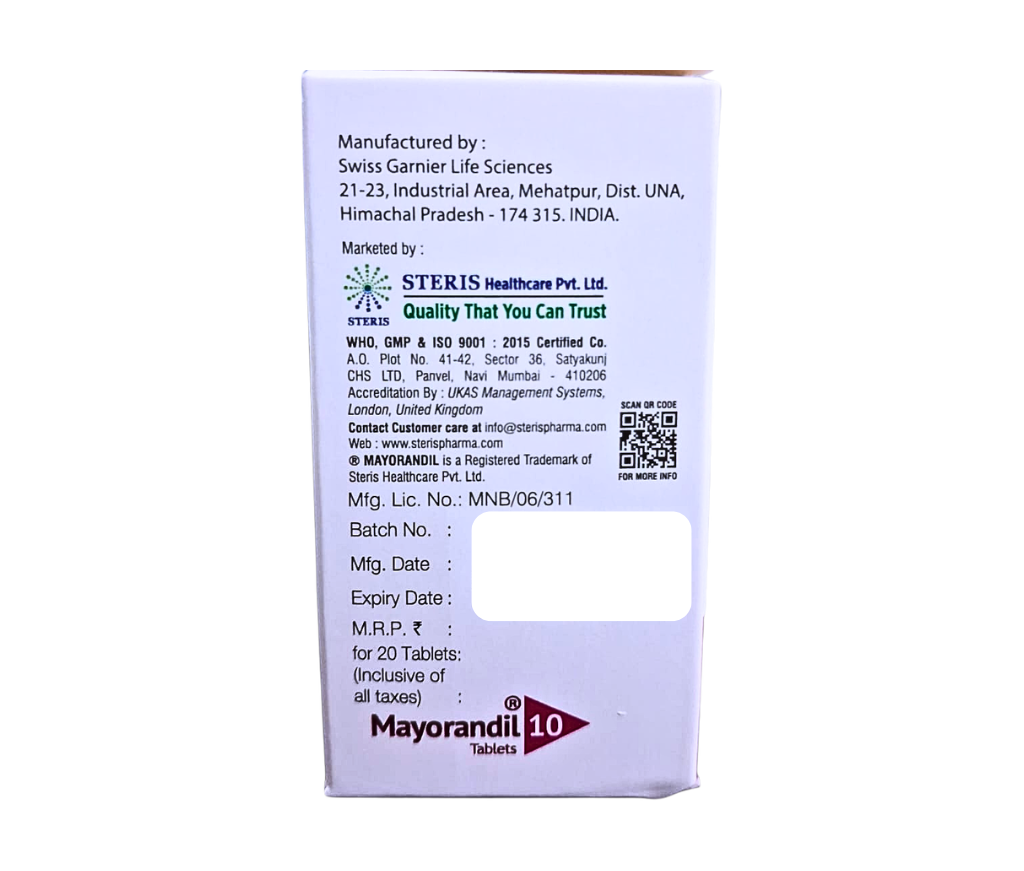
Manufactured By Steris Healthcare Pvt Ltd
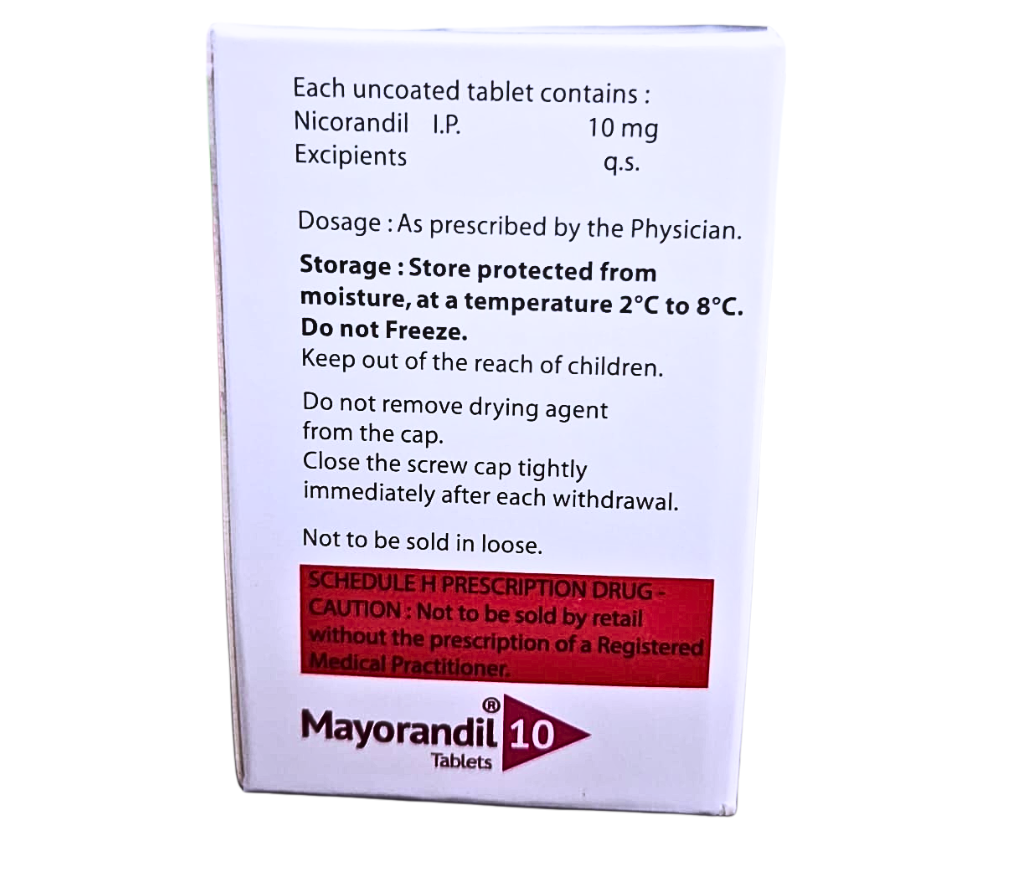
Composition Nicorandil 10mg
Rs 288.09
MRP Rs 411.55
(30% OFF)
Includes all taxes
Package SIZE
( For 20 Tablet )

100% Authentic
Products

Free
Shipping*

Products
Return Policy
Description:
Nicorandil is a prescription medicine used to prevent and manage stable angina (heart-related chest pain). It works through a unique dual mechanism—activating potassium (K-ATP) channels and donating nitric oxide—to widen both the coronary arteries and peripheral blood vessels, easing the heart's workload and improving oxygen supply to heart muscle. It is typically prescribed as a second-line option when beta-blockers or calcium channel blockers are not suitable, not tolerated, or insufficiently effective. Common side effects include headache, flushing, dizziness, and nausea; a rare but serious risk is ulceration of the mouth, skin, eyes, or gastrointestinal tract, which requires immediate medical attention. Nicorandil is not a calcium channel blocker and does not act as a blood thinner.
What Is Nicorandil?
Nicorandil is an oral anti-anginal drug belonging to a distinct pharmacological class known as potassium channel activators. Structurally, it is a hybrid molecule—it carries a nicotinamide (vitamin-like) backbone fused with a nitrate group, which is why it is sometimes described as having "nitrate-like" properties in addition to its potassium-channel activity. <cite index="2-1"> his dual mechanism of action decreases myocardial oxygen demand and increases supply</cite>. Because it combines two distinct vasodilating pathways in a single molecule, nicorandil is often referred to as a first-in-class or "hybrid" anti-anginal agent rather than a classic nitrate or classic calcium channel blocker.
It is primarily indicated for the symptomatic prevention and long-term management of stable angina pectoris, particularly in patients whose symptoms are not adequately controlled by first-line therapies, or who cannot tolerate beta-blockers or calcium channel blockers.
Clinical Indications
| Indication | Details |
|---|---|
| Chronic stable angina | First- or second-line prophylactic therapy to reduce frequency/severity of attacks |
| Angina intolerant to other agents | Used when beta-blockers or calcium antagonists are contraindicated or not tolerated |
| Adjunct in ischaemic heart disease | Sometimes used alongside other anti-anginals for combination therapy (physician discretion) |
Mechanism of Action: How Nicorandil Works
Nicorandil's effectiveness comes from its dual mechanism:
- Potassium channel activation (K-ATP channels): Nicorandil opens ATP-sensitive potassium channels in vascular smooth muscle. <cite index="1-1">This causes potassium ions to exit the cells, leading to hyperpolarization of the cell membrane</cite>, which in turn closes voltage-gated calcium channels and reduces calcium influx. The net effect is relaxation of smooth muscle and widening (dilation) of peripheral and coronary resistance arteries.
- Nitrate-like nitric oxide donation: The nitrate component of nicorandil raises intracellular cyclic GMP levels, primarily dilating larger coronary and venous vessels — similar to how conventional nitrates work—reducing the heart's preload.
Together, these two actions <cite index="7-1">increase coronary blood flow, decrease coronary vascular resistance, improve myocardial oxygen supply, and reduce cardiac preload and afterload</cite>. Research also points to a cytoprotective, "preconditioning-like" effect—the K+ ATP channel has been shown to be involved in the phenomenon of myocardial preconditioning</cite>, meaning nicorandil may help protect heart tissue during episodes of reduced blood flow, beyond simply relieving symptoms.
Key Benefits of Nicorandil
- Dual-action vasodilation — widens both coronary and peripheral vessels through two independent mechanisms, offering broader hemodynamic coverage than single-mechanism anti-anginals
- Reduces frequency and severity of angina attacks by improving the oxygen supply-demand balance in heart muscle
- Cardioprotective potential—potassium channel activation may mimic ischaemic preconditioning, helping protect heart cells during low-oxygen episodes
- Useful second-line option for patients who cannot tolerate or are not adequately controlled by beta-blockers or calcium channel blockers
- No significant tolerance development reported with long-term nitrate-type dosing, unlike some conventional nitrates
- Investigated renal-protective role in patients undergoing coronary procedures—Nicorandil significantly reduced the incidence of contrast-induced nephropathy compared to control group</cite> in pooled clinical trial data, though this remains an area of ongoing research rather than an approved indication
Dosage Guidelines
Nicorandil is typically administered orally in divided doses, generally started at a lower strength and titrated based on response and tolerability, as directed by a cardiologist or physician.
- Administration: Taken orally, usually twice daily, with or without food, as advised by the prescribing doctor
- Titration: Dose is individualized; therapy is often initiated conservatively and adjusted based on symptom control and tolerability, particularly for headache (a common initial side effect)
- Important: Nicorandil tablets are preventive, not a rescue treatment—Nicorandil tablets do not relieve pain during an angina attack</cite>; a fast-acting sublingual nitrate (GTN) should be used for acute attacks, per the prescribing doctor's instructions
- Missed dose: Take as soon as remembered unless close to the next dose; do not double the dose
- Discontinuation: Should not be stopped abruptly without medical guidance
Side Effects of Nicorandil
Common Side Effects
- Headache (most frequently reported, especially at treatment initiation)
- Flushing
- Dizziness
- Nausea
- Palpitations
Serious Side Effects — Seek Medical Attention Immediately
- Mouth, skin, eye, or gastrointestinal ulceration — a rare but well-documented, dose-related risk. <cite index="12-1">Nicorandil can cause serious skin, mucosal, and eye ulceration, including gastrointestinal ulcers, which may progress to perforation, haemorrhage, fistula, or abscess</cite>. Ulcers can appear at any point during treatment, including years after starting.
- Gastrointestinal perforation or bleeding, particularly in patients with diverticular disease or those also taking corticosteroids
- Corneal or conjunctival ulcers — <cite index="11-1">very rare conjunctivitis, conjunctival ulcer and corneal ulcer have been reported with nicorandil; patients should be advised of the signs and symptoms and monitored closely</cite>
- Hyperkalemia (elevated blood potassium), particularly in patients with kidney impairment
- Significant drop in blood pressure, especially when combined with other blood-pressure-lowering medicines
Substitutes & Comparable Anti-Anginal Options
| Drug Class | Example Molecules | How It Compares to Nicorandil |
|---|---|---|
| Potassium channel activator (this class) | Nicorandil | Dual mechanism; second-line option; ulceration risk unique to this class |
| Nitrates | Isosorbide mononitrate, Glyceryl trinitrate (GTN) | Venodilation-predominant; tolerance can develop with continuous use; GTN used for acute attacks, not prevention |
| Beta-blockers | Metoprolol, Bisoprolol | Reduce heart rate/contractility; first-line in most guidelines; different side-effect profile (fatigue, bradycardia) |
| Calcium channel blockers | Amlodipine, Diltiazem | Block calcium entry directly into vascular/cardiac cells; first-line alternative; nicorandil is NOT in this class despite a related downstream effect |
| If-channel inhibitor | Ivabradine | Heart-rate lowering without effect on blood pressure; used when beta-blockers are contraindicated |
Precautions & Contraindications
- Not recommended in patients with acute pulmonary oedema or cardiogenic shock
- Use with caution in patients with diverticular disease — elevated risk of gastrointestinal complications
- Avoid concomitant use with PDE5 inhibitors (e.g., sildenafil) due to nitrate component — risk of severe hypotension
- Caution advised with corticosteroid co-administration due to reported perforation risk
- Use cautiously in renal impairment — monitor for hyperkalemia
- Should be used carefully in hypotension or hypovolemia
- Not established for use in pregnancy and breastfeeding — consult a physician
- Abrupt discontinuation should be avoided; taper under medical supervision
- Regularly monitor for signs of skin, mouth, or eye ulceration throughout treatment, not just at initiation
Conclusion
Nicorandil occupies a distinctive place in the management of stable angina—combining potassium-channel activation with nitrate-like nitric oxide donation to relax coronary and peripheral blood vessels through two complementary pathways. This dual mechanism makes it a valuable second-line option for patients who don't respond adequately to or cannot tolerate beta-blockers or calcium channel blockers. While generally well-tolerated, with headache, flushing, and dizziness as the most common effects, patients and prescribers should stay alert to the rare but serious risk of mucosal, skin, or gastrointestinal ulceration associated with long-term use. As with any Schedule H cardiovascular medicine, nicorandil should be initiated, dosed, and monitored strictly under a physician's guidance—self-medication or abrupt discontinuation is not advised.
Frequently Asked Questions
1. What type of drug is nicorandil?
Nicorandil is a potassium channel activator with an added nitrate-like component, used to prevent and manage angina (chest pain) by widening coronary and peripheral blood vessels.
2. Is nicorandil a blood thinner?
No. Nicorandil is a vasodilator, not a blood thinner (anticoagulant or antiplatelet). It works by relaxing blood vessel walls to improve blood flow, not by affecting blood clotting.
3. What are the common side effects of nicorandil?
The most commonly reported side effects are headache, flushing, dizziness, nausea, and palpitations. A rare but serious risk is ulceration of the mouth, skin, eyes, or gastrointestinal tract, which needs prompt medical attention.
4. Is nicorandil a calcium channel blocker?
No. Nicorandil belongs to a different drug class called potassium channel activators. While its downstream effect indirectly reduces calcium entry into smooth muscle cells, it does not work by directly blocking calcium channels the way drugs like amlodipine or diltiazem do.
5. Which is better, nicorandil or nitroglycerin (GTN)?
They serve different purposes. Nitroglycerin (GTN) is typically used for fast relief during an acute angina attack, while nicorandil is a preventive, twice-daily maintenance therapy that does not relieve pain during an attack itself. Your doctor may prescribe both together — nicorandil for prevention and GTN as rescue therapy.
6. Which is the safest calcium channel blocker?
"Safest" depends on the individual patient's health profile, other medications, and coexisting conditions such as kidney or liver disease. Amlodipine and diltiazem are commonly prescribed calcium channel blockers with well-established safety profiles, but the right choice should always be made by a treating physician based on the patient's full medical history.
7. What is the newest calcium channel blocker?
Calcium channel blocker development has been relatively stable for some years, with amlodipine, diltiazem, and cilnidipine among the more recently favoured options in clinical practice for their tolerability profiles. For the latest approvals and formulations available in India, consult your physician or a current pharmacological reference, as new formulations are periodically introduced.
8. Who should avoid calcium channel blockers?
Calcium channel blockers are generally avoided or used cautiously in patients with certain types of heart failure, severe hypotension, significant heart block, and in some cases, uncontrolled aortic stenosis. This decision should always be individualized by a cardiologist.
9. Is there an alternative to calcium channel blockers?
Yes. Alternatives depending on the condition being treated include beta-blockers, nitrates, potassium channel activators like nicorandil, and if-channel inhibitors such as ivabradine. The right alternative depends on the specific cardiovascular condition and patient profile.
10. What are two blood pressure medications to avoid (in certain situations)?
Certain combinations—such as two drugs from the same class with overlapping mechanisms or an ACE inhibitor combined with an ARB—are generally avoided due to increased risk of side effects like kidney impairment or hyperkalemia. Any change to blood pressure medication should be discussed with a treating physician, as appropriateness varies by individual health condition.
11. How does nicorandil help with angina?
It widens coronary arteries and reduces the heart's workload by lowering preload and afterload, improving the balance between oxygen supply and demand in heart muscle, which reduces the frequency of angina episodes.
12. Can nicorandil cause mouth ulcers?
Yes. Mouth ulcers are a recognized, though uncommon, side effect of nicorandil. If you notice any mouth sores while taking this medicine, inform your doctor promptly, as treatment may need to be reviewed.
13. How long does it take for nicorandil to start working?
Nicorandil begins acting on blood vessels within a short time of oral absorption, but its full preventive benefit on reducing angina frequency is typically assessed over days to weeks of regular use, as directed by your doctor.
14. Can nicorandil be taken with other angina medications?
It is sometimes combined with beta-blockers or nitrates under medical supervision. However, combining nicorandil with PDE5 inhibitors (like sildenafil) should be avoided due to the risk of a significant drop in blood pressure.
15. Is nicorandil safe for long-term use?
Nicorandil can be used long-term under medical supervision, but patients should be periodically monitored for signs of ulceration and other side effects, as the ulceration risk can emerge even years into treatment.
16. What should I do if I miss a dose of nicorandil?
Take the missed dose as soon as you remember, unless it is almost time for your next dose — in that case, skip the missed dose and continue your regular schedule. Do not take a double dose to make up for a missed one.
17. Does nicorandil interact with diabetes medications?
Nicorandil does not have a well-established direct interaction with most standard diabetes medications, but any new medication should be reviewed by your doctor if you have diabetes and are on multiple therapies, to rule out individual interactions.