
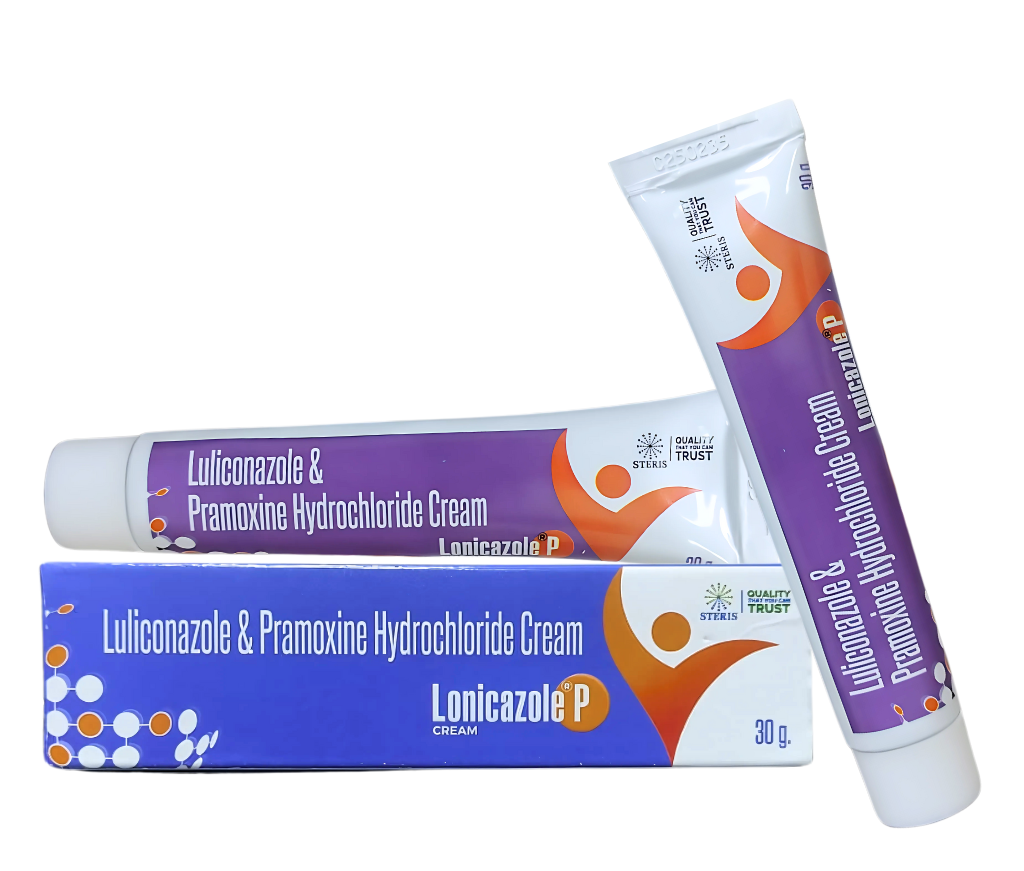
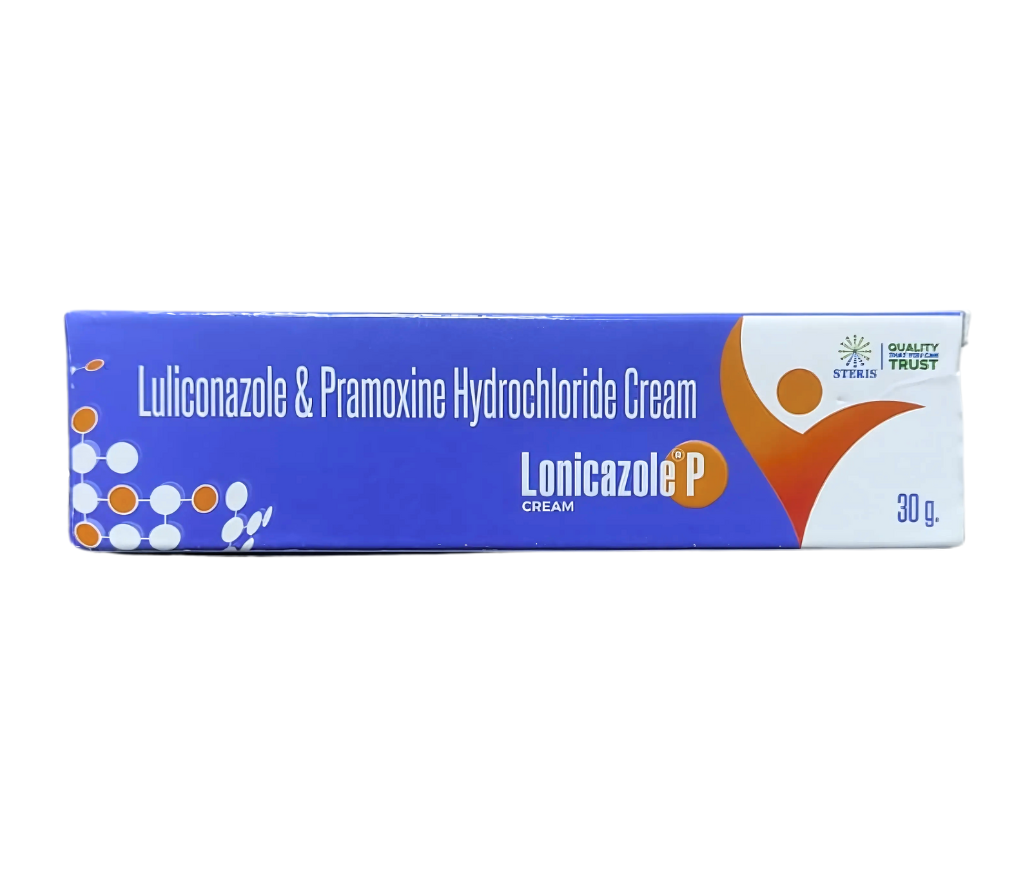
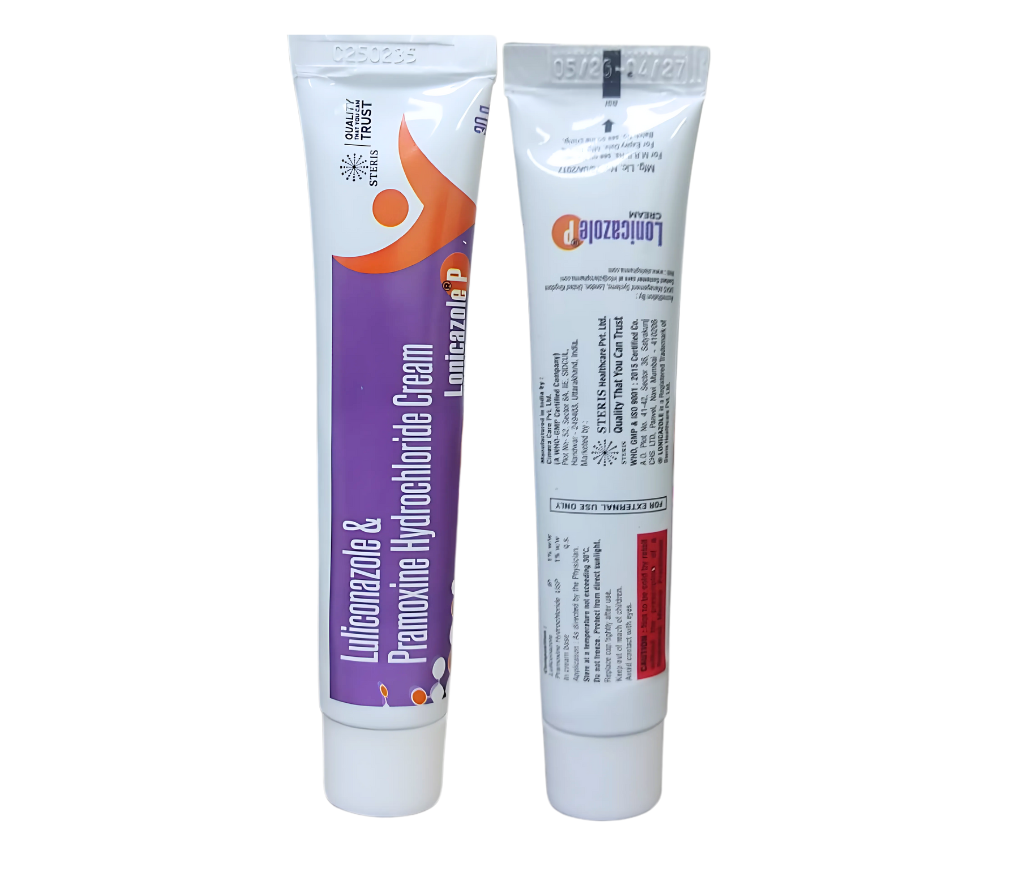
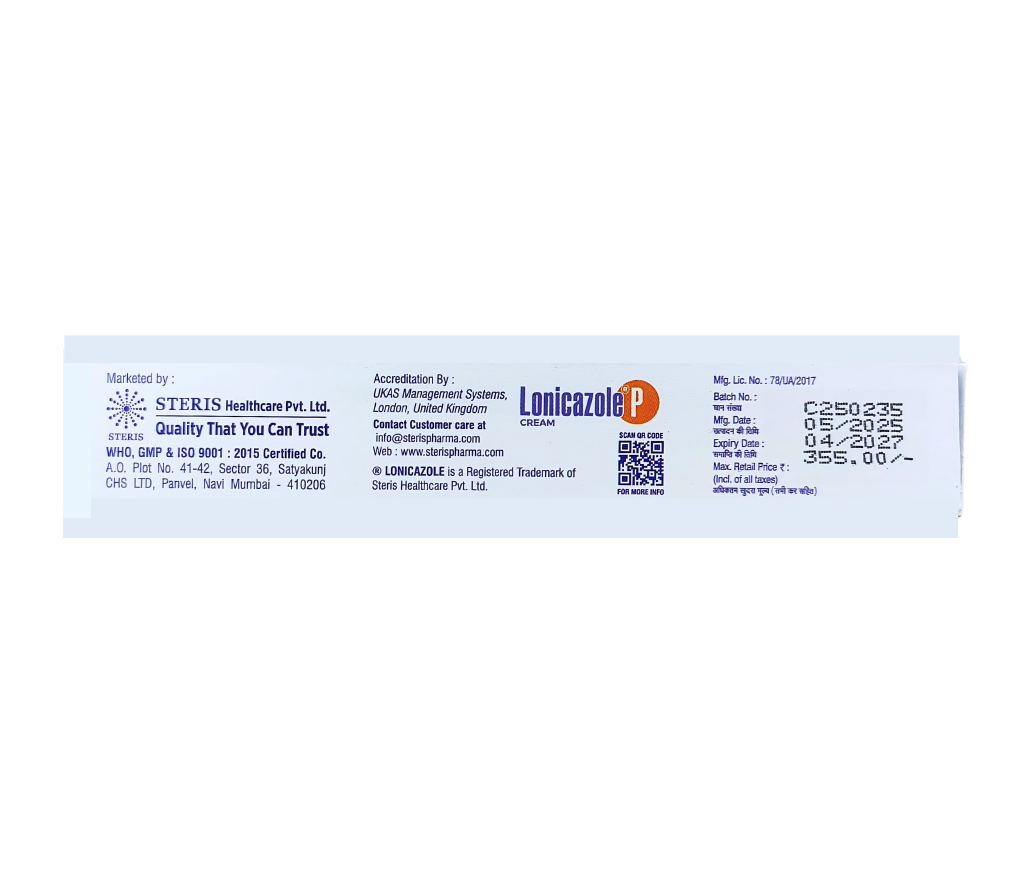
LONICAZOLE P
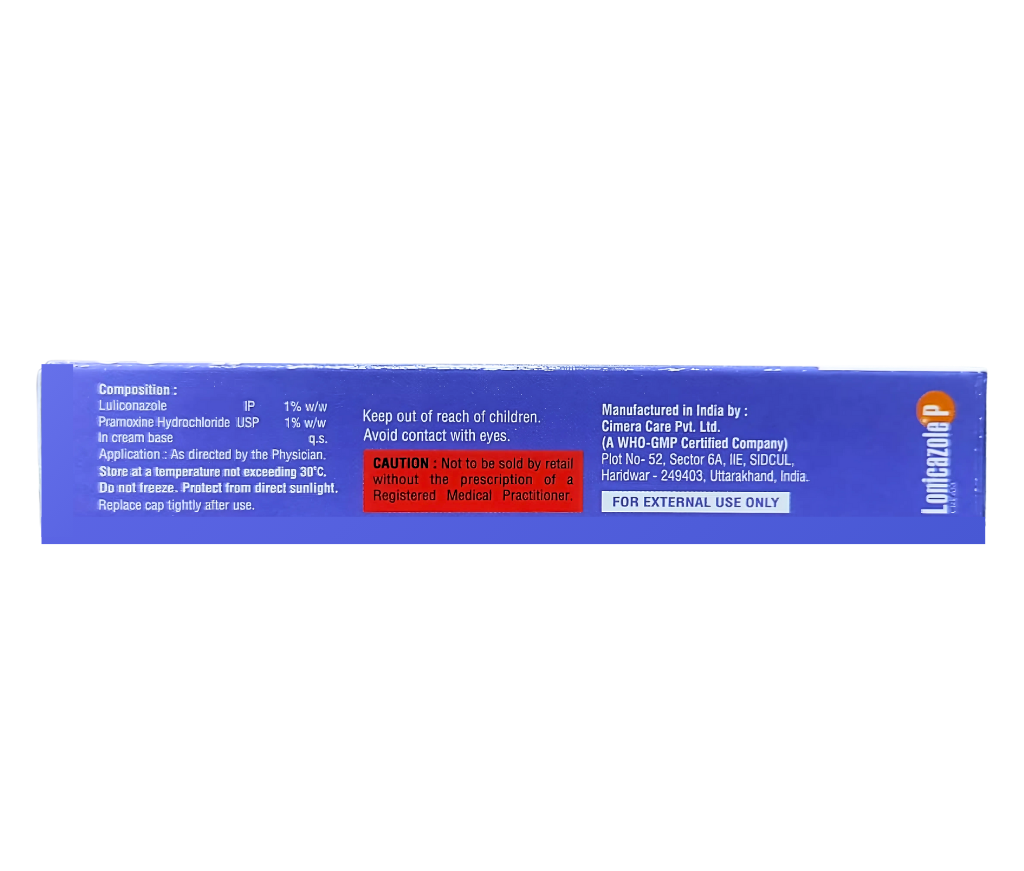
Manufactured By Steris Healthcare Pvt Ltd
Composition luliconazole cream 1 w/w, Pramoxine Hydrochloride 1% w/w
Rs 232.97
MRP Rs 332.81
(30% OFF)
Includes all taxes
Package SIZE
( FOR 30 G )
100% Authentic
Products
Free
Shipping*
Products
Return Policy
Description:
What Are Luliconazole Cream Uses?
Luliconazole cream is a topical azole antifungal that treats common skin infections such as ringworm, jock itch, and athlete's foot by halting the growth of the fungus causing the infection.
Luliconazole cream is generally applied directly to the affected skin and a small surrounding area. The approved regimen for 1% luliconazole cream is typically once daily: one week for tinea corporis or tinea cruris and two weeks for interdigital tinea pedis, although the exact treatment should follow the product label and healthcare professional's instructions.
How Does Luliconazole Cream Work?
Luliconazole is an antifungal that works by disrupting the production of fungal sterols, an essential process for keeping fungal cell membranes intact. This helps to inhibit the proliferation and survival of susceptible dermatophytes.
Fungal infections can cause itching, redness, scaling, burning, cracking and discomfort. With successful treatment, these symptoms can gradually improve as the underlying infection is controlled.
Key Luliconazole Cream Uses
1. Luliconazole Cream for Ringworm
One of the important luliconazole cream uses is the treatment of tinea corporis, commonly called ringworm.
Ringworm is a superficial fungal infection that can produce:
- Circular or ring-shaped patches
- Redness
- Scaling
- Itching
- Expanding skin lesions
- Irritation or discomfort
Luliconazole 1% cream is indicated for topical treatment of tinea corporis caused by susceptible organisms specified in the product labeling.
2. Luliconazole Cream for Jock Itch
Jock itch, or tinea cruris, occurs in the groin and surrounding skin. It can cause itching, redness, scaling and discomfort.
Luliconazole cream 1% is used for the topical treatment of tinea cruris. The labeled regimen is usually once daily for 1 week.
And importantly, not all genital and groin rashes are caused by a fungus. Similar symptoms can occur with dermatitis, bacterial infections, psoriasis or other skin disorders. Persistent or recurrent symptoms should therefore be evaluated by a health care professional.
3. Luliconazole Cream for Athlete's Foot
Tinea pedis, commonly called athlete's foot, is a fungal infection affecting the feet. Interdigital athlete's foot often develops between the toes.
Possible symptoms include:
- Itching
- Scaling
- Peeling
- Cracking
- Burning
- Redness
- Skin irritation
Key Benefits of Luliconazole Cream
When appropriately prescribed for a susceptible fungal infection, potential benefits include:
Targets fungal infection
Luliconazole is an azole antifungal specifically intended to treat certain dermatophyte infections.
Convenient topical application
It is applied directly to affected skin rather than taken orally.
Once-daily labeled regimen
For the labeled indications, luliconazole 1% cream is generally used once daily, which can make treatment easier to follow.
Helps control fungal symptoms
As the fungal infection responds to treatment, associated symptoms such as itching, scaling, redness, and discomfort may improve.
Useful for several common dermatophyte infections
Its labeled uses include tinea corporis, tinea cruris, and interdigital tinea pedis.
How to Apply Luliconazole Cream
Correct application is important for getting the intended benefit.
Step 1: Clean the affected area
Gently wash the affected skin and dry it thoroughly.
Step 2: Apply a thin layer
Apply a thin layer of luliconazole cream to the affected area and the immediate surrounding skin according to your prescription or product instructions.
The U.S. prescribing information specifies application to the affected area and approximately one inch of surrounding skin for the labeled indications.
Step 3: Wash your hands
Wash your hands after application unless the hands themselves are the area being treated.
Step 4: Follow the prescribed schedule
Do not automatically apply the cream more frequently because you want faster results.
For the labeled 1% product, treatment is generally once daily, with duration depending on the infection.
Step 5: Maintain good hygiene
Keep the affected area clean and dry. Avoid sharing towels, clothing, socks, or other personal items that may contribute to spreading a fungal infection.
Can Luliconazole Cream Be Used Twice a Day?
This is an important transactional and informational search query.
Do not automatically use luliconazole cream twice daily unless your doctor or the specific product instructions tell you to. The labeled regimen for luliconazole 1% cream for tinea corporis, tinea cruris, and interdigital tinea pedis is once daily.
Applying more cream or using it more frequently does not necessarily make the infection clear faster and may increase local irritation.
Luliconazole Cream Side Effects
Most medicines can cause unwanted effects, although not everyone experiences them.
According to the prescribing information, application-site reactions were reported in less than 1% of subjects in clinical trials.
Possible local reactions may include:
- Mild burning
- Irritation
- Redness
- Itching
- Stinging
- Dryness
- Discomfort at the application site
If severe irritation, swelling, worsening symptoms, or an unusual reaction develops, stop using the product and seek medical advice.
Important Precautions
Luliconazole cream is intended for topical skin use.
The prescribing information specifically states that luliconazole cream is not for ophthalmic, oral, or intravaginal use.
Avoid getting the cream into the eyes. If accidental eye exposure occurs, rinse thoroughly and seek medical advice if irritation persists.
People who are pregnant, planning pregnancy, breastfeeding, treating children, or using other topical medicines should discuss appropriate use with a healthcare professional.
Can Luliconazole Cream Be Used on Private Parts?
The answer depends on exactly where the rash is located and what is causing it.
Luliconazole has a labeled indication for tinea cruris (jock itch), which affects the groin region. However, the cream should not automatically be used on mucosal or internal genital areas. The product labeling states that it is not for intravaginal use.
Does Luliconazole Cream Remove Dark Spots?
Luliconazole is not a skin-lightening or dark-spot treatment.
A fungal infection may leave temporary discoloration after the infection improves. This is sometimes called post-inflammatory hyperpigmentation. Treating the underlying infection may prevent ongoing inflammation, but luliconazole itself is not indicated to directly remove pigmentation or dark spots.
Luliconazole Cream vs. Other Antifungal Creams
There is no single antifungal cream that is universally "best" for every fungal infection.
Treatment selection depends on:
- Type of fungal infection
- Location
- Severity
- Patient age
- Previous treatment
- Other medical conditions
- Whether the diagnosis is actually fungal
Luliconazole Cream: When Should You Seek Medical Advice?
Consider medical evaluation if:
- The rash is spreading rapidly.
- Symptoms become significantly worse.
- There is severe pain, swelling, pus, or open wounds.
- The rash involves sensitive genital or mucosal areas.
- Symptoms repeatedly return.
- Treatment does not appear to be working.
- You are unsure whether the condition is fungal.
- You develop significant irritation after applying the cream.
Luliconazole Cream
Before purchasing a medicine online, consumers should verify:
- Active ingredient and strength
- Manufacturer
- Product expiry date
- Packaging integrity
- Prescription requirements where applicable
- Licensed/reputable pharmacy
- Storage instructions
- Whether the medicine is appropriate for the diagnosed condition
What Are Luliconazole Cream Uses?
Luliconazole cream is a topical azole antifungal used to treat certain fungal skin infections, including tinea corporis (ringworm), tinea cruris (jock itch), and interdigital tinea pedis (athlete's foot). For the labeled 1% formulation, it is generally applied once daily, with treatment duration depending on the infection. It should be used only on appropriate external skin and according to medical or product instructions.
Conclusion
Luliconazole cream is used mainly to treat some superficial fungal infections, including ringworm, jock itch, and interdigital athlete's foot. Luliconazole is a topical antifungal agent of the azole class with activity against susceptible dermatophytes. The 1% formulation is usually applied once a day for a treatment period of approximately one week for tinea corporis or tinea cruris and two weeks for interdigital tinea pedis.
Luliconazole should not be used as a catch-all cream for any itchy rash, dark spot, or genital irritation. Correct diagnosis, appropriate application, completion of the recommended treatment course and professional advice in case of persistent symptoms will help to ensure safe and effective treatment.
Frequently Asked Questions
1. What is luliconazole cream used for?
Luliconazole cream is an azole antifungal used for certain fungal skin infections, including tinea corporis, tinea cruris, and interdigital tinea pedis.
2. Does luliconazole stop itching?
It can help relieve itching associated with a fungal infection by treating the underlying fungal cause. However, itching may have many causes, so persistent itching requires proper diagnosis.
3. Can I use luliconazole cream on male private parts?
It may be prescribed for fungal infection affecting the external groin area, such as tinea cruris. However, it should not be used automatically on genital or mucosal areas without medical advice. The labeling specifically excludes intravaginal use.
4. Can luliconazole cream remove dark spots?
No. Luliconazole is an antifungal, not a pigmentation-removal medicine. It treats fungal infection rather than directly lightening dark spots.
5. Can I apply luliconazole twice a day?
The labeled regimen for luliconazole 1% cream is generally once daily for its approved tinea indications. Do not increase it to twice daily unless instructed by your healthcare professional.
6. Which fungal cream is best for private parts?
There is no universally best fungal cream. The appropriate medicine depends on whether the rash is actually fungal, its location, and the specific infection. Genital rashes should be evaluated before self-treatment.
7. Is luliconazole cream good for ringworm?
Yes. Luliconazole 1% cream is indicated for topical treatment of tinea corporis, commonly called ringworm, caused by susceptible dermatophytes.
8. Is luliconazole cream used for jock itch?
Yes. Tinea cruris, commonly called jock itch, is one of the labeled uses of luliconazole cream 1%.
9. Is luliconazole cream used for athlete's foot?
Yes. Luliconazole 1% cream is indicated for interdigital tinea pedis, commonly known as athlete's foot.
10. How often should luliconazole cream be applied?
For the labeled 1% formulation, luliconazole is generally applied once daily to the affected area and immediate surrounding skin.
11. How long should I use luliconazole cream?
The labeled treatment duration is generally one week for tinea corporis and tinea cruris and two weeks for interdigital tinea pedis. Follow your specific prescription and product instructions.
12. Can luliconazole cream be used for itching without a fungal infection?
It should not be used simply because skin is itchy. Luliconazole is an antifungal and should be used when a fungal infection is suspected or diagnosed appropriately.
13. What are the side effects of luliconazole cream?
Possible side effects include local application-site reactions such as irritation, burning, redness, itching, or discomfort. Clinical trials reported application-site reactions in less than 1% of subjects.
14. Can luliconazole cream be applied to broken skin?
Use it only as directed by a healthcare professional. Avoid inappropriate application to open, severely damaged, or irritated skin unless specifically advised.
15. Can luliconazole cream be used on the face?
Do not use it on the face simply for an itchy or red rash unless a healthcare professional has recommended it for that specific condition. Facial rashes can have many causes.
16. Is luliconazole cream an antibiotic?
No. Luliconazole is an antifungal medicine, not an antibiotic. It is designed to treat susceptible fungal infections.
17. Can luliconazole cream treat bacterial infections?
No. Luliconazole is an antifungal and is not intended to treat bacterial skin infections.
18. Can I use luliconazole cream every day?
For its labeled indications, luliconazole 1% cream is used once daily for the recommended treatment period. Longer or more frequent use should only be undertaken according to professional advice.
19. What should I do if luliconazole cream does not work?
If symptoms do not improve, become worse, or repeatedly return, consult a healthcare professional. The condition may require a different treatment or may not be a fungal infection.
20. Can I buy luliconazole cream online?
Availability and prescription requirements vary by country and product. When purchasing online, use a legitimate pharmacy and verify the medicine, strength, manufacturer, expiry date, and packaging before use.
Luliconazole Cream at a Glance
| Feature | Information |
|---|---|
| Active ingredient | Luliconazole |
| Common strength | 1% |
| Drug class | Azole antifungal |
| Main uses | Tinea corporis, tinea cruris, interdigital tinea pedis |
| Application | Topical use |
| Typical frequency | Once daily for labeled indications |
| Common treatment duration | 1–2 weeks depending on infection |
| Common side effects | Application-site irritation or reactions |
| Route | Skin application only |