


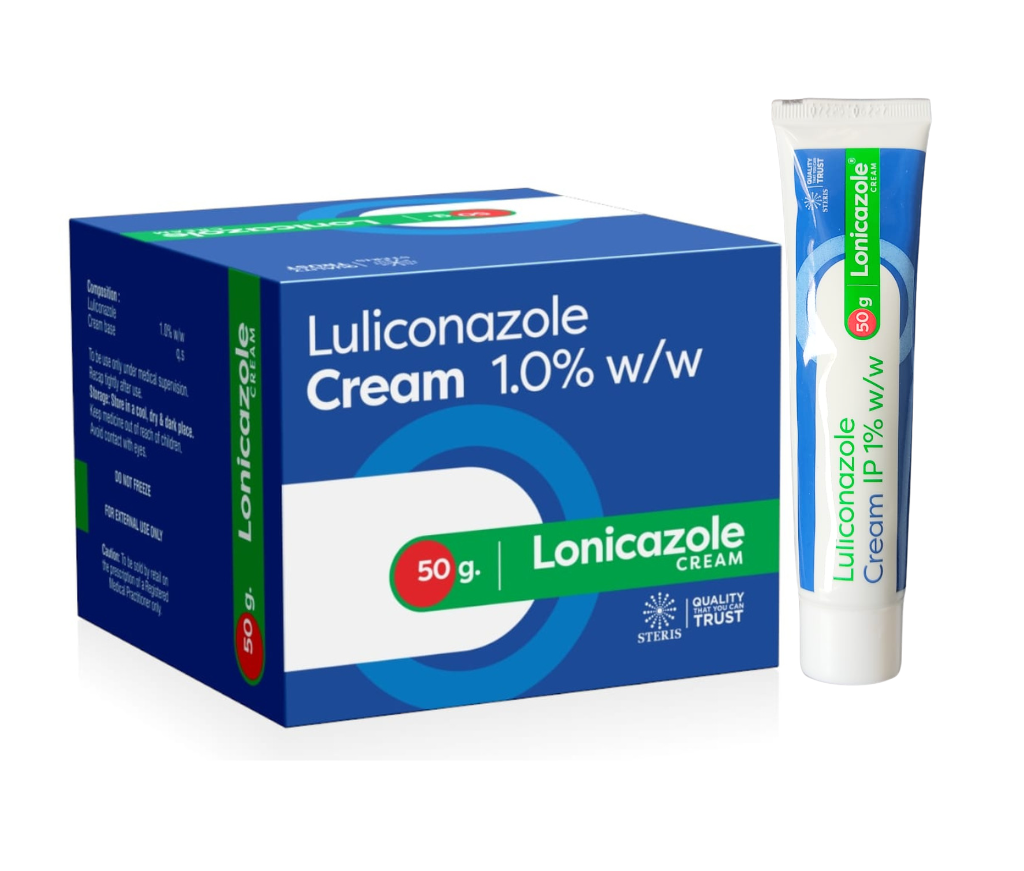
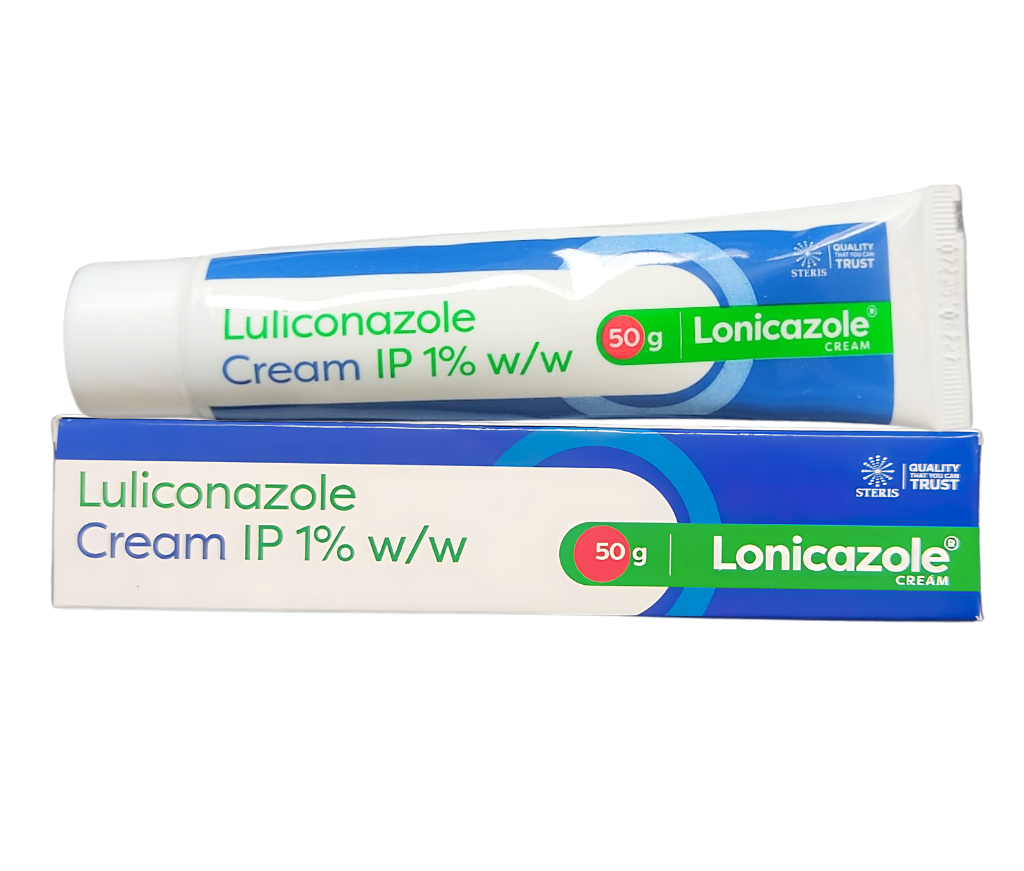
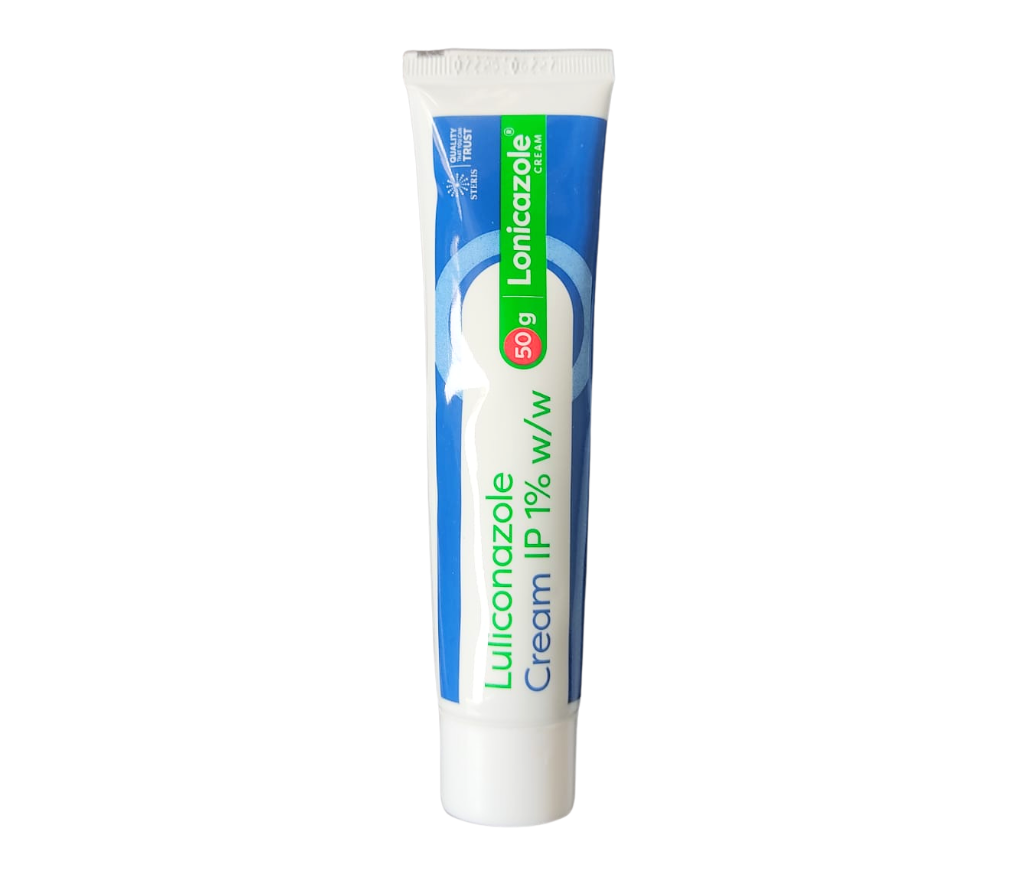
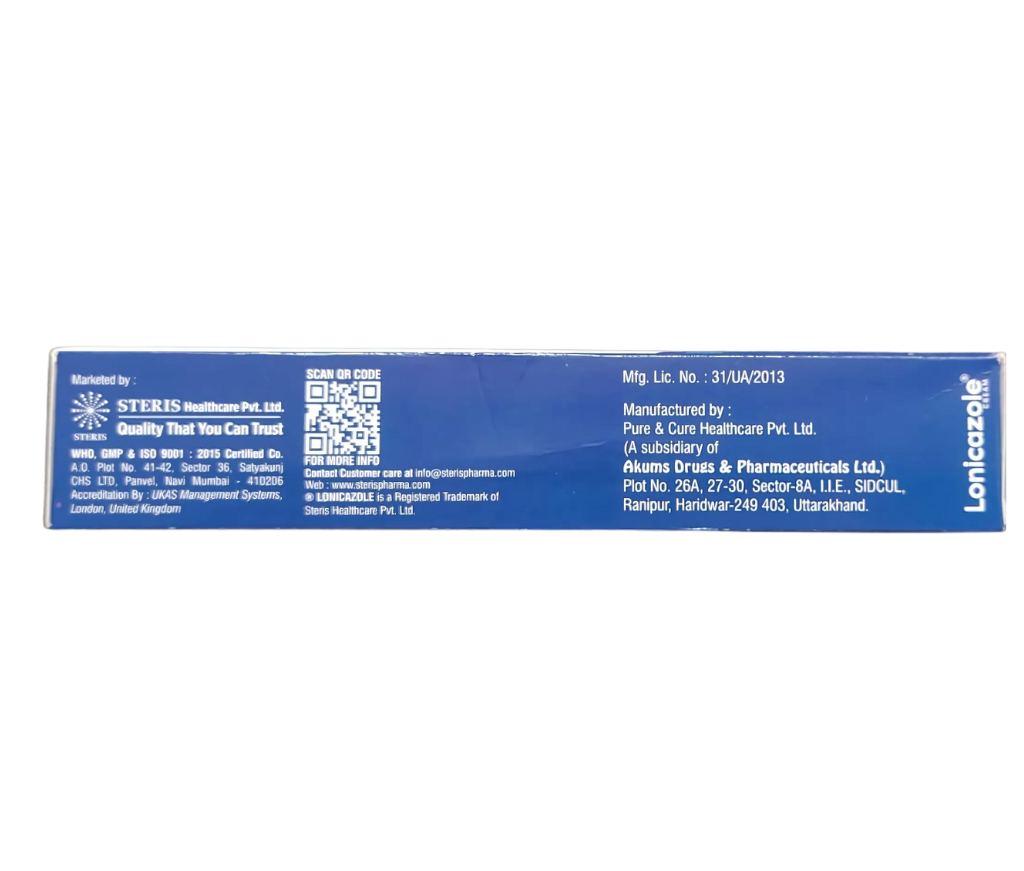
Luliconazole cream ip 1 w/w | LONICAZOLE 50
Manufactured By Steris Healthcare Pvt Ltd
Composition luliconazole cream ip 1 w/w
Rs 252.66
MRP Rs 360.94
(30% OFF)
Includes all taxes
Package SIZE
( For 50g )

100% Authentic
Products

Free
Shipping*

Products
Return Policy
Description:
Fungal skin infections can be highly uncomfortable, causing relentless itching, scaling, and inflammation. When standard over-the-counter options fail, dermatologists frequently turn to advanced topical treatments. Luliconazole Cream IP 1% w/w is a prescription-strength topical antifungal used to treat superficial skin infections
This medical guide provides an evidence-based overview of Luliconazole Cream IP 1% w/w, detailing its clinical uses, mechanisms of action, benefits, potential side effects, and essential application protocols.
What is Luliconazole Cream IP 1% w/w?
Luliconazole Cream IP 1% w/w is an advanced topical formulation containing 1% weight-by-weight of Luliconazole, a potent member of the imidazole class of antifungals. The designation "IP" signifies that the drug complies strictly with the quality, purity, and manufacturing standards outlined in the Indian Pharmacopoeia.
Unlike older antifungals that merely slow down fungal growth (fungistatically), luliconazole possesses unique chemical properties that allow it to penetrate deeply into the skin's outer layers (stratum corneum) and nail beds. It rapidly achieves a high concentration at the infection site, exerting a decisive fungicidal (fungus-killing) action. This structural superiority often translates to shorter treatment cycles compared to classic azole therapies.
Clinical Uses: What Does It Treat?
Dermatologists prescribe Luliconazole Cream 1% w/w primarily for superficial fungal infections caused by dermatophytes and specific yeasts. Its primary clinical indications include:
-
Tinea Corporis (Ringworm of the Body): Characterized by itchy, red, circular or ring-shaped rashes with raised edges that develop across the trunk, arms, or legs.
-
Tinea Cruris (Jock Itch): A painful, intensely itchy fungal infection localized in the groin, inner thighs, and perineal area. It thrives in warm, humid, and friction-prone body folds.
-
Tinea Pedis (Athlete's Foot): A common infection affecting the skin between the toes or on the soles of the feet. It presents as cracking, peeling skin, burning sensations, and maceration.
-
Pityriasis Versicolor & Cutaneous Candidiasis: Though less frequent, its broad-spectrum profile allows it to effectively target specific yeast overgrowths (such as Candida and Malassezia species) on the skin's surface.
How It Works: The Mechanism of Action
To understand why luliconazole is highly effective, it helps to examine its action at the cellular level. Fungi rely on a specific compound called ergosterol to maintain the structural integrity and fluidity of their cell membranes.
-
Enzyme Inhibition: Luliconazole selectively targets and inhibits lanosterol 14-alpha-demethylase, a core enzyme required to synthesize ergosterol.
-
Membrane Disruption: Deprived of ergosterol, the fungal cell membrane becomes unstable, porous, and leaky.
-
Cellular Death: The essential internal components of the fungal cell leak out, arresting replication and killing the pathogen outright.
Because human cell membranes utilize cholesterol rather than ergosterol, this mechanism targets the fungal cells while leaving human skin cells unharmed.
Key Clinical Benefits of Luliconazole
| Benefit Feature | Clinical Advantage |
| Rapid Action | Noticeable reduction in itching, redness, and scaling within the first few days of application. |
| Short Treatment Duration | While older generation antifungals often require 3 to 4 weeks of use, luliconazole frequently resolves ringworm and jock itch in just 1 week (and athlete's foot in 2 weeks). |
| High Retention Rate | The cream binds efficiently to skin keratin, continuing to eliminate fungi long after application. |
| Convenient Once-Daily Dosing | Its long-lasting therapeutic window eliminates the need for multiple daily applications, improving patient adherence. |
| Minimal Bloodstream Absorption | Because it acts locally on the epidermis, minimal systemic absorption occurs, virtually eliminating systemic drug interactions or organ toxicity. |
Side Effects and Safety Profile
Luliconazole Cream IP 1% w/w is exceptionally well-tolerated by most individuals. However, minor localized reactions can occur at the application site.
Common Side Effects (Mild & Localized)
-
Mild burning or stinging upon application
-
Local redness (erythema) or skin irritation
-
Slight dryness or peeling (skin exfoliation)
Rare or Serious Side Effects
-
Contact Dermatitis: Severe blistering, oozing, intense swelling, or an expanding rash indicates a localized allergic reaction. If this occurs, wash the area thoroughly and seek immediate medical evaluation.
-
Systemic Hypersensitivity: While rare, signs like facial swelling, difficulty breathing, or severe hives require emergency medical attention.
How to Apply Luliconazole Correctly
To maximize efficacy and prevent the infection from returning, follow this application sequence carefully:
1.Clean and Dry the Area:Prerequisite Step.
Gently wash the infected skin with mild soap and water. Fungi thrive in damp environments, so pat the skin completely dry with a clean, dedicated towel before applying the medication.
2.Sanitize Your Hands:Prevent Spreading.
Wash your hands thoroughly with soap before touching the medication tube to avoid transferring pathogens.
3.Apply the Cream Beyond the Border:Application Protocol.
Squeeze a small amount of cream onto your fingertip. Apply a thin layer over the visible rash, ensuring you extend the application at least 1 inch (approx. 2.5 cm) into the healthy surrounding skin. Fungal microscopic filaments often exist beyond the visible red border.
4.Final Hand Wash:Post-Application.
Wash your hands with soap immediately after application to prevent transferring the fungus to other parts of your body or other individuals.
Frequently Asked Questions
1. What is the use of luliconazole cream 1 w/w?
Luliconazole Cream IP 1% w/w is primarily used to treat superficial fungal infections of the skin. It is highly effective against ringworm (tinea corporis), jock itch (tinea cruris), and athlete's foot (tinea pedis). It works by destroying the fungal cell wall, eradicating the infection at its source.
2. What is the use of luliconazole cream ip 1 w/w?
Luliconazole Cream IP 1% w/w is an antifungal medicine used to treat ringworm, athlete's foot, jock itch, and other fungal skin infections by stopping fungal growth.
3. Is luliconazole good for itching?
Yes. Luliconazole targets the underlying fungal infection that triggers skin inflammation. As the active fungus is neutralized, the secondary symptoms—such as intense itching, burning, scaling, and redness—subside significantly within a few days of starting treatment.
4. Can luliconazole cream be used on private parts?
Luliconazole cream can be applied to the external skin of the groin and inner thighs to treat jock itch (tinea cruris). However, it must never be applied internally inside the vagina, onto the head of the penis, or directly onto sensitive mucosal surfaces unless explicitly instructed by a qualified doctor.
5. What is lulican cream 1% used for?
Lulican cream is a popular commercial brand name for Luliconazole 1% cream. Like all luliconazole formulations, it is prescribed to clear localized fungal dermatophyte infections including athlete's foot, body ringworm, and groin infections.
6. Which cream is best for private parts?
The appropriate cream depends entirely on the root cause of the irritation. If the skin irritation is verified to be an external fungal infection like jock itch, a targeted antifungal like Luliconazole Cream 1% w/w is highly effective. If the irritation stems from bacterial infections, eczema, or simple chafing, a completely different medication (such as antibiotics or mild barrier creams) is required. A clinical diagnosis is essential before treating delicate areas.
7. Can I apply luliconazole twice a day?
No, luliconazole is formulated for once-daily application. Because the drug binds strongly to skin proteins and maintains high, long-lasting fungicidal concentrations in the tissues, applying it twice a day does not speed up healing. Instead, it increases the likelihood of developing local skin irritation or contact dermatitis.
8. How to remove fungus from private parts?
Eliminating an external groin fungal infection requires a combination of targeted medical treatment and strict lifestyle hygiene:
-
Apply a prescribed topical antifungal cream (like luliconazole) consistently for its full duration.
-
Keep the groin area completely clean and dry.
-
Wear loose-fitting, breathable 100% cotton underwear; avoid tight synthetic fabrics like nylon or polyester.
-
Never share personal items like towels or clothing.
9. Is luliconazole cream any good?
Yes, clinical studies indicate that luliconazole is an excellent, highly potent antifungal agent. Due to its strong fungicidal properties, it typically achieves complete clearance of ringworm and jock itch within a significantly shorter treatment duration (often 7 days) compared to standard over-the-counter options.
10. How many times a day should I apply fungal cream?
The frequency depends entirely on the specific active ingredient. Traditional antifungals (like clotrimazole or miconazole) often require 2 to 3 applications daily. However, advanced antifungals like luliconazole only require once-daily application due to their extended presence within the skin layers. Always follow the frequency indicated on your prescription label.
11. Can I use luliconazole cream on my face?
Luliconazole can be used on the face only if a physician has explicitly diagnosed a fungal infection there (such as tinea faciei). Avoid applying it near the eyes, nose, or mouth. If facial skin irritation, redness, or acne-like breakouts worsen, stop use immediately and contact your doctor.
12. Can luliconazole be used on open wounds or broken skin?
No. Luliconazole cream is designed strictly for intact skin surfaces experiencing a superficial fungal infection. Applying it directly onto open wounds, deep cuts, severe burns, or raw, bleeding skin can cause severe burning sensations and risk unwanted systemic absorption.
13. Should I stop using the cream as soon as my symptoms clear up?
No. This is the most common reason fungal infections recur. Fungal filaments can survive microscopically even after visible scaling and itching disappear. You must complete the full duration prescribed by your doctor (typically 1 to 2 weeks) to ensure complete eradication.
14. Is luliconazole cream safe to use during pregnancy?
Data regarding the safety of topical luliconazole in pregnant women is highly limited. Because safety has not been definitively established, it should be avoided during pregnancy unless your dermatologist determines that the clinical benefit clearly outweighs any potential risk to the fetus.
15. Is luliconazole a steroid cream?
No, luliconazole is a pure antifungal medication. It contains no topical steroids or anti-inflammatory hormones. It clears skin irritation exclusively by eliminating the primary fungal organism responsible for the inflammation.
16. What should I do if the fungal infection does not improve?
If your symptoms show no signs of improvement after 1 to 2 weeks of consistent daily use, or if they worsen significantly, consult your dermatologist. The rash may be caused by a non-fungal condition (such as psoriasis or a bacterial infection), or it could represent a resistant fungal strain requiring an alternative class of medication.
Conclusion
Luliconazole Cream IP 1% w/w stands out as a highly efficient, fast-acting option for managing superficial fungal skin conditions. Its primary advantage lies in its targeted fungicidal design, enabling short, highly effective once-daily treatment courses that offer rapid relief from itching and scaling.
However, achieving permanent resolution depends heavily on proper application technique, continuing the medication for its full prescribed course, and maintaining clean, dry hygiene habits. To protect your skin health and ensure an accurate diagnosis, always consult a qualified healthcare professional before starting any specialized medical treatment.
Product: Lonicazole Cream
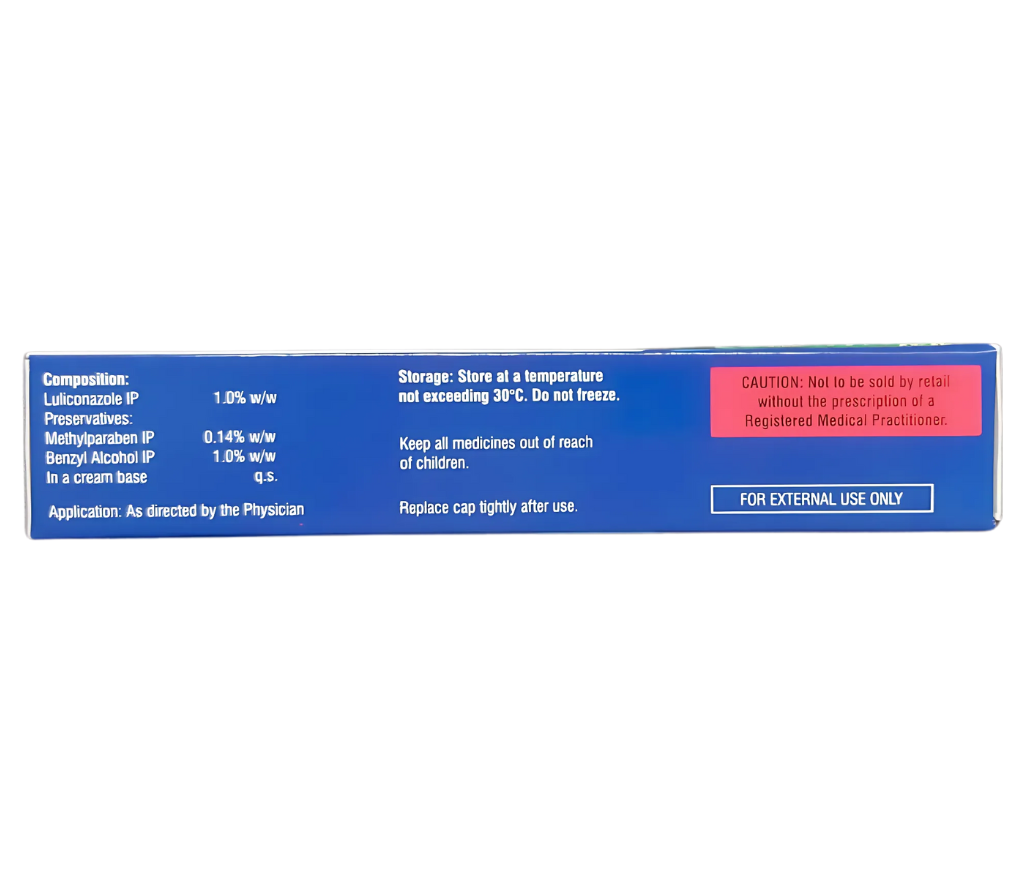
Composition: Luliconazole Cream IP 1% w/w
Formulation: Topical cream
Pack size: 50 g
Marketed by: Steris Healthcare Pvt Ltd
Regulatory standard: WHO-GMP / Quality That You Can Trust (Steris branding)
Schedule: Caution — to be sold by retail on the prescription of a Registered Medical Practitioner only (per box text); for external use only

