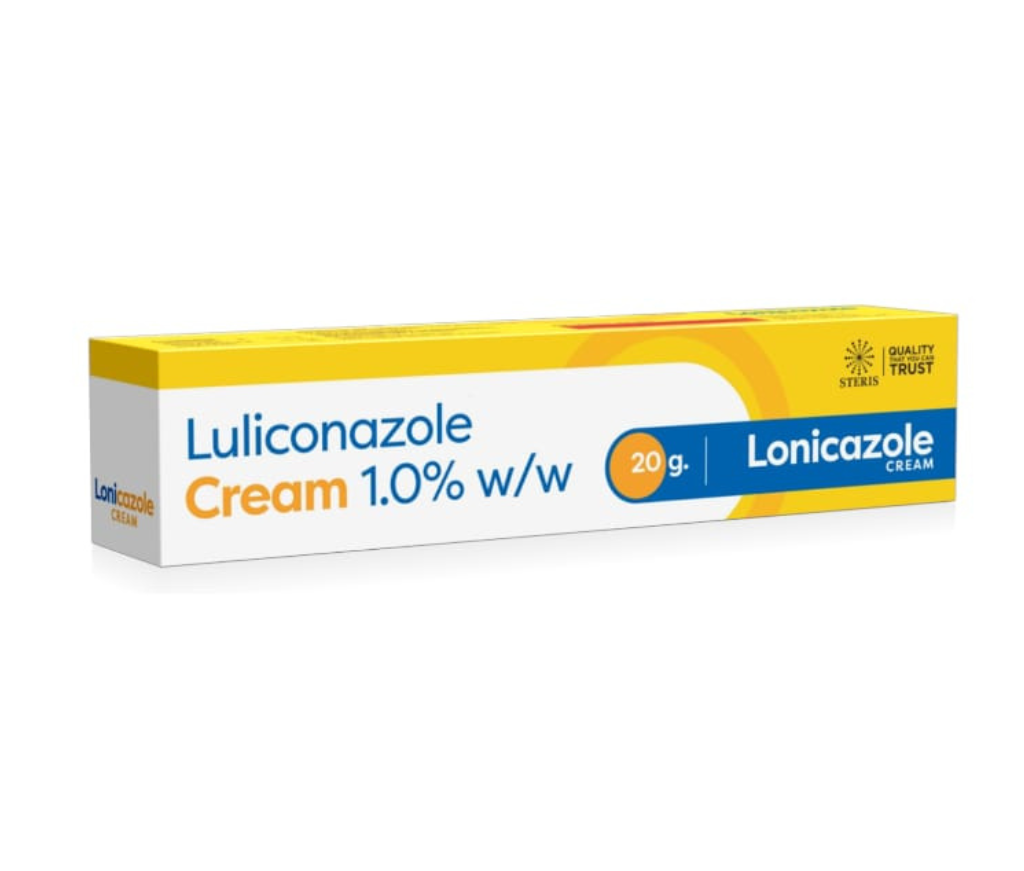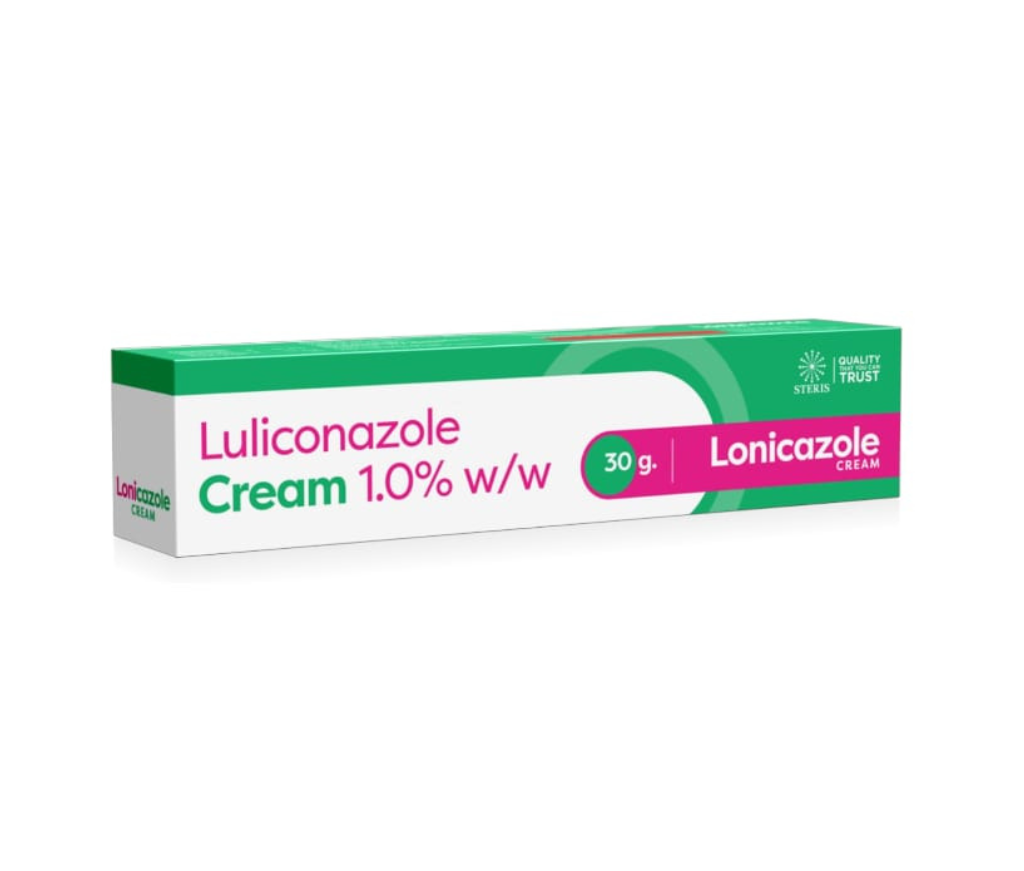
LONICAZOLE 30 (Gram)
Manufactured By Steris Healthcare Pvt Ltd
Composition Luliconazole Cream 1.0% w/w
Rs 150.28
MRP Rs 214.69
(30% OFF)
Includes all taxes
Package SIZE
( For 30g )

100% Authentic
Products

Free
Shipping*

Products
Return Policy
Description:
Lonicazole 30 is an antifungal cream for the skin. Its active ingredient, luliconazole, belongs to the azole family and was developed for superficial fungal infections. The "30" in the name tells you the tube size: 30 grams of cream, which is one and a half times the 20 g tube.
How does it work? Fungi need a compound called ergosterol to build their cell walls. Luliconazole blocks the enzyme lanosterol demethylase, which the fungus uses to make ergosterol. When ergosterol runs short, the fungal membrane becomes leaky and weak, and the fungus stops growing and dies. Laboratory studies have shown luliconazole to be highly active against dermatophytes, the fungi behind most ringworm, and it also acts on certain yeasts such as Candida and Malassezia.
Product Information
| Detail | Information |
|---|---|
| Brand Name | Lonicazole 30 |
| Composition | Luliconazole 1.0% w/w |
| Drug Class | Imidazole (azole) topical antifungal |
| Product Form | Cream |
| Pack Size | 30 g (1 tube) |
| Manufacturer / Marketer | Steris Healthcare Pvt. Ltd. |
| Therapeutic Area | Dermatology / Topical antifungal |
| Route | Topical (skin), external use only |
| Regulatory Status | [CONFIRM: Schedule H / prescription-only or other category on the approved label] |
| Storage | Store below 30°C, away from moisture and direct sunlight. Keep the cap tightly closed. Keep out of reach of children. |
| Available In | India |
Why Is Luliconazole Cream Important?
Fungal skin infections are among the most common skin problems in India. Heat, sweat, humidity, tight clothing, shared towels, and delayed treatment all keep the cycle going. The rash itches badly, disturbs sleep, and spreads to family members if hygiene is not tightened.
Luliconazole cream is important for five reasons:
- It targets the usual culprits. Dermatophytes such as Trichophyton rubrum account for most body, groin, and foot infections.
- It is simple to use. A single daily application fits easily into a routine.
- It can work with shorter courses. Many uncomplicated cases are treated for one to two weeks, though stubborn infections may need longer.
- It stays in the skin layers where the fungus lives. This supports its action between applications.
- It suits combined treatment plans. Doctors pair it with hygiene advice, drying measures, and, when the infection is deep, widespread, or resistant, an oral antifungal.
Steris Healthcare manufactures Lonicazole 30 under WHO-GMP and ISO-certified quality systems, so dermatologists, pharmacists, and distributors get consistent quality.
Key Benefits
- Potent antifungal action: Strong activity against ringworm, jock itch, and athlete's foot fungi.
- Enough cream for larger areas: The 30 g tube reduces the chance of running out mid-course.
- Once-daily application: Simple and easy to follow.
- Relief from itching and redness: As fungal load falls, burning and itching ease.
- Short-course potential: Uncomplicated infections may clear in one to two weeks with regular use, as advised by a doctor.
- Low systemic absorption: Very little enters the bloodstream when used on intact skin as directed.
- Non-greasy cream base: Spreads smoothly on the trunk, thighs, and feet.
- Better value per gram for bigger needs: A larger tube can suit multi-site or family use better than buying several small tubes.
Uses of Lonicazole 30
- Tinea corporis (ringworm of the body): round, red, scaly, itchy patches with a clearer centre
- Tinea cruris (jock itch): itchy, red rash in the groin, inner thighs, and buttock folds
- Tinea pedis (athlete's foot): peeling, itchy, cracked skin between the toes and on the soles
- Extensive or multi-site fungal skin infection, as decided by a dermatologist
- Pityriasis (tinea) versicolor: light or dark patches on the chest, back, and shoulders, where your doctor advises it
- Cutaneous candidiasis (skin yeast infection), where your doctor advises it
Precautions Before Using
Do not use if:
- You are allergic to luliconazole, other azole antifungals (such as clotrimazole, ketoconazole, miconazole, or sertaconazole), or any ingredient in the cream
- The skin is badly broken, raw, or bleeding, unless your doctor advises it
Use with caution and talk to your doctor if:
- You are pregnant or breastfeeding. Absorption through the skin is low, but always check with your doctor first.
- You want to use it on a child. Use only on a paediatrician's or dermatologist's advice, and only if the label allows it for their age group.
- You have very sensitive skin or a history of contact dermatitis
- You have diabetes, low immunity, or a long-standing skin condition, since fungal infections may be harder to clear and need closer follow-up
- You use other creams, steroid creams, or oral antifungals on the same area. Do not stop or change them without medical advice.
Side Effects
Most people tolerate luliconazole cream well. Side effects are usually mild and limited to the area where the cream is applied.
Common or mild:
- Itching at the application site
- Mild burning or stinging
- Redness or irritation
- Dryness or slight peeling
Uncommon:
- Contact dermatitis (an allergic skin reaction)
- Swelling or blistering at the application site
- Temporary worsening of the rash before improvement
- Skin tenderness or pain
Frequently Asked Questions
Where can I buy Luliconazole Cream online?
Luliconazole Cream can be purchased online through licensed pharmacies or authorized medicine suppliers in India, subject to availability and applicable prescription requirements.
What is the price of Luliconazole Cream?
The price of Luliconazole Cream may vary depending on the brand, strength, pack size, manufacturer, seller, and applicable offers. Check the current product listing for the latest price.
Can I order Luliconazole Cream online?
Yes, Luliconazole Cream may be ordered online through an authorized pharmacy or licensed supplier, provided the product is available and any applicable prescription requirements are met.
Is Luliconazole Cream available from Steris Healthcare?
Availability of Luliconazole Cream from Steris Healthcare depends on the current product range and stock status. Contact Steris Healthcare or check its latest product listing for availability and ordering information.
What is Luliconazole Cream used for?
Luliconazole Cream is a topical antifungal medicine used to treat certain fungal skin infections, such as athlete's foot, jock itch, and ringworm, as directed by a healthcare professional.
What is the composition of Luliconazole Cream?
Luliconazole Cream contains Luliconazole as its active antifungal ingredient. The exact strength and inactive ingredients may vary depending on the manufacturer and formulation.
Is a prescription required?
Prescription requirements for Luliconazole Cream may vary depending on the formulation, strength, and local regulations. Use the medicine according to the advice of a qualified healthcare professional.
How should Luliconazole Cream be taken?
Luliconazole Cream is for external use only. Apply a thin layer to the affected area as directed by your healthcare professional or product label. Avoid contact with the eyes, mouth, and other sensitive areas.
What should I know before buying Luliconazole Cream?
Before buying, check the strength, ingredients, pack size, manufacturer, expiry date, and authenticity of the product. Inform your healthcare professional about allergies, existing skin conditions, and other medicines you use.
How can I order Luliconazole Cream online?
To order Luliconazole Cream online, choose a licensed pharmacy or authorized supplier, verify the product details and availability, provide a prescription if required, and complete the seller's ordering and payment process.
Available Substitutes