


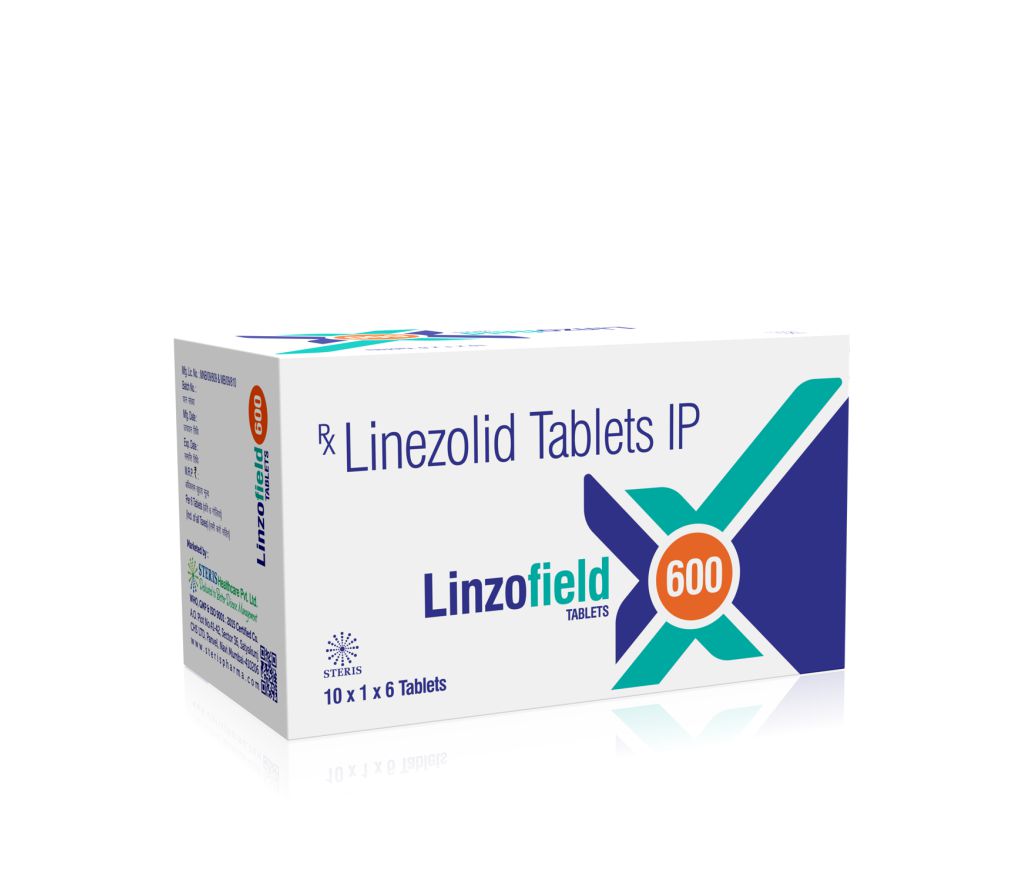
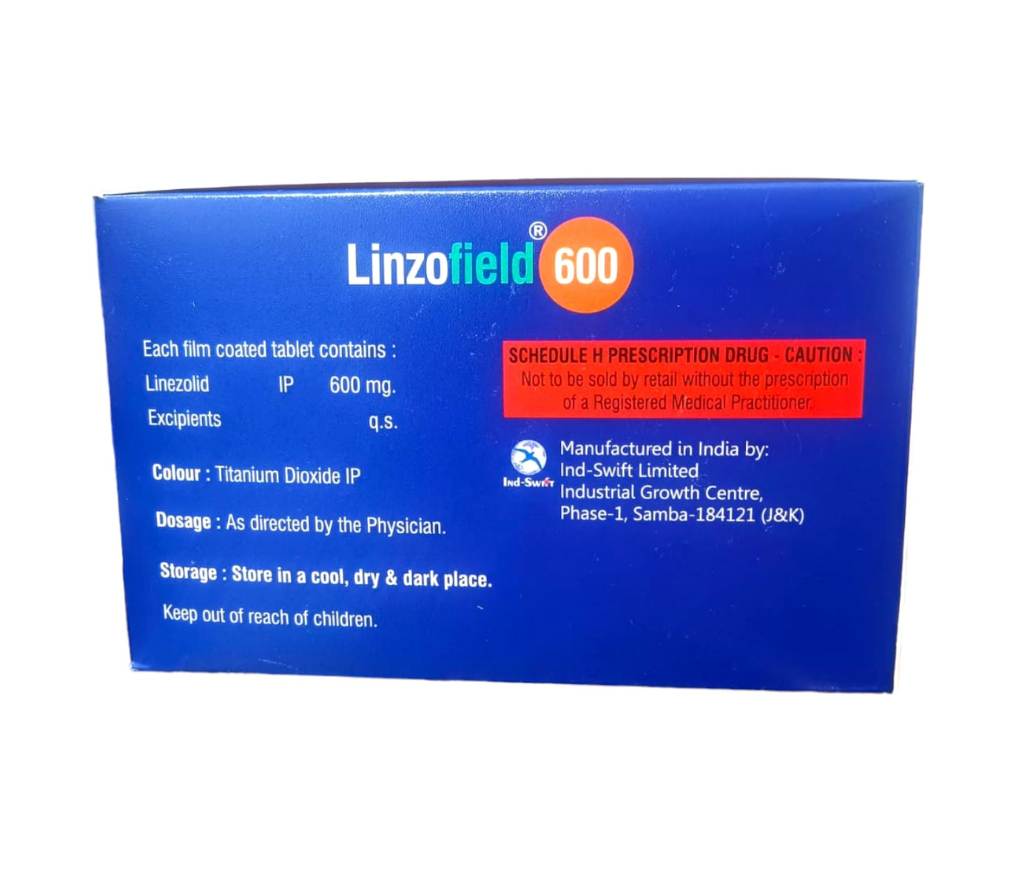
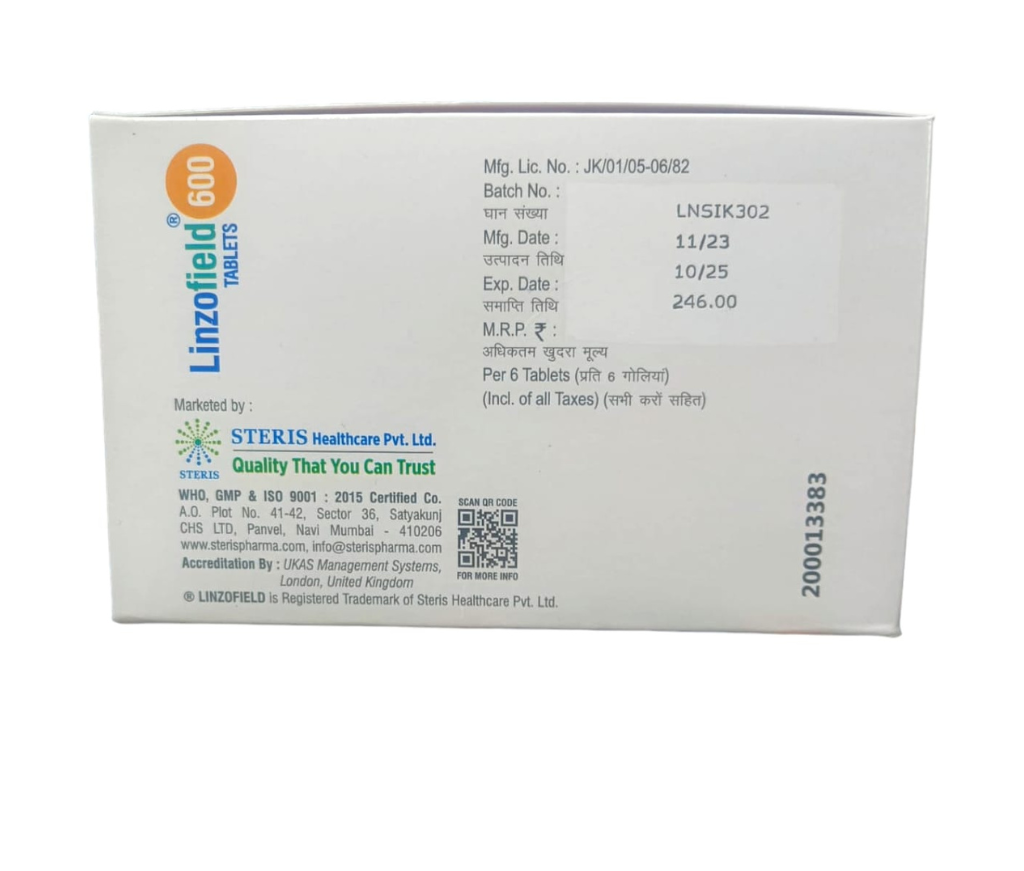
Linezolid 600 mg | LINZOFIELD 600
 Item requires a valid prescription
Manufactured By Steris Healthcare Pvt Ltd
Composition Linezolid (600mg) IP
Rs 161.44
MRP Rs 230.63
(30% OFF)
Includes all taxes
Package SIZE
( For 6 TABS )

100% Authentic
Products

Free
Shipping*

Products
Return Policy
Description:
Linezolid 600 mg tablet is an antibiotic medicine that is available on prescription only. It is used to treat serious bacterial infections that do not respond to other common antibiotics. Linezolid 600 mg is a drug of the oxazolidinone class that is commonly used to treat infections caused by resistant organisms, such as MRSA (Methicillin-Resistant Staphylococcus aureus) and VRE (Vancomycin-Resistant Enterococcus).
Product Information
Brand name: LINZOFIELD 600 (STERIS HEALTHCARE PVT LTD)
Composition Name: Linezolid (600mg) IP
Pack size: Strip of 6 tablets
Marketed By: Steris Healthcare Pvt Ltd
Regulatory standard: WHO-GMP certified
Schedule: Valid Prescription Required (prescription only) please create in this manner.
What Is Linezolid 600 mg?
Linezolid 600 mg is an oral antibiotic tablet with 600 milligrams of linezolid as the active ingredient. It is in the same family of antibiotics as oxazolidinones, and they work in a different way than penicillins, cephalosporins, or macrolides. This novel mechanism is the reason Linezolid 600 mg tablet is effective against many bacteria that have become resistant to older antibiotic classes.
Linezolid 600 mg tablet is typically prescribed for:
- Complicated and uncomplicated skin and soft tissue infections
- Hospital-acquired pneumonia
- Community-acquired pneumonia
- Infections caused by Vancomycin-Resistant Enterococcus faecium (VRE)
- MRSA infections that are resistant to standard treatment
How Does Linezolid 600 mg Work?
Linezolid 600 mg works by binding to the bacterial ribosome — the part of the bacterial cell responsible for producing proteins. By blocking the initiation of protein synthesis at an early stage, linezolid prevents bacteria from growing, multiplying, and repairing themselves. Because it works at a distinct step compared to other antibiotics, it remains effective even against bacteria that have developed resistance to drugs like vancomycin or methicillin. This makes tab Linezolid 600 mg a valuable option for tough, resistant infections when first-line antibiotics fail.
Linezolid 600 mg Tablet Uses
The primary Linezolid 600 mg uses include:
- Skin and soft tissue infections — including infections caused by Staphylococcus aureus (including MRSA) and Streptococcus species.
- Pneumonia — both hospital-acquired and community-acquired pneumonia caused by susceptible bacteria.
- MRSA infections — Linezolid 600 mg is one of the few oral antibiotics effective against MRSA, making it a preferred choice when other drugs fail.
- VRE infections — including bloodstream infections caused by Vancomycin-Resistant Enterococcus faecium.
- Complicated infections in hospitalized patients, particularly when intravenous options are limited or the patient is being switched from IV to oral therapy.
Note on Linezolid 600 mg uses for cough: Linezolid is not a cough medicine and does not treat viral respiratory infections or common colds. It may be prescribed if a cough is a symptom of a bacterial lung infection (such as pneumonia) confirmed or suspected by a doctor — never for a routine cough or viral illness.
Key Benefits of Linezolid 600 mg
- Broad activity against resistant bacteria, including MRSA and VRE
- Available in oral tablet form, allowing many patients to switch from IV to oral therapy and potentially finish treatment at home
- Excellent oral bioavailability — the tablet is absorbed nearly as effectively as the IV form
- Effective for serious skin, soft tissue, and lung infections
- An important treatment option when standard antibiotics have failed or are unsuitable
Side Effects
Common Side Effects
- Nausea
- Diarrhea
- Headache
- Vomiting
- Taste changes
- Dizziness
Frequently Asked Questions
Where can I buy Linezolid 600 mg online?
Linezolid 600 mg can be purchased online through licensed pharmacies or authorized medicine suppliers in India, subject to availability and applicable prescription requirements.
What is the price of Linezolid 600 mg?
The price of Linezolid 600 mg may vary depending on the brand, dosage form, pack size, manufacturer, seller, and applicable offers. Check the current product listing for the latest price.
Can I order Linezolid 600 mg online?
Yes, Linezolid 600 mg may be ordered online through an authorized pharmacy or licensed supplier, provided the product is available and a valid prescription is supplied when required.
Is Linezolid 600 mg available from Steris Healthcare?
Availability of Linezolid 600 mg from Steris Healthcare depends on the current product range and stock status. Contact Steris Healthcare or check its latest product listing for availability and ordering information.
What is Linezolid 600 mg used for?
Linezolid 600 mg is an antibiotic used to treat certain serious bacterial infections, including some infections caused by Gram-positive bacteria. It is used only for susceptible bacterial infections and should be taken under medical supervision.
What is the composition of Linezolid 600 mg?
Linezolid 600 mg contains Linezolid as the active ingredient at a strength of 600 mg. The inactive ingredients may vary depending on the manufacturer and dosage form.
Is a prescription required?
Yes, Linezolid 600 mg is a prescription antibiotic. It should be used only under the direction of a qualified healthcare professional.
How should Linezolid 600 mg be taken?
Take Linezolid 600 mg exactly as prescribed by your healthcare professional. Follow the recommended dose and treatment duration, and do not stop the medicine early unless advised by your doctor.
What should I know before buying Linezolid 600 mg?
Before buying, check the strength, dosage form, pack size, manufacturer, expiry date, and authenticity. Tell your healthcare professional about other medicines you take, particularly antidepressants or other medicines that may interact with Linezolid.
How can I order Linezolid 600 mg online?
To order Linezolid 600 mg online, choose a licensed pharmacy or authorized supplier, verify the product details, provide a valid prescription when required, and complete the seller's ordering and payment process.

