


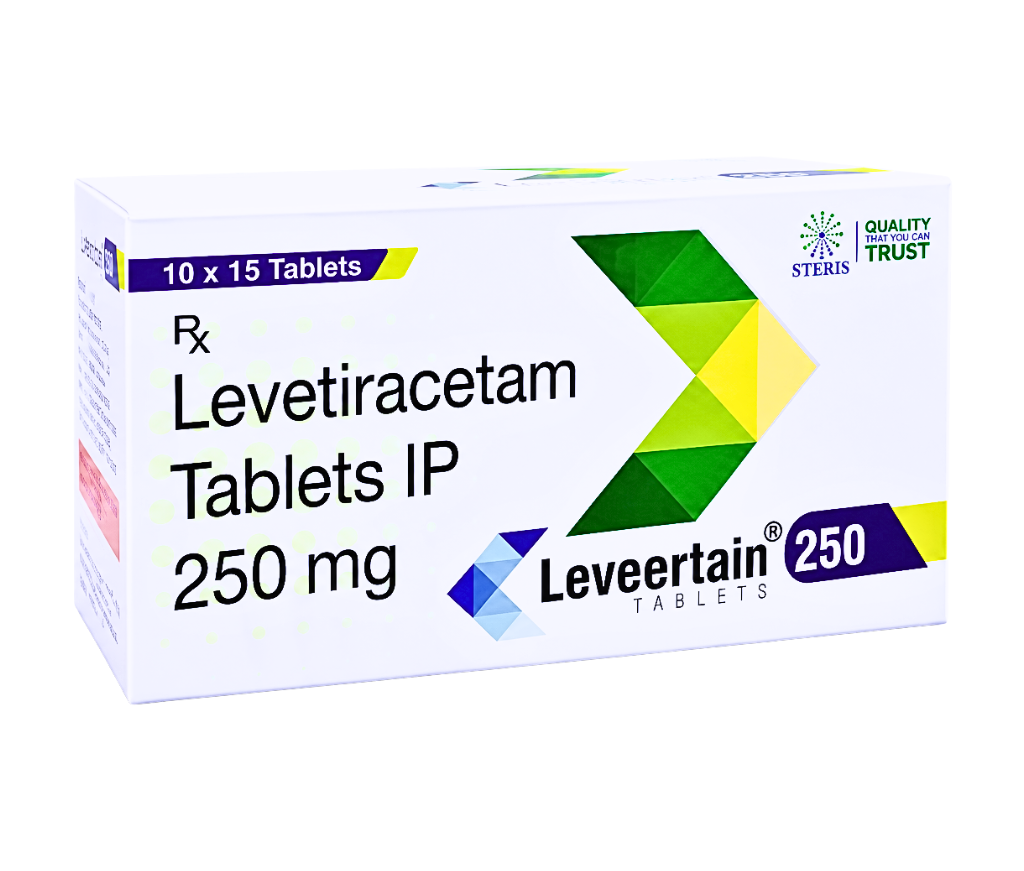
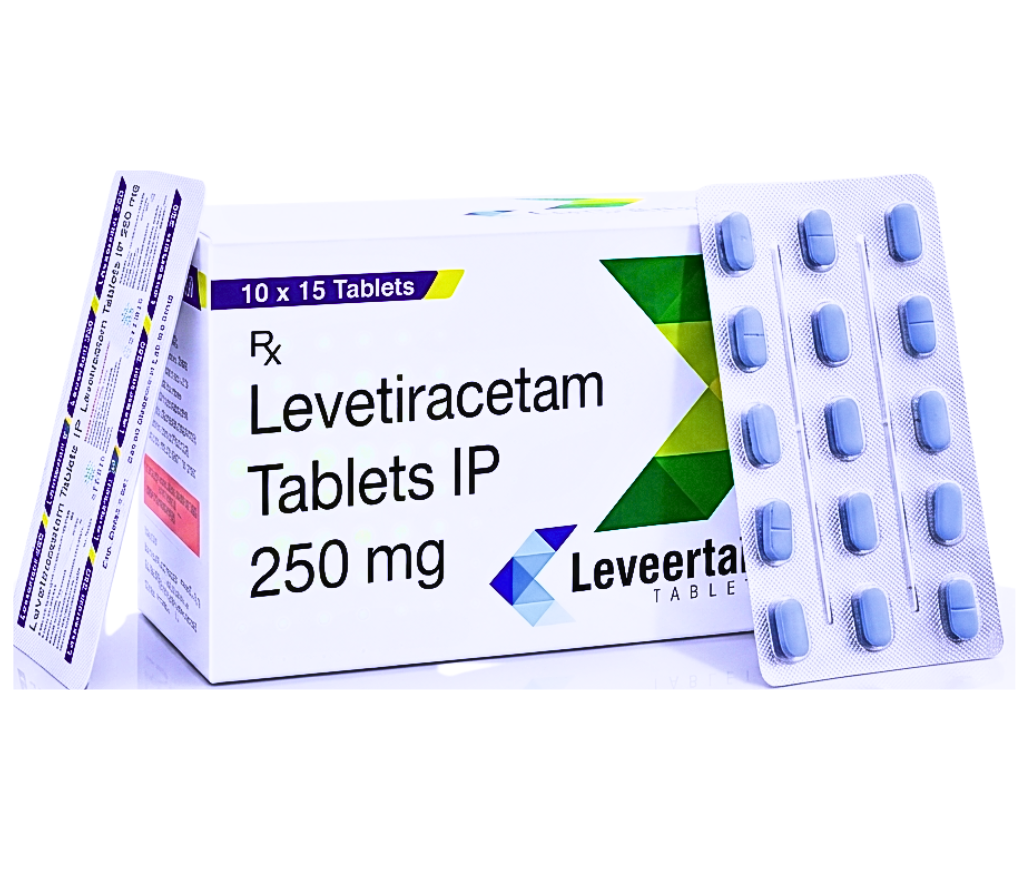
Levetiracetam | LEVECERTAIN 250
 Item requires a valid prescription
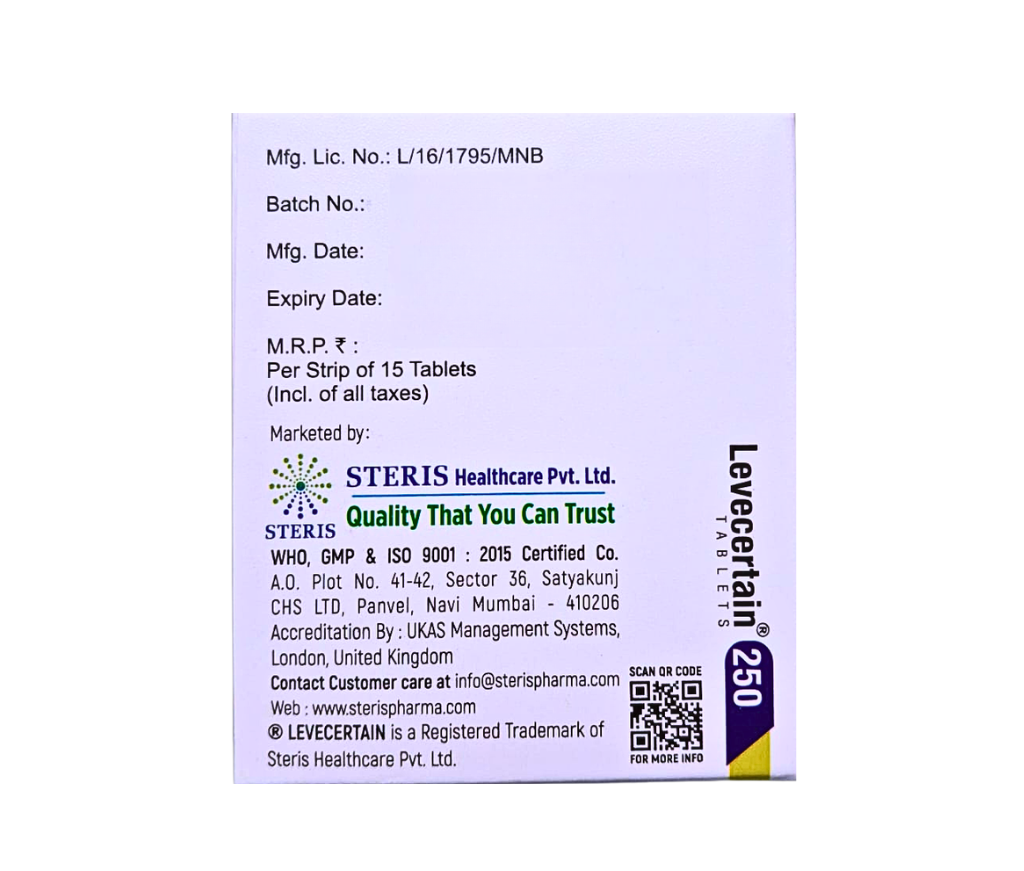
Manufactured By Steris Healthcare Pvt Ltd
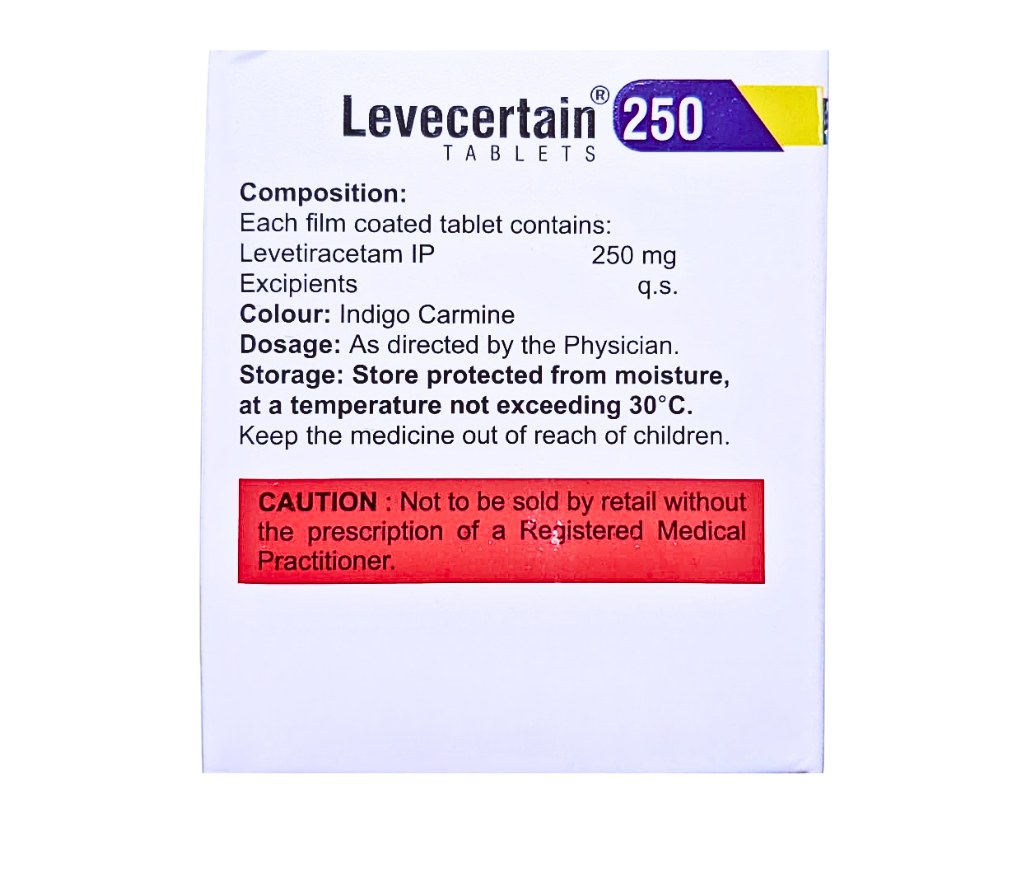
Composition Levetiracetam (250mg)
Rs 71.11
MRP Rs 101.59
(30% OFF)
Includes all taxes
Package SIZE
( For 10x10 Tablets )

100% Authentic
Products

Free
Shipping*

Products
Return Policy
Description:
Levetiracetam is a prescription anticonvulsant (anti-epileptic) medicine, a popular anti-seizure medication used for treating multiple epilepsy types. It works by stabilizing electrical activity in the brain, reducing the frequency and severity of seizure episodes. Levetiracetam is available in strengths of 250mg, 500mg, 750mg, and 1000mg tablets, as well as oral solution and IV injection forms for hospital use. It is usually taken twice daily with or without food. Common side effects include drowsiness, dizziness, weakness, and mood changes; serious side effects such as behavioral changes, suicidal thoughts, or severe skin reactions require immediate medical attention. Levetiracetam is a Schedule H prescription-only drug—it must not be started, stopped, or adjusted without a neurologist's or physician's guidance.
What Is Levetiracetam?
Levetiracetam is a widely prescribed anti-epileptic drug (AED) belonging to the pyrrolidine derivative class. Since its introduction, it has become one of the most commonly recommended second-generation anticonvulsants globally, largely because of its favorable safety profile, minimal drug-interaction burden, and ease of dosing compared with older seizure medicines like phenytoin or carbamazepine.
Levetiracetam is manufactured by Steris Healthcare Pvt. Ltd., a WHO-GMP and ISO-certified pharmaceutical company, ensuring every batch meets stringent quality, purity, and efficacy benchmarks before it reaches pharmacies and hospitals.
Clinical Indications Table
| Condition | Approved Use | Patient Group |
|---|---|---|
| Partial-onset (focal) seizures | Monotherapy or adjunctive therapy | Adults & children (as per prescribing guidance) |
| Myoclonic seizures (Juvenile Myoclonic Epilepsy) | Adjunctive therapy | Adolescents & adults |
| Primary generalized tonic-clonic seizures | Adjunctive therapy | Adults & children |
| Status epilepticus (IV form) | Emergency seizure control | Hospital setting only |
How Does Levetiracetam Work?
Levetiracetam's precise mechanism is distinct from older anti-epileptic drugs. Unlike sodium-channel blockers, levetiracetam is believed to bind to a specific protein in the brain called synaptic vesicle protein 2A (SV2A), which is involved in regulating neurotransmitter release. By modulating SV2A, levetiracetam is thought to reduce the abnormal, excessive electrical firing between neurons that triggers seizures — without significantly affecting normal brain signaling. This unique mechanism is one reason levetiracetam tends to have fewer interactions with other medications compared to traditional AEDs.
Key Benefits of Levetiracetam
- Broad-spectrum seizure control—effective across multiple seizure types (focal, myoclonic, and generalized tonic-clonic).
- Rapid onset of action — therapeutic blood levels are reached quickly, making it suitable for both maintenance therapy and acute seizure management (IV form).
- Minimal drug-drug interactions — because it is not extensively metabolized by liver enzymes (CYP450 pathway), it's often preferred for patients on multiple medications.
- Flexible dosing — available across several strengths (250mg–1000mg), allowing individualized titration.
- No routine blood-level monitoring required — unlike phenytoin or valproate, levetiracetam doesn't typically require frequent therapeutic drug monitoring.
- Available in multiple formulations — tablets, oral solution, and IV injection support use across age groups and clinical settings, including emergency care.
- Well-established long-term safety data — one of the most extensively studied and prescribed AEDs worldwide.
Dosage Guidelines
- Adults (typical starting dose): Often initiated at a lower dose and gradually titrated upward every 1–2 weeks based on seizure control and tolerability.
- Common maintenance doses: Many adult patients are maintained on doses in the 500mg–1500mg twice-daily range, depending on response.
- Pediatric dosing: Calculated on a mg/kg body weight basis and adjusted as the child grows.
- Renal impairment: Dose adjustment is required in patients with reduced kidney function, since levetiracetam is primarily eliminated via the kidneys.
- Missed dose: Take as soon as remembered unless it is close to the next dose—never double the dose.
- Discontinuation: Must always be tapered gradually under medical supervision; abrupt stoppage can trigger rebound seizures or status epilepticus.
Side Effects of Levetiracetam
Common Side Effects
- Drowsiness or fatigue
- Dizziness
- Headache
- Weakness (asthenia)
- Loss of appetite
- Nausea or upset stomach
- Irritability or mood changes
- Nasopharyngitis (common cold-like symptoms)
Serious Side Effects (Seek Immediate Medical Attention)
- Behavioral changes, agitation, aggression, or new/worsening depression
- Suicidal thoughts or self-harm ideation
- Severe skin reactions (blistering, peeling, rash with fever — signs of Stevens-Johnson Syndrome)
- Signs of severe allergic reaction (swelling of face/lips/tongue, difficulty breathing)
- Unusual weakness, muscle pain, or coordination problems
- Signs of liver or kidney dysfunction (yellowing of skin/eyes, dark urine, reduced urination)
- Psychotic symptoms (hallucinations, confusion)
Levetiracetam vs. Other Anti-Epileptic Drugs
| Parameter | Levetiracetam | Sodium Valproate | Oxcarbazepine | Phenytoin |
|---|---|---|---|---|
| Mechanism | SV2A modulation | Multiple (GABA-related) | Sodium-channel blocker | Sodium-channel blocker |
| Drug interactions | Low | Moderate–High | Moderate | High |
| Blood monitoring needed | Not routinely | Yes | Not routinely | Yes |
| Dosing frequency | Twice daily | 2–3 times daily | Twice daily | Once–twice daily |
| Common use | Broad-spectrum | Broad-spectrum | Partial/focal seizures | Focal & generalized seizures |
Precautions & Warnings
- Inform your doctor if you have a history of kidney disease, as dose adjustment is essential.
- Use with caution in patients with a history of depression, anxiety, or psychiatric illness.
- Avoid alcohol while on levetiracetam, as it can worsen drowsiness and dizziness.
- Not recommended to stop abruptly — always taper under medical guidance.
- Use during pregnancy and breastfeeding only under strict medical supervision; discuss risks and benefits with your obstetrician/neurologist.
- Caution advised for patients operating heavy machinery or driving, especially when starting therapy or after dose changes, due to drowsiness/dizziness.
- Elderly patients may require lower doses due to age-related decline in kidney function.
- Keep out of reach of children; store as per label instructions.
Conclusion
Levetiracetam remains one of the most trusted and widely prescribed anti-epileptic medicines for managing focal, myoclonic, and generalized tonic-clonic seizures. Its favorable interaction profile, flexible dosing options, and availability across tablet, oral solution, and injectable forms make it a versatile choice for neurologists managing epilepsy across age groups. That said, like all anti-epileptic drugs, it requires careful, individualized dosing and consistent medical supervision — particularly around kidney function, mental health monitoring, and safe discontinuation. If you or a loved one has been prescribed levetiracetam, following your doctor's dosing schedule closely and reporting any mood, behavioral, or physical changes promptly is the safest path to effective, long-term seizure control.
Frequently Asked Questions
1. What are the uses of levetiracetam?
Levetiracetam is used to treat and control seizures in people with epilepsy, including partial-onset (focal) seizures, myoclonic seizures, and primary generalized tonic-clonic seizures. It is used both as a standalone treatment and alongside other anti-epileptic drugs.
2. Can levetiracetam affect memory?
Yes, some patients report memory difficulties, confusion, or trouble concentrating while taking levetiracetam, especially at the start of treatment or after a dose increase. These cognitive effects are usually mild and may improve over time, but persistent memory issues should always be reported to your doctor.
3. Is levetiracetam a high-risk drug?
Levetiracetam is generally considered to have a favorable safety profile compared to older anti-epileptic drugs, but it is not risk-free. It carries warnings for mood and behavioral changes, including rare risk of suicidal thoughts, and requires dose adjustment in kidney disease. It should always be used strictly under medical supervision.
4. Is it safe to take levetiracetam 750mg twice a day?
A dose of levetiracetam 750mg twice daily falls within the commonly prescribed adult dosing range, but "safe" depends entirely on your individual condition, kidney function, and doctor's assessment. Never adjust to this dose on your own — take it only if specifically prescribed by your physician.
5. What is the maximum amount of levetiracetam per day?
The maximum daily dose is determined by your prescribing doctor based on your seizure type, response, and kidney function; higher-end maintenance doses can go up to around 3000mg per day in divided doses for some adult patients, but this must never be self-adjusted. Always follow your doctor's specific instructions.
6. What are the major side effects of levetiracetam?
Major side effects include drowsiness, dizziness, weakness, mood or behavioral changes, irritability, and in rare cases, severe skin reactions or suicidal thoughts. Any sudden mood changes, aggression, or skin rash should be reported to a doctor immediately.
7. Is levetiracetam safe for kidneys?
Levetiracetam is primarily eliminated through the kidneys, so patients with reduced kidney function need a dose adjustment to avoid drug accumulation and increased side effects. It is not inherently harmful to healthy kidneys, but kidney function should be evaluated before and during treatment, especially in elderly patients.
8. How long does it take for levetiracetam to start working?
Levetiracetam reaches therapeutic blood levels relatively quickly, often within a day of starting treatment, but full seizure control benefits may take longer to assess as your doctor titrates the dose to find your optimal level.
9. Can levetiracetam be stopped suddenly?
No, levetiracetam should never be stopped abruptly, as this can trigger rebound seizures or a dangerous condition called status epilepticus. Discontinuation must always be tapered gradually under a doctor's supervision.
10. Does levetiracetam cause weight gain or weight loss?
Weight changes are not among the most common side effects of levetiracetam, though some patients report appetite changes. Significant weight changes while on this medication should be discussed with your doctor.
11. Can levetiracetam be taken during pregnancy?
Levetiracetam should only be used during pregnancy if the benefits clearly outweigh potential risks, as determined by your neurologist and obstetrician together. Uncontrolled seizures during pregnancy can also pose risks, so treatment decisions require careful medical judgment—never stop or start it without guidance.
12. Is levetiracetam addictive?
No, levetiracetam is not considered an addictive or habit-forming medication in the way controlled substances are. However, physical dependence in the sense of seizure control relies on consistent use, and stopping abruptly can cause withdrawal-type seizures.
13. Can levetiracetam be taken with food?
Yes, levetiracetam can be taken with or without food. However, taking it consistently the same way each day (either always with food or always without) helps maintain steady absorption and blood levels.
14. What should I avoid while taking levetiracetam?
Avoid alcohol, as it can intensify drowsiness and dizziness. Also avoid driving or operating heavy machinery until you know how the medicine affects you, and avoid stopping the medication without medical advice.
15. Can levetiracetam cause mood swings or depression?
Yes, mood changes including irritability, aggression, anxiety, and depression are recognized side effects of levetiracetam. Any new or worsening mood symptoms, especially thoughts of self-harm, should be reported to a doctor immediately.
16. Is levetiracetam available without a prescription?
No, levetiracetam is a Schedule H prescription-only medicine. It cannot be legally purchased or used without a valid prescription from a registered medical practitioner.
17. How is levetiracetam different from other seizure medicines?
Levetiracetam works through a unique mechanism (SV2A modulation) rather than the sodium-channel blocking action of many older anti-epileptic drugs, giving it a lower potential for drug interactions and generally simpler dosing, though effectiveness and side effects vary by individual.

