


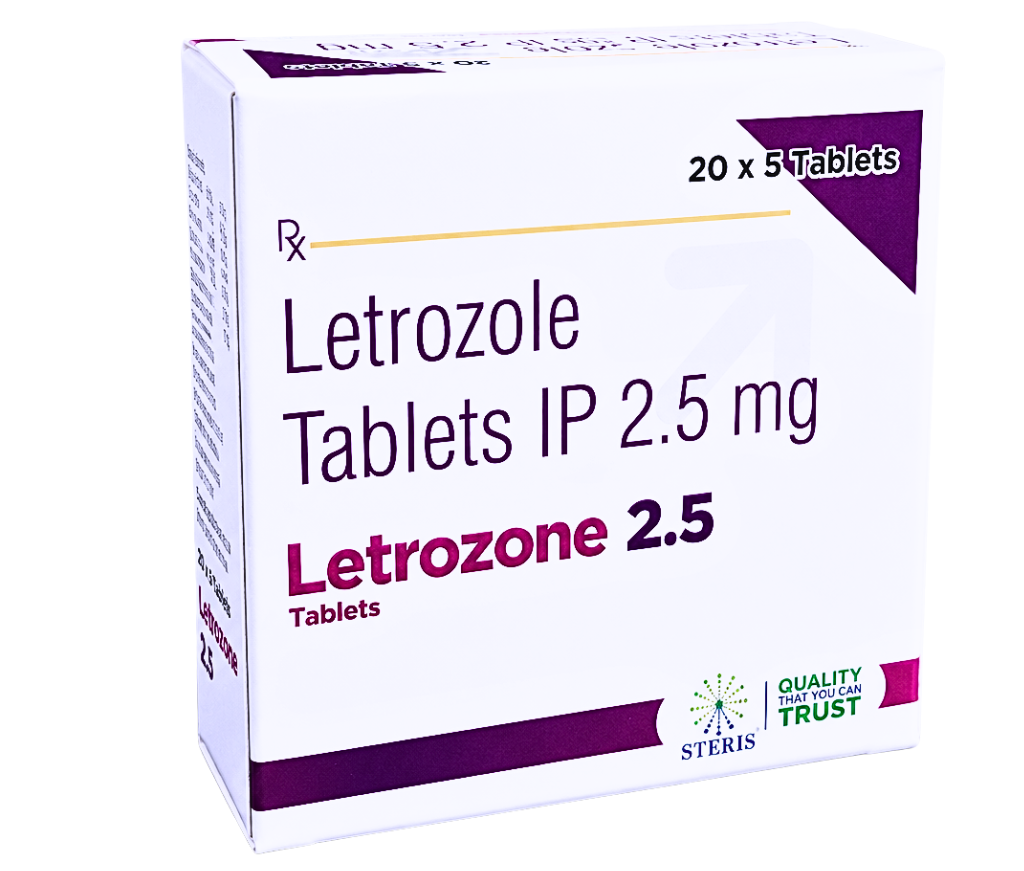
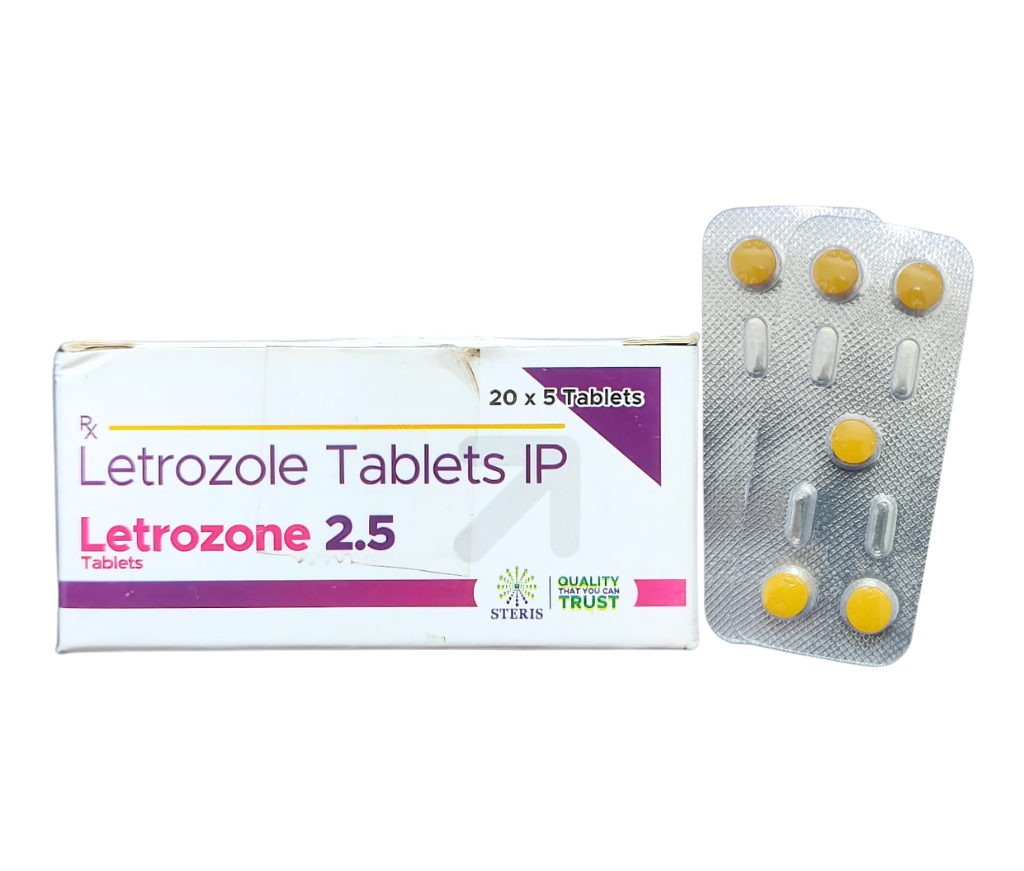

Letrozole 2.5 mg tablet | LETROZONE 2.5
 Item requires a valid prescription
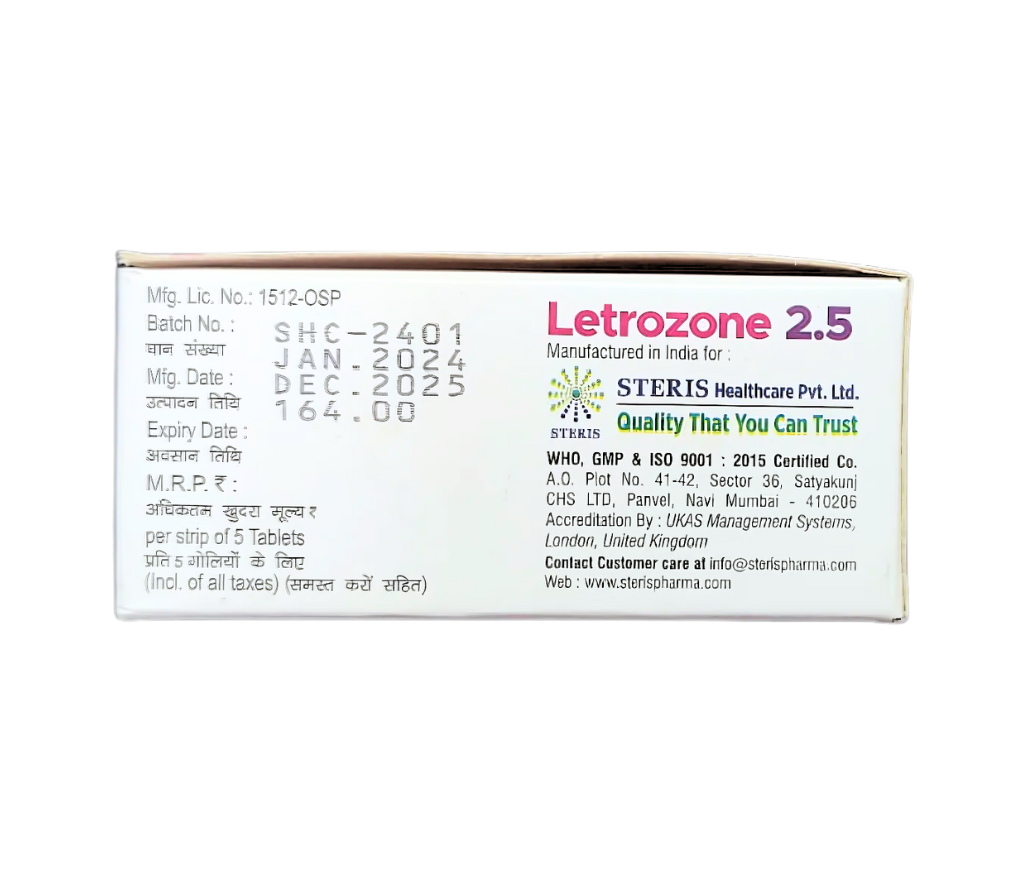
Manufactured By Steris Healthcare Pvt Ltd
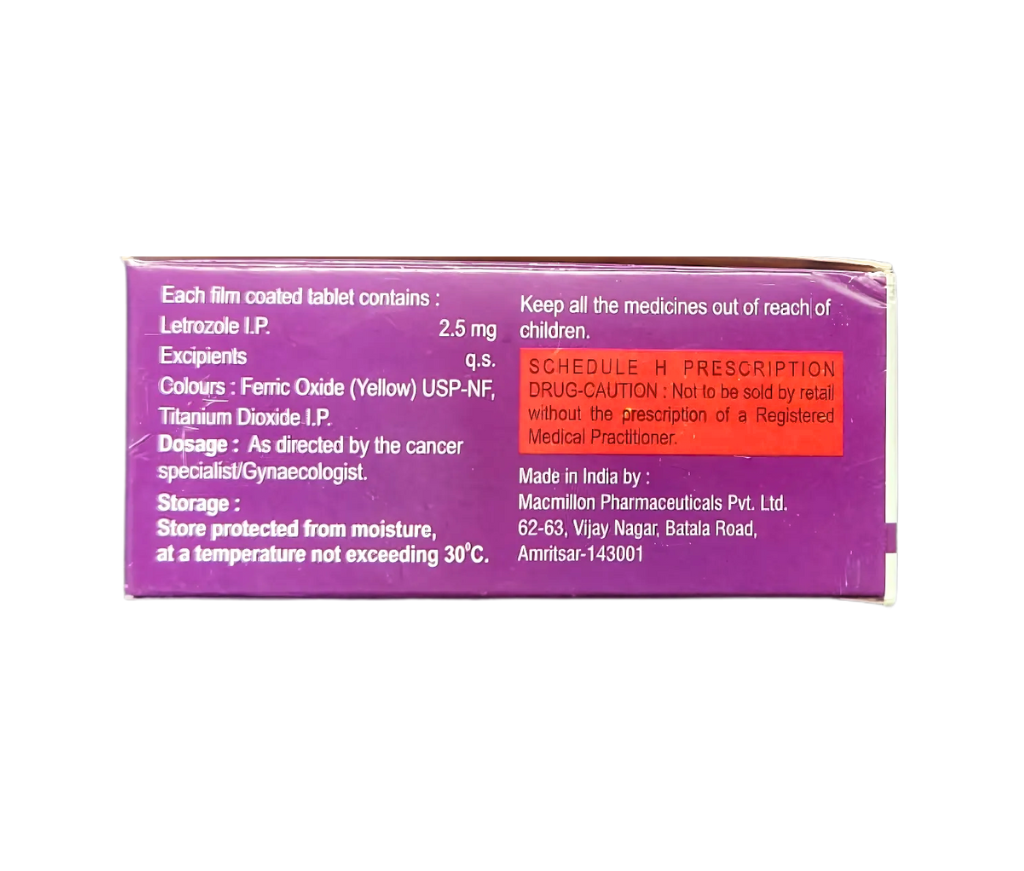
Composition letrozole 2.5 mg tablet
Rs 110.32
MRP Rs 157.60
(30% OFF)
Includes all taxes
Package SIZE
( For 5 Tablet )

100% Authentic
Products

Free
Shipping*

Products
Return Policy
Description:
Letrozole 2.5 mg tablet is an Aromatase inhibitors treat hormone-positive breast cancer and may be used off-label to support ovulation and fertility. It has an established role in the treatment of hormone-receptor-positive breast cancer in appropriate patients. It is also widely used by fertility specialists for ovulation induction, particularly in women with PCOS who do not ovulate regularly. The fertility use is off-label in some countries, so it should be taken only under specialist supervision.
What Is Letrozole 2.5 mg Tablet?
The Letrozole 2.5 mg tablet contains 2.5 mg of letrozole and belongs to a class of medicines called aromatase inhibitors. It works by inhibiting the aromatase enzyme, which is involved in converting certain hormones into estrogen.
Lowering estrogen is particularly important in hormone-sensitive breast cancer because some breast cancer cells depend on estrogen signals for growth. Letrozole is therefore used as an endocrine treatment in appropriate postmenopausal patients with hormone-receptor-positive breast cancer.
Letrozole 2.5 mg Tablet Uses
1. Breast Cancer Treatment
Letrozole is used in appropriate patients with hormone-receptor-positive breast cancer, particularly in postmenopausal women. By reducing estrogen production, it can help slow the growth of estrogen-dependent cancer cells.
The treatment plan may vary depending on whether letrozole is being used as initial endocrine therapy, after another hormonal treatment, or as part of longer-term breast cancer management.
2. Ovulation Induction
Letrozole is commonly prescribed by fertility specialists to stimulate ovulation in women who ovulate irregularly or do not ovulate, especially those with PCOS-related anovulatory infertility.
The 2023 international PCOS guideline recommends letrozole rather than clomiphene for improving ovulation, clinical pregnancy, and live-birth outcomes in appropriate women with PCOS and anovulatory infertility.
3. Fertility Treatment
For selected patients, letrozole may help create a more predictable ovulation window, increasing the opportunity for conception through timed intercourse or assisted reproductive treatment.
How Does Letrozole Work for Fertility?
Letrozole temporarily lowers estrogen levels by blocking aromatase. The reduction in estrogen feedback can encourage the brain and pituitary gland to increase signals that stimulate ovarian follicles.
As follicles develop, one may become dominant and release an egg during ovulation.
For example, a fertility clinic may prescribe 2.5 mg once daily for five days, often beginning early in the menstrual cycle. One NHS fertility service describes a common starting schedule as days 2–6, followed by progesterone testing around day 21 to assess whether ovulation occurred. However, protocols differ between patients and clinics.
Letrozole 2.5 mg Dosage for Fertility
A commonly used starting regimen for ovulation induction is 2.5 mg once daily for five days, but this is not a universal dosage.
Some fertility protocols use days 2–6 of the menstrual cycle, while others may use a different starting day. If ovulation does not occur, a fertility specialist may increase the dose in a subsequent cycle.
Monitoring may include:
- Menstrual-cycle assessment
- Ovulation testing
- Progesterone blood testing
- Ultrasound follicle monitoring when appropriate
- Pregnancy testing
- Assessment of other infertility factors
Key Benefits of Letrozole 2.5 mg Tablet
Supports Ovulation
For appropriate women with PCOS-related anovulatory infertility, letrozole can stimulate ovulation and is recommended as first-line pharmacological treatment by current international PCOS guidance.
May Improve Pregnancy Chances
By helping an eligible patient ovulate, letrozole can increase the opportunity for conception. However, ovulation is only one part of fertility, so pregnancy is not guaranteed.
Useful in PCOS-Related Anovulation
Letrozole is particularly relevant when infertility is associated with irregular or absent ovulation caused by PCOS.
Short Treatment Courses for Ovulation Induction
Many fertility protocols use letrozole for five consecutive days during the menstrual cycle rather than continuously throughout the cycle.
Established Endocrine Therapy
Outside fertility treatment, letrozole has an established role in hormone-sensitive breast cancer management in appropriate patients.
Letrozole 2.5 mg Side Effects
Commonly reported effects may include:
- Hot flashes
- Headache
- Dizziness
- Fatigue
- Muscle or joint aches
- Nausea
- Increased sweating
- Mood changes
- Sleep disturbance
During fertility treatment, some women may experience abdominal discomfort, bloating, headache, dizziness, hot flushes, fatigue, muscle aches, or temporary visual symptoms.
Less Common but Important Risks
Ovulation induction can occasionally result in development of multiple follicles and therefore increase the possibility of multiple pregnancy. Ovarian hyperstimulation is uncommon with letrozole but can occur.
Seek prompt medical attention for severe abdominal pain or swelling, significant vomiting, breathing difficulty, fainting, or sudden vision problems.
Is Letrozole Safe?
For fertility treatment, letrozole should not be used if there is a possibility of an existing pregnancy. International PCOS guidance specifically recommends excluding pregnancy before ovulation induction.
The FDA prescribing information for Femara states that letrozole may cause fetal harm and is contraindicated in women who are or may become pregnant when used for its approved breast-cancer indication.
Long-term letrozole therapy can also affect bone mineral density, which is an important consideration in breast cancer treatment.
What Happens After Taking Letrozole for 5 Days?
If letrozole is being used for ovulation induction, taking it for five days does not necessarily mean ovulation happens immediately after the final tablet.
The ovaries may continue developing a follicle after the five-day course. Ovulation timing varies between individuals, which is why fertility clinics may use cycle tracking, ovulation tests, ultrasound, or progesterone testing.
One NHS fertility protocol uses letrozole on days 2–6 and checks progesterone around day 21 to confirm ovulation.
Can I Get Pregnant With Letrozole 2.5 mg?
The chance of pregnancy depends on factors such as age, ovarian function, sperm quality, fallopian-tube health, timing of intercourse or insemination, and other causes of infertility.
Letrozole is particularly recommended for women with PCOS-related anovulatory infertility when no other infertility factors are present.
Can Letrozole Increase Egg Quality?
Letrozole is primarily used to stimulate ovulation, not as a medicine proven to directly improve egg quality.
Egg quality is strongly influenced by factors such as age and ovarian biology. If you are concerned about egg quality or ovarian reserve, discuss appropriate fertility testing with a reproductive specialist.
Does Letrozole 2.5 mg Help With Pregnancy?
It can help some women become pregnant by inducing ovulation, especially women with PCOS who have anovulatory infertility.
It does not directly cause pregnancy and cannot overcome every cause of infertility. A fertility evaluation is important before or alongside treatment when clinically appropriate.
How Fast Can I Get Pregnant on Letrozole?
Some women may conceive during their first ovulatory treatment cycle, while others require several cycles or additional fertility treatment.
A recent NHS fertility protocol notes that treatment may be continued for several cycles when appropriate and recommends specialist review if pregnancy has not occurred after multiple ovulatory cycles.
There is no medically reliable way to guarantee pregnancy within a specific number of days or cycles.
When to Take Letrozole for Fertility?
There is no single schedule for everyone.
A commonly used fertility protocol starts letrozole early in the menstrual cycle, such as days 2–6, with one 2.5 mg tablet daily. Other fertility specialists may use different schedules depending on the patient's cycle and response.
Follow the exact schedule prescribed by your fertility specialist.
Why Is Letrozole Taken at Night?
Letrozole does not universally need to be taken at night.
Some patients may be advised to take it at night if side effects such as dizziness, headache, or hot flashes are easier to manage while sleeping. Others may take it in the morning. Consistency and following the prescribed schedule are more important than choosing morning versus night.
Can Letrozole Delay Your Period?
Yes, your menstrual timing can change during an ovulation-induction cycle.
If ovulation occurs later than expected, the next period may also occur later. If your period does not arrive when expected, your healthcare professional may recommend a pregnancy test rather than assuming the delay is caused by letrozole.
Who Should Not Take Letrozole Without Medical Advice?
Do not self-medicate with letrozole if you:
- Are pregnant or may already be pregnant
- Have unexplained infertility without evaluation
- Have unexplained abnormal vaginal bleeding
- Have significant liver disease
- Have an allergy to letrozole or its ingredients
- Are taking other medicines that may interact with your treatment
- Are considering using it for fertility without professional assessment
Letrozole vs. Clomiphene for Fertility
Both letrozole and clomiphene can be used for ovulation induction, but they work differently.
For women with PCOS and anovulatory infertility without other infertility factors, the international 2023 PCOS guideline recommends letrozole rather than clomiphene to improve ovulation, clinical pregnancy, and live-birth outcomes.
Is Letrozole 2.5 mg Used for Pregnancy?
Letrozole 2.5 mg may be used under specialist supervision to induce ovulation and increase the chance of pregnancy in selected women, particularly those with PCOS-related anovulatory infertility. It does not directly cause pregnancy and should not be taken during an existing pregnancy.
Frequently Asked Questions
1. What happens after taking letrozole for 5 days?
After a five-day fertility course, ovarian follicles may continue developing and ovulation may occur later in the cycle. The exact timing varies, so your fertility team may monitor ovulation.
2. Can I get pregnant with letrozole 2.5 mg?
Yes. If letrozole successfully induces ovulation, it can improve the opportunity for conception in selected women, particularly those with PCOS-related anovulatory infertility. Pregnancy is not guaranteed.
3. Can letrozole increase egg quality?
Letrozole primarily stimulates ovulation; it is not established as a medicine that directly improves egg quality.
4. Does letrozole 2.5 mg help with pregnancy?
Yes, it may help selected women conceive by stimulating ovulation. It is particularly recommended as first-line pharmacological ovulation induction for appropriate women with PCOS-related anovulatory infertility.
5. How fast can I get pregnant on letrozole?
Some women conceive during an early treatment cycle, while others require several cycles or further fertility treatment. Individual results vary considerably.
6. Why is letrozole taken at night?
It does not have to be taken at night for everyone. Some patients may prefer or be advised to take it at night to make certain side effects easier to tolerate.
7. When to take letrozole for fertility?
A commonly used protocol is once daily for five days early in the menstrual cycle, often days 2–6. Your fertility specialist may prescribe a different schedule.
8. Can letrozole delay your period?
It can alter the timing of your cycle, particularly if ovulation occurs later than expected. A missed period should be evaluated for pregnancy rather than automatically attributed to letrozole.
9. What are the side effects of letrozole?
Possible side effects include hot flashes, headache, dizziness, fatigue, nausea, muscle or joint aches and other hormonal symptoms. Fertility patients may also experience abdominal discomfort or bloating.
10. Is letrozole high risk?
Letrozole is a prescription medicine with important risks and contraindications, but it can be an appropriate treatment when prescribed and monitored correctly. It must not be used during pregnancy.
11. How quickly does letrozole start work?
Letrozole begins reducing aromatase activity after administration, but the fertility effect is not simply immediate. Follicular development and ovulation occur over the following days, with timing varying between patients.
12. Can letrozole be used for PCOS?
Yes. Current international guidance recommends letrozole as first-line pharmacological ovulation induction for women with PCOS who have anovulatory infertility and no other infertility factors.
13. Can I take letrozole if I am already pregnant?
No. Letrozole should not be used when pregnancy is present or suspected. Pregnancy should be excluded before fertility-related ovulation induction.
14. Does letrozole guarantee ovulation?
No. Some patients do not respond to the initial dose. Fertility specialists may adjust the treatment plan or investigate other causes of infertility if ovulation does not occur.
15. Does letrozole guarantee pregnancy?
No. Letrozole can help induce ovulation, but conception depends on multiple reproductive factors.
16. How long is letrozole taken for fertility?
Many protocols use it for five days during each treatment cycle. The number of cycles and whether the dose changes should be determined by a fertility specialist.
17. Can letrozole cause twins?
Ovulation induction can increase the possibility of multiple pregnancy because more than one follicle may develop. The risk is generally lower with letrozole than with clomiphene in some fertility protocols, but it is not zero.
18. What should I do if I miss a letrozole dose?
Follow your prescriber's instructions. Do not automatically double the next dose. If you are using letrozole for fertility and miss a scheduled dose, contact your fertility clinic for individualized advice.
Conclusion
Letrozole 2.5 mg tablet is an aromatase inhibitor with established use in hormone-sensitive breast cancer and an important role in fertility medicine for inducing ovulation in selected women, especially those with PCOS-related anovulatory infertility. Current international PCOS guidance identifies letrozole as the preferred first-line pharmacological option for appropriate patients with anovulatory infertility.
For fertility treatment, a common protocol involves 2.5 mg once daily for five days early in the menstrual cycle, but treatment schedules vary and should be prescribed individually. Letrozole can improve the chance of pregnancy by helping ovulation, but it cannot guarantee conception.
Because letrozole can cause side effects and must not be used during an existing pregnancy, professional medical supervision is essential. For buyers searching for letrozole 2.5 mg tablets, always verify the medicine, packaging, supplier credentials, prescription requirements, and product authenticity before purchase.
| Information | Details |
|---|---|
| Active ingredient | Letrozole |
| Strength | 2.5 mg |
| Drug class | Aromatase inhibitor |
| Dosage form | Oral tablet |
| Breast cancer use | Hormone-sensitive breast cancer in appropriate patients |
| Fertility use | Ovulation induction, particularly PCOS-related anovulatory infertility |
| Prescription status | Prescription medicine |
| Fertility dosing | Individualized by fertility specialist |
| Pregnancy | Must be excluded before ovulation induction |
| Common fertility regimen | Often 2.5 mg daily for 5 days, but protocol varies |