


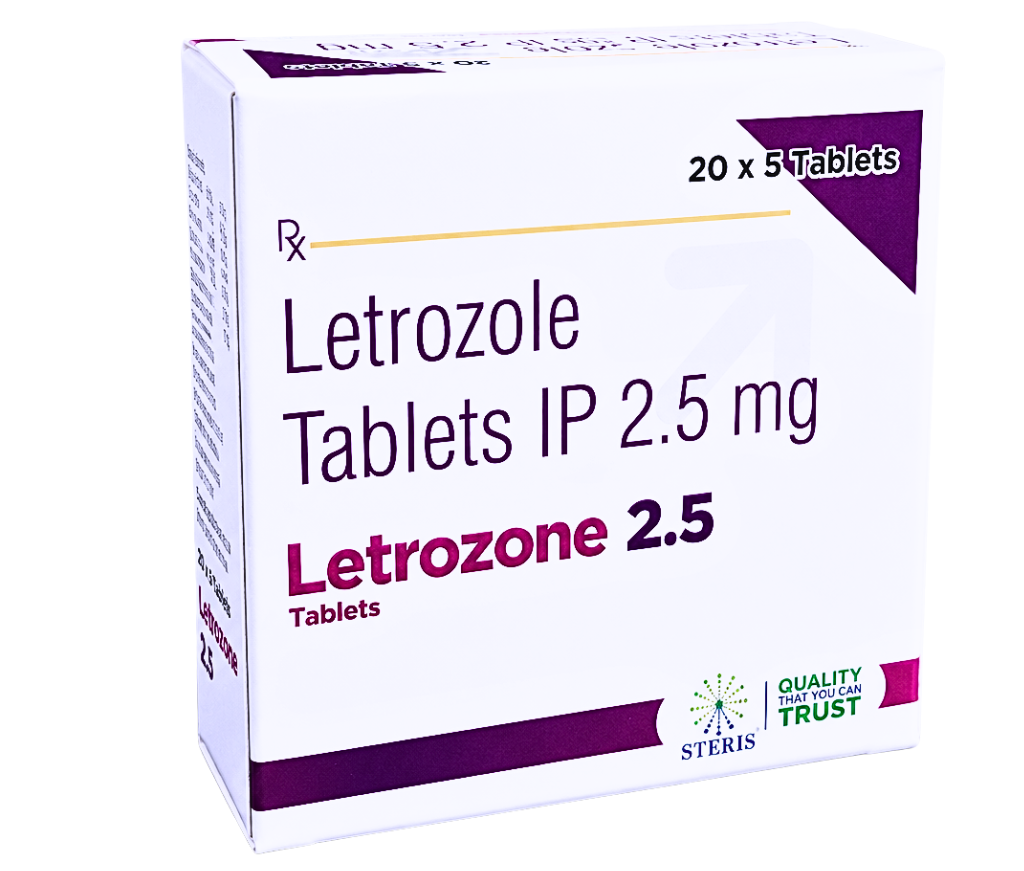
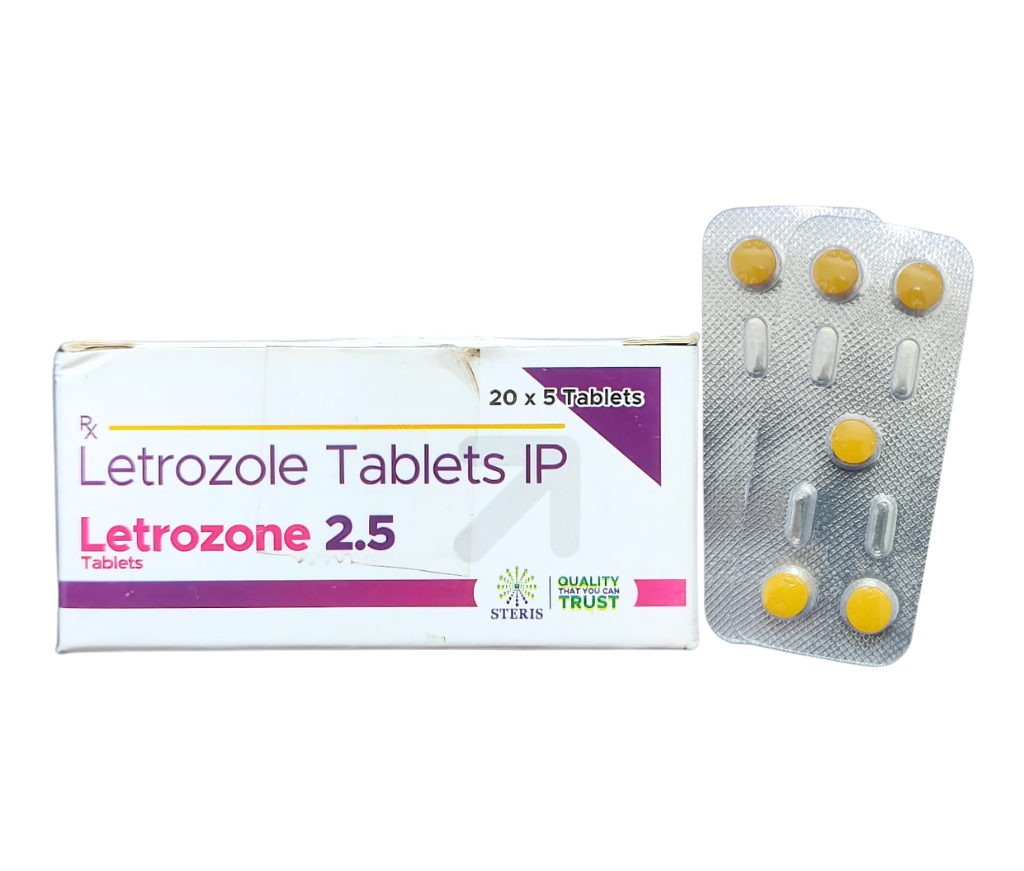

Letrozole 2.5 mg tablet | LETROZONE 2.5
 Item requires a valid prescription
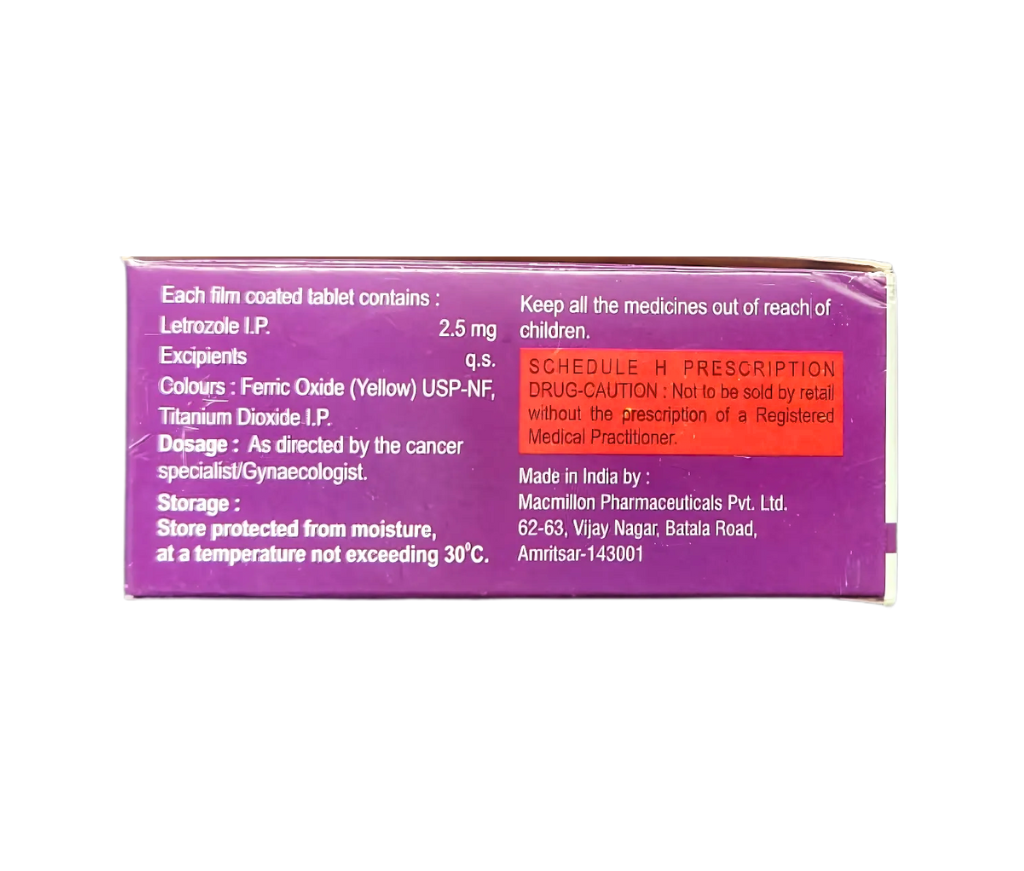
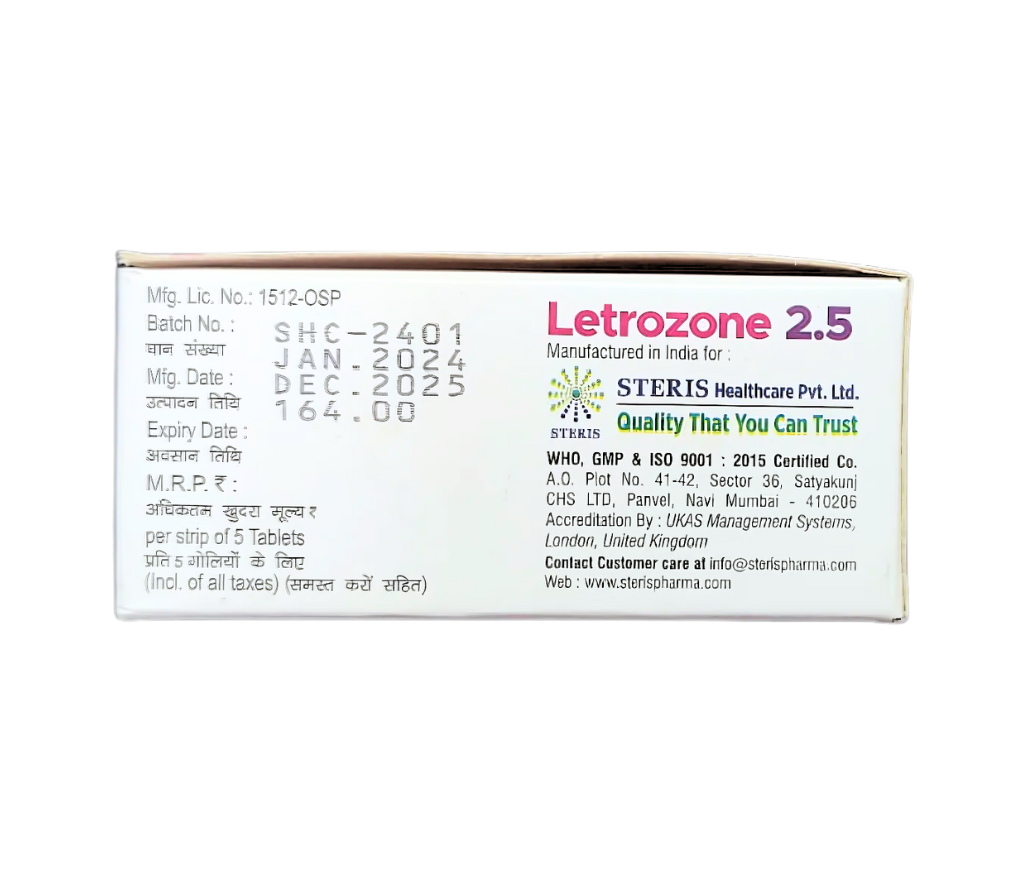
Manufactured By Steris Healthcare Pvt Ltd
Composition letrozole 2.5 mg tablet
Rs 110.32
MRP Rs 157.60
(30% OFF)
Includes all taxes
Package SIZE
( For 5 Tablet )

100% Authentic
Products

Free
Shipping*

Products
Return Policy
Description:
Letrozole 2.5 mg tablet is an Aromatase inhibitors treat hormone-positive breast cancer and may be used off-label to support ovulation and fertility. It has an established role in the treatment of hormone-receptor-positive breast cancer in appropriate patients. It is also widely used by fertility specialists for ovulation induction, particularly in women with PCOS who do not ovulate regularly. The fertility use is off-label in some countries, so it should be taken only under specialist supervision.
PRODUCT INFORMATION
| Information | Details |
|---|---|
| Active ingredient | Letrozole |
| Strength | 2.5 mg |
| Drug class | Aromatase inhibitor |
| Dosage form | Oral tablet |
| Breast cancer use | Hormone-sensitive breast cancer in appropriate patients |
| Fertility use | Ovulation induction, particularly PCOS-related anovulatory infertility |
| Prescription status | Prescription medicine |
| Fertility dosing | Individualized by fertility specialist |
| Pregnancy | Must be excluded before ovulation induction |
| Common fertility regimen | Often 2.5 mg daily for 5 days, but protocol varies |
What Is Letrozole 2.5 mg Tablet?
The Letrozole 2.5 mg tablet contains 2.5 mg of letrozole and belongs to a class of medicines called aromatase inhibitors. It works by inhibiting the aromatase enzyme, which is involved in converting certain hormones into estrogen.
Lowering estrogen is particularly important in hormone-sensitive breast cancer because some breast cancer cells depend on estrogen signals for growth. Letrozole is therefore used as an endocrine treatment in appropriate postmenopausal patients with hormone-receptor-positive breast cancer.
Letrozole 2.5 mg Tablet Uses
1. Breast Cancer Treatment: Letrozole is used in appropriate patients with hormone-receptor-positive breast cancer, particularly in postmenopausal women. By reducing estrogen production, it can help slow the growth of estrogen-dependent cancer cells. The treatment plan may vary depending on whether letrozole is being used as initial endocrine therapy, after another hormonal treatment, or as part of longer-term breast cancer management.
2. Ovulation Induction: Letrozole is commonly prescribed by fertility specialists to stimulate ovulation in women who ovulate irregularly or do not ovulate, especially those with PCOS-related anovulatory infertility. The 2023 international PCOS guideline recommends letrozole rather than clomiphene for improving ovulation, clinical pregnancy, and live-birth outcomes in appropriate women with PCOS and anovulatory infertility.
3. Fertility Treatment: For selected patients, letrozole may help create a more predictable ovulation window, increasing the opportunity for conception through timed intercourse or assisted reproductive treatment.
How Does Letrozole Work for Fertility?
Letrozole temporarily lowers estrogen levels by blocking aromatase. The reduction in estrogen feedback can encourage the brain and pituitary gland to increase signals that stimulate ovarian follicles.
As follicles develop, one may become dominant and release an egg during ovulation.
For example, a fertility clinic may prescribe 2.5 mg once daily for five days, often beginning early in the menstrual cycle. One NHS fertility service describes a common starting schedule as days 2–6, followed by progesterone testing around day 21 to assess whether ovulation occurred. However, protocols differ between patients and clinics.
Key Benefits of Letrozole 2.5 mg Tablet
Supports Ovulation: For appropriate women with PCOS-related anovulatory infertility, letrozole can stimulate ovulation and is recommended as first-line pharmacological treatment by current international PCOS guidance.
May Improve Pregnancy Chances: By helping an eligible patient ovulate, letrozole can increase the opportunity for conception. However, ovulation is only one part of fertility, so pregnancy is not guaranteed.
Useful in PCOS-Related Anovulation: Letrozole is particularly relevant when infertility is associated with irregular or absent ovulation caused by PCOS.
Short Treatment Courses for Ovulation Induction: Many fertility protocols use letrozole for five consecutive days during the menstrual cycle rather than continuously throughout the cycle.
Established Endocrine Therapy: Outside fertility treatment, letrozole has an established role in hormone-sensitive breast cancer management in appropriate patients.
Side Effects
Commonly reported effects may include:
- Hot flashes
- Headache
- Dizziness
- Fatigue
- Muscle or joint aches
- Nausea
- Increased sweating
- Mood changes
- Sleep disturbance
During fertility treatment, some women may experience abdominal discomfort, bloating, headache, dizziness, hot flushes, fatigue, muscle aches, or temporary visual symptoms.
Frequently Asked Questions
1. What happens after taking letrozole for 5 days?
After a five-day fertility course, ovarian follicles may continue developing and ovulation may occur later in the cycle. The exact timing varies, so your fertility team may monitor ovulation.
2. Can I get pregnant with letrozole 2.5 mg?
Yes. If letrozole successfully induces ovulation, it can improve the opportunity for conception in selected women, particularly those with PCOS-related anovulatory infertility. Pregnancy is not guaranteed.
3. Can letrozole increase egg quality?
Letrozole primarily stimulates ovulation; it is not established as a medicine that directly improves egg quality.
4. Does letrozole 2.5 mg help with pregnancy?
Yes, it may help selected women conceive by stimulating ovulation. It is particularly recommended as first-line pharmacological ovulation induction for appropriate women with PCOS-related anovulatory infertility.
5. How fast can I get pregnant on letrozole?
Some women conceive during an early treatment cycle, while others require several cycles or further fertility treatment. Individual results vary considerably.
6. Why is letrozole taken at night?
It does not have to be taken at night for everyone. Some patients may prefer or be advised to take it at night to make certain side effects easier to tolerate.
7. When to take letrozole for fertility?
A commonly used protocol is once daily for five days early in the menstrual cycle, often days 2–6. Your fertility specialist may prescribe a different schedule.
8. Can letrozole delay your period?
It can alter the timing of your cycle, particularly if ovulation occurs later than expected. A missed period should be evaluated for pregnancy rather than automatically attributed to letrozole.
9. What are the side effects of letrozole?
Possible side effects include hot flashes, headache, dizziness, fatigue, nausea, muscle or joint aches and other hormonal symptoms. Fertility patients may also experience abdominal discomfort or bloating.
10. Is letrozole high risk?
Letrozole is a prescription medicine with important risks and contraindications, but it can be an appropriate treatment when prescribed and monitored correctly. It must not be used during pregnancy.

