


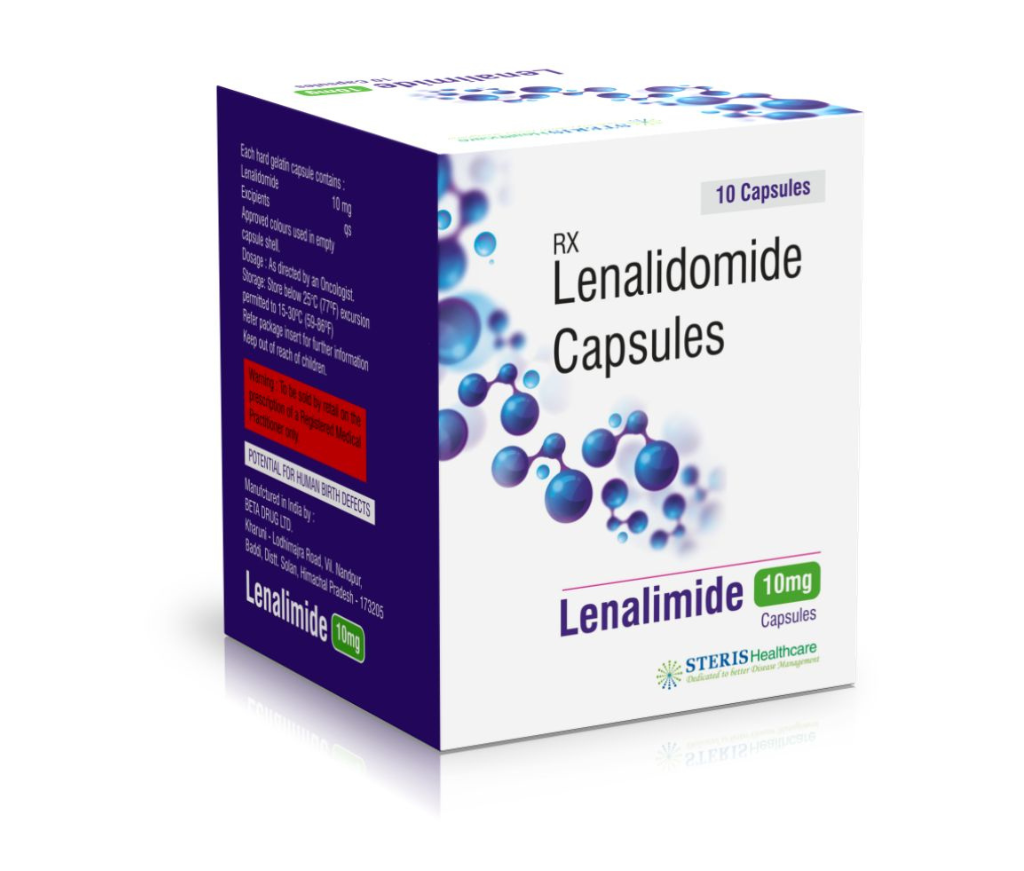
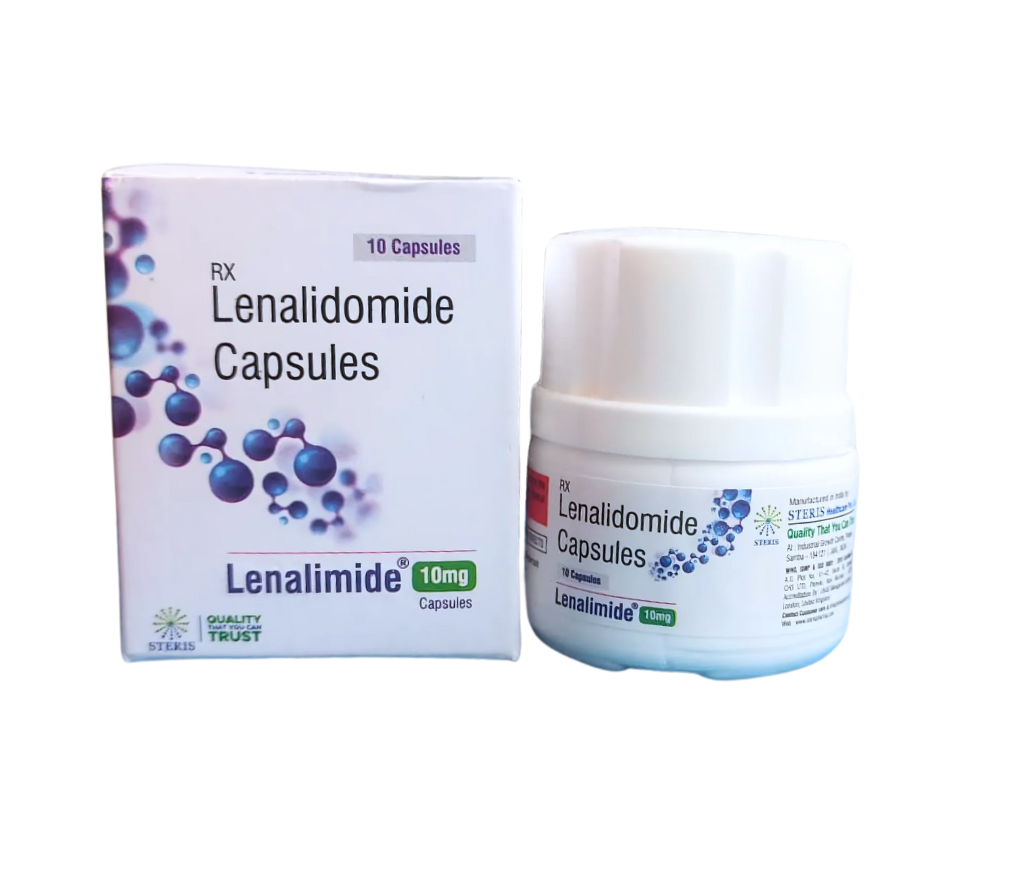
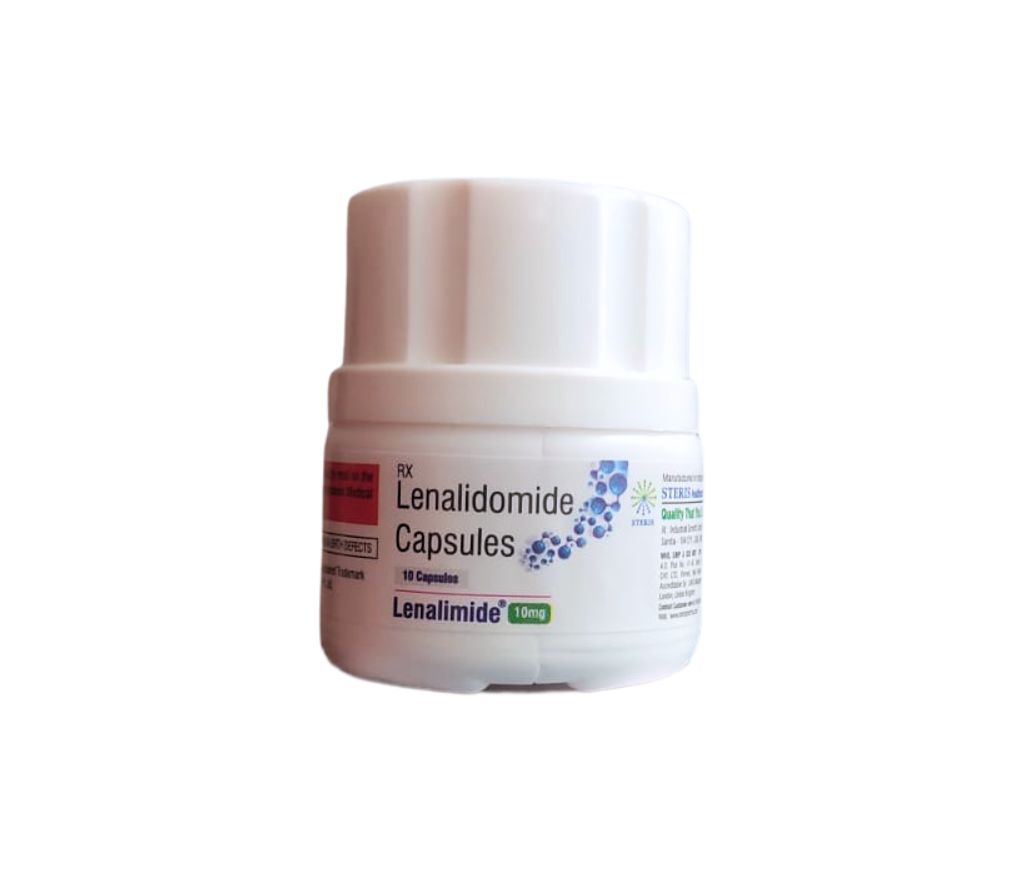
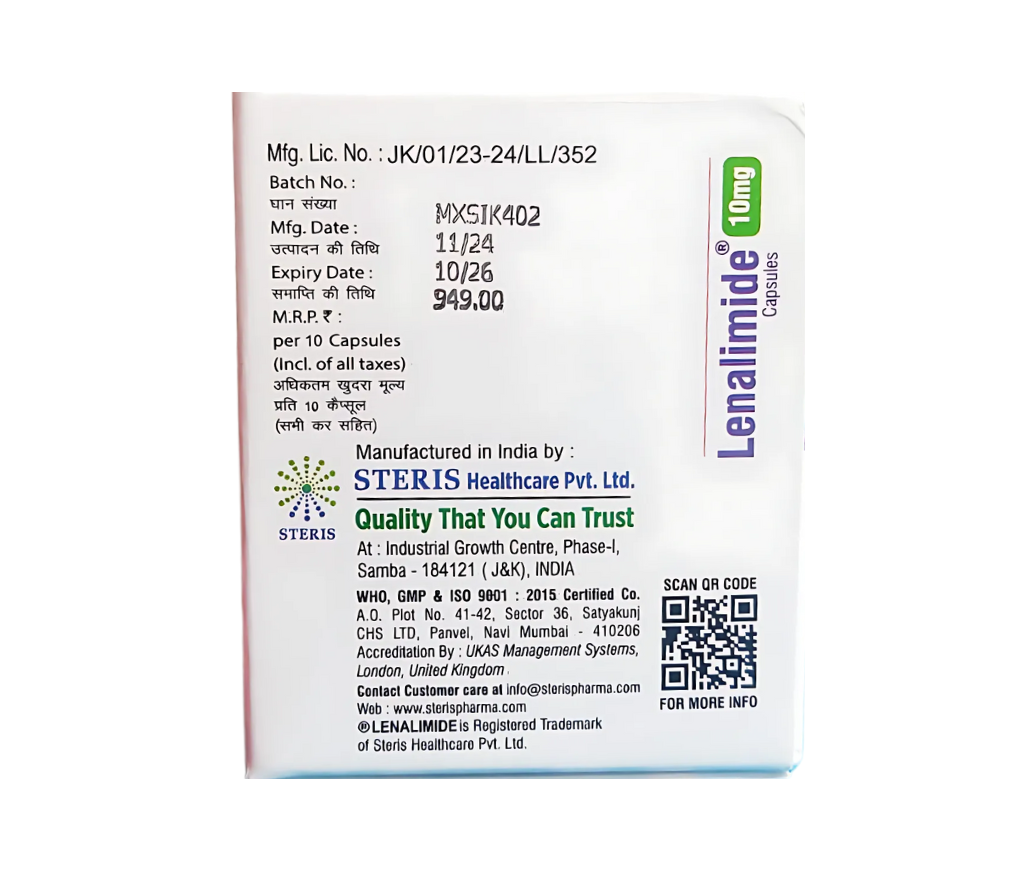
LENALIMIDE 10
 Item requires a valid prescription
Manufactured By Steris Healthcare Pvt Ltd
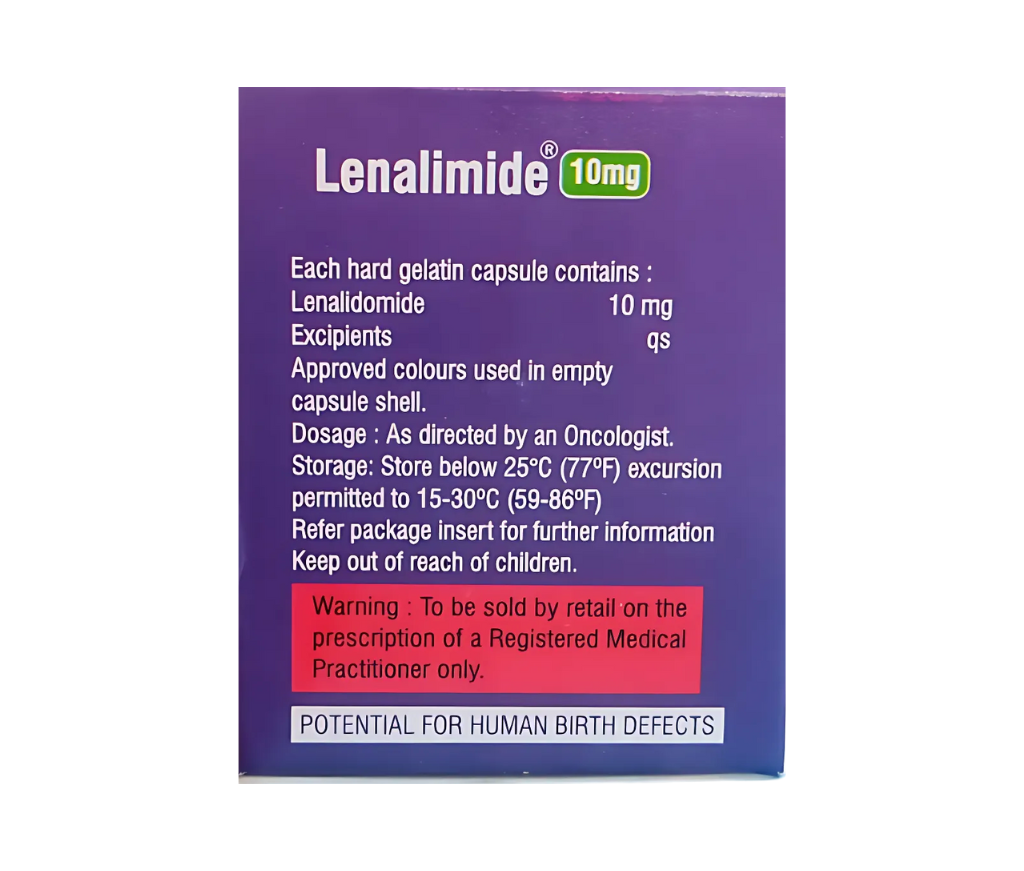
Composition lenalidomide 10 mg
Rs 622.78
MRP Rs 889.69
(30% OFF)
Includes all taxes
Package SIZE
( For 10 Tablet )

100% Authentic
Products

Free
Shipping*

Products
Return Policy
Description:
If you are searching for lenalidomide 10 mg in India, LENALIMIDE 10 is a prescription medicine containing lenalidomide 10 mg and manufactured by Steris Healthcare Pvt. Ltd. It is an oral anticancer medicine belonging to the immunomodulatory drug (IMiD) class and is used under specialist medical supervision for certain blood cancers and related disorders.
Lenalidomide is most commonly associated with the treatment of multiple myeloma and certain myelodysplastic syndromes. Depending on the specific disease, treatment history and applicable prescribing information, it may also be used for other hematological malignancies. The appropriate dose and treatment schedule are individualized by the treating specialist.
Because lenalidomide can cause serious and potentially life-threatening adverse effects, including severe fetal harm if taken during pregnancy and significant blood-count abnormalities or thromboembolic events, it should not be purchased or used as a self-medication product.
LENALIMIDE 10 Product Information
| Product Detail | Information |
|---|---|
| Brand Name | LENALIMIDE 10 |
| Active Ingredient | Lenalidomide |
| Strength | 10 mg |
| Composition | Lenalidomide 10 mg |
| Manufacturer/Marketer | Steris Healthcare Pvt. Ltd. |
| Dosage Form | Tablet |
| Pack Size | 10 tablets |
What Is Lenalidomide 10 mg?
Lenalidomide 10 mg is an oral immunomodulatory medicine used in the management of certain blood cancers and related disorders.
It is structurally related to thalidomide and has immunomodulatory, anti-proliferative and anti-angiogenic properties. At the cellular level, lenalidomide interacts with the cereblon-containing E3 ubiquitin ligase complex, influencing the degradation of specific proteins involved in immune-cell and cancer-cell biology
The precise way lenalidomide contributes to treatment varies according to the disease being treated. It may influence cancer-cell survival, immune responses and the tumor microenvironment.
LENALIMIDE 10 should therefore be viewed as a specialist oncology medicine, rather than a general immune-boosting supplement.
What Is Lenalidomide 10 mg Used For?
Lenalidomide has established uses in several hematological conditions.
The Steris product information identifies LENALIMIDE 10 for conditions including:
-
Multiple myeloma
-
Certain myelodysplastic syndromes (MDS)
-
Certain mantle cell lymphoma cases
The precise indication depends on the patient's diagnosis, previous treatment and the applicable prescribing guidance.
Multiple Myeloma
Multiple myeloma is a cancer involving plasma cells in the bone marrow. Lenalidomide is commonly incorporated into treatment regimens for multiple myeloma, frequently in combination with other medicines.
The actual treatment combination and duration depend on the patient's disease status, previous therapies, eligibility for transplantation and other clinical factors.
Myelodysplastic Syndromes
Lenalidomide is also used for certain patients with myelodysplastic syndromes, particularly specific cases involving deletion 5q cytogenetic abnormalities. Clinical protocols have evaluated 10 mg regimens in selected MDS populations
Mantle Cell Lymphoma
Lenalidomide may be prescribed for certain patients with mantle cell lymphoma after previous treatments, depending on the applicable indication and clinical circumstances.
It is important not to assume that a 10 mg tablet is appropriate for every patient with one of these conditions. The prescribed dose and schedule can differ according to kidney function, disease, previous treatment and other factors.
How Does Lenalidomide Work?
Lenalidomide is an immunomodulatory drug. It has several biological effects that contribute to its anticancer activity.
One important mechanism involves binding to cereblon, a component of an E3 ubiquitin ligase complex. Lenalidomide changes the interaction between this complex and certain proteins, including transcription factors involved in immune and malignant-cell biology.
Lenalidomide can also affect the tumor environment and immune-cell activity. Its activity is therefore broader than simply attacking cancer cells directly.
This mechanism is one reason lenalidomide has become an important component of treatment strategies for certain plasma-cell and hematological disorders.
How Should Lenalidomide 10 mg Be Taken?
Lenalidomide should be taken exactly as prescribed by the treating doctor.
The appropriate dose is not determined simply by the strength printed on the package. Depending on the indication, lenalidomide can be used at different doses and schedules. Dose adjustments may also be necessary for patients with reduced kidney function.
Patients should:
-
Follow the exact prescription.
-
Take the medicine on the scheduled days.
-
Swallow the medicine as instructed by the healthcare professional.
-
Avoid changing the dose independently.
-
Avoid taking extra tablets after a missed dose unless specifically instructed.
-
Attend scheduled blood tests and medical appointments.
MedlinePlus advises that if a missed lenalidomide dose is remembered within 12 hours, it may generally be taken; if more than 12 hours have passed, the missed dose should generally be skipped rather than doubled. Patients should follow their own prescribing instructions if they differ
Why Is Medical Monitoring Important?
Lenalidomide can affect blood cells and other body systems. Regular medical monitoring is therefore an important part of treatment.
Doctors may monitor:
-
Complete blood counts
-
Kidney function
-
Liver-related parameters where clinically appropriate
-
Symptoms suggesting blood clots
-
Treatment response
-
Other disease-specific laboratory markers
The Steris product information specifically emphasizes regular blood testing and monitoring for hematological toxicity.
Patients should not skip monitoring appointments simply because they feel well.
Important Pregnancy Warning
One of the most important facts about lenalidomide is its serious risk of fetal harm.
Lenalidomide is highly teratogenic, meaning exposure during pregnancy can cause severe birth defects or fetal death. Appropriate pregnancy-prevention precautions are therefore essential for patients who can become pregnant.
Pregnancy-prevention requirements may include pregnancy testing, contraception and other risk-management measures prescribed by the treating healthcare team. The exact requirements should be followed as instructed by the relevant healthcare professional and applicable local program.
Men taking lenalidomide may also have specific precautions regarding contraception and sexual exposure. Patients should receive individualized counseling before treatment begins.
This is one of the key reasons LENALIMIDE 10 must not be treated as an ordinary medicine that can be purchased and used without supervision.
Lenalidomide 10 mg and Kidney Function
Kidney function is particularly relevant when lenalidomide is prescribed.
Lenalidomide is substantially eliminated through the kidneys, and patients with renal impairment may require dose adjustments. The Steris product information also highlights the need for caution and possible dosage adjustment in patients with renal impairment
Tell your doctor if you have:
-
Chronic kidney disease
-
Reduced kidney function
-
A history of kidney problems
-
Dialysis treatment
-
Previous abnormal kidney-function tests
Never adjust the dose yourself based on your kidney test results.
Possible Side Effects of Lenalidomide 10 mg
Lenalidomide can cause side effects, and the likelihood and severity can vary according to the patient and treatment combination.
Reported adverse effects can include:
-
Fatigue
-
Nausea
-
Constipation
-
Diarrhea
-
Rash
-
Headache
-
Low red blood cell counts
-
Low white blood cell counts
-
Low platelet counts
-
Increased risk of infections
-
Blood clots
The Steris product information specifically lists fatigue, nausea, gastrointestinal symptoms, rash, neutropenia, thrombocytopenia and thrombotic events among potential adverse effects.
Patients should promptly contact their healthcare team if they develop symptoms such as unusual bleeding, severe weakness, fever, signs of infection, sudden shortness of breath, chest pain, or swelling/pain in an arm or leg.
Do not stop cancer treatment suddenly without speaking with your treating physician unless you are instructed to do so.
Drug Interactions
Before starting LENALIMIDE 10, tell your doctor about every medicine and supplement you take.
This includes:
-
Prescription medicines
-
Blood thinners
-
Steroids
-
Chemotherapy medicines
-
Medicines for diabetes
-
Blood-pressure medicines
-
Vitamins
-
Herbal products
-
Over-the-counter medicines
Lenalidomide is often administered alongside other medicines, such as dexamethasone, depending on the treatment protocol. Combining therapies can alter the risk profile, including the risk of blood clots.
The Steris product information also highlights potential considerations involving anticoagulants, erythropoietin-stimulating agents and other medicines.
Your oncologist or pharmacist should review your complete medication list before treatment.
What Should You Know Before Buying Lenalidomide 10 mg?
If you are looking to buy lenalidomide 10 mg online in India, verify more than the product price.
Verify the prescription
Lenalidomide is a prescription medicine. The Steris Online product listing explicitly states that a valid prescription is required.
Check the exact brand and strength
Confirm that your prescription calls for LENALIMIDE 10 / lenalidomide 10 mg.
Do not substitute 5 mg, 15 mg, 20 mg or 25 mg products because they appear similar.
Check the pack size
The Steris listing identifies the package as 10 tablets.
Check expiry and packaging
Before accepting the medicine, inspect:
-
Product name
-
Strength
-
Batch number
-
Expiry date
-
Manufacturer information
-
Seal and packaging condition
Verify the seller
Purchase from a legitimate pharmacy, authorized supplier or manufacturer-linked channel.
Compare the final price
When comparing lenalidomide 10 mg price, look at the final payable amount rather than only the displayed discount.
Follow storage instructions
Store the medicine according to the package and pharmacist's instructions.
Can I Order Lenalidomide 10 mg Online?
Prescription lenalidomide products can be listed through online pharmaceutical channels in India.
For LENALIMIDE 10, the Steris Online product page provides an online product listing and identifies the medicine as requiring a valid prescription
A typical online purchasing process is:
-
Obtain a current prescription from your treating specialist.
-
Search for LENALIMIDE 10 or lenalidomide 10 mg.
-
Confirm the manufacturer and strength.
-
Select the 10-tablet pack.
-
Check the current price and availability.
-
Submit the prescription when requested.
-
Review delivery and payment details.
-
Confirm the final payable amount.
-
Check the medicine when it arrives.
Transactional Buying Guide for LENALIMIDE 10
If your doctor has already prescribed lenalidomide 10 mg, you can use the following checklist before placing an online order:
Prescription → Product verification → Price check → Prescription upload → Checkout → Delivery verification
Step 1: Keep your prescription ready
Because LENALIMIDE 10 is a prescription anticancer medicine, have the prescription available before starting the purchasing process.
Step 2: Verify the product
Make sure the product says:
LENALIMIDE 10 – Lenalidomide 10 mg
Step 3: Confirm the pack
The Steris Online listing currently identifies a 10-tablet package.
Step 5: Complete prescription verification
Upload or provide your prescription if requested by the pharmacy.
Step 6: Review the order
Confirm:
-
Brand
-
Strength
-
Quantity
-
Price
-
Delivery charges
-
Billing details
-
Prescription status
Step 7: Inspect the medicine after delivery
Check the packaging, batch information and expiry date before use.
Is Lenalidomide 10 mg Available From Steris Healthcare?
Yes. The Steris Online product listing identifies LENALIMIDE 10 as a product manufactured by Steris Healthcare Pvt. Ltd., containing lenalidomide 10 mg. The listing provides the 10-tablet pack and identifies the product as requiring a valid prescription.
Steris also publishes additional information about LENALIMIDE 10 and its use in multiple myeloma and certain myelodysplastic syndromes.
Availability and pricing should be confirmed on the current product listing before an order is placed.
Why Compare Lenalidomide 10 mg Prices Carefully?
People searching for lenalidomide 10 mg price in India may encounter multiple brands and different online prices.
However, comparing the displayed price alone can be misleading.
Consider:
-
Same active ingredient
-
Same 10 mg strength
-
Same pack size
-
Manufacturer
-
Current MRP
-
Current discount
-
Prescription requirements
-
Availability
-
Delivery charges
-
Product authenticity
-
Remaining shelf life
A cheaper listing is not automatically a suitable substitute for the product prescribed by your oncologist.
If you want to change brands, discuss the substitution with your doctor or pharmacist first.
Storage and Handling
Keep LENALIMIDE 10 according to the storage conditions printed on the product packaging and supplied by your pharmacist.
Keep medicines away from children and avoid storing them in unsuitable environments such as excessive heat or moisture.
Do not use tablets that are expired or have damaged or suspicious packaging.
Because lenalidomide is a potent prescription medicine with significant reproductive and hematological risks, unused medicine should be handled according to professional/pharmacy guidance rather than casually discarded or given to another person.
Frequently Asked Questions
Where can I buy lenalidomide 10 mg online?
You can find lenalidomide products through legitimate online pharmacies and manufacturer-linked pharmaceutical channels in India. LENALIMIDE 10 is listed on Steris Online, where the product is identified as requiring a valid prescription.
What is the price of lenalidomide 10 mg?
The current Steris Online listing for LENALIMIDE 10, 10 tablets displays a price of ₹622.78, against an MRP of ₹889.69. Prices, discounts and availability can change, so confirm the current price before ordering.
Can I order lenalidomide 10 mg online?
Yes, lenalidomide products may be available through legitimate online pharmaceutical channels in India. However, it is a prescription anticancer medicine, and the seller may require a valid prescription before processing the order. Steris Online identifies LENALIMIDE 10 as requiring a prescription.
Is lenalidomide 10 mg available from Steris Healthcare?
Yes. Steris Online lists LENALIMIDE 10, containing lenalidomide 10 mg, as manufactured by Steris Healthcare Pvt. Ltd. The listed package size is 10 tablets.
What is lenalidomide 10 mg used for?
Lenalidomide is used for certain hematological cancers and disorders. Its established uses include specific forms of multiple myeloma and certain myelodysplastic syndromes, while it may also be used in particular lymphoma treatment settings. The indication and treatment regimen depend on the patient's diagnosis and medical history.
What is the composition of lenalidomide 10 mg?
LENALIMIDE 10 contains lenalidomide 10 mg as its active ingredient. The Steris Online product page identifies this composition directly
Is a prescription required?
Yes. LENALIMIDE 10 is identified as a prescription product on the Steris Online listing. Lenalidomide requires specialist supervision because of important risks including fetal toxicity, blood-count abnormalities and thromboembolic events.
How should lenalidomide 10 mg be taken?
Take it exactly according to your oncologist's prescription. The appropriate dose and schedule depend on the disease being treated, other medicines and kidney function. Do not change the dose or treatment schedule yourself.
If you miss a dose, do not automatically double the next dose. MedlinePlus advises that a missed dose remembered within 12 hours can generally be taken, while a missed dose remembered after more than 12 hours should generally be skipped.
What should I know before buying lenalidomide 10 mg?
Verify your prescription, product name, strength, manufacturer, pack size, expiry date, packaging, seller legitimacy and final price. You should also inform your doctor about kidney disease, previous blood clots, allergies, pregnancy or pregnancy plans, breastfeeding and all medicines or supplements you take.
Most importantly, lenalidomide should not be purchased for self-treatment.
How can I order alpha lenalidomide 10 mg online?
If by "alpha lenalidomide 10 mg" you mean lenalidomide 10 mg, first obtain a prescription from your treating healthcare professional. Then use a legitimate pharmacy or manufacturer-linked channel, verify LENALIMIDE 10, confirm the 10-tablet pack and current price, complete prescription verification, and review the final order before payment.

