


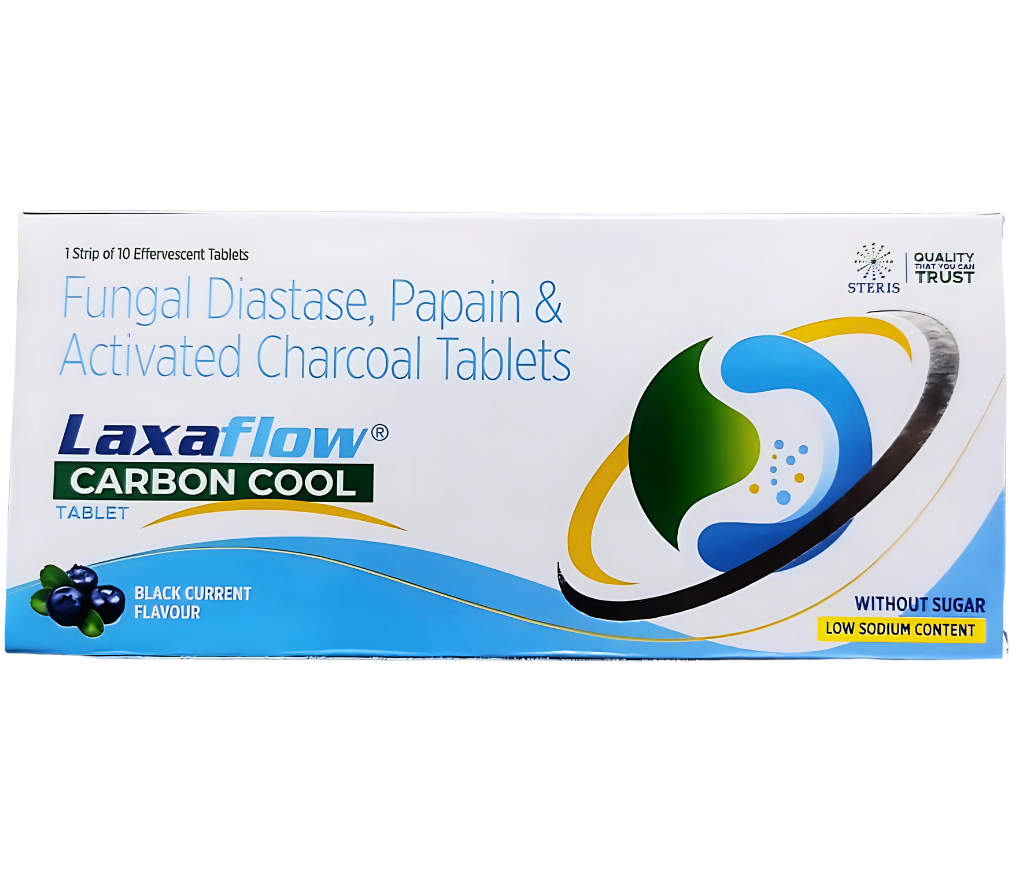
LAXAFLOW CARBON COOL
 Item requires a valid prescription
Manufactured By Steris Healthcare Pvt Ltd
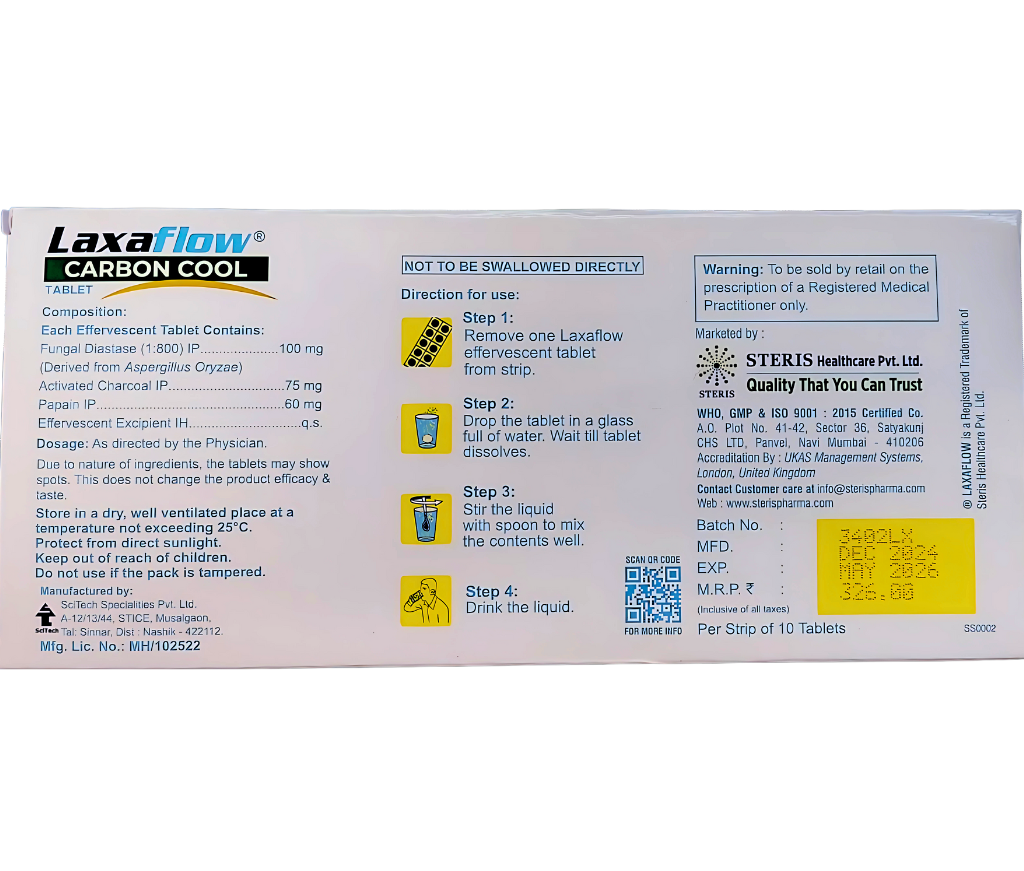
Composition Fungal Diastase(100 mg), Papain(60 mg) & Activated Charcoal (75 mg) Tablets
Rs 296.46
MRP Rs 305.63
(3% OFF)
Includes all taxes
Package SIZE
( FOR 10 TABLETS )

100% Authentic
Products

Free
Shipping*

Products
Return Policy
Description:
Laxaflow Carbon Cool is a three-in-one digestive tablet. It is designed for the very common problem of a heavy, gassy, bloated stomach after eating. Each ingredient does a different job:
1. Fungal Diastase (100 mg). Fungal diastase is an amylase enzyme, usually obtained from the mould Aspergillus oryzae. It breaks down starch (from rice, roti, potatoes, bread) into simpler sugars. This matters in India, where meals are often carbohydrate-heavy. When starch is not digested well, it ferments in the gut and produces gas.
2. Papain (60 mg). Papain is a protein-digesting enzyme that comes from raw papaya. It helps break down proteins (dal, paneer, eggs, meat) into smaller peptides and amino acids, and it has been used for many years in traditional and modern digestive preparations.
3. Activated Charcoal (75 mg). Activated charcoal is a highly porous material with a very large surface area. Inside the gut, it adsorbs (surface-binds) gas molecules and some irritating substances, which can reduce bloating and the feeling of pressure. It is not absorbed into the body and passes out in the stool.
Why combine them? A heavy meal can leave you with two problems: food that is not fully broken down, and gas that is trapped in the intestines. The enzymes work on the first problem, while the charcoal works on the second. Together, they aim to make meals easier to digest and reduce the "stuffed, gassy" feeling.
Product Information
| Detail | Information |
|---|---|
| Brand Name | Laxaflow Carbon Cool |
| Composition | Fungal Diastase 100 mg + Papain 60 mg + Activated Charcoal 75 mg (per tablet) |
| Category | Digestive enzyme + carminative/adsorbent combination |
| Product Form | Tablet |
| Pack Size | 10 tablets (1 strip) |
| Manufacturer / Marketer | Steris Healthcare Pvt. Ltd. |
| Therapeutic Area | Gastroenterology / Digestive health |
| Route | Oral |
| Regulatory Status | [CONFIRM: Schedule H, OTC, or other category on the approved label] |
| Storage | Store below 30°C, away from moisture and direct sunlight. Keep the strip sealed until use. Keep out of reach of children. |
| Available In | India |
Why Is a Fungal Diastase, Papain and Activated Charcoal Combination Important?
Indigestion, gas, and bloating are among the most common complaints heard by Indian doctors and pharmacists. Festive foods, oily and spicy meals, late dinners, eating in a hurry, irregular meal timing, stress, and long hours of sitting all add to the problem. For many people, it is not a disease, but it does affect comfort, appetite, sleep, and work.
This combination is important for five reasons:
- It supports digestion of a carbohydrate-heavy diet. Fungal diastase directly helps with the starch that dominates most Indian meals.
- It supports protein digestion. Papain helps with dal, paneer, egg, and meat-based dishes.
- It targets gas as well as digestion. Activated charcoal addresses the trapped gas that makes people uncomfortable.
- It works quickly for occasional symptoms. A tablet after a heavy meal is a simple, practical step.
- It fits a wide range of adults. Many people who have an occasional heavy meal can benefit, provided they have no contraindications.
Steris Healthcare manufactures Laxaflow Carbon Cool under WHO-GMP and ISO-certified quality systems, so doctors, pharmacists, and distributors get consistent quality.
Key Benefits
- Helps digest starch: Fungal diastase supports the breakdown of rice, roti, and other carbohydrates.
- Helps digest protein: Papain supports the breakdown of dal, eggs, paneer, and meat.
- Reduces gas and bloating: Activated charcoal helps adsorb excess gas in the intestine.
- Eases a heavy, full stomach: Helpful after large or rich meals.
- Relieves abdominal discomfort: May reduce cramping and pressure linked to trapped gas.
- Convenient combination: Three actions in one tablet.
- Simple routine: Taken after meals, easy to remember.
- Compact 10-tablet strip: Easy to keep at home, at work, or when travelling.
Uses of Laxaflow Carbon Cool
- Indigestion (dyspepsia) related to heavy or rich meals
- Flatulence and excess gas
- Abdominal bloating and distension
- A feeling of heaviness or fullness after meals
- Mild abdominal discomfort or cramping related to gas
- Loss of appetite associated with poor digestion, as advised by a doctor
- Supportive use when digestion is sluggish, as recommended by a physician
Precautions Before Taking
Tell your doctor or pharmacist your full medical history before starting this medicine.
Do not use if:
- You are allergic to papain, papaya, fungal enzymes, Aspergillus moulds, charcoal, or any ingredient in the tablet
- You have a known or suspected intestinal obstruction, paralytic ileus, or severe slowing of gut movement. Charcoal can worsen these.
- You have gastrointestinal bleeding, perforation, or an acute abdomen (sudden severe belly pain)
- You have active severe ulcers or severe gut inflammation unless your doctor specifically approves
Use with caution and talk to your doctor if:
- You are allergic to latex. Papain and latex allergies can cross-react in some people.
- You have asthma or a known allergy to inhaled enzymes. Enzyme dust can trigger allergic reactions in sensitive people.
- You are pregnant or breastfeeding. Papain is generally avoided in large amounts during pregnancy, so use only on a doctor's advice.
- You have constipation, slow bowel movements, or a history of bowel surgery
- You take blood thinners (such as warfarin) or have a bleeding disorder. Papain may have a mild effect on clotting in some people.
- You have diabetes. Enzyme preparations do not usually change sugar control, but discuss any new supplement.
- You are due for surgery. Tell your surgeon about all enzyme and supplement use.
Side Effects
Most people tolerate this combination well, and side effects are usually mild.
Common or mild:
- Black-coloured stools (an expected, harmless effect of charcoal)
- Constipation
- Mild nausea
- Bloating or a feeling of fullness (rarely, initially)
- Dry mouth
Less common:
- Diarrhoea or loose stools
- Stomach upset or mild abdominal cramps
- Heartburn or a burning feeling
- Belching
Frequently Asked Questions
Where can I buy Fungal Diastase, Papain & Activated Charcoal online?
Fungal Diastase, Papain & Activated Charcoal products can be purchased online through authorized pharmacies and pharmaceutical suppliers in India, subject to product availability and applicable requirements.
What is the price of Fungal Diastase, Papain & Activated Charcoal?
The price may vary depending on the brand, formulation, strength, pack size, seller, and applicable offers. Check the current product listing for the latest price.
Can I order Fungal Diastase, Papain & Activated Charcoal online?
Yes, this formulation may be ordered online through an authorized pharmacy or pharmaceutical supplier, subject to availability and applicable prescription requirements.
Is Fungal Diastase, Papain & Activated Charcoal available from Steris Healthcare?
Availability from Steris Healthcare depends on current stock and the specific product listing. Check with Steris Healthcare for current availability, pack size, and ordering information.
What is Fungal Diastase, Papain & Activated Charcoal used for?
This combination is commonly used as a digestive aid. Fungal diastase helps break down carbohydrates, papain is a proteolytic enzyme that helps digest proteins, and activated charcoal may help adsorb certain gases and substances in the digestive tract. It may be used for symptoms such as indigestion, bloating, and abdominal discomfort, depending on the specific formulation.
What is the composition of Fungal Diastase, Papain & Activated Charcoal?
The key ingredients are Fungal Diastase, Papain, and Activated Charcoal. The exact strengths and additional ingredients can vary by manufacturer, so check the product label for complete composition details.
Is a prescription required?
Prescription requirements may vary depending on the specific formulation and applicable regulations. Follow the product label or use it as advised by a qualified healthcare professional.
How should Fungal Diastase, Papain & Activated Charcoal be taken?
Take the product exactly as directed on the label or by your healthcare professional. If it is supplied as an oral tablet or capsule, swallow it with water and follow the recommended dosage. Activated charcoal can interfere with the absorption of other medicines, so ask your doctor or pharmacist about appropriate spacing from other medicines.
What should I know before buying Fungal Diastase, Papain & Activated Charcoal?
Before buying, check the complete composition, strength, dosage form, pack size, manufacturer, expiry date, and product authenticity. Inform your healthcare professional about allergies, digestive conditions, pregnancy or breastfeeding, and any medicines or supplements you are taking.
How can I order Fungal Diastase, Papain & Activated Charcoal online?
To order online, check availability with an authorized pharmacy or pharmaceutical supplier, review the product composition and usage instructions, provide a prescription if required, and complete the order through the seller's ordering process.