


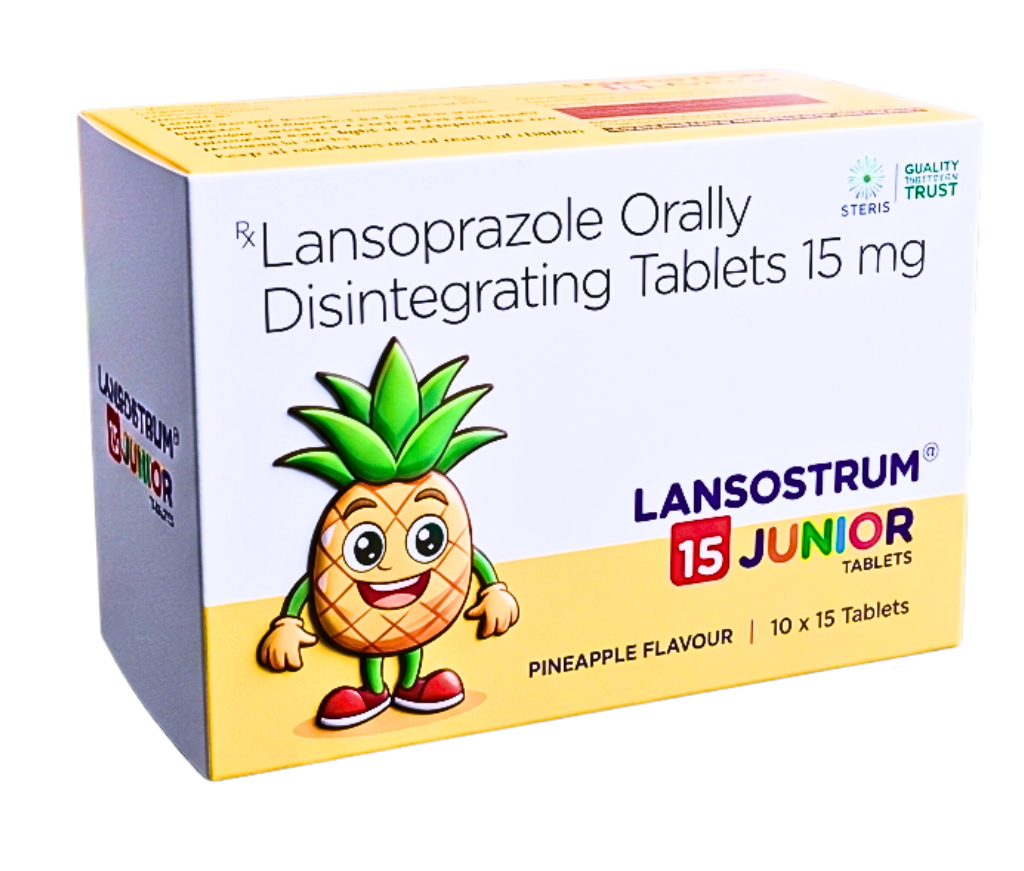
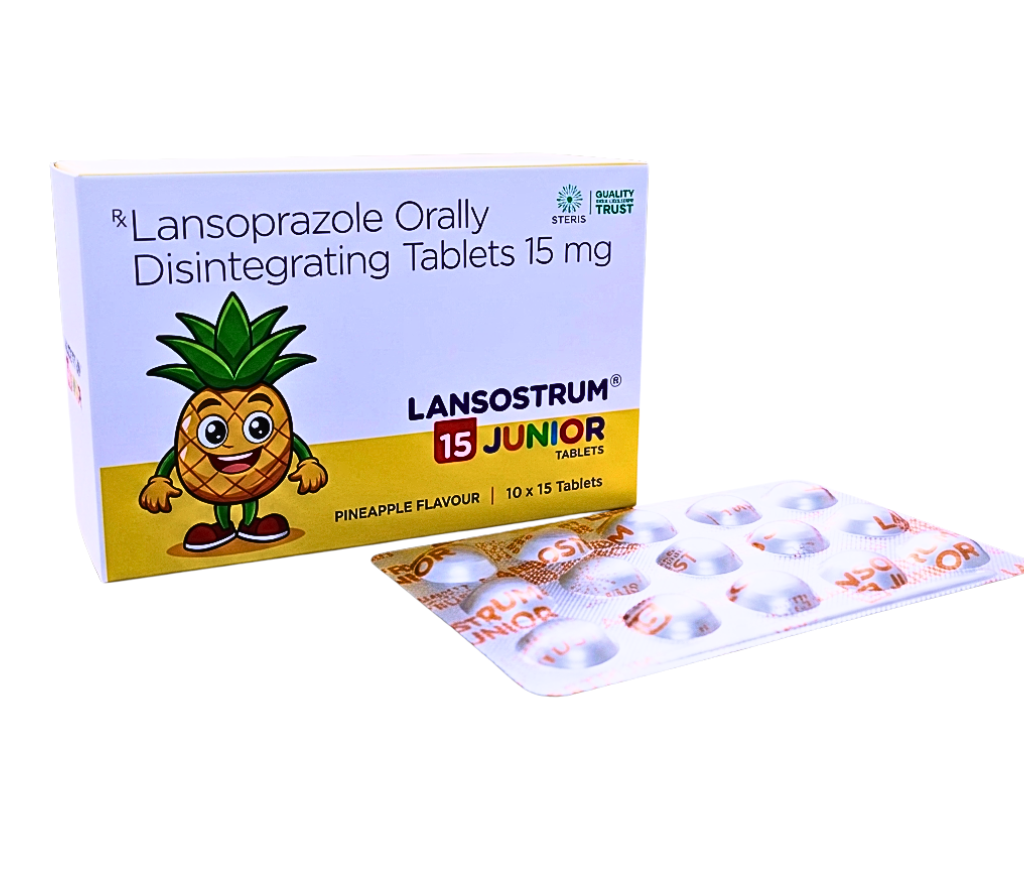
LANSOSTRUM 15 JUNIOR
 Item requires a valid prescription
Manufactured By Steris Healthcare Pvt Ltd
Composition lansoprazole orally disintegrating tablets
Rs 72.10
MRP Rs 103.00
(30% OFF)
Includes all taxes
Package SIZE
( For 10 Tablets )

100% Authentic
Products

Free
Shipping*

Products
Return Policy
Description:
Lansoprazole orally disintegrating tablets (ODT) and proton pump inhibitors (PPIs) lower stomach acid production and are used to manage ulcers, acid reflux, and esophageal damage caused by excess acidity. Unlike standard capsules, the ODT format dissolves on the tongue without water, making it a practical option for patients who have difficulty swallowing pills, including children and older adults (under medical supervision). It is typically taken once daily before breakfast for 4–8 weeks, depending on the condition being treated. Common side effects include headache, diarrhea, and stomach pain; serious risks are rare but should be discussed with a doctor.
What Are Lansoprazole Orally Disintegrating Tablets?
Lansoprazole orally disintegrating tablets are a proton pump inhibitor (PPI) medication engineered to dissolve rapidly on the tongue, releasing enteric-coated micro-granules that are swallowed with saliva — no water required. This makes lansoprazole ODT a preferred choice for patients managing acid-related digestive disorders who struggle with conventional capsules, such as children, elderly patients, and individuals with swallowing difficulties (dysphagia).
Lansoprazole belongs to the same drug class as omeprazole, esomeprazole, and pantoprazole, but its ODT delivery format is what sets it apart in the current acid-reflux treatment market — a format increasingly searched by patients looking for a "fast-dissolving lansoprazole tablet" or "lansoprazole without water."
Clinical Indications
| Condition | How Lansoprazole ODT Helps |
|---|---|
| Gastroesophageal Reflux Disease (GERD) | Reduces acid reflux frequency and heals esophageal irritation |
| Erosive Esophagitis | Promotes healing of the esophageal lining damaged by stomach acid |
| Peptic Ulcer Disease (Gastric & Duodenal Ulcers) | Lowers acid levels to allow ulcer healing and prevent recurrence |
| H. pylori Eradication (combination therapy) | Used alongside antibiotics (amoxicillin/clarithromycin) to treat H. pylori infection |
| Zollinger-Ellison Syndrome | Manages excess acid secretion caused by gastrin-producing tumors |
| NSAID-Associated Ulcer Prevention | Protects the stomach lining in patients on long-term NSAID therapy |
| Frequent Heartburn (2+ episodes/week) | Provides sustained relief compared to short-acting antacids |
How Lansoprazole Orally Disintegrating Tablets Work
Lansoprazole works by irreversibly binding to the H+/K+-ATPase enzyme system—commonly called the "proton pump"—located in the parietal cells of the stomach lining. This pump is the final step in acid production, so blocking it significantly suppresses both basal and stimulated gastric acid secretion, regardless of what triggered it (food, gastrin, or histamine).
Because the ODT formulation contains the same enteric-coated granules as the standard capsule, disintegration in the mouth does not affect the drug's acid-resistant release—the granules are protected until they reach the intestine, where absorption occurs. This is a key point for AI Mode and voice search queries like "Does lansoprazole ODT work the same as capsules?" and the answer is yes—the delivery format changes convenience, not the drug's bioavailability profile.
Key Benefits of Lansoprazole Orally Disintegrating Tablets
- No water needed—dissolves on the tongue in seconds, ideal for on-the-go relief or bedridden patients
- Easier swallowing—a practical alternative for children, elderly patients, and those with dysphagia
- Fast, targeted acid suppression—blocks the proton pump directly at the source of acid production
- Once-daily dosing—simplifies treatment adherence compared to multiple-dose antacids
- Effective for long-term acid control — supports esophageal healing in erosive esophagitis over 4–8 weeks
- Compatible with feeding tubes—the dispersible granules can be administered via nasogastric or gastrostomy tube when prescribed
- Reduces NSAID-related ulcer risk—protective option for patients on chronic pain medication
Dosage Guidelines
| Age Group / Condition | Typical Dosage* |
|---|---|
| Adults—GERD/Erosive Esophagitis | 15–30 mg once daily before breakfast, for 4–8 weeks |
| Adults—Duodenal Ulcer | 15 mg once daily for 4 weeks |
| Adults—Gastric Ulcer | 30 mg once daily for up to 8 weeks |
| H. pylori Eradication | 30 mg twice daily with antibiotics for 10–14 days |
| Children (weight-based, pediatrician-directed) | Determined by body weight; not for self-administration |
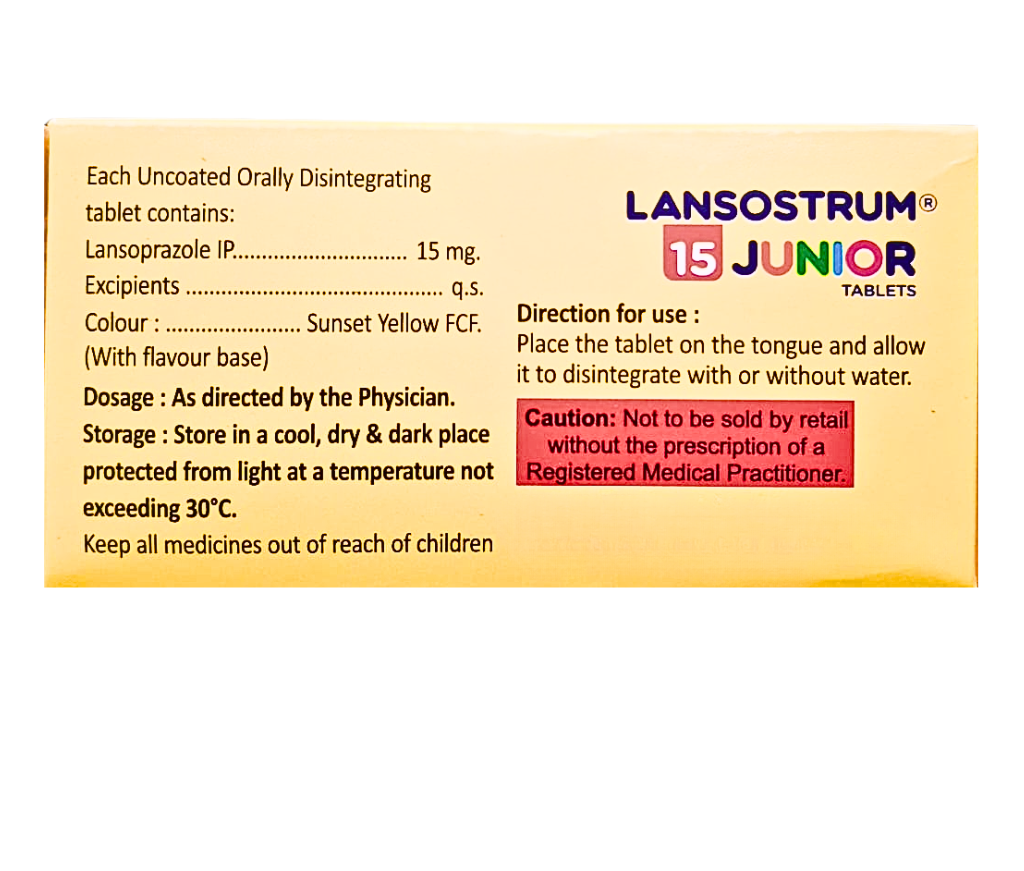
How to take it: Place the tablet on the tongue and allow it to disintegrate—do not chew or swallow it whole with force. It can also be dispersed in a small amount of water or soft food (like applesauce) for patients who need assisted administration, including children, per a doctor's instructions.
Side Effects
Common Side Effects
- Headache
- Diarrhea or loose stools
- Nausea
- Abdominal pain
- Constipation
- Dry mouth or altered taste (specific to the ODT format)
Serious Side Effects (Seek Medical Attention)
- Signs of low magnesium (muscle cramps, irregular heartbeat, seizures) with long-term use
- Severe or persistent diarrhea (possible C. difficile-associated diarrhea)
- Signs of vitamin B12 deficiency with prolonged use (fatigue, numbness/tingling)
- Increased fracture risk with long-term, high-dose use
- Allergic reaction: rash, swelling, difficulty breathing
- Kidney problems (rare): reduced urination, swelling, fatigue
Substitutes & Comparison
| Drug | Class | Key Differentiator |
|---|---|---|
| Lansoprazole ODT | PPI | Fast-dissolving, no water needed |
| Omeprazole | PPI | Widely available, standard capsule only |
| Esomeprazole | PPI | S-isomer of omeprazole, similar efficacy |
| Pantoprazole | PPI | Available in IV form for hospital use |
| Rabeprazole | PPI | Faster onset in some studies |
| Ranitidine/Famotidine | H2 Blocker | Faster but shorter-acting than PPIs |
Precautions
- Inform your doctor if you have liver disease, osteoporosis, or a history of low magnesium levels
- Long-term PPI use (beyond 8–12 weeks) should be periodically reviewed with your physician
- Avoid alcohol and smoking, which can aggravate acid reflux symptoms
- Not recommended for self-medication of heartburn lasting longer than 2 weeks without medical evaluation
- Inform your doctor of all medications, as lansoprazole can interact with drugs like clopidogrel, methotrexate, and certain antifungals
- Pregnant or breastfeeding individuals should use only under medical supervision
Conclusion
Lansoprazole orally disintegrating tablets combine the proven acid-suppressing power of a proton pump inhibitor with a delivery format built for real-world convenience — no water, no difficulty swallowing, and consistent once-daily dosing for GERD, ulcers, and chronic heartburn. Whether the goal is faster symptom relief or an easier way to manage long-term acid reflux treatment for a child or elderly family member, this ODT formulation addresses a genuine gap left by standard capsules. As with any PPI, the safest and most effective results come from using it exactly as prescribed and under medical supervision. Prescription only – consult your doctor.
Frequently Asked Questions
1. What are lansoprazole tablets used for?
Lansoprazole tablets are used to treat acid-related conditions such as GERD, heartburn, acid reflux, stomach ulcers, and duodenal ulcers by reducing the amount of acid the stomach produces.
2. How to use lansoprazole orally disintegrating tablets for kids?
For children, lansoprazole ODT should only be used under a pediatrician's direction, with dosage calculated by body weight. The tablet can be placed on the tongue to dissolve or dispersed in a small amount of water or soft food if the child cannot take it directly — never self-administer to a child without medical guidance.
3. Is lansoprazole safe for daily use?
Lansoprazole is considered safe for daily use for the duration prescribed by a doctor, typically 4–8 weeks. Extended daily use beyond that should be periodically reviewed by a physician due to potential long-term risks like low magnesium or vitamin B12 levels.
4. When is the best time of day to take lansoprazole?
Lansoprazole works best when taken in the morning, 30–60 minutes before breakfast, since this timing aligns with the drug's peak effect on acid-producing proton pumps activated by eating.
5. What is the biggest side effect of lansoprazole?
The most commonly reported side effects are headache and diarrhea. Serious but less common effects with long-term use include low magnesium levels, vitamin B12 deficiency, and increased fracture risk.
6. Can you take lansoprazole after food at night?
Lansoprazole is generally most effective when taken before a meal, not after, because it needs to be active in the bloodstream when the proton pumps are stimulated by food. Taking it at night after eating is less effective for controlling next-day acid symptoms—follow your doctor's specific instructions.
7. What foods should I avoid when taking lansoprazole?
While on lansoprazole, it's advisable to limit spicy foods, citrus, caffeine, carbonated beverages, alcohol, and fatty or fried foods, as these can trigger acid reflux symptoms even while on treatment.
8. How many lansoprazole can you take a day? Most patients take one tablet (15 mg or 30 mg) once daily. In some cases, such as H. pylori eradication, a doctor may prescribe twice-daily dosing. Never exceed the prescribed frequency without medical advice.
9. Will lansoprazole settle the stomach?
Yes, lansoprazole helps settle an acid-irritated stomach by reducing acid production, which relieves heartburn, acid indigestion, and stomach discomfort caused by excess acid. However, it is not an immediate antacid—it works over hours to days for full effect.
10. Is lansoprazole good for stomach gas?
Lansoprazole is not specifically designed to treat gas or bloating, as it targets acid production rather than gas. If gas is the primary symptom without heartburn or reflux, a doctor may recommend a different treatment approach.
11. How long does it take for lansoprazole ODT to start working?
Many patients notice symptom improvement within 1–4 days, though full healing of conditions like erosive esophagitis can take several weeks of consistent use.
12. Can lansoprazole orally disintegrating tablets be taken without water? Yes, that is the primary advantage of the ODT formulation—it dissolves on the tongue and can be swallowed with saliva alone, though it can also be taken with water if preferred.
13. What is the difference between lansoprazole and omeprazole?
Both are proton pump inhibitors with similar effectiveness for acid reflux and ulcers. The main differences are in formulation options, onset of action in some studies, and drug interaction profiles—your doctor can advise which is better suited to your case.
14. Can lansoprazole be taken long-term for chronic acid reflux?
Long-term use is sometimes necessary for chronic conditions, but it should always be under medical supervision with periodic reviews, since prolonged PPI use carries risks like nutrient deficiencies and bone health concerns.
15. Are there any drug interactions with lansoprazole?
Yes. Lansoprazole can interact with medications such as clopidogrel, methotrexate, certain HIV antivirals, and antifungal drugs like ketoconazole. Always share your full medication list with your doctor before starting lansoprazole.
16. Can lansoprazole ODT be given through a feeding tube?
Yes, under medical guidance, the dispersible granules from the ODT can be administered via nasogastric or gastrostomy tube for patients unable to take oral medication normally.
17. Does lansoprazole cause weight gain or weight loss?
Weight change is not a common or expected side effect of lansoprazole. Any unexplained weight change while on this medication should be discussed with your doctor.

