


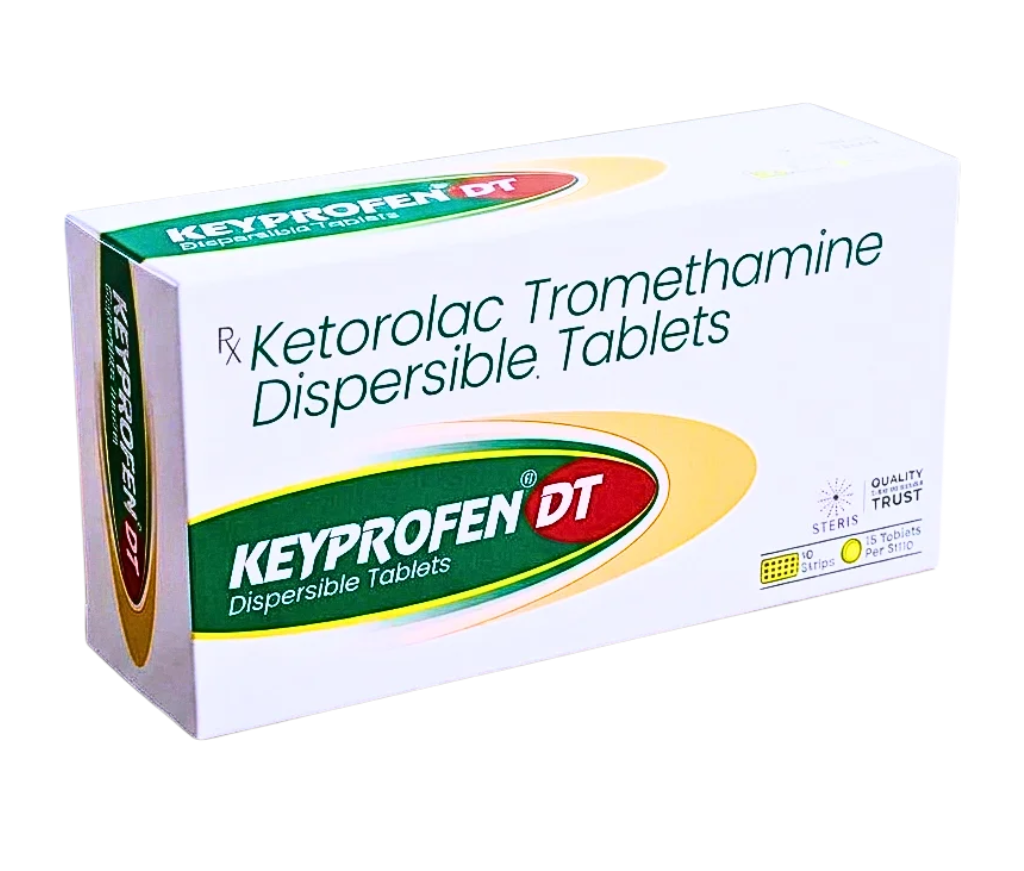
KEYPROFEN DT
 Item requires a valid prescription
Manufactured By STERIS HEALTHCARE PVT LTD
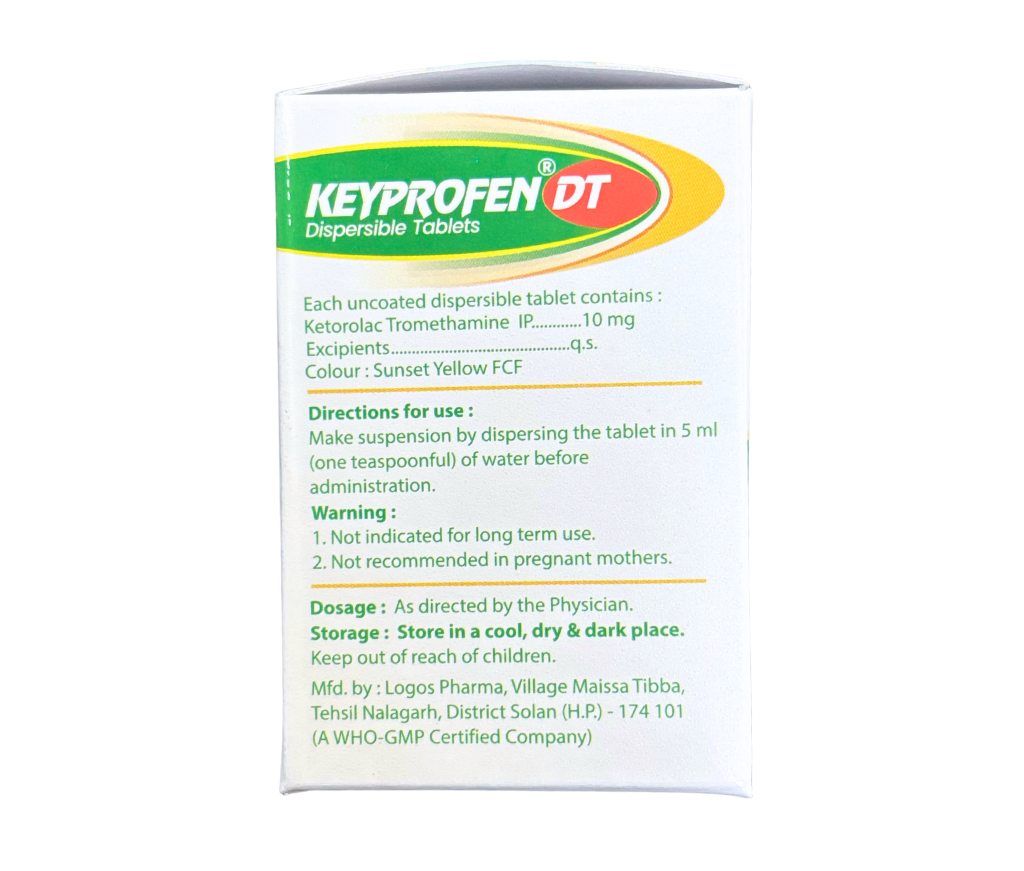
Composition ketorolac tromethamine dispersible tablets 10 mg
Rs 124.05
MRP Rs 177.25
(30% OFF)
Includes all taxes
Package SIZE
( For 15 tablets )

100% Authentic
Products

Free
Shipping*

Products
Return Policy
Description:
Keyprofen DT is a dispersible tablet that contains 10 mg of ketorolac tromethamine, a strong pain-relieving NSAID. Unlike mild painkillers, ketorolac is reserved for moderate to severe pain where a stronger analgesic is needed for a short time. Its pain-relieving strength is comparable to some opioids in certain settings, but it works through a different pathway and does not cause opioid-type dependence.
How does it work? When tissue is injured or inflamed, the body produces chemicals called prostaglandins. These sensitise nerve endings and cause pain, swelling, and inflammation. Ketorolac blocks the cyclooxygenase (COX-1 and COX-2) enzymes that make prostaglandins. With less prostaglandin, pain signals fall and inflammation eases.
Product Information
| Detail | Information |
|---|---|
| Brand Name | Keyprofen DT |
| Composition | Ketorolac Tromethamine 10 mg (per dispersible tablet) |
| Drug Class | Non-steroidal anti-inflammatory drug (NSAID), analgesic |
| Product Form | Dispersible tablet (DT) |
| Pack Size | 10 × 15 (10 strips of 15 tablets each; 150 tablets per box) |
| Manufacturer / Marketer | Steris Healthcare Pvt. Ltd. |
| Therapeutic Area | Pain management / Analgesic |
| Route | Oral (dissolve in water before swallowing) |
| Prescription Status | Schedule H (prescription only) [CONFIRM on the approved label] |
| Storage | Store below 30°C, away from moisture and direct sunlight. Keep out of reach of children. |
| Available In | India |
Why Is Ketorolac Tromethamine Dispersible Tablet Important?
Acute pain that is not controlled can slow recovery, disturb sleep, limit movement, and lower quality of life. After a surgery, a dental extraction, or an injury, prompt and adequate pain control helps patients move, eat, and recover better.
Ketorolac dispersible tablets are important for five reasons:
- They deliver strong non-opioid analgesia. For moderate to severe pain, ketorolac gives effective relief without the sedation, constipation, or dependence risk of opioids.
- They are easy to take. The dispersible form is helpful after dental work or for patients who cannot swallow tablets easily.
- They work quickly. Dispersing the tablet in water helps it reach the gut in a ready-to-absorb form.
- They suit step-down therapy. After an injection given in a hospital, doctors often switch patients to oral ketorolac to continue treatment for the remaining days.
- They have a defined, short course. The strict 5-day limit keeps the medicine in its safest window, which supports responsible pain management.
Key Benefits
- Strong pain relief: Effective for moderate to severe acute pain that mild painkillers may not control.
- Non-opioid option: No opioid-type sedation, constipation, or dependence.
- Anti-inflammatory action: Also reduces swelling and inflammation around the injured area.
- Fast onset: Relief typically begins within an hour.
- Easy dispersible format: Dissolves in water, which helps patients who dislike or cannot swallow whole tablets.
- Convenient dosing: A 10 mg tablet allows flexible short-course dosing under medical guidance.
- Useful after injectable therapy: Helps continue pain control at home after hospital treatment.
- Large trade pack: The 10 × 15 pack suits hospitals, clinics, pharmacies, and institutional supply.
Uses of Keyprofen DT
- Short-term management of moderate to severe acute pain in adults
- Post-operative pain after surgery
- Dental pain, including pain after tooth extraction or oral procedures
- Pain from musculoskeletal injury, sprains, and strains
- Renal or biliary colic-type pain, as directed by a doctor
- Step-down oral therapy after injectable ketorolac, as decided by the treating doctor
Precautions Before Taking
Tell your doctor your full medical history before starting this medicine.
Do not use if:
- You have an active stomach or intestinal ulcer, a recent gastrointestinal bleed or perforation, or a history of serious stomach bleeding
- You have a bleeding disorder, are at risk of bleeding, or have had bleeding in the brain
- You have moderate to severe kidney problems or are at risk of kidney failure due to dehydration or low blood volume
- You are allergic to ketorolac, aspirin, or other NSAIDs, including having had asthma, hives, or a runny nose triggered by them
- You are pregnant (particularly in the third trimester), in labour and delivery, or breastfeeding
- You are about to have or have had coronary artery bypass graft (CABG) surgery
- You are on aspirin, other NSAIDs, probenecid, or pentoxifylline
- You are undergoing surgery with a high risk of bleeding
Side Effects
Like all NSAIDs, ketorolac can cause side effects, and the risk rises with higher doses, longer use, and in older adults.
Common:
- Nausea
- Stomach pain, indigestion, or heartburn
- Headache
- Dizziness or drowsiness
- Diarrhoea or constipation
- Swelling of the feet or ankles (fluid retention)
Less common:
- Stomach or intestinal ulcers
- Raised blood pressure
- Skin rash or itching
- Ringing in the ears
- Raised liver enzymes
Frequently Asked Questions
Where can I buy Ketorolac Tromethamine Dispersible Tablets online?
Ketorolac Tromethamine Dispersible Tablets can be purchased online through authorized pharmacies and pharmaceutical suppliers in India, subject to availability and applicable prescription requirements.
What is the price of Ketorolac Tromethamine Dispersible Tablets?
The price may vary depending on the brand, strength, pack size, seller, and applicable offers. Check the current product listing for the latest price.
Can I order Ketorolac Tromethamine Dispersible Tablets online?
Yes, Ketorolac Tromethamine Dispersible Tablets may be ordered online through an authorized pharmacy or pharmaceutical supplier, subject to prescription requirements and product availability.
Is Ketorolac Tromethamine Dispersible Tablets available from Steris Healthcare?
Availability from Steris Healthcare depends on current stock and the specific product listing. Check with Steris Healthcare for current availability, strength, pack size, and ordering details.
What is Ketorolac Tromethamine Dispersible Tablets used for?
Ketorolac Tromethamine is a non-steroidal anti-inflammatory drug (NSAID) used for the short-term management of moderate to severe acute pain. It is generally intended for short-duration use because prolonged use can increase the risk of serious adverse effects.
What is the composition of Ketorolac Tromethamine Dispersible Tablets?
The active ingredient is Ketorolac Tromethamine. The exact strength and inactive ingredients may vary depending on the specific product and manufacturer. Check the product packaging for complete composition details.
Is a prescription required?
Yes, Ketorolac Tromethamine is generally a prescription medicine. It should be used only under the direction of a qualified healthcare professional.
How should Ketorolac Tromethamine Dispersible Tablets be taken?
Take Ketorolac Tromethamine exactly as prescribed by your doctor. As a dispersible tablet, follow the product-specific instructions for dispersing or taking the tablet. Do not exceed the prescribed dose or duration, and avoid combining it with other NSAIDs unless specifically advised by your doctor.
What should I know before buying Ketorolac Tromethamine Dispersible Tablets?
Before buying, check the strength, composition, manufacturer, pack size, expiry date, and product authenticity. Tell your doctor if you have a history of stomach ulcers or bleeding, kidney problems, heart disease, asthma triggered by NSAIDs, or if you take blood thinners or other medicines.
How can I order Ketorolac Tromethamine Dispersible Tablets online?
To order online, check availability with an authorized pharmacy or pharmaceutical supplier, provide a valid prescription when required, review the product details, and complete the order through the seller's ordering process.