


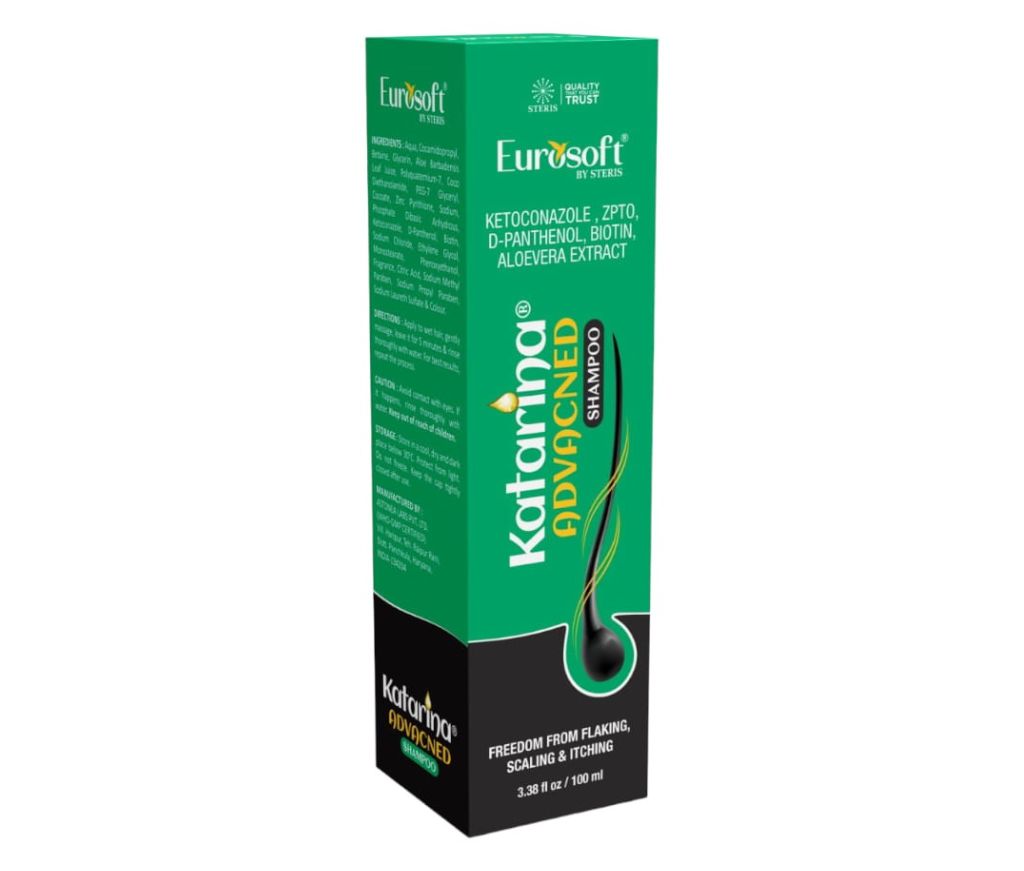
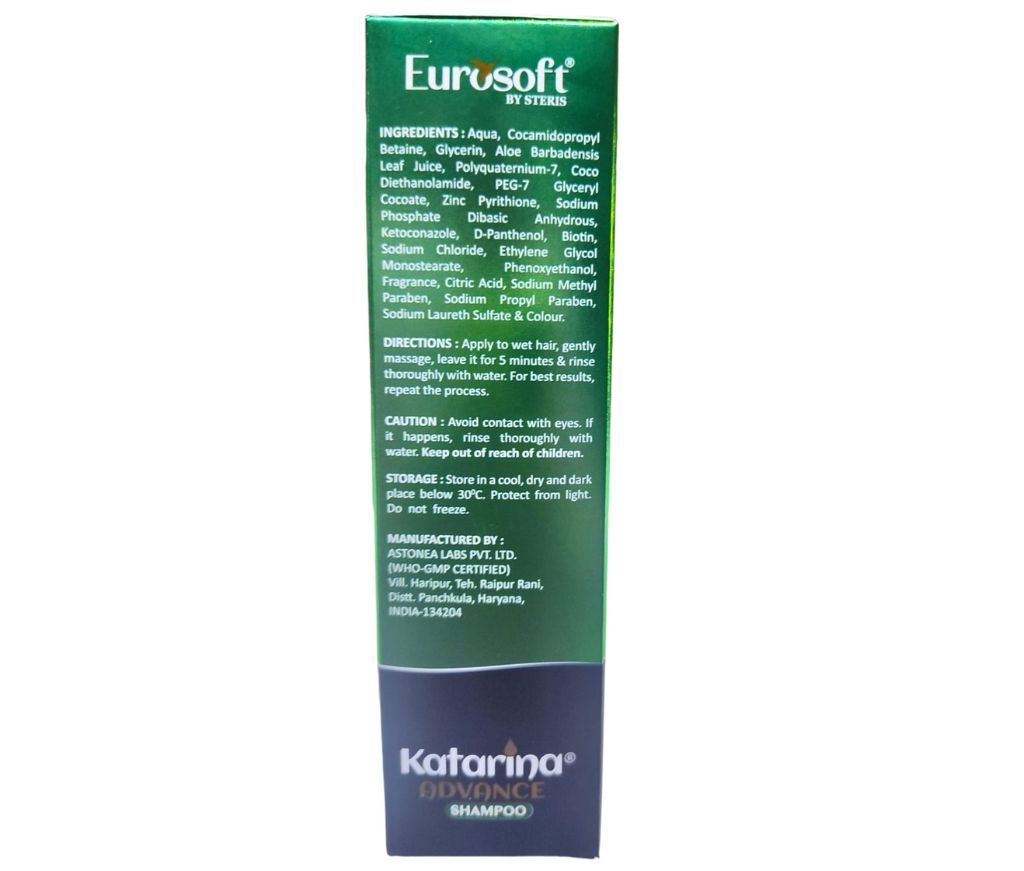
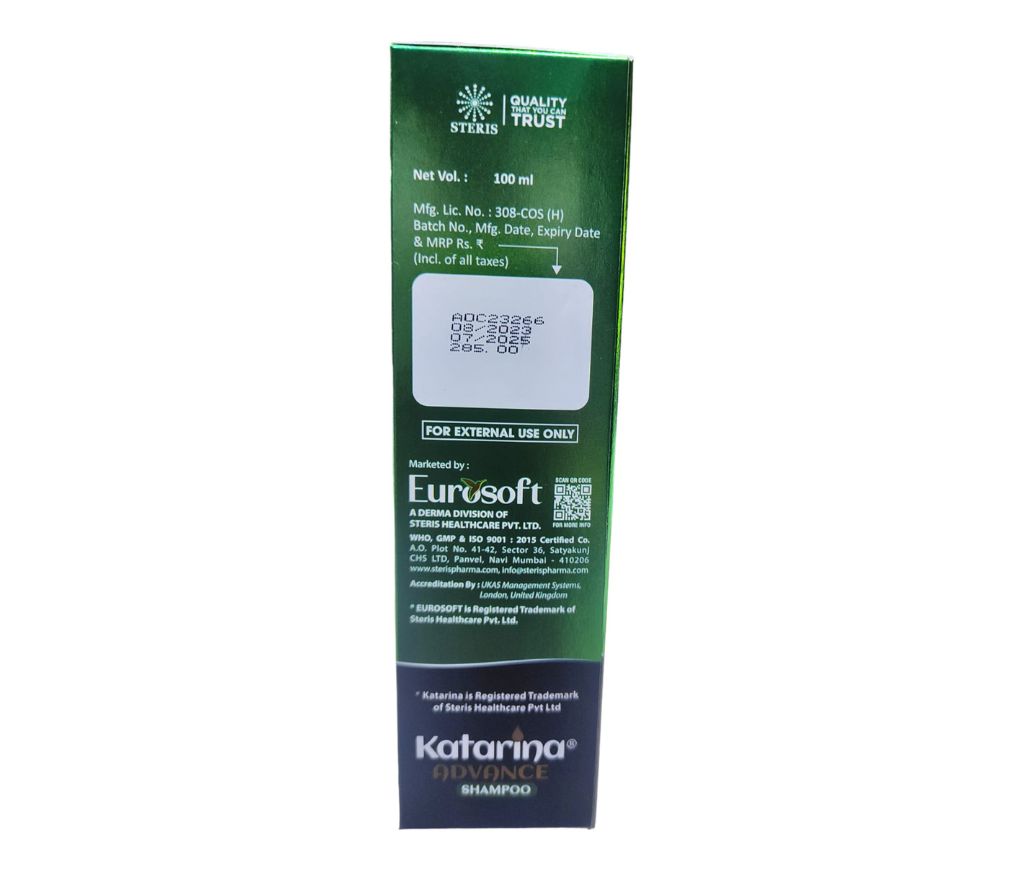
KATARINA ADVANCE SHAMPOO
Manufactured By STERIS HEALTHCARE PVT LTD
Composition Ketoconazole, ZPTO, D-Panthenol, Biotin & Aloevera Extract
Rs 177.56
MRP Rs 253.65
(30% OFF)
Includes all taxes
Package SIZE
( 100 ML )

100% Authentic
Products

Free
Shipping*

Products
Return Policy
Description:
Dandruff, an itchy scalp, and persistent flaking are among the most common scalp concerns people search for solutions to, often trying multiple products before finding one that actually works. Ketoconazole and Zinc Pyrithione Shampoo is a medicated, dual-action hair care formulation specifically designed to target the root causes of dandruff and related scalp conditions rather than just masking the symptoms.
This shampoo combines two powerful active ingredients — Ketoconazole, a well-established antifungal agent, and Zinc Pyrithione (ZPTO), an antimicrobial and antifungal compound widely used in dermatology. Together, they work to reduce the yeast and fungal overgrowth on the scalp that is most commonly responsible for dandruff, seborrheic dermatitis, and related scalp irritation. This shampoo is primarily used for the treatment and prevention of dandruff, scalp itching, flaking, and fungal-related scalp infections.
Product Information
| Product Details | Information |
|---|---|
| Brand Name | KATARINA ADVANCE SHAMPOO |
| Composition | Ketoconazole, ZPTO, D-Panthenol, Biotin & Aloe Vera Extract |
| Product Form | Shampoo |
| Pack Size | 100 ML |
| Manufacturer/Marketer | Steris Healthcare Pvt. Ltd. |
| Target Market | India |
Why Ketoconazole and Zinc Pyrithione Shampoo Is Important
Dandruff isn't just a cosmetic annoyance — for many people, it's a persistent, recurring condition linked to an overgrowth of a yeast called Malassezia, which naturally lives on the scalp but can multiply excessively due to oiliness, hormonal changes, stress, or weather conditions. When left unaddressed, this can lead to chronic flaking, redness, itching, and in some cases, a more inflamed condition known as seborrheic dermatitis.
Regular cosmetic shampoos often only clean the hair and scalp superficially, without addressing the underlying microbial imbalance causing the dandruff. This is where a medicated shampoo containing ketoconazole and zinc pyrithione becomes especially important. Ketoconazole directly targets the fungal overgrowth at a cellular level, while zinc pyrithione provides additional antimicrobial action and helps control flaking and irritation. Together, this dual-action approach offers a more targeted, effective solution than standard anti-dandruff shampoos, particularly for individuals with moderate to persistent dandruff that hasn't responded well to over-the-counter options.
Key Benefits
- Effective dandruff control – Targets the fungal overgrowth responsible for most cases of dandruff.
- Reduces scalp itching and irritation – Helps calm an itchy, uncomfortable scalp associated with flaking.
- Controls flaking and scaling – Reduces visible white flakes that often accumulate on hair and clothing.
- Helps manage seborrheic dermatitis – Useful in controlling symptoms of this common inflammatory scalp condition.
- Dual antifungal and antimicrobial action – The combination of ketoconazole and zinc pyrithione offers broader coverage than single-ingredient shampoos.
- Supports healthier scalp environment – By reducing microbial overgrowth, it helps maintain a more balanced scalp condition over time.
- Suitable for regular scalp maintenance – Can be incorporated into a routine hair care regimen for individuals prone to recurring dandruff.
- May improve scalp comfort with consistent use – Regular, correctly guided use often leads to noticeably reduced flaking and irritation.
Mechanism of Action
How it works: Ketoconazole works by disrupting the cell membrane of fungal organisms, particularly Malassezia yeast, which is the primary microorganism associated with dandruff and seborrheic dermatitis. By inhibiting the synthesis of ergosterol — a critical component of the fungal cell membrane — ketoconazole weakens and eventually destroys the fungal cells, reducing their population on the scalp. Zinc Pyrithione complements this action through its own antifungal and antibacterial properties, helping to further control microbial overgrowth while also exerting a mild anti-inflammatory effect that helps soothe scalp irritation. When formulations include additional ingredients like biotin, D-panthenol, and aloe vera extract, these are typically included to support scalp hydration, soothing, and overall hair health, complementing the antifungal action of the primary active ingredients.
Side Effects
Most users tolerate ketoconazole and zinc pyrithione shampoo well, but some may experience mild, temporary effects such as:
- Mild scalp irritation or a slight burning sensation
- Dryness of the scalp or hair
- Temporary increased oiliness or dryness depending on hair type
- Mild itching immediately after application
- Change in hair texture with prolonged use
These effects are usually mild and tend to resolve as the scalp adjusts to the product.
Precautions & Warnings
- Avoid contact with eyes during application; rinse thoroughly with water if this occurs.
- Discontinue use and consult a doctor if irritation, redness, or allergic symptoms develop.
- Not intended for use on broken or severely irritated skin unless advised by a dermatologist.
- Pregnant or breastfeeding women should consult a doctor before regular use of medicated shampoos.
- If dandruff or scalp symptoms do not improve after consistent use over several weeks, consult a dermatologist for further evaluation.
- Store in a cool, dry place away from direct sunlight and out of reach of children.
- Perform a patch test if you have known sensitivities to antifungal or antimicrobial ingredients before full application.
- Avoid combining with other strong medicated scalp treatments without professional guidance, to prevent excessive irritation.
Frequently Asked Questions
1. What is ketoconazole, biotin, D-panthenol and aloe vera extract used for?
This combination is typically used in medicated shampoos to control dandruff and fungal scalp conditions while also supporting scalp hydration and overall hair health through the added soothing ingredients.
2. What is ketoconazole ZPTO shampoo used for?
It is used to treat and manage dandruff, scalp itching, flaking, and seborrheic dermatitis by targeting fungal overgrowth on the scalp.
3. Can I apply ketoconazole shampoo daily?
Generally, it is not recommended for daily use unless advised by a dermatologist; it is typically used a few times per week.
4. Is ZPTO safe for hair?
Yes, Zinc Pyrithione is generally considered safe for regular scalp use when applied as directed and is widely used in anti-dandruff formulations.
5. Will ketoconazole cause hair loss?
Ketoconazole shampoo is not typically associated with causing hair loss; in fact, it is sometimes used to support a healthier scalp environment, though individual reactions can vary.
6. Does ketoconazole shampoo regrow hair?
Ketoconazole shampoo is primarily formulated to manage dandruff and scalp conditions, not specifically as a hair regrowth treatment, though a healthier scalp may indirectly support better hair condition.
7. How long does it take for ketoconazole shampoo to work on dandruff?
Many users notice improvement within a few weeks of consistent use, though results can vary based on the severity of the condition.
8. Can ketoconazole and zinc pyrithione shampoo be used on colored hair?
It is generally considered compatible with colored hair, but checking product-specific instructions or consulting your stylist or dermatologist is advisable.
9. Is this shampoo suitable for sensitive scalps?
It can be used on sensitive scalps, but a patch test is recommended, and individuals with known sensitivities should consult a dermatologist first.
10. Can this shampoo be used by both men and women?
Yes, ketoconazole and zinc pyrithione shampoo is suitable for both men and women experiencing dandruff or related scalp conditions.