


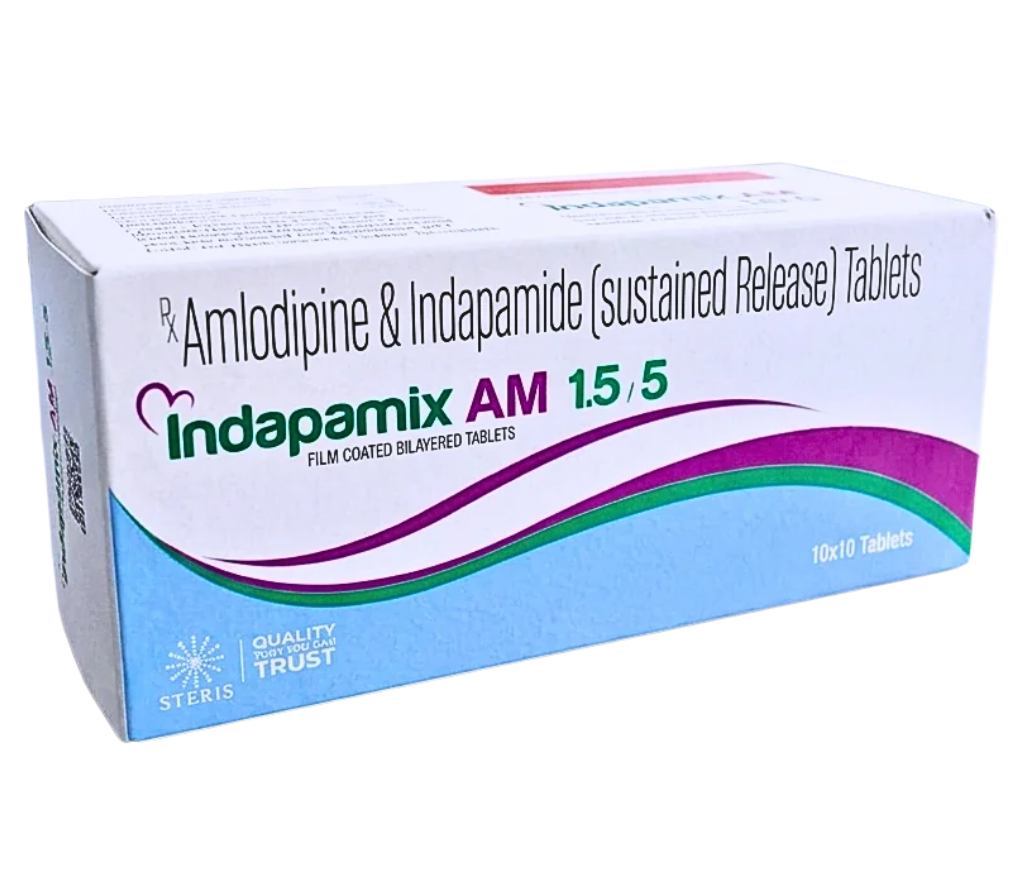
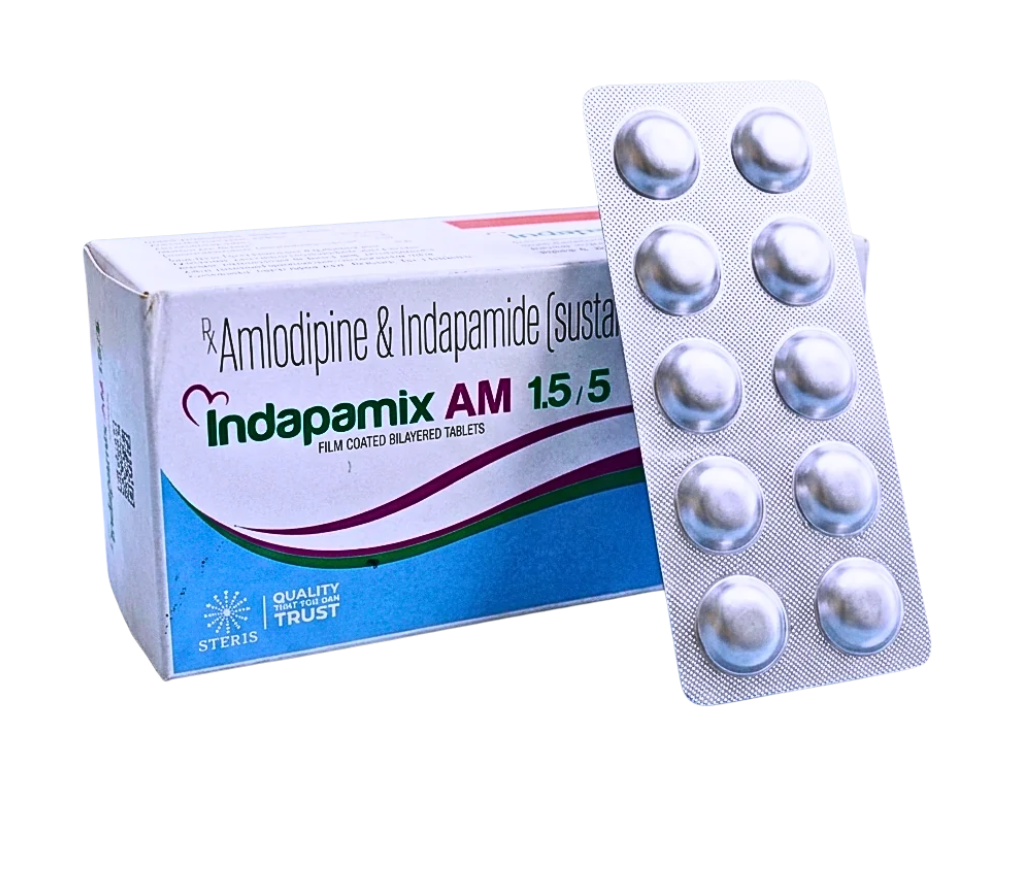
INDAPAMIX AM 1.5/5
 Item requires a valid prescription
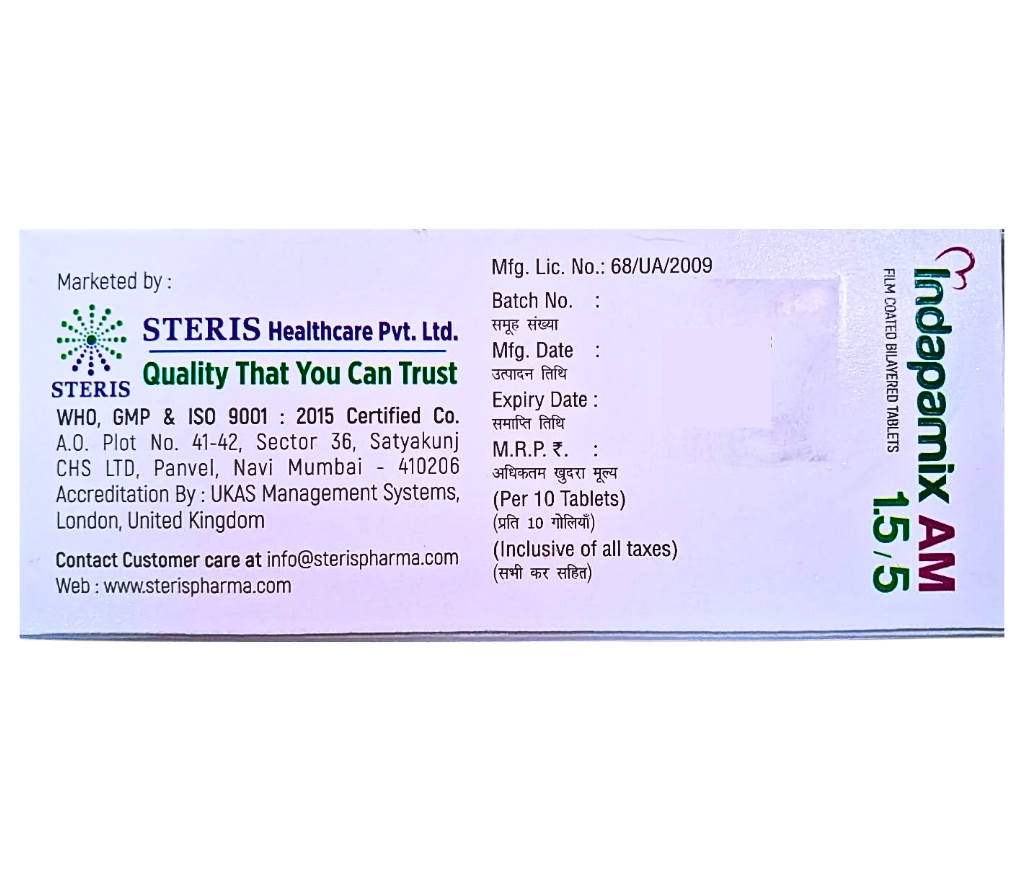
Manufactured By Steris Healthcare Pvt Ltd
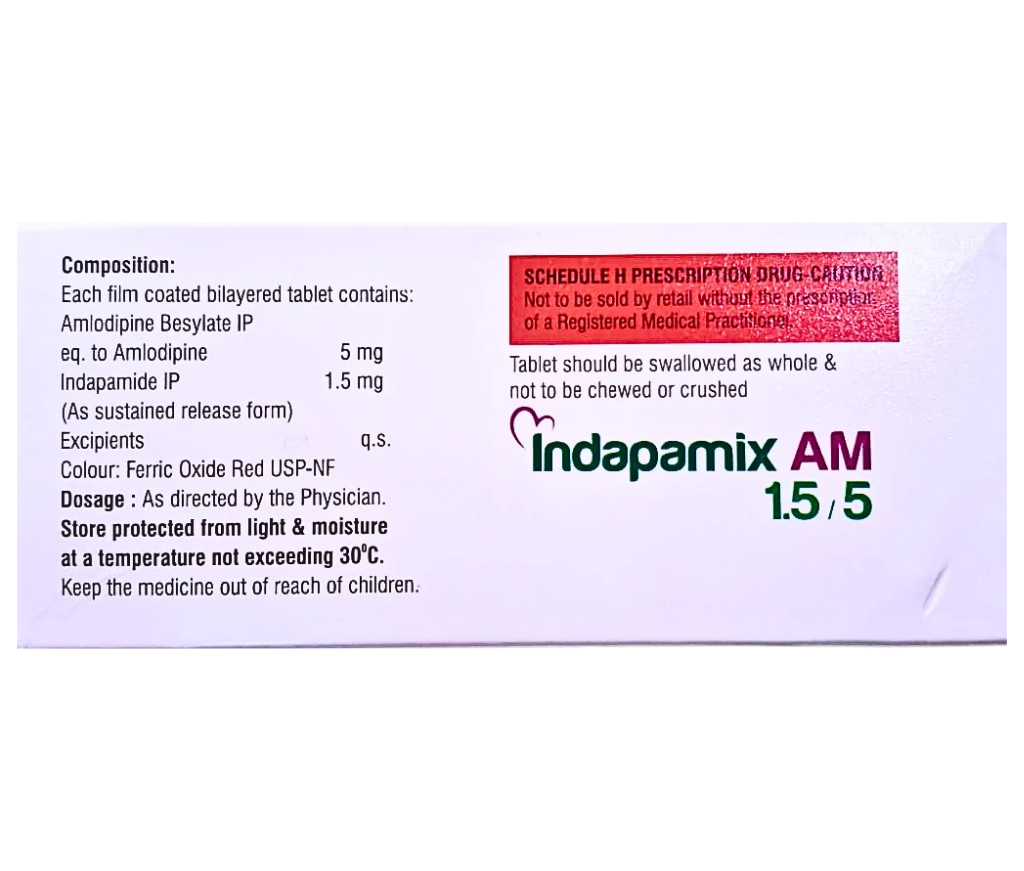
Composition Amlodipine 5 mg And Indapamide 1.5 mg Sustained Release Tablets
Rs 105.00
MRP Rs 150.00
(30% OFF)
Includes all taxes
Package SIZE
( For 10 Tablets )

100% Authentic
Products

Free
Shipping*

Products
Return Policy
Description:
Amlodipine 5 mg and Indapamide 1.5 mg Sustained Release Tablets are a prescription-only, once-daily combination for essential hypertension (high blood pressure). Amlodipine is a calcium channel blocker that relaxes blood vessels. Indapamide is a thiazide-like diuretic that helps the body remove excess salt and water. Together, they lower blood pressure more effectively than either medicine alone in many patients. The most common side effects are ankle swelling, headache, dizziness, and low potassium. This medicine should be taken only on a doctor’s advice.
What Are Amlodipine 5 mg and Indapamide 1.5 mg Sustained Release Tablets?
Amlodipine 5 mg and Indapamide 1.5 mg Sustained Release Tablets are a fixed-dose combination that puts two proven blood pressure medicines in one tablet. High blood pressure usually needs more than one medicine to control, so single-pill combinations are widely used today. They are simpler for patients and often help people stay on treatment.
- Amlodipine 5 mg is a dihydropyridine calcium channel blocker (CCB).
- Indapamide 1.5 mg (SR) is a thiazide-like diuretic in a sustained release form.
- Dosage form: Sustained release (SR) tablet for once-daily use.
- Category: Antihypertensive (prescription medicine).
What Are Amlodipine and Indapamide SR Tablets Used For?
This is one of the most searched questions about this combination.
Amlodipine and Indapamide SR tablets are used to treat essential hypertension (high blood pressure) in adults. They are typically prescribed when:
- Blood pressure is not adequately controlled with amlodipine or indapamide alone.
- A doctor wants to replace two separate tablets with one combination tablet.
- A patient needs a simpler once-daily routine to improve adherence.
Long-term, well-controlled blood pressure helps lower the risk of serious complications such as stroke, heart attack, heart failure, and kidney damage. It is not a quick fix for sudden or emergency blood pressure spikes.
What Is the Purpose of Indapamide Sustained Release Tablets 1.5 mg?
Indapamide SR 1.5 mg is used to lower blood pressure in people with essential hypertension. It acts in two ways:
- Diuretic action: It helps the kidneys remove extra sodium and water, which reduces the volume of fluid in the blood vessels.
- Vascular action: It helps relax and widen blood vessels, so blood flows with less resistance.
The SR form releases the drug slowly, so one tablet in the morning can give 24-hour coverage. At this strength, indapamide is generally considered to work well for blood pressure control with fewer metabolic effects than many older diuretics. Your doctor will still monitor your blood tests.
How Does This Combination Work?
The two ingredients lower blood pressure through different, complementary mechanisms.
| Ingredient | Drug Class | How It Helps |
|---|---|---|
| Amlodipine 5 mg | Calcium channel blocker | Stops calcium from entering the smooth muscle of blood vessel walls, so vessels relax and widen |
| Indapamide 1.5 mg SR | Thiazide-like diuretic | Reduces salt and water load and relaxes blood vessels |
Because they act on different pathways, the combination can achieve better control than raising the dose of one medicine. Indapamide’s diuretic effect may also reduce the ankle swelling that amlodipine sometimes causes, although this does not happen in every patient.
Key Benefits of Amlodipine 5 mg and Indapamide 1.5 mg SR Tablets
- Dual-action blood pressure control. Two complementary mechanisms work together in one tablet.
- Once-daily convenience. One SR tablet a day fits easily into a morning routine.
- Fewer pills, better adherence. Single-pill combinations are linked with better treatment continuity than taking several separate tablets. Recent hypertension guidelines from major cardiology and hypertension societies support single-pill combinations for many patients.
- 24-hour coverage. Both ingredients are suited to once-daily dosing, supporting steady control through the day and night.
- Well-established ingredients. Amlodipine and indapamide have been used for many years and are well studied.
- May help with ankle swelling. The diuretic component may offset some fluid retention associated with amlodipine.
- Cost-effective option. One combination product can be more economical than buying two separate medicines. Check the current price with your pharmacist.
How to Take Amlodipine and Indapamide SR Tablets
- Take one tablet once daily, usually in the morning, unless your doctor advises otherwise.
- Swallow the tablet whole with water. Do not crush, chew, or break it, as this can damage the sustained release mechanism.
- Take it at the same time every day, with or without food.
- If you miss a dose, take it when you remember on the same day. Do not take a double dose the next day.
- Continue the medicine even if you feel well. High blood pressure often has no symptoms.
- Do not stop or change the dose without speaking to your doctor.
Side Effects of Amlodipine and Indapamide Together
What Are the Common Side Effects of Taking Indapamide and Amlodipine Together?
Most people tolerate this combination well, but some may experience side effects.
Common or more likely effects
- Swelling of the ankles or feet (peripheral oedema)
- Headache
- Dizziness or lightheadedness, especially when standing up quickly
- Flushing (warmth or redness of the face)
- Tiredness or sleepiness
- Palpitations (a pounding or fast heartbeat)
- Nausea or abdominal discomfort
- Muscle cramps or weakness
- Increased urination, especially at first
Effects related to blood salts and metabolism (detected by blood tests)
- Low potassium (hypokalaemia)
- Low sodium (hyponatraemia)
- Raised uric acid, which may trigger gout in some people
- Raised blood sugar, particularly in people with diabetes
Rare but serious effects: get medical help immediately if you notice
- Severe skin rash, blistering, or swelling of the face, lips, or throat (allergic reaction)
- Fainting or very low blood pressure
- Irregular heartbeat
- Yellowing of the skin or eyes
- Severe muscle weakness or cramps
- Sudden eye pain or reduced vision (rarely reported with thiazide-type medicines)
Who Should Not Take This Medicine?
Do not use this combination if you:
- Are allergic to amlodipine, indapamide, sulfonamide-derived medicines, or any ingredient in the tablet
- Have severe kidney impairment
- Have severe liver disease or hepatic encephalopathy
- Have low blood potassium that has not been corrected
- Have severely low blood pressure, shock, or certain serious heart conditions (such as severe aortic stenosis or unstable angina)
- Are pregnant or breastfeeding, unless your doctor specifically advises otherwise
Tell your doctor before starting if you:
- Have diabetes, gout, or heart rhythm problems
- Have mild to moderate kidney or liver problems
- Take lithium, digoxin, anti-arrhythmic drugs, NSAID painkillers, other blood pressure medicines, or medicines that lower potassium
- Take certain antibiotics or antifungals (such as clarithromycin or itraconazole), simvastatin, or immunosuppressants
- Are scheduled for surgery or a parathyroid test
Lifestyle Tips While Taking This Medicine
Medicine works best alongside healthy habits:
- Reduce salt intake, and follow a DASH-style, heart-healthy diet
- Eat potassium-rich foods only as your doctor advises, since needs differ by patient
- Exercise regularly, such as brisk walking for about 30 minutes on most days
- Maintain a healthy weight
- Limit alcohol and avoid smoking
- Check your blood pressure at home and keep a log to share with your doctor
- Stay hydrated, and get up slowly from a sitting or lying position
- Protect your skin from strong sunlight, as diuretics can occasionally increase sun sensitivity
How to Buy Amlodipine 5 mg and Indapamide 1.5 mg SR Tablets Safely
- Get a valid prescription. Your doctor will confirm that this combination suits your blood pressure, kidney function, and other health conditions.
- Buy from a licensed pharmacy. Choose a registered local chemist or a licensed, verified online pharmacy that asks for your prescription.
- Check the label. Confirm the strength (Amlodipine 5 mg + Indapamide 1.5 mg SR), manufacturer, batch number, manufacturing and expiry dates, and that the seal is intact.
- Compare prices responsibly. Prices vary by brand, pack size, and seller, so check the MRP printed on the pack. An unusually low price can be a warning sign of a counterfeit.
- Check the pack size. Strips of 10 or 15 tablets are common, and a 30-day supply is often prescribed for convenience.
- Store it correctly. Keep it in a cool, dry place away from direct sunlight and out of children’s reach.
- Keep your refill schedule. Do not run out, since stopping blood pressure medicine suddenly can cause readings to rise.
Conclusion
Amlodipine 5 mg and Indapamide 1.5 mg Sustained Release Tablets offer a practical, once-daily way to manage essential hypertension by combining a calcium channel blocker with a thiazide-like diuretic. The dual mechanism gives effective blood pressure control, and the single-pill format makes treatment easier to follow. Like all medicines, it can cause side effects such as ankle swelling, headache, dizziness, or changes in blood salts, so regular check-ups and blood tests matter.
Frequently Asked Questions
1. What are the common side effects of taking indapamide and amlodipine together?
The most common side effects are ankle or foot swelling, headache, dizziness, flushing, tiredness, palpitations, and increased urination. Indapamide may also lower blood potassium and sodium, which is why your doctor may order periodic blood tests. Report any severe or persistent symptoms to your doctor.
2. What are amlodipine and indapamide SR tablets used for?
They are used to treat essential hypertension (high blood pressure) in adults, particularly when blood pressure is not controlled with a single medicine or when a doctor wants to simplify treatment into one daily tablet.
3. What is the purpose of indapamide sustained release tablets 1.5 mg?
Indapamide SR 1.5 mg lowers blood pressure by helping the body remove excess salt and water and by relaxing blood vessels. The sustained release form provides steady, 24-hour control with one dose a day.
4. How does amlodipine with indapamide lower blood pressure?
Amlodipine relaxes and widens blood vessels, while indapamide reduces fluid volume and eases vessel resistance. Together they work through two different pathways for better control.
5. When is the best time to take Amlodipine and Indapamide SR tablets?
It is usually taken once daily in the morning, at the same time every day. Follow your doctor’s instructions.
6. Can I crush or split Amlodipine and Indapamide SR tablets?
No. Swallow the tablet whole. Crushing or splitting can damage the sustained release mechanism and release the medicine too quickly.
7. Is Amlodipine 5 mg and Indapamide 1.5 mg SR a prescription medicine?
Yes. It should be used only on the advice of a qualified doctor, who will assess whether it suits you.
8. Can this combination cause low potassium?
Yes. Indapamide can lower potassium and sodium levels. Symptoms may include muscle weakness, cramps, or tiredness. Your doctor may check your blood levels from time to time.
9. Does this medicine cause ankle swelling?
Ankle swelling is a known effect of amlodipine. The diuretic action of indapamide may reduce it in some patients, but it can still occur. Tell your doctor if it is troublesome.
10. Can I take this tablet with food?
Yes, it can be taken with or without food. Taking it at the same time daily helps build a habit.
11. How long does it take for the medicine to work?
Blood pressure starts to fall within days, but the full effect may take a few weeks. Keep taking it as prescribed and attend follow-ups.
12. Can I stop taking it when my blood pressure becomes normal?
No. Normal readings usually mean the medicine is working. Stopping without medical advice can cause blood pressure to rise again.
13. Is this combination safe for people with diabetes?
It may be used in some people with diabetes, but indapamide can slightly affect blood sugar. Your doctor will monitor your levels and decide if it is suitable.
14. Can I drink alcohol while taking Amlodipine and Indapamide SR tablets?
Alcohol can lower blood pressure further and increase dizziness. Limit alcohol and discuss it with your doctor.
15. Is it safe during pregnancy or breastfeeding?
It is generally not recommended during pregnancy or breastfeeding. Tell your doctor right away if you are pregnant, planning pregnancy, or nursing.
16. Which medicines should not be taken with Amlodipine and Indapamide?
Inform your doctor about lithium, digoxin, NSAID painkillers, other blood pressure medicines, potassium-affecting drugs, certain antibiotics and antifungals, simvastatin, and immunosuppressants, as they may interact.
17. What should I do if I miss a dose?
Take it as soon as you remember on the same day. If it is nearly time for the next dose, skip the missed one. Never double up.
18. Where can I buy Amlodipine 5 mg and Indapamide 1.5 mg SR tablets?
Buy from a licensed pharmacy or a verified online pharmacy with a valid prescription. Check the batch number, expiry date, MRP, and seal before use.
19. What tests are needed while on this medicine?
Your doctor may check blood pressure regularly, plus blood tests for potassium, sodium, kidney function, uric acid, and blood sugar.
20. Can this medicine make me dizzy or affect driving?
It may cause dizziness or tiredness, especially at the start. Avoid driving or operating machinery until you know how it affects you.

