




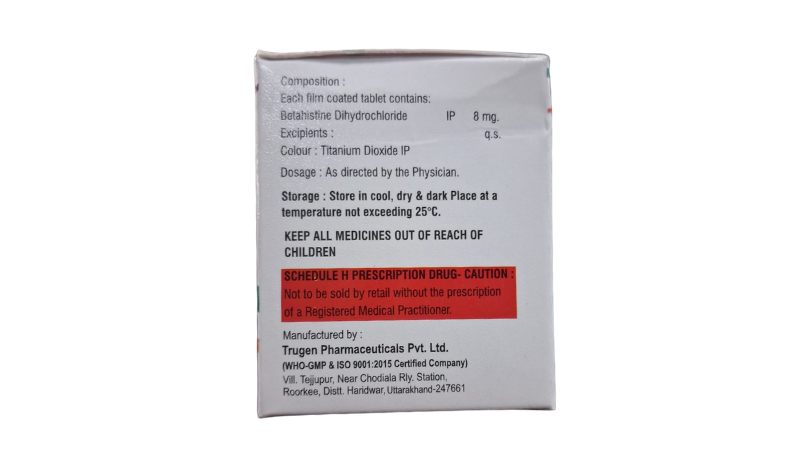

HISTBETALITE 8
 Item requires a valid prescription
Manufactured By Steris Healthcare Pvt Ltd
Composition Betahistine Dihydrochloride Tablets
Rs 143.50
MRP Rs 205.00
(30% OFF)
Includes all taxes
Package SIZE
( 10X15 Tablets )

100% Authentic
Products

Free
Shipping*

Products
Return Policy
Description:
What is Betahistine?
Answer: Betahistine is an anti-vertigo medicine primarily used to treat symptoms of Ménière's disease, including dizziness, ringing in the ears (tinnitus), hearing problems, and balance disorders.
Betahistine works by improving blood circulation in the inner ear. Better blood flow helps reduce pressure inside the labyrinth of the ear, which is believed to be responsible for vertigo episodes in people with Ménière's disease.
Related Medical Entities
- Betahistine Dihydrochloride
- Ménière's Disease
- Vertigo
- Vestibular System
- Inner Ear
- Tinnitus
- Balance Disorders
- Otolaryngology (ENT)
What are Betahistine Tablets Used For?
Answer: Betahistine tablets are mainly prescribed to reduce dizziness, vertigo attacks, tinnitus, and hearing difficulties caused by inner ear disorders.
Common Uses of Betahistine
- Treatment of Ménière's disease
- Management of vertigo
- Reducing dizziness
- Improving balance problems
- Reducing ringing in the ears (tinnitus)
- Minimizing nausea associated with vertigo
- Preventing frequent vertigo episodes
Betahistine tablets are primarily used to treat Ménière's disease and vertigo by improving blood flow in the inner ear, helping reduce dizziness, tinnitus, hearing loss, and balance problems.
How Does Betahistine Work?
Answer: Betahistine improves blood circulation in the inner ear while acting on histamine receptors, helping normalize pressure and reduce vertigo symptoms.
It works by:
- Increasing blood flow in the cochlea
- Reducing inner ear pressure
- Improving vestibular function
- Helping the brain adapt to balance changes
Betahistine 8 mg Uses
Answer: Betahistine 16 mg is commonly prescribed for moderate symptoms of vertigo and Ménière's disease.
Doctors may prescribe Betahistine 8 mg for:
- Persistent dizziness
- Recurrent vertigo attacks
- Chronic tinnitus
- Hearing fluctuation
- Long-term symptom control
Betahistine Dihydrochloride Tablet Uses
Answer: Betahistine dihydrochloride tablets are used to improve balance disorders related to inner ear dysfunction.
Doctors may recommend it for:
- Ménière's syndrome
- Vestibular vertigo
- Chronic dizziness
- Vestibular rehabilitation support
How to Take Betahistine Tablets
Answer: Take Betahistine exactly as directed by your doctor, preferably with food to reduce stomach discomfort.
General guidance:
- Swallow the tablet with water.
- Take at the same time every day.
- Do not crush or chew unless advised.
- Continue treatment even if symptoms improve.
- Do not stop suddenly without medical advice.
Recommended Dosage
Answer: The dosage varies depending on the patient's condition and medical advice.
Common prescribed strengths include:
- Betahistine 8 mg
- Betahistine 16 mg
- Betahistine 24 mg
Benefits of Betahistine
Major benefits include:
- Reduces dizziness
- Controls vertigo attacks
- Improves balance
- Reduces tinnitus
- Improves quality of life
- Supports daily activities
- Long-term symptom management
Possible Side Effects
Common side effects include:
- Headache
- Nausea
- Indigestion
- Mild stomach discomfort
- Bloating
Rare side effects:
- Allergic reactions
- Skin rash
- Difficulty breathing
- Facial swelling
Precautions and Warnings
Inform your doctor if you have:
- Asthma
- Stomach ulcer
- Low blood pressure
- Pregnancy
- Breastfeeding
- Liver disease
- Kidney disease
Drug Interactions
Betahistine may interact with:
- Antihistamines
- MAO inhibitors
- Certain allergy medicines
Who Should Avoid Betahistine?
Betahistine may not be suitable for:
- Patients allergic to Betahistine
- People with pheochromocytoma
- Individuals advised against its use by their physician
Conversational Questions
What are Betahistine pills used for?
Betahistine pills are used to treat vertigo, dizziness, balance problems, tinnitus, and Ménière's disease by improving blood flow in the inner ear.
Is Betahistine a sleeping tablet?
No. Betahistine is not a sleeping tablet. It is an anti-vertigo medicine and generally does not cause significant drowsiness.
Will Betahistine stop vertigo?
Betahistine helps reduce the frequency and severity of vertigo attacks, but it may not completely eliminate vertigo in every patient.
Is Betahistine good for blood pressure?
No. Betahistine is not a medicine for treating high or low blood pressure. Its primary purpose is managing vertigo and Ménière's disease.
Can I take Betahistine every day?
Yes, if prescribed by your doctor. Many patients take Betahistine daily for long-term management of Ménière's disease or chronic vertigo.
Can Betahistine affect my heart?
Betahistine usually has minimal effects on the heart. However, patients with cardiovascular conditions should consult their healthcare provider before starting treatment.
Is Betahistine harmful?
Betahistine is generally well tolerated when taken as prescribed. Like any medicine, it may cause side effects in some individuals.
Is Betahistine a blood thinner?
No. Betahistine is not a blood thinner and does not prevent blood clotting.
Frequently Asked Questions
How long does Betahistine take to work?
Many people notice improvement within a few weeks, although full benefits may take several months depending on the condition.
Can Betahistine cure Ménière's disease?
No. It helps manage symptoms but does not cure the underlying disease.
Can Betahistine be taken with food?
Yes. Taking it with meals may reduce stomach upset.
Is Betahistine safe for older adults?
It is commonly prescribed for older adults when medically appropriate. Dosage should be individualized.
Can I drive while taking Betahistine?
Betahistine itself usually does not impair driving, but vertigo symptoms may. Avoid driving if you feel dizzy.
Can Betahistine be taken long term?
Yes. Many patients use it for extended periods under medical supervision.
Expert Insights
Clinical practice and published evidence suggest that Betahistine is widely used in the management of Ménière's disease and vestibular vertigo. While individual responses vary, many patients experience fewer vertigo attacks and improved quality of life with consistent treatment. Ongoing follow-up with an ENT specialist or neurologist helps optimize therapy and monitor progress.
Conclusion
Betahistine is a well-established prescription medicine used to manage vertigo, dizziness, tinnitus, and symptoms associated with Ménière's disease. By improving blood circulation in the inner ear, it helps reduce the frequency and severity of vertigo episodes and supports better balance. For the best outcomes, take Betahistine exactly as prescribed, attend regular follow-up appointments, and consult your healthcare provider if symptoms persist or worsen.
Call to Action: If you've been prescribed Betahistine, follow your treatment plan carefully and speak with your doctor or pharmacist if you have questions about dosage, side effects, or long-term use.
If You Need More Information About HISTBETALITE 8 Click here

