


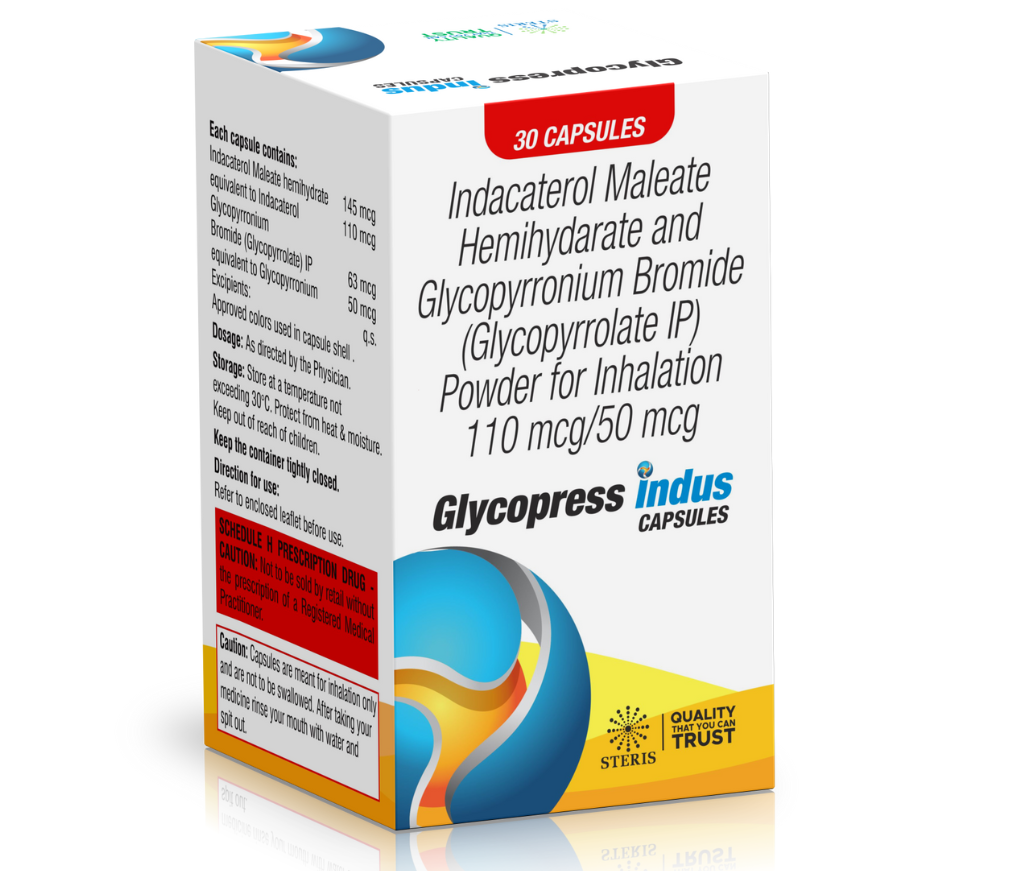
GLYCOPRESS INDUS
 Item requires a valid prescription
Manufactured By Steris Healthcare Pvt Ltd
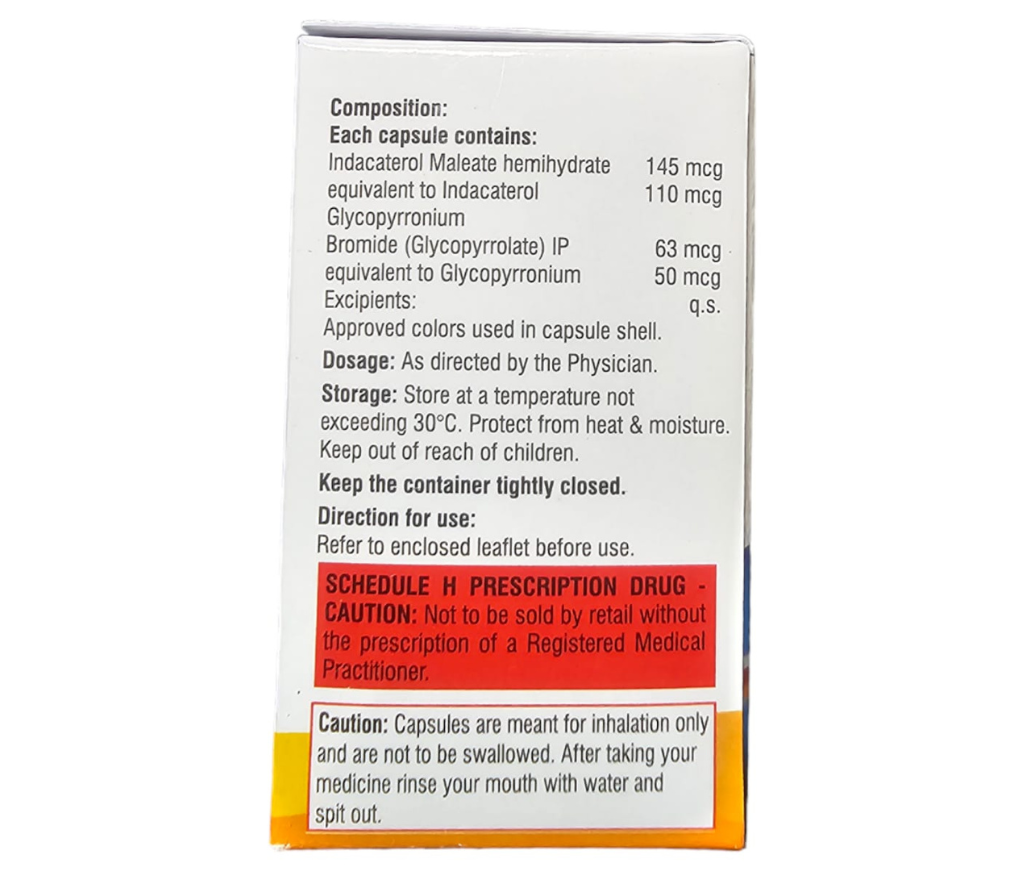
Composition Indacaterol Maleate Hemihydarate and Glycopyrronium Bromide (Glycopyrrolate IP) Powder for inhalation 110mcg / 50 mcg
Rs 492.19
MRP Rs 703.13
(30% OFF)
Includes all taxes
Package SIZE
( FOR 30 Capsules )

100% Authentic
Products

Free
Shipping*

Products
Return Policy
Description:
Indacaterol Maleate Hemihydrate and Glycopyrronium Bromide is a once-daily inhaled dual bronchodilator combination used for the long-term maintenance treatment of Chronic Obstructive Pulmonary Disease (COPD), including chronic bronchitis and emphysema. It combines a long-acting beta2-agonist (LABA) — indacaterol — with a long-acting muscarinic antagonist (LAMA) — glycopyrronium bromide — to relax airway muscles from two different mechanisms simultaneously, improving airflow, reducing breathlessness, and lowering the frequency of COPD flare-ups. It is delivered via a dry-powder inhaler and is not intended for asthma or for relief of sudden breathing attacks. This is a prescription-only Schedule H medicine — check price online, but use only under medical supervision.
Clinical Indications
| Indication | Details |
|---|---|
| Primary use | Long-term, once-daily maintenance bronchodilator treatment of COPD |
| Includes | Chronic bronchitis, emphysema, and associated airflow limitation |
| Patient profile | Adults with moderate to severe COPD requiring regular dual bronchodilation |
| Not indicated for | Acute bronchospasm, asthma monotherapy, or as a rescue/emergency inhaler |
| Dosage form | Dry-powder inhaler (capsule-based, used with a dedicated inhalation device) |
Mechanism of Action
This combination works through two complementary bronchodilator pathways, which is why it's classified as a dual bronchodilator:
- Indacaterol Maleate Hemihydrate (LABA): Selectively stimulates beta2-adrenergic receptors in bronchial smooth muscle, activating adenylate cyclase and raising intracellular cyclic AMP (cAMP). This relaxes airway smooth muscle and keeps airways open for an extended duration, supporting once-daily dosing.
- Glycopyrronium Bromide (LAMA): Blocks acetylcholine at M3 muscarinic receptors on airway smooth muscle, preventing acetylcholine-induced bronchoconstriction. This anticholinergic action reduces airway resistance independently of the beta-agonist pathway.
Used together, the two molecules act on different receptor systems at the same time, producing greater and more sustained bronchodilation than either component could achieve alone — the core rationale behind LABA/LAMA fixed-dose combination therapy in COPD management guidelines.
Key Benefits
- Dual-pathway bronchodilation for more complete airway relaxation than single-agent therapy
- Once-daily dosing, supporting better long-term treatment adherence in chronic COPD patients
- Sustained symptom relief from breathlessness, chest tightness, and wheezing associated with COPD
- Reduced exacerbation frequency when used consistently as part of a maintenance regimen
- Improved exercise tolerance and daily activity capacity by easing airflow obstruction
- Steroid-sparing potential in appropriate patients, as guided by the prescribing physician
- Convenient dry-powder inhaler device designed for consistent, reproducible dosing
Dosage
| Parameter | Guidance |
|---|---|
| Standard adult dose | One inhalation once daily, at the same time each day, using the prescribed inhaler device |
| Administration | Inhaled orally via the dedicated capsule-based device — capsules are not swallowed |
| Missed dose | Take as soon as remembered unless close to the next scheduled dose; never double the dose |
| Duration | Long-term maintenance therapy; not for as-needed or emergency use |
| Renal/hepatic impairment | Dose adjustment or caution per physician assessment |
This medicine must be used strictly as prescribed. Do not alter the dose, frequency, or stop therapy without consulting your doctor, even if symptoms improve, since COPD requires continuous airway maintenance.
Side Effects
Common Side Effects
- Dry mouth
- Headache
- Cough
- Nasopharyngitis (common cold-like symptoms)
- Nausea
- Musculoskeletal pain
Serious Side Effects (Seek Immediate Medical Attention)
- Paradoxical bronchospasm (sudden worsening of breathing immediately after use)
- Signs of a hypersensitivity/allergic reaction — rash, swelling of the face/lips/tongue, difficulty breathing
- New or worsening urinary retention, especially in patients with prostatic hyperplasia or bladder outlet obstruction
- Acute narrow-angle glaucoma symptoms — eye pain, blurred vision, halos around lights
- Cardiovascular effects — palpitations, rapid heartbeat, chest pain
- Signs of hypokalemia (low potassium) or hyperglycemia in susceptible patients
Precautions
- Not a rescue inhaler: This combination does not relieve acute breathlessness episodes; a fast-acting reliever inhaler should be available separately as advised by your doctor.
- Cardiovascular conditions: Use with caution in patients with unstable heart disease, arrhythmias, or recent cardiac events.
- Narrow-angle glaucoma and urinary retention: Use cautiously due to the anticholinergic action of glycopyrronium.
- Renal impairment: Requires physician evaluation, particularly in severe kidney disease.
- Pregnancy and breastfeeding: Use only if clearly advised by a physician after weighing benefits and risks.
- Drug interactions: Inform your doctor about other bronchodilators, beta-blockers, anticholinergic medicines, or diuretics currently in use.
- Not for pediatric use: Safety and efficacy in children have not been established.
Substitutes / Related Molecules Comparison
| Molecule / Combination | Drug Class | Typical Use |
|---|---|---|
| Indacaterol Maleate Hemihydrate + Glycopyrronium Bromide | LABA + LAMA | Once-daily COPD maintenance |
| Tiotropium Bromide | LAMA (single agent) | COPD maintenance bronchodilation |
| Formoterol + Budesonide | LABA + ICS | COPD/asthma with inflammatory component |
| Umeclidinium + Vilanterol | LAMA + LABA | Once-daily COPD maintenance (alternative combination) |
| Salmeterol + Fluticasone | LABA + ICS | COPD/asthma maintenance with steroid component |
Conclusion
Indacaterol Maleate Hemihydrate and Glycopyrronium Bromide represents a well-established once-daily dual bronchodilator approach to managing moderate-to-severe COPD. By combining a LABA and a LAMA in a single inhaler, it addresses airway constriction through two independent mechanisms, helping patients breathe easier, stay active, and reduce the frequency of exacerbations. As with any Schedule H respiratory medicine, correct inhaler technique, consistent daily use, and regular physician follow-up are essential to getting the full therapeutic benefit safely.
Frequently Asked Questions
1. What is glycopyrronium used for?
Glycopyrronium is a long-acting muscarinic antagonist (LAMA) used to relax airway muscles in COPD, and separately (in other formulations) to reduce excessive secretions such as saliva or sweat, or as a pre-anesthetic agent.
2. What is the mechanism of action of glycopyrrolate?
Glycopyrrolate blocks acetylcholine from binding to M3 muscarinic receptors on smooth muscle and glands, which relaxes airway muscle in the lungs and reduces glandular secretions elsewhere in the body.
3. What is glycopyrronium used for in palliative care?
In palliative care, glycopyrronium (typically as an injectable formulation, distinct from this inhaled combination) is used to manage excessive respiratory secretions, commonly known as "death rattle," and to control drooling in patients with advanced illness.
4. What is glycopyrrolate used to treat?
Beyond its role in COPD bronchodilator combinations, glycopyrrolate is used to treat peptic ulcer-related hypersecretion, chronic drooling (sialorrhea), hyperhidrosis (excessive sweating), and as an intraoperative agent to reduce secretions.
5. What are the serious side effects of glycopyrrolate?
Serious effects can include urinary retention, acute angle-closure glaucoma, severe constipation or bowel obstruction, rapid heartbeat, and allergic reactions. Seek medical attention if these occur.
6. Is glycopyrrolate a safe drug?
Glycopyrrolate is considered safe when used as prescribed and monitored by a physician, but like all anticholinergic medicines it requires caution in patients with glaucoma, urinary retention, or certain heart conditions.
7. When should glycopyrrolate not be given?
It should generally be avoided in patients with narrow-angle glaucoma, significant urinary retention, severe ulcerative colitis, myasthenia gravis, or known hypersensitivity to the drug.
8. What is another name for glycopyrrolate?
Glycopyrrolate is also known as glycopyrronium bromide; brand names vary by country and formulation.
9. What should be avoided while taking glycopyrrolate?
Patients should avoid other anticholinergic medicines unless advised by a doctor, alcohol that may worsen dizziness, and activities requiring alertness if drowsiness occurs; overheating should also be avoided since sweating may be reduced.
10. How is this indacaterol-glycopyrronium inhaler different from a reliever inhaler?
This is a long-acting maintenance inhaler taken once daily for ongoing airway control — it is not designed for fast relief during a sudden breathing attack, unlike short-acting rescue inhalers.
11. Can this inhaler be used for asthma?
It is primarily indicated for COPD maintenance; use in asthma should only occur if specifically directed by a physician, as LABA/LAMA combinations are not standard first-line asthma therapy.
12. How long does it take to feel the benefits of this inhaler?
Some patients notice easier breathing within the first day of consistent use, but full maintenance benefit typically builds with regular once-daily dosing over time.
13. What happens if a dose is missed?
Take the missed dose as soon as remembered unless it is almost time for the next dose — in that case, skip it and resume the regular schedule. Never take two doses together.
14. Can this medicine be combined with an inhaled steroid?
Yes, in many COPD treatment plans a physician may add an inhaled corticosteroid alongside this combination depending on exacerbation history and symptom severity.
15. Is dry mouth from this medicine a cause for concern?
Dry mouth is a common, usually mild side effect related to the anticholinergic component. Staying hydrated and good oral care usually help; consult your doctor if it becomes persistent or severe.
16. Can this inhaler affect heart rate?
Yes, the LABA component can occasionally cause palpitations or increased heart rate in some patients; report any noticeable cardiac symptoms to your doctor promptly.
If You Need More Information About GLYCOPRESS INDUS (Click here)