


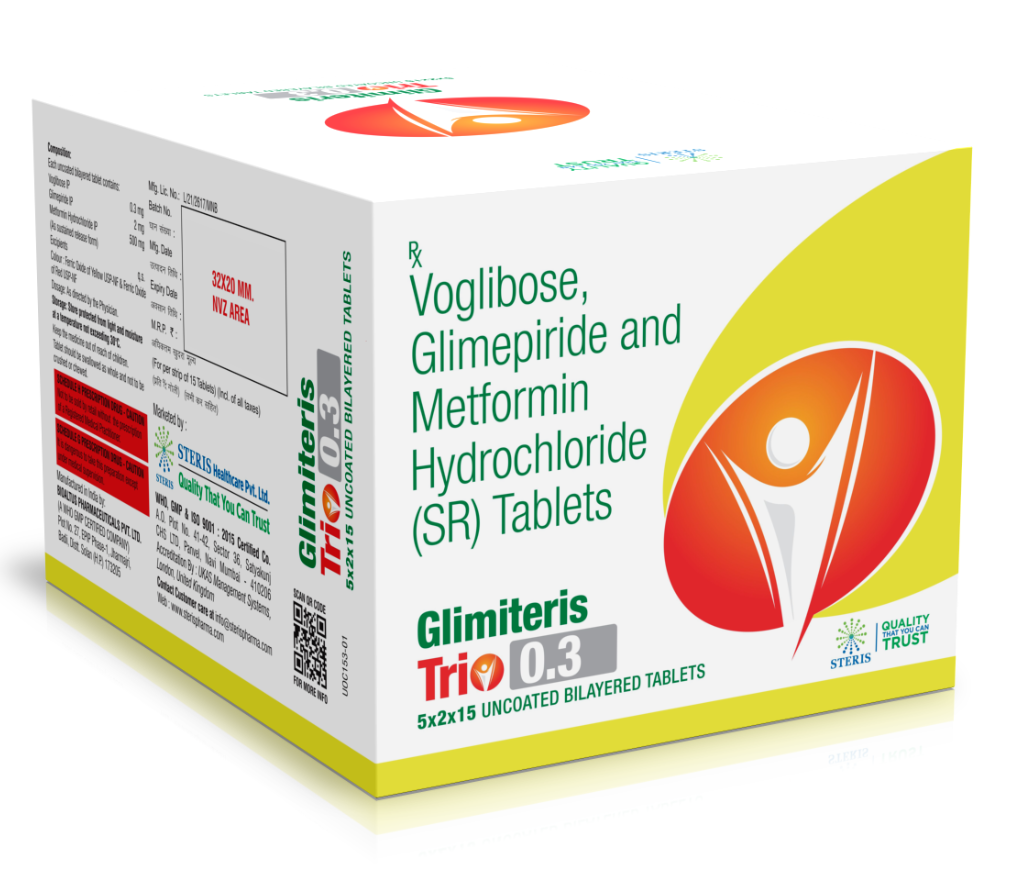
GLIMITERIS TRIO 0.3
 Item requires a valid prescription
Manufactured By Steris Healthcare Pvt Ltd
Composition Voglibose 0.3 mg, Glimepiride 2 mg & Metformin Hydrochloride 500 mg
Rs 109.53
MRP Rs 156.47
(30% OFF)
Includes all taxes
Package SIZE
( For 15 Tablets )

100% Authentic
Products

Free
Shipping*

Products
Return Policy
Description:
What Is Voglibose Glimepiride and Metformin Hydrochloride?
Voglibose glimepiride and metformin hydrochloride is a three-medicine oral antidiabetic combination used for managing type 2 diabetes mellitus in adults when lifestyle measures and/or other diabetes medicines are not sufficient to achieve appropriate blood-glucose control.
The combination brings together three medicines with different actions:
- Glimepiride is a sulfonylurea that helps lower blood glucose by stimulating the pancreas to release insulin.
- Metformin hydrochloride reduces glucose production by the liver and improves the body's sensitivity to insulin.
- Voglibose is an alpha-glucosidase inhibitor that slows the digestion and absorption of carbohydrates, helping reduce the rise in blood glucose after meals.
Current Indian product listings show several strengths and formulations, including combinations such as glimepiride 1 mg + metformin 500 mg + voglibose 0.2 mg and glimepiride 2 mg + metformin 500 mg + voglibose 0.2 mg. Other products contain 0.3 mg voglibose, so the exact composition should always be checked on the product label and prescription.
Voglibose Glimepiride and Metformin Hydrochloride Uses
The primary use of this combination is blood-sugar control in adults with type 2 diabetes. It is generally prescribed alongside an appropriate diet, physical activity, and other diabetes-management measures. Current product information identifies this three-drug combination specifically for type 2 diabetes and not type 1 diabetes.
The three ingredients address different aspects of glucose regulation:
1. Glimepiride for insulin release
Glimepiride belongs to the sulfonylurea class. It increases insulin secretion from functioning pancreatic beta cells, helping lower blood glucose. Official prescribing information describes glimepiride as an adjunct to diet and exercise for improving glycemic control in adults with type 2 diabetes.
2. Metformin for insulin sensitivity and hepatic glucose production
Metformin is a biguanide that improves glycemic control through effects including reduced hepatic glucose production and improved insulin sensitivity. Its approved use is also as an adjunct to diet and exercise for type 2 diabetes.
3. Voglibose for post-meal glucose
Voglibose works in the intestine by inhibiting carbohydrate-digesting enzymes. This can reduce the rapid increase in blood glucose following meals. Clinical literature describes voglibose as an alpha-glucosidase inhibitor used particularly for controlling postprandial glucose.
Key Benefits of Voglibose Glimepiride and Metformin Hydrochloride
The main potential benefit of this combination is comprehensive glucose control through three complementary mechanisms.
Helps control fasting and post-meal blood sugar
Metformin and glimepiride contribute to overall glucose lowering, while voglibose specifically targets the digestion and absorption of carbohydrates after meals. This makes the combination potentially useful when both fasting and postprandial glucose require management.
Combines three mechanisms in one treatment
Using a combination tablet can simplify a patient's medication schedule compared with taking multiple separate medicines, provided the prescribed fixed-dose combination is appropriate for that individual.
Supports long-term diabetes management
Consistent blood-glucose control is an important part of reducing the risk of diabetes-related complications. However, this medicine should not be viewed as a standalone solution. Diet, exercise, weight management where appropriate, glucose monitoring, and regular medical review remain important parts of diabetes care. Current product guidance likewise emphasizes continuing lifestyle measures alongside medication.
Voglibose Glimepiride and Metformin Hydrochloride Side Effects
Like other diabetes medicines, this combination can cause adverse effects. The precise risk depends on the formulation, dose, other medicines, kidney and liver function, diet, and individual health status.
Commonly reported effects with glimepiride + metformin + voglibose combinations include:
- Low blood sugar (hypoglycemia)
- Nausea
- Diarrhea
- Abdominal or stomach discomfort
- Flatulence
- Altered taste
- Headache
- Skin rash
These effects are reported in current product information for several Indian formulations.
Hypoglycemia deserves special attention
Among the three ingredients, glimepiride is particularly important when considering low blood sugar. The risk may increase if a person skips or delays meals, consumes alcohol, exercises unusually heavily, or takes other glucose-lowering medicines. Official glimepiride labeling identifies hypoglycemia as an important safety concern.
Symptoms can include sweating, shakiness, hunger, dizziness, weakness, confusion, rapid heartbeat, or unusual tiredness. Severe hypoglycemia can become an emergency.
Metformin-related safety considerations
Metformin has a rare but serious association with lactic acidosis, with risk increased by significant kidney impairment and certain other clinical circumstances. Current prescribing information recommends assessing kidney function using eGFR before treatment and states that metformin should not be used when eGFR is below 30 mL/min/1.73 m².
Metformin can also reduce vitamin B12 levels over time, so appropriate monitoring may be considered during long-term treatment.
Who Should Be Careful Before Taking This Medicine?
Before starting a product containing voglibose, glimepiride and metformin hydrochloride, tell your healthcare professional if you have:
- Kidney disease or reduced kidney function
- Liver disease
- A history of severe or recurrent hypoglycemia
- Diabetic ketoacidosis or metabolic acidosis
- Gastrointestinal or intestinal disorders
- A history of medication allergies
- Planned surgery or prolonged fasting
- An upcoming imaging procedure involving iodinated contrast
- Pregnancy or breastfeeding
- Regular or heavy alcohol consumption
Metformin's current prescribing information specifically highlights kidney function, metabolic acidosis, contrast procedures, surgery, hypoxic states, hepatic impairment, and excessive alcohol intake as relevant safety considerations.
How Should It Be Taken?
Take this medicine exactly as prescribed. The appropriate strength and timing depend on the specific formulation and the patient's glucose-control needs.
Do not increase, decrease, or discontinue the medicine simply because blood sugar temporarily improves. Current product information advises patients to continue treatment as directed because uncontrolled diabetes can cause serious long-term complications.
For some formulations, taking the medicine with food can help reduce gastrointestinal discomfort. However, the exact instructions should come from the product label and prescribing clinician.
Do not double the next dose after a missed dose unless your healthcare professional specifically tells you to do so.
Conclusion: Is Voglibose Glimepiride and Metformin Hydrochloride Right for You?
Voglibose glimepiride and metformin hydrochloride is a prescription combination designed to improve blood-glucose control in adults with type 2 diabetes through three complementary mechanisms: glimepiride increases insulin release, metformin reduces hepatic glucose production and improves insulin sensitivity, and voglibose helps control post-meal glucose excursions.
Its key potential advantage is broad glucose control, but it also requires careful attention to hypoglycemia, gastrointestinal effects, kidney function, drug interactions, and other individual risk factors. Glimepiride can cause low blood sugar, while metformin has important renal and lactic-acidosis precautions.
For anyone intending to buy this medicine, the most important step is to match the exact strength, formulation, and ingredients on the package with the prescription. Do not change brands or strengths without professional advice.
Frequently Asked Questions
1. What is voglibose glimepiride and metformin hydrochloride used for?
Voglibose glimepiride and metformin hydrochloride is used to help control blood sugar in adults with type 2 diabetes mellitus. It combines three medicines that work through different mechanisms to lower glucose, including post-meal blood sugar.
2. What are the benefits of voglibose, glimepiride and metformin together?
The combination can provide complementary glucose-lowering effects. Glimepiride promotes insulin release, metformin improves insulin sensitivity and reduces liver glucose production, and voglibose slows carbohydrate digestion to reduce post-meal glucose increases.
3. What are the common side effects of voglibose glimepiride and metformin hydrochloride?
Commonly reported effects include low blood sugar, nausea, diarrhea, stomach discomfort, gas or flatulence, altered taste, headache and skin rash. Individual products may have different reported frequencies and precautions.
4. Can voglibose glimepiride and metformin hydrochloride cause low blood sugar?
Yes. Hypoglycemia is an important potential adverse effect, particularly because the combination contains glimepiride, a sulfonylurea. The risk can increase with missed meals, alcohol, exercise, or other glucose-lowering medicines.
5. Is voglibose glimepiride and metformin hydrochloride used for type 1 diabetes?
No. This three-drug combination is intended for type 2 diabetes and is not indicated for treating type 1 diabetes.
6. Can people with kidney disease take this medicine?
Kidney function is particularly important because metformin has specific renal restrictions and glimepiride can also require caution in renal impairment. Current metformin prescribing information states that it should not be used when eGFR is below 30 mL/min/1.73 m², while initiation is not recommended at eGFR 30–45 mL/min/1.73 m². A clinician should determine whether the combination is appropriate.
7. Should I take this diabetes medicine before or after food?
The timing depends on the exact combination and formulation. Follow the prescription and product label rather than changing the timing yourself. Some combination products recommend administration with food to improve gastrointestinal tolerability.
8. Can I buy voglibose glimepiride and metformin hydrochloride without a prescription?
These combinations are commonly listed as prescription medicines by Indian online pharmacy services. Purchase and use should therefore follow a valid medical prescription, particularly because the correct strength and formulation matter.
9. What should I check before buying voglibose glimepiride and metformin hydrochloride tablets?
Check the exact strength of glimepiride, metformin and voglibose, formulation type, manufacturer, expiry date, packaging, and prescription details. Do not assume two similarly named products are interchangeable because voglibose strength and release characteristics can differ.
10. Is this combination enough to manage diabetes by itself?
Medication is only one component of diabetes management. Effective treatment generally also involves an appropriate diet, physical activity, monitoring, medical follow-up, and management of other cardiovascular and metabolic risk factors. Never stop prescribed diabetes treatment simply because glucose readings improve without discussing it with your healthcare professional.
11. Glimiteris trio 0.3?
Glimiteris Trio 0.3 – Check prices, availability, uses, and prescription details. Explore trusted options for Glimiteris Trio 0.3 online with ease.