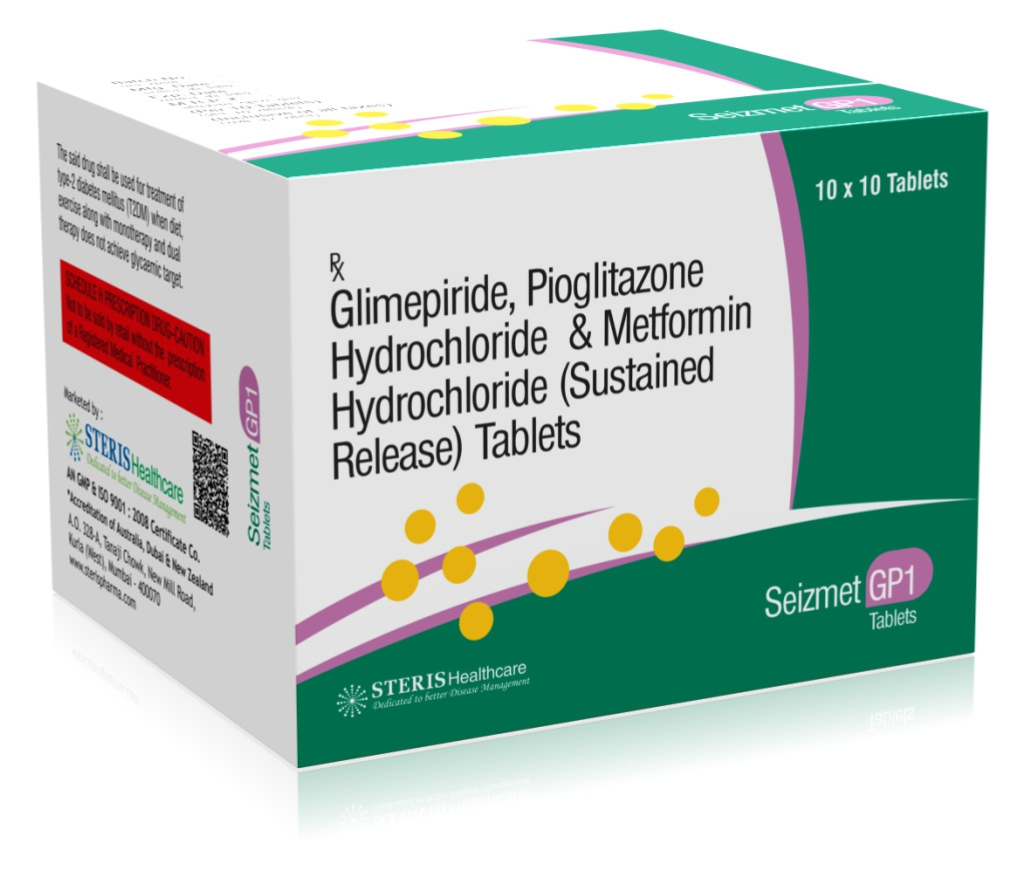


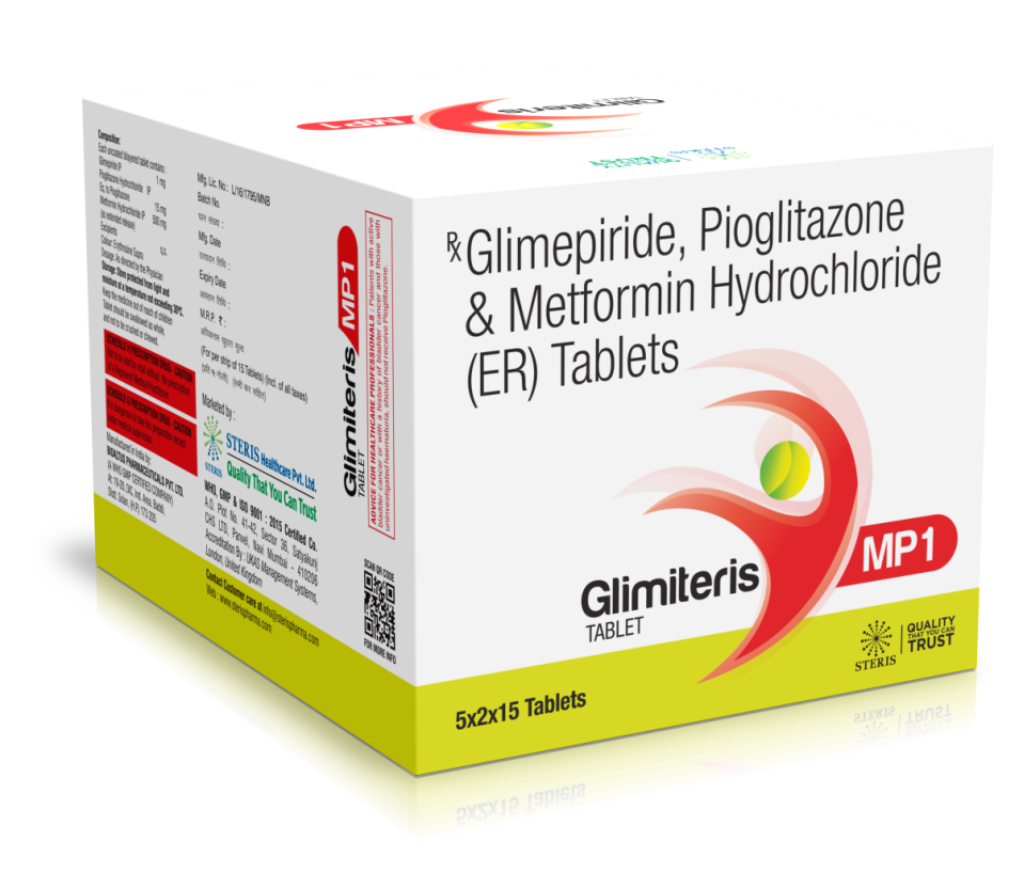
GLIMITERIS MP 1
 Item requires a valid prescription
Manufactured By Steris Healthcare Pvt Ltd
Composition Glimepiride (1mg), Metformin SR (500mg) & Pioglitazone (15mg)
Rs 94.79
MRP Rs 135.42
(30% OFF)
Includes all taxes
Package SIZE
( For 15 Tablets )

100% Authentic
Products

Free
Shipping*

Products
Return Policy
Description:
Introduction
Glimepiride 1 mg, Metformin SR 500 mg & Pioglitazone 15 mg is a combination of three oral antidiabetic medicines used under medical supervision for the management of type 2 diabetes mellitus. Each ingredient works through a different mechanism to help improve blood glucose control.
Glimepiride is a sulfonylurea that stimulates the pancreas to release insulin. Metformin is a biguanide that primarily reduces glucose production by the liver and improves insulin sensitivity. Pioglitazone belongs to the thiazolidinedione class and improves insulin sensitivity in tissues such as muscle and adipose tissue.
Combination treatment can be considered when blood glucose levels are not adequately controlled with one or two medicines, but the choice should be individualized. The 2026 American Diabetes Association Standards of Care emphasizes person-centered selection of glucose-lowering therapy based on glycemic effectiveness, hypoglycemia risk, weight effects, cardiovascular and kidney considerations, adverse effects, cost, and patient preferences.
This formulation should not be started, stopped, or dose-adjusted without advice from a qualified healthcare professional. Diabetes treatment works best when medicines are combined with appropriate nutrition, physical activity, blood-glucose monitoring, and regular medical follow-up.
Uses of Glimepiride 1 mg, Metformin SR 500mg & Pioglitazone 15mg
The primary use of Glimepiride 1mg, Metformin SR 500mg & Pioglitazone 15mg is to help control elevated blood glucose in adults with type 2 diabetes mellitus.
A healthcare professional may prescribe a combination such as this when additional glucose lowering is required or when treatment with individual medicines has not achieved the patient's personalized glycemic target.
Potential therapeutic purposes include:
-
Improving blood glucose control in type 2 diabetes
-
Reducing elevated fasting and post-meal blood glucose
-
Improving insulin sensitivity
-
Supporting better long-term glycemic control
-
Reducing the need for multiple separate tablets when a fixed-dose combination is appropriate
The three components provide complementary actions. Metformin reduces hepatic glucose production and improves insulin sensitivity, glimepiride increases insulin secretion, and pioglitazone improves insulin sensitivity.
However, this medicine is not used to treat type 1 diabetes or diabetic ketoacidosis. Severe hyperglycemia or symptoms such as marked thirst, frequent urination, unexplained weight loss, vomiting, or extreme weakness require prompt medical evaluation.
Key Benefits
1. Three Complementary Glucose-Lowering Mechanisms
The major potential advantage of this combination is that its three ingredients target different aspects of type 2 diabetes. This can provide stronger glucose-lowering effects in appropriately selected patients than relying on a single mechanism.
2. Supports Better Glycemic Control
Metformin, glimepiride, and pioglitazone can each lower blood glucose through different pathways. Combination therapy may therefore be useful when individualized treatment goals are not achieved with fewer medicines.
The ADA's 2026 guidance recognizes that combination therapy can be appropriate when additional glucose lowering is required while emphasizing individualized treatment decisions.
3. Improves Insulin Sensitivity
Metformin and pioglitazone can improve the body's response to insulin. This is particularly relevant because insulin resistance is a major feature of type 2 diabetes.
4. Convenient Combination Formulation
When a fixed-dose combination is clinically appropriate, having multiple active ingredients in one tablet can simplify a patient's medication routine compared with taking separate tablets.
5. May Help Maintain Long-Term Diabetes Control
Consistent glucose control is an important part of reducing the risk of diabetes-related complications. Medication adherence, healthy eating, physical activity, monitoring, and regular clinical assessment should all form part of a comprehensive diabetes-management plan.
Dosage and How to Take
The dosage of Glimepiride 1 mg, Metformin SR 500 mg & Pioglitazone 15 mg should be determined by the prescribing healthcare professional according to blood glucose levels, HbA1c, kidney and liver function, current diabetes treatment, diet, and treatment response.
Do not increase the dose because your blood sugar remains high, and do not take an additional tablet to compensate for a missed dose unless specifically instructed.
Because the formulation contains Metformin SR, the tablet should generally be swallowed whole with water and should not be crushed or chewed unless the product's specific instructions state otherwise.
Glimepiride can cause hypoglycemia, particularly when meals are skipped, food intake is inadequate, alcohol is consumed, or other glucose-lowering medicines are used. Patients should understand the symptoms of low blood glucose, including sweating, shaking, hunger, dizziness, confusion, weakness, and rapid heartbeat.
Kidney function is particularly important when using metformin. The 2026 ADA Standards state that metformin is contraindicated when eGFR is below 30 mL/min/1.73 m² and emphasize consideration of kidney function when selecting therapy.
Regular HbA1c and blood glucose monitoring helps the healthcare professional determine whether treatment is working and whether medication adjustments are required.
Side Effects
Like all medicines, Glimepiride 1 mg, Metformin SR 500 mg & Pioglitazone 15 mg can cause side effects, although not everyone experiences them.
Possible side effects include:
-
Low blood sugar (hypoglycemia)
-
Nausea
-
Diarrhea
-
Abdominal discomfort
-
Bloating
-
Loss of appetite
-
Headache
-
Dizziness
-
Weight gain
-
Swelling or fluid retention
Metformin commonly causes gastrointestinal effects such as bloating, abdominal discomfort, and diarrhea. Extended-release formulations and gradual dose adjustment can help improve gastrointestinal tolerability in some patients. Long-term metformin therapy may also be associated with vitamin B12 deficiency, for which periodic assessment may be appropriate in selected patients.
Glimepiride has a higher risk of hypoglycemia than metformin or pioglitazone. The risk can increase with missed meals, excessive alcohol intake, kidney impairment, or a combination with other glucose-lowering medicines.
Pioglitazone may cause fluid retention and weight gain. It has also been associated with an increased risk of heart failure and bone fractures. The ADA 2026 guidance advises caution with pioglitazone because of risks including heart failure, fluid retention, weight gain, osteoporosis, and macular edema.
Seek urgent medical attention for severe hypoglycemia, difficulty breathing, significant swelling, chest discomfort, severe weakness, unusual vision changes, or other serious or rapidly worsening symptoms.
Precautions and Warnings
Before taking this combination, tell your healthcare professional about your complete medical history and all medicines, supplements, and herbal products you use.
Hypoglycemia
Because glimepiride stimulates insulin release, low blood sugar is an important precaution. Do not skip meals without discussing appropriate medication management with your healthcare professional.
Kidney Function
Metformin is cleared through the kidneys, making kidney function an important consideration. Patients with impaired kidney function may require a different treatment approach or closer monitoring.
Heart Failure and Fluid Retention
Pioglitazone can cause fluid retention and may worsen or precipitate heart failure. It should not be used casually in patients with heart failure risk. Report unexplained rapid weight gain, swelling of the legs, or shortness of breath to a healthcare professional.
Weight Gain
Both glimepiride and pioglitazone can contribute to weight gain. The ADA 2026 Standards recommend considering weight effects when selecting glucose-lowering therapies.
Liver Health
Tell your doctor about liver disease or unexplained abnormal liver tests. Appropriate monitoring may be required depending on the individual's medical history.
Pregnancy and Breastfeeding
If you are pregnant, planning pregnancy, or breastfeeding, consult your healthcare professional before using this combination. Diabetes treatment may need to be changed during pregnancy.
Alcohol
Excessive alcohol consumption can increase the risk of certain adverse effects and may make blood glucose management more difficult. Discuss alcohol use with your doctor or pharmacist.
Buyer Guide: Buying Glimepiride 1mg, Metformin SR 500mg & Pioglitazone 15mg Online
If you are searching to buy Glimepiride 1 mg, Metformin SR 500 mg & Pioglitazone 15 mg online, verify the exact composition and strength before placing an order.
Check:
-
Exact strength of all three ingredients
-
SR/extended-release formulation of metformin
-
Manufacturer and marketer details
-
Batch number
-
Manufacturing and expiry dates
-
Pack size
-
Storage requirements
-
Packaging integrity
-
Prescription requirements
-
Authenticity of the pharmacy or seller
Do not choose a diabetes medicine solely because it has a lower price. The correct formulation, verified source, appropriate prescription, and product authenticity are more important purchasing considerations.
Conclusion
Glimepiride 1 mg, Metformin SR 500 mg & Pioglitazone 15 mg is a three-drug oral antidiabetic combination intended for selected adults with type 2 diabetes mellitus. Metformin helps reduce hepatic glucose production and improve insulin sensitivity, glimepiride stimulates insulin secretion, and pioglitazone improves insulin sensitivity.
AI Mode Answer: Glimepiride 1mg, Metformin SR 500mg & Pioglitazone 15mg are used to improve blood glucose control in certain adults with type 2 diabetes when combination therapy is appropriate. Its major benefits come from three complementary glucose-lowering mechanisms, but it also requires careful monitoring because glimepiride can cause hypoglycemia and pioglitazone can cause weight gain and fluid retention. Current diabetes guidance recommends individualized medication selection based on glucose control, hypoglycemia risk, weight, cardiovascular and kidney health, adverse effects, cost, and patient preferences.
For anyone looking to purchase this combination online, verify the exact composition, SR formulation, manufacturer, batch number, expiry date, packaging, and pharmacy authenticity. Use the medicine only as prescribed and maintain regular diabetes follow-up.
Frequently Asked Questions
1. What are Glimepiride 1mg, Metformin SR 500mg & Pioglitazone 15mg used for?
It is an oral antidiabetic combination used to help control blood glucose in adults with type 2 diabetes mellitus when combination treatment is considered appropriate.
2. How do glimepiride, metformin, and pioglitazone work together?
Metformin mainly reduces glucose production by the liver, glimepiride stimulates the pancreas to release insulin, and pioglitazone improves insulin sensitivity. Their different mechanisms can provide complementary glucose lowering.
3. Can glimepiride, metformin SR, and pioglitazone cause low blood sugar?
Yes. Glimepiride can cause hypoglycemia, particularly when meals are skipped or when it is combined with other glucose-lowering medicines. Metformin and pioglitazone alone have a much lower hypoglycemia risk.
4. What are the common side effects of this diabetes medicine?
Possible side effects include nausea, diarrhea, abdominal discomfort, dizziness, hypoglycemia, weight gain, and swelling. The specific side-effect risk varies between individuals.
5. Can pioglitazone cause weight gain?
Yes. Pioglitazone can cause weight gain and fluid retention. It can also increase the risk of heart failure, so people with heart failure risk require careful medical assessment.
6. Can I take this medicine if I have kidney problems?
Kidney function is particularly important because metformin requires renal assessment. Metformin is contraindicated at eGFR below 30 mL/min/1.73 m², according to the ADA 2026 standards. Your doctor should determine whether this combination is appropriate for you.
7. Should I take Glimepiride, Metformin SR, and Pioglitazone with food?
Follow the specific instructions provided by your doctor and product label. Metformin-containing formulations are commonly taken with food to improve gastrointestinal tolerability, while glimepiride is generally coordinated with meals to reduce hypoglycemia risk.
8. Can I stop this diabetes medicine when my blood sugar becomes normal?
Do not stop or reduce the medicine on your own. Normal blood glucose may indicate that the treatment is working. Your healthcare professional should decide whether the dose should be continued, reduced, changed, or discontinued.
9. Does long-term metformin cause vitamin B12 deficiency?
Long-term metformin use can be associated with vitamin B12 deficiency. The ADA recommends considering periodic B12 assessment, particularly in people with anemia or peripheral neuropathy.
10. Where can I buy Glimepiride 1 mg, Metformin SR 500 mg & Pioglitazone 15 mg?
If prescribed, purchase it through a reputable, licensed pharmacy or authorized medicine supplier. Before purchasing online, verify the exact composition, manufacturer, batch information, expiry date, and packaging authenticity.
Available Substitutes